The Complete Hanfu and Traditional Silk Care Guide
The Renaissance of Traditional Garments
The global resurgence of traditional Chinese clothing, from the flowing silhouettes of Hanfu to the tailored elegance of the Qipao and the modern Xin Zhongshi (New Chinese Style) movement, has brought centuries-old textiles into contemporary wardrobes. However, owning a beautifully embroidered Ming Dynasty-style Mamianqun (horse-face skirt) or a delicate Song Dynasty-inspired Beizi comes with a unique set of responsibilities. Unlike modern fast fashion, these garments often utilize premium, delicate fibers such as mulberry silk, raw ramie, and intricate Song brocades that demand specialized care.
According to the UNESCO Silk Road Programme, the historical significance of silk weaving in Asia is deeply tied to the meticulous preservation of the fiber's natural protein structure. Improper washing or storage can irreversibly damage these garments, leading to color bleeding, shattered pleats, or weakened fibers. This comprehensive guide provides actionable, expert-backed advice on how to wash, iron, and store your traditional Asian garments to ensure they remain pristine for generations.
Understanding Your Traditional Garment Fabrics
Before reaching for the detergent, it is crucial to identify the fiber content of your garment. Traditional Chinese textiles generally fall into three categories: protein fibers (silk), cellulose fibers (ramie, hemp, cotton), and modern synthetic blends often used in everyday Hanfu or Xin Zhongshi daily wear.
| Fabric Type | Common Garments | Wash Method | Ironing Temperature | Primary Vulnerability |
|---|---|---|---|---|
| Mulberry Silk (Satin/Crepe) | Qipao, Ruqun tops, Song Beizi | Hand-wash cold or Dry Clean | Low (110°C / 230°F) | Alkaline detergents, water spots |
| Ramie / Summer Linen | Summer Hanfu, Ming Dynasty tops | Machine wash (gentle) or Hand-wash | Medium-High (150°C / 300°F) | Hard creasing, stiffness |
| Song Brocade / Jacquard | Mamianqun, formal outerwear | Dry Clean Only | Low with press cloth | Snagging, metallic thread tarnish |
| Polyester / Viscose Blends | Daily Xin Zhongshi, budget Hanfu | Machine wash (cold) | Low-Medium (130°C / 265°F) | Heat melting, static cling |
Washing Protocols: The Science of Clean
Caring for Silk: A Protein Fiber
Silk is a protein fiber, much like human hair. It is highly sensitive to alkaline substances, which can strip the fiber of its natural sericin coating, leading to a dull appearance and brittle texture. Never use standard biological laundry detergents or bleach on silk Hanfu or Qipaos.
- The Right Product: Invest in a pH-neutral or slightly acidic detergent specifically formulated for delicates. Products like The Laundress Delicate Wash or Eucalan Fine Fabric Wash (approx. $15-$20 per bottle) are excellent choices. As noted by The Laundress Silk Care Guide, preserving the natural oils and structure of silk requires avoiding harsh enzymes.
- Water Temperature: Always use cold water, ideally below 30°C (86°F). Hot water causes silk fibers to contract and can set protein-based stains like sweat.
- The 5-Minute Rule: Submerge the garment and gently agitate it with your hands. Do not let silk soak for more than 5 minutes. Prolonged soaking can cause dyes, especially traditional botanical dyes used in artisan Hanfu, to bleed.
Caring for Ramie and Blends
Ramie, a bast fiber historically used in Chinese summer clothing, is highly breathable but prone to severe wrinkling. Ramie can withstand warmer water and standard mild detergents. For modern Xin Zhongshi garments made of viscose or polyester blends, turn the garment inside out and place it in a mesh laundry bag before using the delicate cycle on your washing machine to prevent friction damage to any embroidered motifs.
Drying and Ironing: Preserving the Silhouette
Never wring out a silk Qipao or a pleated Hanfu skirt. Wringing creates micro-tears in the fibers and permanently distorts the garment's shape.
The Towel Roll Method
To dry your garments safely, lay them flat on a clean, dry, white cotton towel. Roll the towel up like a sleeping bag with the garment inside, and press down gently to absorb excess moisture. Unroll and lay the garment flat on a drying rack away from direct sunlight. UV rays will rapidly fade the rich reds, indigos, and golds typical of traditional Chinese textiles.
Mastering the Mamianqun Pleats
The Ming Dynasty Mamianqun (horse-face skirt) is famous for its intricate, knife-sharp pleats. Maintaining these pleats is the most daunting aspect of Hanfu care.
- Steaming over Ironing: Use a high-quality garment steamer rather than a flat iron. Hang the skirt and steam the pleats from top to bottom, allowing the weight of the fabric to pull the pleats straight.
- The Clip Technique: If the pleats have loosened after washing, lay the skirt flat on an ironing board. Align the pleats manually and secure them with stainless steel sewing clips (avoid plastic clips that may melt or leave residue).
- Pressing: Place a 100% cotton press cloth over the pleats. Set your iron to the 'Silk' or 'Low' setting (110°C). Press down firmly without sliding the iron back and forth, which can shift the fabric. Let the fabric cool completely before removing the clips to 'set' the pleat.
Proper Storage Solutions for Longevity
'Proper storage is not merely about keeping garments clean; it is about preserving the structural integrity of historical silhouettes and preventing chemical degradation of the fibers.' — Victoria and Albert Museum Textile Conservation Guidelines
Hanging vs. Folding
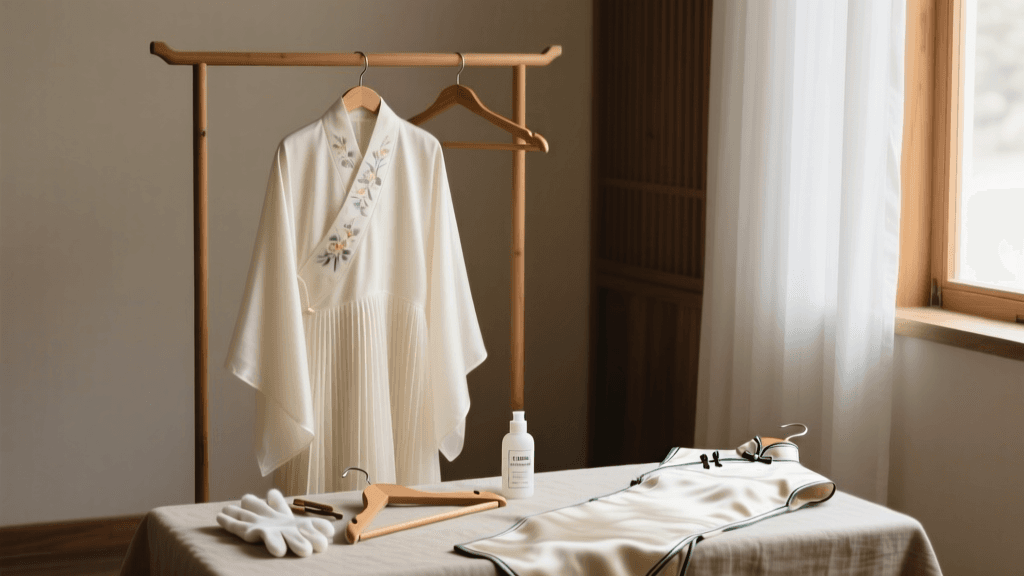
While it is tempting to display your beautiful Hanfu on hangers, gravity is the enemy of traditional garments. Heavy, multi-layered silk and brocade skirts will stretch at the waistband if hung for long periods. Furthermore, hanging a Qipao can cause the shoulders to develop permanent 'hanger bumps'.
- When to Fold: Heavy Mamianqun, heavily embroidered Ruqun tops, and vintage silk Qipaos should always be folded and stored flat.
- When to Hang: Lightweight, unlined summer Hanfu made of ramie or thin cotton can be hung. Use wide, padded velvet hangers to distribute the weight evenly and prevent shoulder dimples.
Archival Storage Materials
Standard cardboard boxes and plastic bins are detrimental to natural fibers. Cardboard contains acidic compounds that will yellow silk over time, while plastic bins trap moisture, leading to mildew.
- Acid-Free Tissue Paper: When folding silk, place sheets of unbuffered, acid-free tissue paper between the folds. This prevents hard creases that can eventually cause the silk to 'shatter' or tear along the fold lines. (Cost: approx. $15 for a pack of 50 sheets).
- Archival Boxes: Store your folded garments in acid-free, lignin-free archival textile boxes. These are available from conservation supply stores for roughly $25 to $45 each.
- Pest Prevention: Moths and carpet beetles are highly attracted to silk and wool. Avoid chemical mothballs, which leave a toxic, lingering odor that permeates the fibers. Instead, use natural Aromatic Cedar blocks or rings (Cost: $15-$20). Sand the cedar lightly every six months to refresh the natural oils that repel insects.
Stain Removal and Emergency Care
Accidents happen, whether it is a drop of soy sauce at a dim sum restaurant or makeup transfer on a high-collared Qipao. Because traditional garments often feature water-sensitive dyes, aggressive spot cleaning can cause localized fading.
- Oil Stains: Immediately apply a small amount of cornstarch or talcum powder to the stain to absorb the oil. Let it sit for 30 minutes, then gently brush it off with a soft makeup brush before hand-washing.
- Sweat and Deodorant: Sweat is acidic and can degrade silk over time, leaving yellow marks. A mixture of one part white vinegar to three parts cold water can be dabbed onto the underarm areas with a clean white cloth before washing. Always test on an inconspicuous inner seam first.
- Water Spots: If a drop of water leaves a ring on your silk Qipao, the solution is counterintuitive: you must wet the entire panel evenly. Lightly mist the whole fabric panel with distilled water and allow it to dry uniformly to erase the watermark line.
Conclusion
Caring for Hanfu, Qipaos, and Xin Zhongshi garments requires a departure from the convenience of modern laundry routines. By understanding the unique properties of mulberry silk, ramie, and brocade, and by investing in pH-neutral detergents, proper steaming techniques, and archival storage materials, you ensure that these culturally significant garments remain vibrant and structurally sound. Treating your traditional wardrobe with this level of respect not only protects your financial investment but also honors the centuries of Asian textile artistry woven into every thread.