Chinese Fashion History Education: 2026 Digital Drape Analysis

The Renaissance of Chinese Fashion History in 2026 Academia
The academic study of Chinese fashion history has undergone a radical transformation in 2026. No longer confined to the static examination of fragile archaeological textiles or two-dimensional mural analysis, universities and research institutions are now leveraging advanced digital drape analysis and artificial intelligence to reconstruct historical garments. This pedagogical shift is largely driven by the explosive global popularity of the Xin Zhongshi (新中式) movement, which has created an urgent demand for historically accurate yet commercially viable traditional Chinese designs. Consequently, fashion history education has evolved into a highly interdisciplinary field, merging textile engineering, digital humanities, and 3D physics simulation.
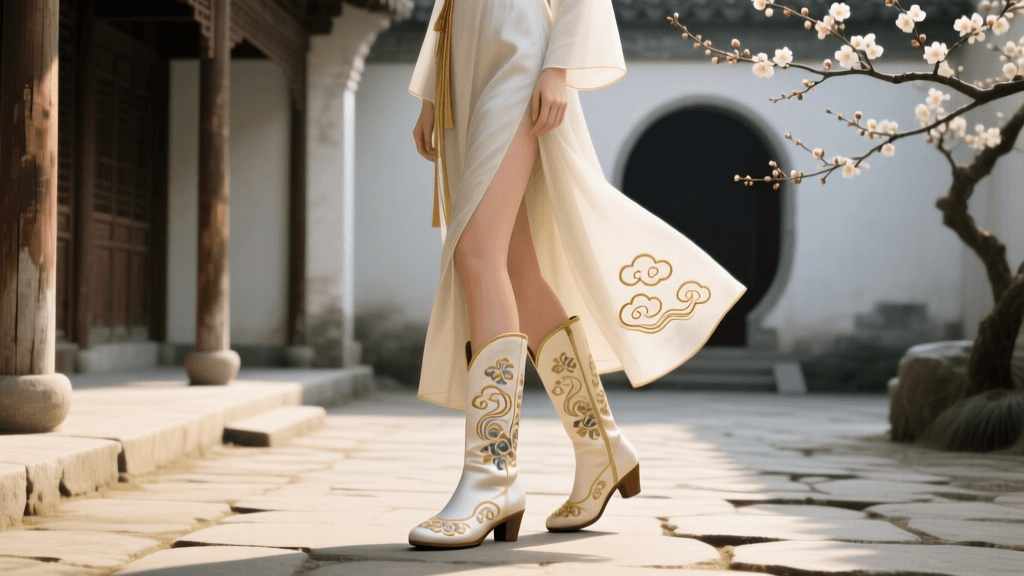
Institutions such as Donghua University and the Beijing Institute of Fashion Technology have completely overhauled their 2026 curricula to include mandatory modules on digital textile reconstruction. Students are now expected to understand not just the historical context of a Tang Dynasty qixiong ruqun (chest-high skirt) or a Ming Dynasty mamianqun (horse-face skirt), but also the precise bending rigidity, shear properties, and dynamic drape coefficients of the original silks used to construct them. This rigorous academic approach ensures that the modern revival of Hanfu and traditional Chinese aesthetics is grounded in empirical research rather than speculative costume design.
Digital Drape Analysis: Decoding Ancient Textile Physics
At the core of modern Chinese fashion history research is digital drape analysis. Historical garments were designed around the specific physical properties of indigenous textiles, such as the crisp, structured hand of Zhangduan (a heavy silk satin) or the fluid, heavy drape of Xiangyunsha (gambiered Canton gauze). To accurately simulate these garments in a virtual environment, researchers must first digitize the physical properties of surviving textile fragments or meticulously crafted modern replicas.
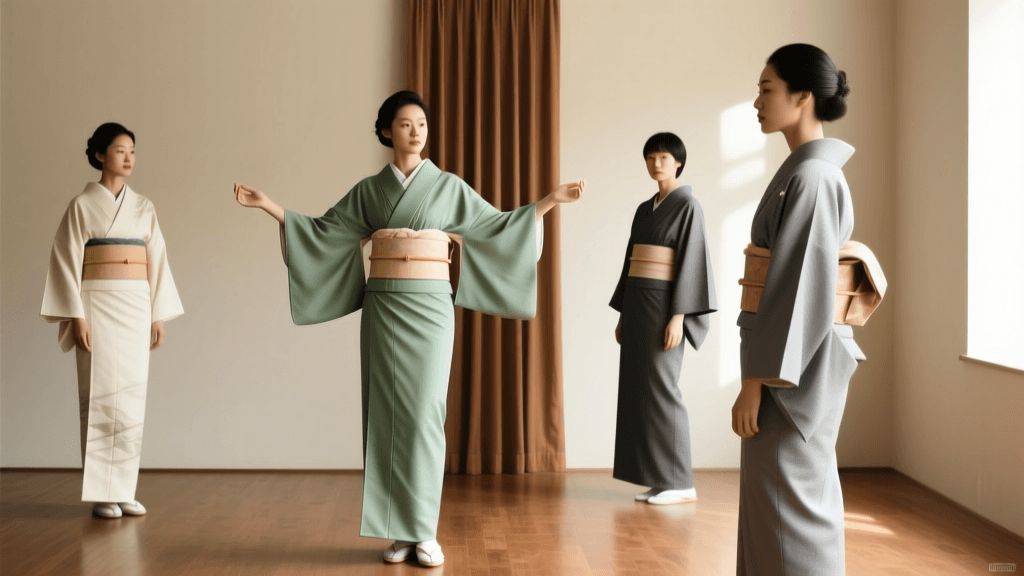
In 2026, academic labs utilize advanced fabric testing systems, such as the KES-FB (Kawabata Evaluation System for Fabrics), to measure tensile strength, bending stiffness, and surface friction. These empirical data points are then translated into physics engines within 3D modeling software. This allows researchers to observe how a historical garment would have moved, folded, and interacted with the human body in motion, providing unprecedented insights into ancient tailoring techniques and ergonomic design.
Key Fabric Properties in Hanfu Reconstruction
- Bending Rigidity: Crucial for simulating the distinct, sharp pleats of the Ming Dynasty mamianqun, which require a high bending modulus to maintain their structural integrity during movement.
- Shear Stiffness: Determines how the fabric drapes across the shoulders and chest, particularly important for the flowing, unstructured silhouettes of Song Dynasty beizi (jackets).
- Surface Friction: Affects how layers of silk interact with one another. Traditional Chinese dress often involves complex layering, and accurate friction coefficients prevent virtual garments from clipping or sliding unnaturally.
- Weight and Density: Essential for replicating the heavy, grounded drape of Xiangyunsha silk, which behaves vastly differently under gravity compared to lightweight modern chiffons.
2026 Academic Software and Hardware Stack for Textile Simulation
The transition from physical archives to digital laboratories requires a robust technological infrastructure. In 2026, academic researchers rely on a specific stack of software and hardware to achieve photorealistic, physically accurate simulations of historical Chinese garments. The integration of AI-assisted pattern making has also drastically reduced the time required to convert fragmented archaeological patterns into fully realized 3D garments.
| Software / Hardware | Primary Academic Application | 2026 Features for Historical Research |
|---|---|---|
| CLO 3D (Academic Suite) | Primary garment simulation and pattern drafting | AI-driven historical pattern recognition; advanced multi-layer collision engines for complex Hanfu layering. |
| Marvelous Designer | Cinematic visualization and dynamic motion capture | Integration with motion-capture suits to study how ancient garments restrict or facilitate traditional movement and dance. |
| Blender (with Cloth Sim) | Open-source environmental rendering and artifact decay simulation | Node-based material editors to simulate the visual degradation and fading of unearthed Silk Road textiles. |
| NVIDIA RTX 5090 Workstations | Real-time ray tracing and physics calculation | Dedicated tensor cores for AI upscaling of low-resolution mural textures onto high-poly 3D garment models. |
AI-Driven Archiving and the Silk Road Exchange
The Silk Road was the ancient superhighway of textile exchange, and its material legacy is a cornerstone of Chinese fashion history education. However, many textiles recovered from arid sites along the route, such as the Astana cemeteries in Turfan, are highly fragmented. In 2026, researchers are utilizing generative AI and machine learning algorithms to digitally reconstruct these damaged artifacts. By training neural networks on intact textiles from the UNESCO Silk Roads Programme archives, AI can predict missing weave structures, dye patterns, and motif continuations with remarkable accuracy.
This technology has been particularly revolutionary in the study of Sogdian and Sasanian influences on Tang Dynasty silk weaves. Students can now digitally 'weave' reconstructed textiles and apply them to 3D avatar models, observing how cross-cultural exchanges manifested not just in visual motifs, but in the structural drape and tailoring of the garments themselves. As noted by textile historians at the Metropolitan Museum of Art, understanding the physical behavior of these hybrid textiles is essential for comprehending the socio-cultural integration of the Silk Road.
Integrating Xin Zhongshi (新中式) into Modern Curricula
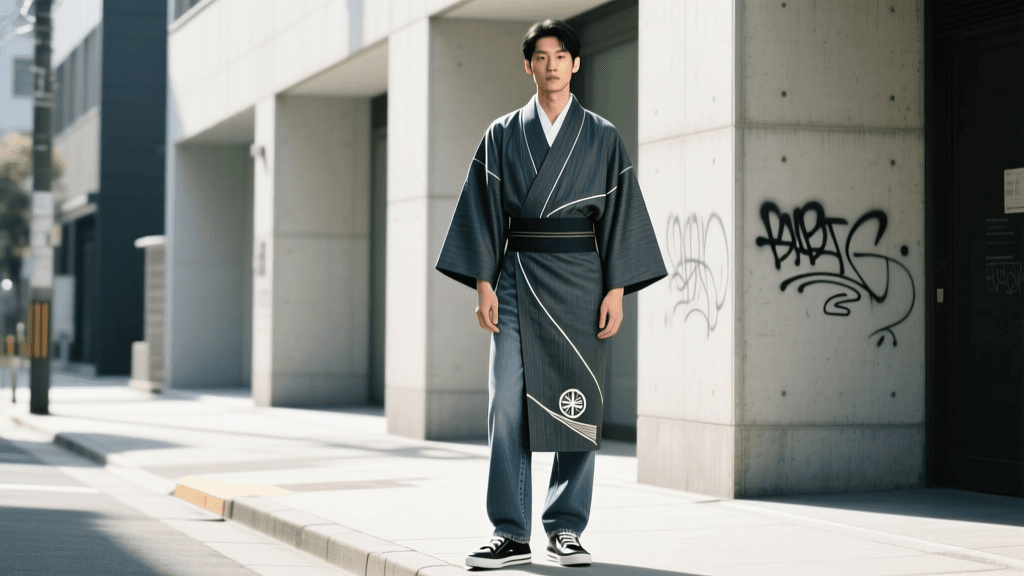
The Xin Zhongshi (new Chinese style) movement has bridged the gap between academic research and the commercial fashion industry. In 2026, university design programs require students to use historical drape data to inform contemporary collections. The challenge lies in adapting traditional, often voluminous silhouettes for modern, active lifestyles without losing the essential 'spirit' or shenyun (神韵) of the original garment.
Through digital drape analysis, students can experiment with substituting traditional, high-maintenance silks with modern, sustainable smart-fabrics, observing in real-time how these material swaps alter the historical silhouette. For instance, replacing a heavy traditional brocade with a lightweight, structurally engineered recycled polymer allows designers to maintain the sharp, architectural pleats of a mamianqun while making it suitable for daily urban wear. This empirical approach to design ensures that the Xin Zhongshi movement remains a respectful evolution of Chinese fashion history, rather than a superficial appropriation of historical aesthetics.
Practical Steps for Setting Up a University Drape Lab
For academic institutions looking to establish a digital textile reconstruction lab in 2026, a strategic investment in both physical testing equipment and digital infrastructure is required. Here is a practical roadmap for setting up a state-of-the-art facility:
- Acquire Physical Testing Equipment: Procure a modernized KES-FB or FAST (Fabric Assurance by Simple Testing) system. These machines are essential for generating the empirical physics data required by 3D software. Budget approximately $45,000 to $60,000 for a fully calibrated, automated academic unit.
- Establish a 3D Scanning Station: Invest in structured light 3D scanners to capture the exact topography of surviving historical garments held in museum partnerships. This allows for the creation of base meshes that can be reverse-engineered into flat 2D patterns.
- Secure Enterprise Software Licenses: Partner with developers like CLO Virtual Fashion to secure academic enterprise licenses. These licenses often include access to proprietary fabric libraries and dedicated technical support for complex simulation troubleshooting.
- Build a High-Performance Compute Cluster: Cloth simulation, especially when calculating multi-layer collisions and high-resolution mesh subdivisions, is incredibly resource-intensive. A lab should be equipped with workstations featuring minimum 64GB of RAM and top-tier GPUs to ensure real-time viewport rendering.
- Foster Cross-Disciplinary Partnerships: Successful labs in 2026 do not operate in silos. Establish joint research initiatives between the fashion history department, the computer science faculty (for AI and physics engine optimization), and the materials science department (for textile engineering).
By embracing these advanced methodologies, the academic community is ensuring that the rich, complex history of Chinese fashion is preserved, understood, and continuously reimagined for future generations. The fusion of ancient artistry and 2026 digital science represents a golden age for textile research, offering a profound new lens through which to view the cultural heritage of Asia.