Hanfu Fabric Drape & Comfort Analysis: 2026 Textile Guide
The Evolution of Hanfu Textiles in 2026
As the Xin Zhongshi (new Chinese style) movement matures in 2026, Hanfu has transitioned from ceremonial occasion-wear to a staple of daily global wardrobes. This shift has placed unprecedented demands on textile engineering. Modern enthusiasts no longer prioritize heavy, ornate brocades meant solely for photography; instead, the 2026 market prioritizes kinetic drape, all-day breathability, and tactile comfort. Understanding the physics of how fabric falls, folds, and breathes is essential for selecting the right garment for your climate and lifestyle. Whether you are styling a flowing Song Dynasty Beizi or a structured Ming Dynasty Mamianqun, the textile's warp, weft, and fiber composition dictate the garment's success.
The Physics of Hanfu Drape (Xuíchuíxìng)
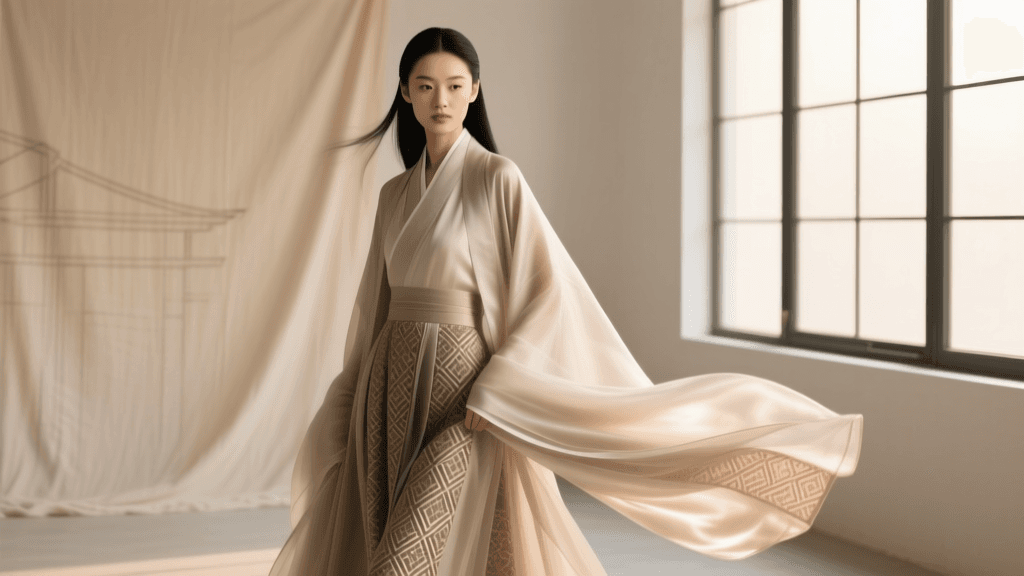
In textile science, drape is the measure of a fabric's ability to hang gracefully under its own weight. For Hanfu, drape is categorized into two distinct visual effects: the 'waterfall' drape and the 'cloud' drape. The waterfall drape requires high-density, heavier fabrics that create sharp, enduring pleats—essential for the horse-face skirt (Mamianqun). Conversely, the cloud drape relies on lightweight, high-fluidity textiles that catch the wind and billow softly, which is the hallmark of the large-sleeved Daxiushan and summer Ruqun sets.
The drape coefficient is influenced by the fabric's GSM (grams per square meter) or momme weight, the tightness of the weave, and the fiber's natural stiffness. In 2026, advancements in bio-based yarns and micro-fiber weaving have allowed manufacturers to manipulate these variables with extreme precision, offering consumers bespoke drape profiles that were impossible to achieve with traditional hand-looms.
2026 Fabric Comparison: Silk vs. Tencel vs. Jacquard
To navigate the current market, it is crucial to understand how the top three textile categories perform across key metrics. Below is a comprehensive analysis of the leading Hanfu fabrics available this year.
| Fabric Type | Weight (GSM/Momme) | Drape Fluidity | Breathability | Ideal 2026 Hanfu Style |
|---|---|---|---|---|
| 100% Mulberry Silk | 19-22 Momme | High (Fluid) | Excellent | Summer Ruqun, Beizi |
| Tencel-Lyocell Blend | 150-180 GSM | Very High (Heavy Fluid) | Superior | Daily Wear Song Dynasty Sets |
| Poly-Viscose Jacquard | 220-260 GSM | Medium (Structured) | Moderate | Mamianqun, Ming Dynasty Aoqun |
| Ramie-Cotton Blend | 120-140 GSM | Low (Crisp) | Excellent | Spring/Autumn Banbi |
Deep Dive into Top 2026 Hanfu Textiles
Mulberry Silk: The Enduring Gold Standard
Silk remains the soul of traditional Chinese garment making. According to The Metropolitan Museum of Art's historical archive on silk production, the cultivation of the Bombyx mori silkworm has been refined over millennia to produce fibers of unparalleled tensile strength and luster. In 2026, the sweet spot for Hanfu is 19 to 22 momme crepe de chine or silk satin. This weight provides enough mass to prevent the fabric from clinging statically to the body while maintaining a luxurious, liquid drape. However, pure silk requires meticulous care; it is prone to water-spotting and UV degradation, making it better suited for indoor events, evening wear, or dedicated enthusiasts willing to invest time in garment maintenance. Expect to pay between $85 and $140 for a high-quality, 19-momme silk Ruqun top in the current market.
Tencel-Lyocell: The 2026 Comfort Revolution
The most significant disruption in the 2026 Hanfu market is the widespread adoption of Tencel-Lyocell blends. Derived from sustainably sourced wood pulp, Tencel offers a 'cool hand-feel' and exceptional moisture-wicking properties that outperform silk in high-humidity environments. As detailed in Lenzing's official Tencel fiber documentation, the fiber's smooth surface area allows for superior dye absorption and a naturally fluid, heavy drape that mimics the movement of silk but with the durability of cotton. A Tencel-blend Beizi (long outer jacket) is currently the ultimate choice for urban commuters, as it resists wrinkling, drapes beautifully over modern base layers, and can be machine-washed on gentle cycles. Priced affordably at $45 to $75 per garment, Tencel has democratized high-end drape for daily wearers.
Poly-Viscose Jacquard: Mastering the Structured Pleat
While fluidity is desired for tops and outerwear, the Mamianqun demands structural integrity. The iconic flat panels and deep side pleats of the horse-face skirt require a fabric with high memory and moderate stiffness. In 2026, advanced poly-viscose jacquards dominate this category. The polyester provides the 'snap-back' memory needed to keep pleats razor-sharp even after sitting, while the viscose softens the hand-feel and adds a subtle, luxurious sheen. Furthermore, many leading Hanfu brands are now utilizing recycled PET polyester in these weaves, aligning with Textile Exchange's material guidelines for sustainable fashion. A well-constructed 240 GSM jacquard Mamianqun will cost between $60 and $110, offering a spectacular acoustic rustle and kinetic swing that lighter fabrics simply cannot replicate.
Comfort & Climate Adaptability Matrix
Choosing the right Hanfu fabric in 2026 requires matching the textile's Moisture Vapor Transmission Rate (MVTR) and thermal resistance to your local climate.
- Hot & Humid (Tropical Summers): Avoid heavy silks and polyesters. Opt for 100% Tencel or lightweight Ramie-Cotton blends. Ramie offers a crisp, breathable structure that keeps the fabric away from the skin, promoting airflow.
- Hot & Dry (Arid Climates): 16 momme Mulberry silk is ideal here. The natural protein structure of silk regulates temperature beautifully in dry heat, and the low humidity prevents the silk from water-spotting via perspiration.
- Cool & Windy (Spring/Autumn): Layering is key. Use a Tencel inner Shan (shirt) for skin comfort, paired with a structured poly-viscose jacquard Ao (jacket) to block wind while maintaining a regal silhouette.
Practical Care for Maintaining Drape and Texture
The structural integrity of Hanfu relies heavily on proper maintenance. A crushed pleat or a warped silk seam will ruin the garment's intended drape geometry.
- Washing: Never wring or twist Hanfu textiles. For silk and Tencel, use a pH-neutral detergent in cold water and lay flat to dry on a mesh rack. The weight of the water will naturally pull the fabric downward, enhancing the fluid drape as it dries.
- Ironing: Always use a vertical steam iron for Mamianqun pleats. Lay the skirt flat, align the pleats, and use the steam burst function to set the folds without applying direct pressure, which can cause 'shine' marks on polyester and viscose blends.
- Storage: Fluid fabrics like silk and Tencel should be hung on wide, velvet-lined hangers to prevent shoulder dimples and allow the skirt to hang freely. Structured jacquard skirts should be folded along their natural pleat lines and stored flat in breathable cotton garment bags to prevent the pleats from relaxing over time.
Conclusion: The Future of Wearable Tradition
The 2026 Hanfu landscape is a triumph of material science meeting ancient aesthetics. By understanding the distinct drape profiles and comfort metrics of silk, Tencel, and jacquard, enthusiasts can curate a wardrobe that honors historical silhouettes while embracing modern livability. Whether you are drawn to the liquid grace of botanic Tencel or the architectural majesty of woven jacquard, the perfect textile ensures that your Hanfu moves not just as a garment, but as a living extension of your own kinetic energy.