Top Hanfu Education & Certification Programs in 2026
The Evolution of Hanfu Education in 2026
Over the past decade, the Hanfu movement has transformed from a niche internet subculture into a globally recognized sartorial renaissance. As we navigate 2026, the demand for historically accurate, masterfully crafted traditional Chinese garments has outpaced the supply of skilled artisans. This has led to a surge in formalized Hanfu education workshops and certification programs. No longer limited to informal online tutorials or hobbyist forums, aspiring tailors, fashion historians, and cultural ambassadors now have access to rigorous, institution-backed curricula. These programs bridge the gap between ancient textile traditions and modern sartorial demands, ensuring that the profound heritage of the Han, Tang, Song, and Ming dynasties is preserved with academic and technical precision.
Why Pursue a Hanfu Certification in 2026?
The global "Guochao" (national trend) market has matured significantly by 2026, evolving into a multi-billion-dollar industry that intersects with high fashion, theatrical costuming, museum curation, and luxury bespoke tailoring. Earning a formal certification in Hanfu design and tailoring provides several distinct advantages:
- Professional Credibility: As the market becomes saturated with mass-produced, historically inaccurate costumes, certified artisans are highly sought after by film studios, cultural institutions, and high-end clientele who demand authenticity.
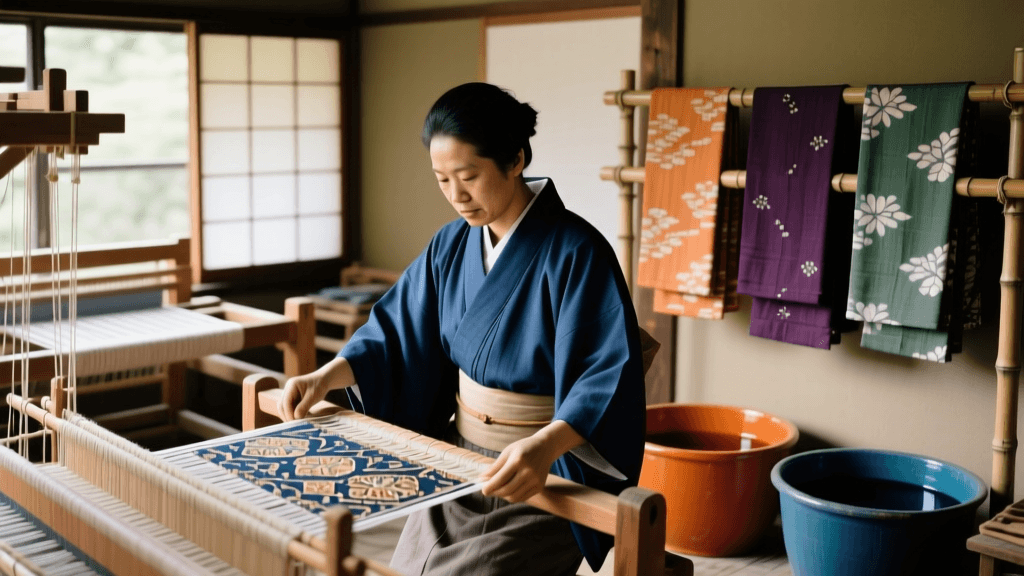
- Mastery of Traditional Techniques: Certification programs offer hands-on training in "Pingmian" (flat pattern cutting), traditional silk weaving, and natural dyeing—skills that are rarely taught in conventional Western fashion schools.
- Cultural Preservation: Students become active participants in safeguarding intangible cultural heritage, learning the philosophical and cosmological significance embedded in garment construction, such as the "Shenyi" (deep robe) representing the unity of heaven and earth.
Top Hanfu Education Workshops & Certification Programs for 2026
1. Beijing Institute of Fashion Technology (BIFT) – Heritage Tailoring Certificate
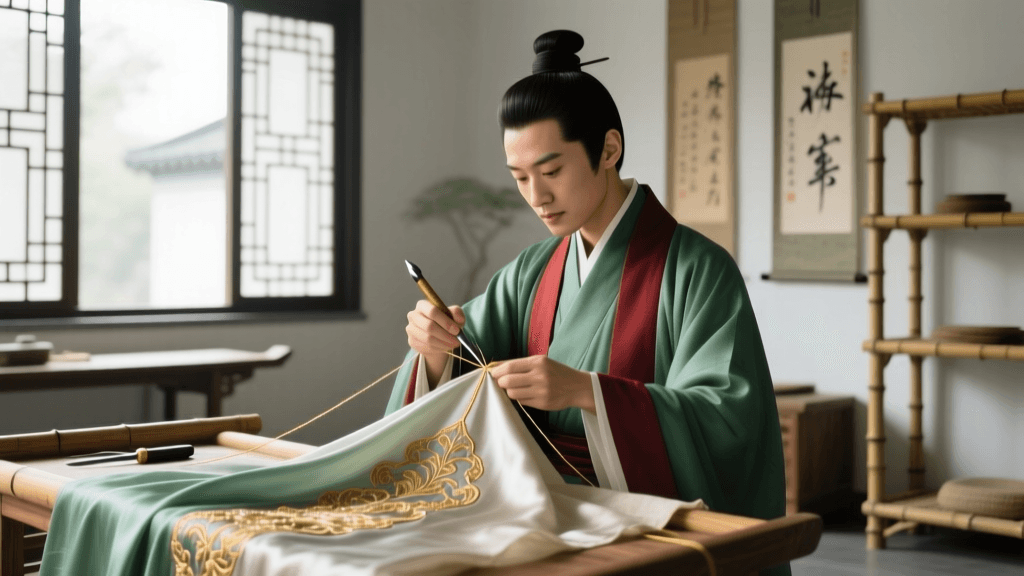
Widely regarded as the premier institution for fashion in China, the Beijing Institute of Fashion Technology offers an intensive, six-month Heritage Tailoring Certificate tailored specifically for traditional Hanfu construction. In 2026, the curriculum has been updated to include AI-assisted historical pattern reconstruction, allowing students to analyze fragmented archaeological textile finds and generate accurate flat patterns. The program focuses heavily on Ming Dynasty silhouettes, including the intricate pleating of the "Mamianqun" (horse-face skirt) and the structural tailoring of the "Dahu" (sleeveless vest). International students benefit from bilingual instruction, though a foundational grasp of Mandarin is recommended for workshop interactions.
2. China National Silk Museum – Advanced Textile & Natural Dyeing Masterclass
Located in Hangzhou, the epicenter of Chinese silk production, this four-week masterclass is essential for those looking to specialize in Hanfu textiles. The 2026 syllabus places a strong emphasis on eco-friendly, historically accurate natural dyeing methods. Students work directly with master dyers to extract pigments from madder root, indigo, and the pagoda tree, learning the complex mordanting processes required to achieve the vibrant, colorfast hues seen in Song Dynasty garments. The workshop also covers the restoration and replication of traditional jacquard weaving techniques used in "Zhuanghua" (brocade) fabrics.
3. Global Hanfu Heritage Academy – Online Styling & Historical Accuracy Certification
For those unable to travel to China, the Global Hanfu Heritage Academy offers a comprehensive, fully remote certification program. Developed in collaboration with international textile historians and museum curators, this 12-week online course focuses on the styling, layering, and historical context of Hanfu. Students learn to authenticate vintage pieces, style garments for modern ceremonial use (such as weddings and coming-of-age ceremonies), and consult for media productions. The 2026 cohort features virtual reality (VR) modules where students can inspect 3D-scanned artifacts from the Metropolitan Museum of Art's textile archives and other global collections.
Program Comparison Chart
| Program Name | Duration | Format | 2026 Tuition (USD) | Best For |
|---|---|---|---|---|
| BIFT Heritage Tailoring Certificate | 6 Months | In-Person (Beijing) | $4,800 | Aspiring bespoke tailors & pattern drafters |
| Silk Museum Textile Masterclass | 4 Weeks | In-Person (Hangzhou) | $2,200 | Textile artists & natural dye specialists |
| Global Hanfu Heritage Academy | 12 Weeks | Online (Global) | $1,500 | Stylists, historians & media consultants |
Core Curriculum: What You Will Learn
Pattern Drafting and the "Pingmian" Technique
Unlike Western tailoring, which relies heavily on darts and complex 3D draping to contour the body, traditional Hanfu utilizes "Pingmian" (flat pattern cutting). This method uses geometric, straight-line cutting to preserve the integrity of the woven silk, minimizing waste and allowing the fabric to drape naturally over the wearer. Certification programs drill students on calculating the precise ratios for the "Jiaoling Youren" (cross-collared, right-over-left) lapel, ensuring the neckline sits perfectly without the use of modern interfacing or stiffeners.
Historical Accuracy vs. Modern Adaptation
A major focus of 2026 workshops is navigating the line between strict historical replication and modern wearability. Students study primary sources, including tomb murals, dynastic histories, and surviving textile fragments. They learn to identify the "Hanfu elements" that must remain sacred (such as the right-over-left closure and specific sleeve shapes like the "Pipa" sleeve) versus elements that can be subtly adapted for contemporary comfort, such as integrating hidden modern fasteners beneath traditional tie closures.
Sustainable Sourcing and Fabric Mechanics
Understanding fabric mechanics is crucial. Students learn how different weaves—such as "Luo" (gauze), "Ling" (twill), and "Juan" (plain weave silk)—behave when cut and sewn. With sustainability being a core tenet of the 2026 fashion landscape, programs also teach students how to source ethically produced, peace silk (Ahimsa silk) and organic ramie, ensuring that the environmental impact of traditional garment production is minimized without sacrificing historical authenticity.
Career Trajectories Post-Certification
Graduates of these 2026 certification programs are stepping into a robust job market. Common career paths include:
- Bespoke Hanfu Tailor: Creating custom, historically accurate garments for weddings, tea ceremonies, and cultural festivals. Bespoke Mamianqun and Ming-style Aoqun are particularly high-ticket items.
- Theatrical and Film Costumer: Working with production designers to ensure that period dramas and historical films avoid the anachronisms that plague lesser productions.
- Museum Textile Conservator: Assisting in the restoration, mounting, and preservation of fragile historical garments for gallery exhibitions.
- Cultural Educator: Leading workshops, writing authoritative publications, and consulting for global fashion brands looking to respectfully incorporate traditional Asian elements into their collections.
Actionable Advice for Prospective Students
If you are planning to enroll in a Hanfu certification program in 2026, preparation is key. First, build a foundational sewing portfolio. While you do not need prior experience in traditional Chinese garments, demonstrating proficiency in basic hand-sewing, seam finishing, and fabric manipulation will strengthen your application. Second, for in-person programs in China, aim to achieve at least an HSK Level 3 or 4 in Mandarin; while some masterclasses offer translation, the nuanced vocabulary of traditional tailoring is best absorbed in its native language. Finally, look into cultural exchange grants and textile heritage scholarships, many of which have expanded their funding pools in 2026 to support international students dedicated to the preservation of Asian sartorial arts.
Conclusion
The institutionalization of Hanfu education marks a triumphant milestone for traditional Asian garments. By enrolling in a certified workshop or program in 2026, you are not merely learning to sew; you are becoming a custodian of a millennia-old visual language. Whether you are drawn to the meticulous flat-pattern drafting of the Ming Dynasty or the vibrant, natural dyeing techniques of the Song, these programs offer the rigorous, authoritative training required to master the art of Hanfu.