Best Hanfu Styles for Tai Chi and Qigong Practice in 2026
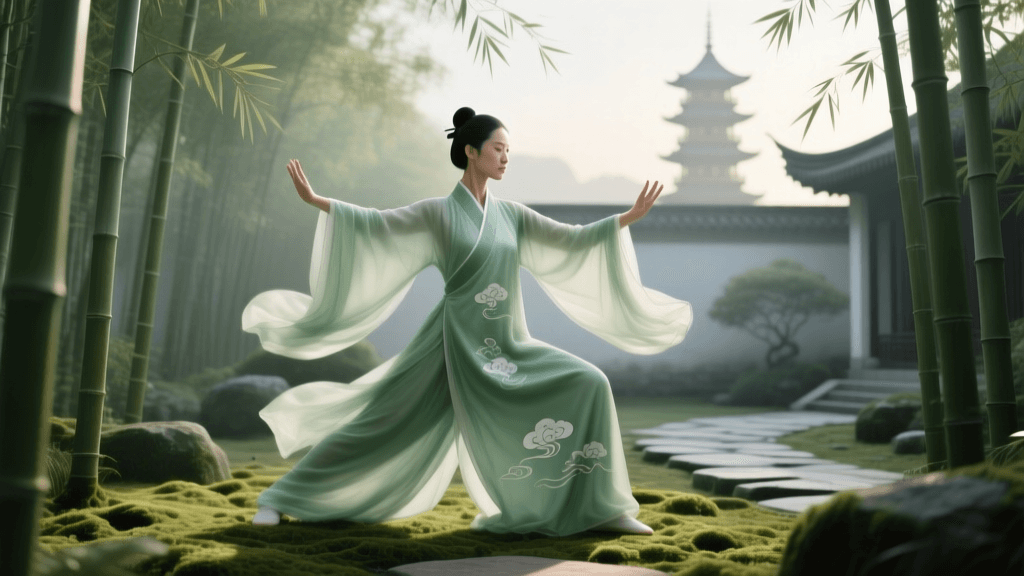
The Intersection of Hanfu and Internal Martial Arts
As the Xin Zhongshi (new Chinese style) movement matures in 2026, the boundary between traditional Chinese fashion and holistic wellness has seamlessly blurred. Practitioners of Tai Chi and Qigong are increasingly turning away from synthetic, mass-produced activewear in favor of authentic Hanfu garments. This shift is not merely aesthetic; it is deeply rooted in the traditional Chinese understanding of how clothing interacts with the body's energy systems. According to Harvard Health, Tai Chi is often described as 'meditation in motion,' requiring a state of physical and mental relaxation that restrictive modern clothing can actively hinder. By adopting traditional silhouettes, practitioners in 2026 are finding deeper alignment, better breathability, and a more profound connection to the cultural lineage of their practice.
The Philosophy of Dress: Unrestricted Qi Flow
In traditional Chinese medicine and martial arts, the flow of Qi (vital energy) through the body's meridians is paramount. Modern athletic wear, with its tight compression fabrics and rigid waistbands, can inadvertently restrict the superficial meridians, particularly around the waist, knees, and shoulders. Hanfu, by contrast, is engineered around the principles of drape and volume. The traditional Jiaoling Youren (intersecting collar right-over-left) allows the neck and chest to remain open, facilitating deep diaphragmatic breathing essential for Qigong. Furthermore, the absence of tight buttons or zippers across the torso ensures that the Dan Tian (the body's energetic center located just below the navel) remains relaxed and uncompressed during deep stances like Ma Bu (horse stance).
Color Theory: Wu Xing (Five Elements) in Wellness Attire
In 2026, wellness-focused Hanfu designers are heavily incorporating Wu Xing (Five Elements) color theory into their collections, allowing practitioners to align their garments with their specific health intentions:
- Wood (Green/Teal): Associated with the liver and gallbladder. Ideal for morning Qigong routines focused on detoxification and tendon stretching.
- Fire (Red/Crimson): Linked to the heart and circulatory system. Often worn during dynamic Tai Chi forms to stimulate blood flow and vitality.
- Earth (Yellow/Ochre): Connects to the spleen and digestion. Grounding colors chosen for standing meditation (Zhan Zhuang) to cultivate stability.
- Metal (White/Silver): Relates to the lungs and respiratory system. The most popular choice for breathwork and Ba Duan Jin (Eight Brocades) practice.
- Water (Black/Navy): Tied to the kidneys and deep energy reserves. Worn for restorative, Yin-style practices and evening meditation.
Top Hanfu Silhouettes for Tai Chi and Qigong
Not all Hanfu is created equal. While a heavily layered ceremonial Daopao is stunning, it is entirely impractical for physical movement. For wellness practices, specific historical silhouettes have been adapted for the 2026 practitioner:
1. Duan Da (Short Garments) and Kuzhe
The Duan Da is a traditional short tunic paired with loose-fitting trousers. Historically worn by martial artists and laborers, it provides maximum mobility. In 2026, modern wellness brands have updated the Kuzhe (a pleated or gusseted martial tunic) with hidden stretch gussets in the crotch and underarms, allowing for deep lunges and high kicks without the risk of tearing the natural fibers.
2. Song-Style Beizi (Open-Front Coat)
For outdoor morning practice in cooler climates, the Song dynasty Beizi is the ultimate layering piece. Its straight, open-front design allows for unhindered arm movements during forms like 'Single Whip' or 'Cloud Hands.' Unlike modern zip-up jackets, the Beizi drapes over the shoulders without pulling on the neck, maintaining proper spinal alignment.
3. Modified Mamianqun (Horse-Face Skirt)
Traditionally a structured skirt, the 2026 'Wellness Mamianqun' features a wider, softer waistband made of elasticated silk-cotton blends, and deeper pleats that allow for a full range of leg movement. While not suitable for deep martial stances, it is highly favored by practitioners of gentle, standing Qigong and flowing Tai Chi fan routines.
The 2026 Fabric Guide: Natural vs. Modern Blends
The textile industry has seen massive advancements in sustainable, natural fiber processing. The National Center for Complementary and Integrative Health (NCCIH) notes that the physical comfort of the practitioner directly impacts the stress-reduction benefits of mind-body practices. Therefore, fabric choice is critical. Below is a comparison of the top fabrics dominating the Hanfu wellness market in 2026.
| Fabric Type | Breathability | Drape & Flow | Best Practice Style | 2026 Avg. Price Range |
|---|---|---|---|---|
| Heavyweight Linen | Excellent | Structured, softens over time | Summer outdoor Tai Chi, standing meditation | $85 - $140 |
| Mulberry Silk (Crepe de Chine) | High | Fluid, luxurious, follows Qi | Indoor Qigong, flowing fan forms | $150 - $280 |
| Bamboo-Lyocell Blend | Superior moisture-wicking | Heavy drape, highly elastic | High-sweat martial conditioning, Ba Duan Jin | $60 - $110 |
| Cupro-Cotton | Very Good | Crisp but yielding | Everyday wellness wear, casual park practice | $70 - $120 |
Expert Tip: Avoid raw, unprocessed silk for high-movement practices, as it lacks elasticity and can tear at the seams. Instead, look for 'stretch crepe' silk blends that incorporate a 2% to 5% elastane or natural rubber thread, a major innovation in 2026 traditional textile manufacturing.
Footwear: Grounding Through Traditional Soles
A crucial, often overlooked aspect of Tai Chi and Qigong is the connection to the earth. Modern running shoes feature thick, cushioned heels that disrupt the body's natural posture and obscure the sensory feedback from the ground. Traditional Qiancengdi (thousand-layer cloth sole) shoes offer a flat, zero-drop profile that promotes proper weight distribution across the Yongquan (Kidney 1) acupressure point on the sole of the foot.
In 2026, heritage footwear brands have introduced hybrid Bu Xie (cloth shoes). These feature the traditional cotton-layered upper and classic aesthetic, but utilize a vulcanized natural rubber outsole infused with grounding carbon threads. This provides the necessary grip for wet park pavements and urban concrete while maintaining the thin, flat profile required for internal martial arts balance work.
Care and Maintenance for Energetic Purity
In traditional Chinese wellness philosophy, clothing absorbs the energetic residue of the wearer. Maintaining your wellness Hanfu is not just about fabric care; it is about preserving the garment's energetic purity.
- Washing: Always hand-wash silk and linen Hanfu in cool water using pH-neutral, plant-based detergents. Avoid harsh chemical softeners that coat the fibers and block the fabric's natural breathability.
- Drying: Never wring out silk. Roll the garment in a clean, dry cotton towel to press out excess water, then lay it flat on a bamboo drying rack away from direct sunlight to prevent UV degradation of natural dyes.
- Storage: Store your practice garments separately from your daily street clothes. Use cedar wood hangers for structured tops, and fold trousers along their natural seams. Sachets of dried mugwort (Ai Ye) placed in the storage drawers are highly recommended in 2026 wellness circles to naturally repel insects and infuse the fabric with calming, meridian-warming properties.
Conclusion: Embracing the Holistic Lifestyle
The integration of Hanfu into Tai Chi and Qigong practice represents a beautiful synthesis of form and function. By choosing garments that respect the body's natural mechanics, utilize breathable, sustainable textiles, and honor traditional color theories, practitioners can significantly deepen their mind-body connection. As we move through 2026, the Xin Zhongshi wellness movement continues to prove that ancient sartorial wisdom holds the key to modern holistic health. Whether you are practicing the slow, deliberate movements of the Yang-style 24-form or engaging in silent standing meditation, the right Hanfu acts not merely as clothing, but as an extension of your energetic practice.