Decoding Hanfu Styles in Classic Chinese Scroll Art
The Intersection of Art and Sartorial History
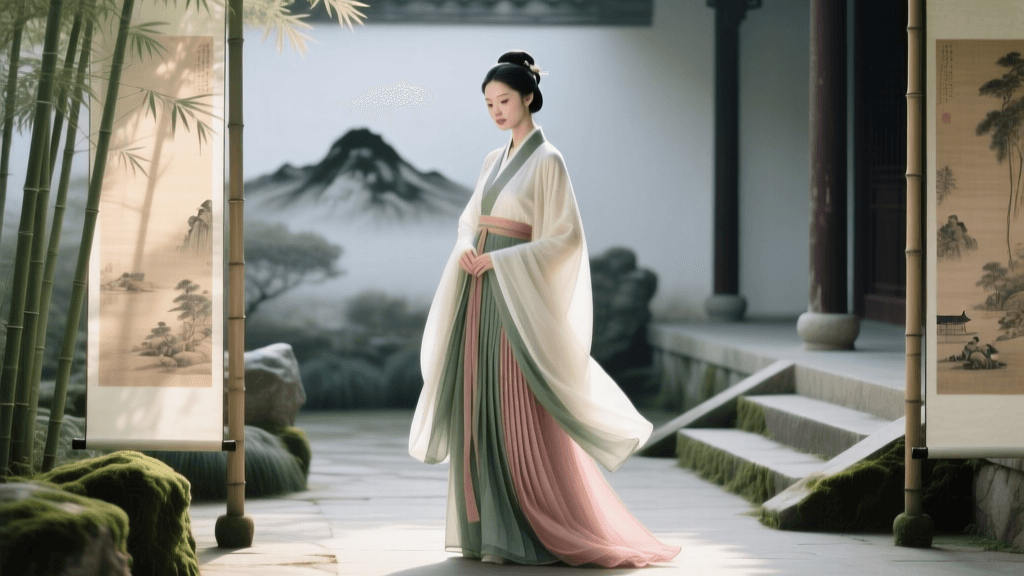
Chinese scroll paintings are far more than mere aesthetic masterpieces; they are meticulous historical archives of sartorial evolution. For modern hanfu enthusiasts, historians, and textile artisans, these scrolls offer a visual blueprint of traditional Chinese clothing, capturing the drape, layering, and textile behavior that written records often fail to convey. By studying the brushwork used to depict folding silk, the mineral pigments chosen for dyed fabrics, and the silhouettes of historical figures, we can reverse-engineer the garments of the past with remarkable accuracy.
Translating two-dimensional brushstrokes into three-dimensional, wearable garments requires a deep understanding of both art history and textile physics. This guide explores how to decode hanfu silhouettes from classic scroll paintings, offering actionable advice on fabric selection, yardage calculation, and natural dyeing techniques to achieve historical authenticity.
Tang Dynasty Opulence: Decoding Zhou Fang's Masterpiece
The Tang Dynasty (618–907 CE) is renowned for its cosmopolitan culture and luxurious textiles. According to the Metropolitan Museum of Art's Heilbrunn Timeline, the Silk Road trade heavily influenced Tang fashion, introducing new weaving techniques and vibrant dyes. One of the most vital visual records of this era is Zhou Fang's Court Ladies Adorning Their Hair with Flowers. This scroll provides a masterclass in depicting the qixiong ruqun (chest-high skirt) and the pibo (draped silk stole).
Actionable Replication: The Qixiong Ruqun and Pibo
In Zhou Fang's painting, the court ladies' skirts pool heavily at the floor, and the fabric clings slightly to the body before flaring out, indicating a specific silk weight and weave. To replicate this exact drape in a modern reconstruction, you must avoid stiff modern satins and instead opt for heavy, fluid silks.
- Skirt Fabric: Use 19-momme to 22-momme silk crepe de chine or heavy silk charmeuse. The high momme weight provides the necessary gravity to create the deep, pooling folds seen at the hem of the painted skirts.
- Skirt Yardage: The painted circumference suggests extreme fullness. For an authentic drape, cut the skirt panels to a minimum of 3.5 to 4 meters in total width. Use knife pleats of 1.5 inches at the waistband, releasing into unpressed folds below the bust.
- Pibo (Stole) Specifications: The pibo in the scroll appears nearly translucent, floating around the arms. Source 8-momme silk habotai or silk organza. Cut the stole to exactly 35 centimeters wide and 2.5 meters long to match the proportions relative to the figures' heights in the painting.
Song Dynasty Restraint: Analyzing Genre Paintings
Transitioning into the Song Dynasty (960–1279 CE), the aesthetic shifted dramatically toward restraint, intellectualism, and structured elegance. As noted in the Met Museum's essay on Song Dynasty art, the era favored subtle beauty over ostentatious display. This is vividly captured in genre paintings like Zhang Zeduan's Along the River During the Qingming Festival and Su Hanchen's depictions of daily life, where the beizi (a long, open-front outer jacket) becomes the dominant silhouette.
Actionable Replication: The Beizi and Structured Layering
Unlike the clinging silks of the Tang, the Song beizi depicted in these scrolls stands slightly away from the body, featuring crisp, straight lines and narrow sleeves. The brushstrokes indicate a fabric with more body and less drape.
- Jacket Fabric: To achieve the structured, architectural lines of the Song beizi, avoid fluid silks. Instead, use raw silk (such as silk dupioni or noil), heavy linen, or a linen-cotton blend. These fabrics hold their shape and create the sharp, vertical folds seen in the artwork.
- Collar and Edge Binding: Scroll paintings highlight contrasting edge bindings (yuanbian). Use a 2-centimeter wide bias binding in a complementary color. For historical accuracy, interface the collar and front edges with a medium-weight cotton canvas to ensure the jacket remains perfectly upright and does not collapse against the inner garments.
- Layering Proportions: The scrolls consistently show the inner skirt (qun) extending exactly 10 to 15 centimeters below the hem of the beizi. When drafting your patterns, ensure this precise ratio is maintained to capture the authentic Song silhouette.
Comparative Analysis: Visual Cues to Fabric Translation
Understanding how ancient artists painted different textiles is crucial for modern sourcing. The table below breaks down the visual cues found in traditional scroll art and translates them into actionable textile choices for modern hanfu makers.
| Visual Cue in Scroll Art | Historical Garment Type | Painted Behavior | Modern Fabric Translation |
|---|---|---|---|
| Sharp, angular folds with high contrast shadows | Song Beizi (Outer Jacket) | Stiff, structured, stands away from body | Raw silk, heavy linen, or cotton-linen blends (150-200 GSM) |
| Deep, pooling curves with soft, blurred shadows | Tang Qixiong Skirt | Heavy, fluid, clings then flares | 19-22 momme silk crepe de chine or heavy rayon challis |
| Fine, translucent overlapping layers | Pibo (Stole) or Dahu | Sheer, floating, reveals colors beneath | 8-10 momme silk habotai, silk organza, or fine ramie |
| Tight, repetitive geometric surface patterns | Zhijuan (Woven Brocade) | Matte finish with slight texture, rigid drape | Silk damask or jacquard weaves with a matte finish |
Decoding Color: From Mineral Pigments to Natural Dyes
The colors seen in Chinese scroll paintings were derived from the same mineral and botanical sources used to dye the actual garments. The study of historical silk and textile production reveals a deep connection between the painter's palette and the dyer's vat. By identifying the pigments used in a scroll, modern artisans can select the correct natural dyes to replicate historical colors accurately.
For instance, the vibrant, enduring reds seen in Tang court paintings were often achieved using cinnabar (a mercury sulfide mineral) or madder root. To replicate the warm, slightly orange-leaning red of madder-dyed silk seen in genre paintings, modern dyers should use Rubia tinctorum (madder root) with an alum mordant, dyeing at a low temperature (60°C) to preserve the bright, warm tones rather than shifting into deep burgundy.
Similarly, the deep, luminous blues depicted in Song scholar robes were historically derived from indigo or azurite. To achieve the multi-tonal, slightly uneven blue characteristic of hand-dyed historical garments, use natural indigo vat dyeing. Dip the silk or linen multiple times (at least 8 to 10 dips) with oxidation periods in between to build a deep, colorfast navy that mimics the azurite pigments ground by ancient painters.
Digital Tools for High-Resolution Garment Analysis
Modern technology has revolutionized the way we study traditional clothing in art. Major institutions now offer open-access, gigapixel-resolution images of classic scrolls. To properly analyze garment construction, seams, and textile weaves, follow this digital workflow:
- Source High-Res Files: Download the largest available TIFF or JPEG files from museum portals such as the National Palace Museum or the Metropolitan Museum of Art's Open Access collection.
- Analyze Seam Lines: Zoom in to 200% or 400% to look for subtle shifts in the painted pattern or slight breaks in the brushwork. These often indicate the placement of structural seams, particularly the center-back seam (zhongfeng) which is a non-negotiable element of traditional hanfu cutting.
- Measure Proportions: Use digital calipers or image analysis software (like ImageJ) to measure the ratio of the collar width to the shoulder width, or the sleeve length relative to the torso. This prevents the common modern mistake of making collars too narrow or sleeves too short compared to historical norms.
Conclusion
Traditional Chinese scroll paintings are indispensable tools for the accurate reconstruction of hanfu. By moving beyond a superficial appreciation of the art and actively decoding the brushstrokes, fabric drapes, and color palettes, modern makers can bridge the gap between historical documentation and wearable reality. Whether you are drafting a heavy Tang silk skirt or tailoring a structured Song linen jacket, the answers to your most complex sartorial questions are waiting to be discovered within the ink and pigment of the masters.
'To wear history is to understand it. The scroll does not merely depict the garment; it teaches the fabric how to move.' — Traditional Textile Conservation Adage