2026 Hanfu Fabric Drape and Comfort Analysis Guide
The Evolution of Hanfu Textiles in 2026
The Hanfu renaissance has matured significantly by 2026, transitioning from a niche historical reenactment hobby into a robust pillar of the global Xin Zhongshi (New Chinese Style) fashion movement. As traditional Chinese garments become integrated into daily wardrobes, office environments, and international travel, the demands placed on Hanfu fabrics have evolved. Enthusiasts and designers are no longer satisfied with mere visual accuracy; they now prioritize the physics of fabric drape, tactile comfort, and climate adaptability. Understanding how different textiles behave when cut into flowing Da Xiu (large sleeves) or structured Mamianqun (horse-face skirts) is essential for both creators and consumers in the modern era.
In this comprehensive 2026 analysis, we break down the textile science behind traditional and contemporary Hanfu fabrics. By examining drape coefficients, grams per square meter (GSM), and thermal regulation properties, we provide a definitive guide to selecting the perfect material for your traditional wardrobe, ensuring both historical elegance and modern comfort.
Understanding Fabric Drape and GSM in Hanfu Design
Drape is the manner in which a fabric falls, folds, and flows under its own weight. In textile engineering, the drape coefficient measures a material's flexibility and stiffness. For Hanfu, drape is not merely an aesthetic choice; it is a structural necessity. The sweeping silhouettes of the Wei-Jin dynasty require fabrics with a low drape coefficient (high fluidity), whereas the rigid, architectural collars of the Ming dynasty demand high-stiffness textiles.
Equally important is the fabric weight, measured in GSM (grams per square meter). In 2026, advanced textile milling allows for precise GSM control, enabling weavers to create ultra-lightweight silks that retain structural memory. A standard summer Ruqun might utilize a 40-60 GSM chiffon or lightweight linen, allowing for maximum airflow and a 'flying' drape effect when walking. Conversely, winter garments like the Bijia (vests) or heavy winter Mamianqun require 150+ GSM brocades to maintain the sharp, knife-like pleats that define the silhouette.
Traditional Masters: Xiangyunsha and Song Brocade
Despite the influx of modern synthetics, heritage textiles remain the gold standard for high-end Hanfu in 2026. Two fabrics, in particular, dominate the luxury market due to their unique textural and draping qualities.
Xiangyunsha (Gambiered Guangdong Silk)
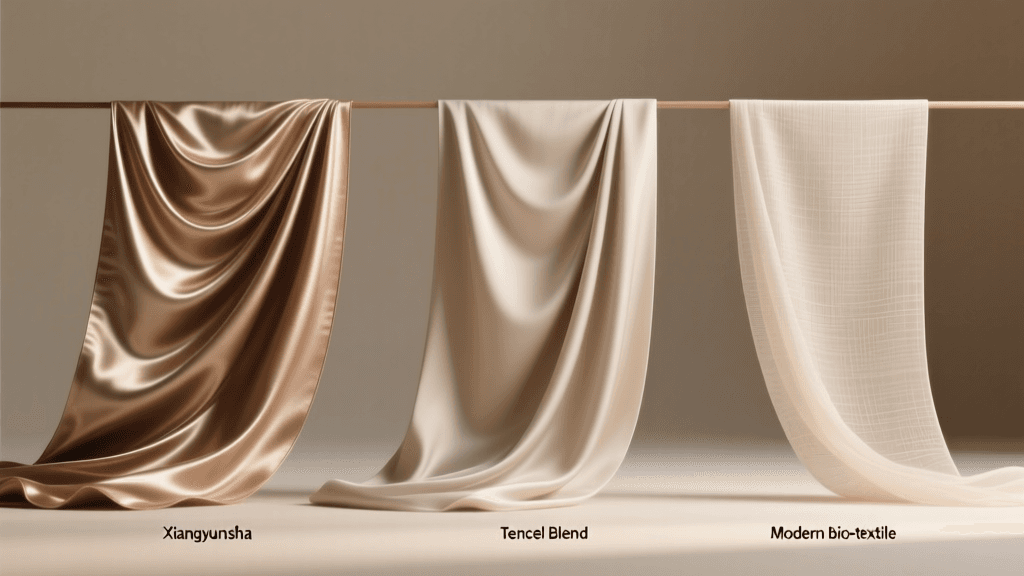
Recognized by the UNESCO Intangible Cultural Heritage list, Xiangyunsha is a marvel of ancient bio-engineering. This silk is dyed using the juice of the Dioscorea cirrhosa tuber and coated with iron-rich river mud. The resulting chemical reaction creates a fabric that is entirely unique: it possesses a crisp, paper-like texture that produces a distinctive rustling sound, yet it remains highly breathable and naturally moisture-wicking.
From a drape perspective, Xiangyunsha is moderately stiff. It does not cling to the body, making it exceptionally comfortable in the humid summers of southern China and Southeast Asia. Its structural integrity makes it the premier choice for 2026 summer Mamianqun, as the mud-coated fibers hold pleats remarkably well without the need for synthetic heat-setting.
Song Brocade (Song Jin)
For formal and ceremonial Hanfu, Song Brocade remains unmatched. Characterized by its intricate, multi-layered weaving technique and subdued, elegant color palettes, Song Jin is a heavier fabric, typically ranging from 120 to 180 GSM. The drape is structured and regal, falling in deep, deliberate folds rather than flowing ripples. While it lacks the breezy comfort of summer silks, its thermal insulation and luxurious hand-feel make it the definitive choice for autumn and winter Aoqun (jacket and skirt) ensembles.
The 2026 Bio-Textile Revolution: Tencel and Bamboo-Silk
The most significant shift in the 2026 Hanfu market is the widespread adoption of sustainable, bio-engineered cellulosic fibers. As the Xin Zhongshi movement emphasizes eco-conscious consumption, designers are turning to advanced botanical textiles that mimic the drape of silk while offering superior everyday comfort.
Tencel-Linen Blends
Tencel, a brand of lyocell produced by Lenzing AG, has revolutionized daily-wear Hanfu. According to Lenzing's official textile data, Tencel fibers are derived from sustainably sourced wood pulp and are celebrated for their high tenacity and exceptional moisture management. When blended with fine linen, the resulting fabric overcomes the traditional stiffness and wrinkling associated with pure linen.
A 60% Tencel / 40% Linen blend offers a fluid, heavy drape that mimics the historical 'falling water' aesthetic of Song dynasty garments. It is cool to the touch, highly breathable, and possesses enough weight to prevent the skirt from tangling around the legs during windy conditions—a common complaint with pure synthetic chiffons.
Bamboo-Silk Chiffon
For the ethereal, multi-layered Pibo (shawls) and wide-sleeved Banbi (half-sleeve jackets), bamboo-silk blends have overtaken pure polyester chiffon. Bamboo viscose offers a softer, more luxurious hand-feel and natural antibacterial properties. In 2026, micro-milled bamboo-silk at 35 GSM provides an ultra-sheer, cloud-like drape that floats on the air currents generated by the wearer's movement, achieving the romantic 'immortal' aesthetic highly sought after in Wei-Jin style photography and daily wear.
Comparative Analysis: 2026 Hanfu Fabric Matrix
To assist in selecting the right material for your specific Hanfu project or purchase, we have compiled a performance matrix based on 2026 textile testing standards.
| Fabric Type | Average GSM | Drape Quality | Breathability | Pleat Retention | Best Hanfu Application |
|---|---|---|---|---|---|
| Xiangyunsha (Mud Silk) | 65 - 85 | Crisp, Structured | Excellent | High | Summer Mamianqun, Ming Ao |
| Song Brocade | 140 - 180 | Heavy, Regal | Moderate | Very High | Winter Outerwear, Formal Ceremonial |
| Tencel-Linen Blend | 110 - 130 | Fluid, Weighted | High | Moderate | Song-style Beizi, Daily Ruqun |
| Bamboo-Silk Chiffon | 30 - 45 | Ethereal, Floating | Very High | Low | Pibo Shawls, Summer Da Xiu Sleeves |
| High-Twist Crepe Silk | 80 - 100 | Bouncy, Resilient | High | High | Tang-style Qixiong Ruqun |
Style-Specific Fabric Pairings for Maximum Comfort
Matching the fabric to the specific historical cut is crucial for both comfort and visual accuracy. Here are our top recommendations for 2026:
- Ming Dynasty Mamianqun (Horse-Face Skirt): The defining feature of this skirt is its sharp, parallel pleats. Pure cotton or low-grade linen will lose these pleats after a single wash. We recommend high-twist polyester-silk blends for budget-conscious buyers, or traditional Xiangyunsha for luxury seekers. The natural stiffness of the mud-coating acts as a permanent press.
- Song Dynasty Beizi (Long Outer Jacket): The Beizi relies on long, vertical lines to elongate the wearer's silhouette. A stiff fabric will cause the jacket to flare out awkwardly at the hips. Tencel-linen blends or heavy silk crepes provide the necessary downward pull, ensuring the jacket drapes closely to the body's natural contours while remaining breathable.
- Tang Dynasty Qixiong Shanqun (Chest-High Skirt): Because this skirt is tied above the bust, heavy fabrics can cause discomfort and slipping. Lightweight, high-friction textiles like crepe silk or textured bamboo blends provide the necessary grip against the undergarments while maintaining a voluminous, bouncy drape that does not weigh the wearer down.
Maintenance for Pleat Retention and Drape Longevity
The longevity of a Hanfu garment's drape is heavily dependent on proper care. The intricate weaving of historical textiles requires specific maintenance routines to preserve their structural integrity.
Washing and Drying Protocols
Never machine-wash Xiangyunsha or Song Brocade. The agitation will destroy the mud coating and warp the brocade threads. Instead, utilize a pH-neutral silk detergent and gently hand-wash in cool water. When drying, avoid hanging heavy wet skirts by the waistband, as the weight of the water will stretch the fibers and distort the drape. Lay the garment flat on a mesh drying rack in the shade.
Storing for Structural Memory
For pleated Mamianqun, storage is critical. In 2026, specialized Hanfu storage boards are widely available. These flat, acid-free boards allow you to fold the skirt precisely along its original pleat lines and store it flat under light pressure. Hanging a Mamianqun in a closet for extended periods will cause the pleats to relax and the fabric to stretch unevenly at the waist, permanently altering the garment's drape coefficient.
Conclusion
The intersection of ancient weaving techniques and modern bio-textile science has made 2026 a golden year for Hanfu enthusiasts. By understanding the nuanced physics of fabric drape, GSM, and thermal comfort, you can curate a traditional wardrobe that not only honors the rich history of Chinese服饰 (fushi) but also seamlessly integrates into the demands of contemporary life. Whether you are investing in the heritage craftsmanship of Xiangyunsha or embracing the sustainable fluidity of Tencel, the right fabric is the foundation of true sartorial elegance.
For further reading on the historical context of these materials, the Metropolitan Museum of Art's Heilbrunn Timeline of Art History offers an exceptional overview of silk's evolution along the ancient trade routes, providing deeper context to the textiles we cherish today.