Best Hanfu Fabrics 2026: Drape, Texture & Comfort
The Evolution of Hanfu Textiles in 2026
The Hanfu revival movement has matured significantly by 2026, transitioning from a niche historical reenactment hobby to a mainstream sartorial choice integrated into daily life. Central to this evolution is the Xin Zhongshi (New Chinese Style) movement, which demands that traditional garments meet modern standards of comfort, durability, and ease of care. While historical accuracy remains important for ceremonial wear, the everyday Hanfu market in 2026 is dominated by advanced textile engineering. Designers and wearers alike are no longer satisfied with garments that look beautiful but feel restrictive or require museum-level preservation. Today, the focus is heavily on fabric texture, drape dynamics, and skin-level comfort. Understanding how different materials behave in motion and against the skin is essential for selecting the perfect Hanfu for any occasion.
The Science of Fabric Drape in Traditional Garments
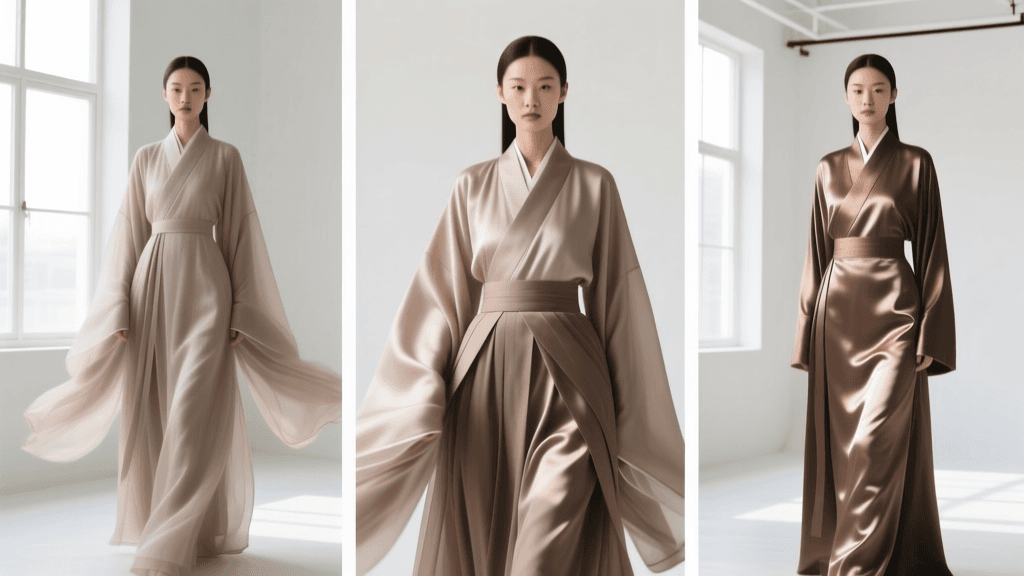
In textile science, 'drape' refers to the way a fabric hangs under its own weight. It is quantified using the drape coefficient (F%), which measures the ratio of the fabric's draped area to its flat area. A lower drape coefficient indicates a stiffer, more structured fabric, while a higher coefficient signifies a fluid, flowing material. For Hanfu, drape is not merely an aesthetic choice; it dictates the structural integrity of the garment's silhouette. According to historical textile analyses preserved by institutions like the Victoria and Albert Museum, ancient Chinese weavers manipulated warp and weft tensions to achieve specific draping qualities for different dynastic styles. In 2026, modern Hanfu enthusiasts use these same principles to match fabrics to specific historical silhouettes, ensuring that a Ming Dynasty horse-face skirt holds its pleats while a Tang Dynasty sleeve flows like water.
Top Hanfu Fabrics Analyzed: Texture, Drape, and Comfort
Xiangyunsha (Gambiered Guangdong Silk)
Often referred to as the 'soft gold' of the silk world, Xiangyunsha is a heritage fabric dyed with the juice of the Dioscorea cirrhosa plant and coated with iron-rich river mud. In 2026, authentic Xiangyunsha remains a premium investment, with prices hovering around $180 to $220 per meter due to strict geographical indication protections and labor-intensive sun-drying processes. Texture-wise, it initially feels crisp and slightly leathery, producing a distinctive rustling sound known as 'silk singing.' However, with wear, it softens dramatically against the skin. Its drape coefficient is relatively low, making it exceptionally stiff and structured. This makes it the ultimate choice for Ming Dynasty Mamianqun (horse-face skirts) and structured Beizi (jackets), where sharp pleats and architectural collars are required. Furthermore, its natural antimicrobial and UV-resistant properties make it highly practical for summer wear.
2026 Tencel-Mulberry Silk Blends
The breakthrough fabric of the mid-2020s, Tencel-silk blends (typically 70% Lyocell and 30% Mulberry silk) have become the undisputed champions of everyday Hanfu in 2026. Tencel provides exceptional moisture-wicking, machine-washability, and a heavy, fluid drape, while the silk content retains the luxurious luster and thermoregulating properties of traditional textiles. Priced accessibly at $35 to $50 per meter, this blend offers a high drape coefficient, allowing it to cascade beautifully. It is incredibly soft against the skin, eliminating the friction and static common in pure synthetic alternatives. This fabric is the top recommendation for Song Dynasty-style Ruqun (tops and skirts) and wide-sleeved Shan (shirts), where a breezy, ethereal flow is desired without the high-maintenance anxiety of pure silk.
Cupro (Bemberg) for Linings and Summer Layers
Derived from cotton linter, Cupro is a regenerated cellulose fiber that mimics the feel of silk at a fraction of the cost. In 2026, it is heavily utilized in the Hanfu market as a lining material for heavy brocade jackets or as the primary fabric for lightweight summer inner layers. Cupro is highly breathable, hypoallergenic, and possesses excellent anti-static properties—a crucial feature when layering multiple Hanfu garments. Its texture is smooth and cool to the touch, and it exhibits a medium-to-high drape coefficient. While it lacks the historical pedigree of pure silk, its comfort profile makes it indispensable for modern wearers navigating humid climates or crowded urban commutes.
Song Brocade (Songjin) for Structured Ceremonial Wear
For formal events, weddings, and winter festivals, Song Brocade remains the pinnacle of Hanfu textiles. Characterized by its complex jacquard weaving, subtle matte luster, and dense geometric or floral patterns, Songjin is a heavy, robust fabric. As noted in the Metropolitan Museum of Art's archives on Asian silk weaving, brocades of this type were historically reserved for elite classes due to their intricate production. In 2026, modernized Song Brocade incorporates fine metallic threads and reinforced weaves that resist snagging. It has a very low drape coefficient, meaning it does not cling to the body but rather stands away from it, creating a majestic, voluminous silhouette. It is best reserved for outerwear, ceremonial Pifeng (capelets), and formal winter Mamianqun.
2026 Hanfu Fabric Comparison Chart
| Fabric Material | Drape Coefficient (F%) | Breathability & Comfort | 2026 Avg. Price (USD/m) | Best Hanfu Silhouette |
|---|---|---|---|---|
| Xiangyunsha (Mud Silk) | Low (Stiff/Structured) | High (Cool, Antimicrobial) | $180 - $220 | Ming Mamianqun, Structured Beizi |
| Tencel-Silk Blend (70/30) | High (Fluid/Flowing) | Very High (Moisture-wicking) | $35 - $50 | Song Ruqun, Wide-sleeve Shan |
| Cupro (Bemberg) | Medium-High (Soft Drape) | High (Anti-static, Smooth) | $15 - $25 | Inner Linings, Summer Zhongyi |
| Song Brocade (Songjin) | Very Low (Rigid/Voluminous) | Low-Medium (Heavy, Warm) | $90 - $140 | Ceremonial Pifeng, Winter Skirts |
| Crepe de Chine (Pure Silk) | Medium (Balanced Drape) | High (Lightweight, Soft) | $60 - $85 | Tang Banbi, Everyday Tops |
Practical Guide: Matching Fabric to Hanfu Silhouettes
Selecting the right fabric requires an understanding of the garment's architectural needs. Here is a practical breakdown for 2026 wardrobe planning:
- Ming Dynasty Mamianqun (Horse-Face Skirt): The defining feature of this skirt is its sharp, knife-like pleats. To maintain these pleats throughout the day, you must choose a fabric with high shear stiffness and a low drape coefficient. Xiangyunsha, heavy pure silk taffeta, or wool-blend suiting are ideal. Avoid Tencel or pure chiffon, as the pleats will collapse and flatten when sitting.
- Song Dynasty Beizi (Jacket): The Beizi is characterized by its straight, narrow silhouette and side slits. It requires a fabric with a medium drape that skims the body without clinging. Crepe de Chine or medium-weight linen-silk blends provide the perfect balance of structure and fluidity, allowing the jacket to move gracefully with the wearer.
- Tang Dynasty Qixiong Ruqun (Chest-High Skirt): This style relies on volume and a sweeping, romantic train. High drape coefficient fabrics are mandatory here. Tencel-silk blends, pure silk chiffon, and lightweight georgette will create the ethereal, floating effect that defines the Tang aesthetic. The Food and Agriculture Organization (FAO) notes that the natural elasticity and fine denier of mulberry silk fibers make them uniquely suited for these lightweight, high-volume weaves.
Care and Maintenance for Optimal Drape Longevity
The drape and texture of your Hanfu can degrade if improperly maintained. In 2026, while many modern blends are machine-washable, heritage fabrics still require meticulous care. For Xiangyunsha and pure silks, always use a pH-neutral detergent specifically formulated for protein fibers. Never wring or twist the fabric, as this breaks the internal fiber structure and permanently alters the drape coefficient, leading to uneven hanging. Instead, roll the garment in a clean towel to absorb excess water and lay it flat to dry in the shade. When ironing, use a steam iron on the 'silk' setting and always iron on the reverse side or through a pressing cloth. For structured garments like Mamianqun, hang them on wide, padded hangers to prevent the shoulders from stretching, and store them in breathable cotton garment bags to protect against dust and moisture fluctuations. By respecting the textile science behind these fabrics, you ensure that your Hanfu remains comfortable, visually striking, and historically resonant for years to come.