Hanfu Fabric Drape & Comfort Analysis: 2026 Guide
The Evolution of Hanfu Textiles in 2026
As the Xin Zhongshi (new Chinese style) movement continues to dominate global fashion weeks in 2026, the traditional Hanfu has evolved from a niche historical interest into a sophisticated, everyday wardrobe staple. However, the true elegance of any traditional Chinese garment lies not just in its cut, but in the physics of its fabric. The interplay between texture, weight, and drape dictates how a garment moves, breathes, and ultimately feels against the skin. For modern enthusiasts and designers alike, understanding Hanfu fabric drape and comfort is essential for selecting the right material for specific historical silhouettes and contemporary climates.
In 2026, textile innovation has merged with ancient weaving techniques. We now see a market flooded with both meticulously revived historical weaves and cutting-edge bio-synthetic blends designed for urban commuting. This comprehensive analysis breaks down the drape coefficients, breathability, and comfort profiles of the most prominent Hanfu fabrics available today, helping you make informed decisions for your wardrobe.
Understanding Fabric Drape Coefficients in Traditional Garments
In textile science, the drape coefficient (DC) measures how a fabric folds and hangs under its own weight. A lower drape coefficient indicates high fluidity and softness, allowing the fabric to cling and flow gracefully. Conversely, a higher drape coefficient denotes structural stiffness, meaning the fabric holds its shape and resists folding. When styling Hanfu, matching the fabric's DC to the garment's structural requirements is critical.
The Physics of the Silhouette
Consider the iconic Ming Dynasty Mamianqun (horse-face skirt). This garment relies on sharp, structured pleats (zhe) and flat front-and-back panels (ma). If constructed from a fabric with a low drape coefficient, such as lightweight silk chiffon, the pleats will collapse, and the skirt will lose its architectural majesty. A medium-to-high DC fabric, like heavy silk satin or a structured cotton-linen blend, is required to maintain the crisp geometry of the pleats while allowing the skirt to swing dynamically during movement.
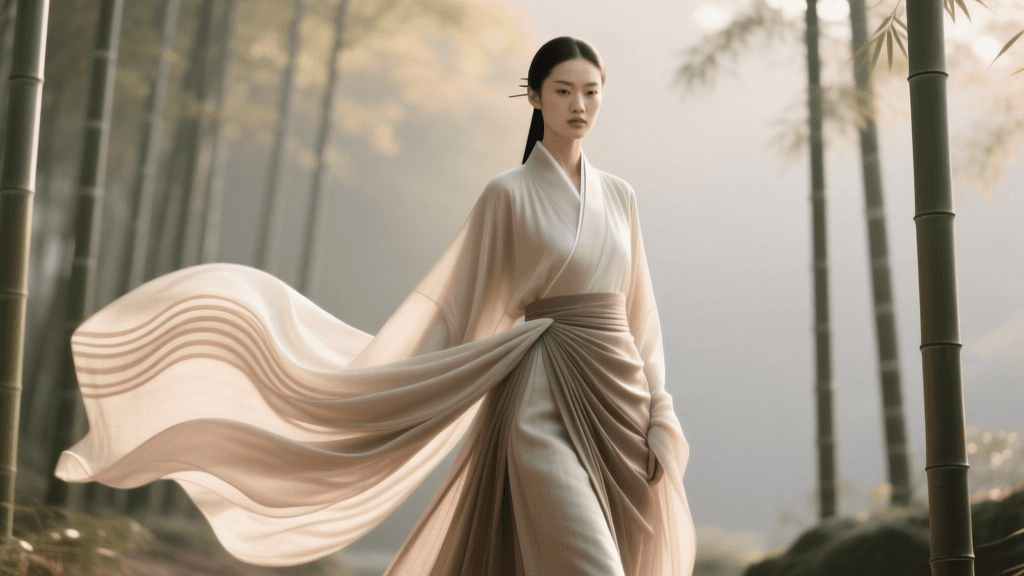
On the other hand, the ethereal, layered shawls and wide-sleeved Dashan of the Tang Dynasty demand fabrics with an exceptionally low drape coefficient. The fabric must cascade over the shoulders and pool at the wrists, requiring high fluidity to achieve that signature romantic silhouette. According to historical textile analyses preserved by institutions like The Metropolitan Museum of Art, ancient weavers mastered these varying drape profiles by altering the twist tension of the silk threads and the complexity of the loom weave.
2026 Hanfu Fabric Comparison Chart
The following table provides a comparative analysis of the most popular Hanfu fabrics in the 2026 market, evaluating their drape characteristics, comfort, and current pricing.
| Fabric Type | Weave / Texture | Drape Coefficient (1-10) | Breathability | 2026 Avg. Price (per meter) | Best Hanfu Style |
|---|---|---|---|---|---|
| Mulberry Silk (Chou) | Plain / Smooth | 4.5 (Fluid) | High | $45 - $65 | Song Dynasty Ruqun |
| Silk Gauze (Luo) | Open / Leno Weave | 3.0 (Very Fluid) | Extreme | $85 - $130 | Tang Dynasty Dashan |
| Silk Satin (Duan) | Satin / Glossy | 6.5 (Structured) | Moderate | $70 - $95 | Ming Dynasty Mamianqun |
| Ramie (Xia Bu) | Crisp / Textured | 8.0 (Stiff) | Extreme | $25 - $45 | Summer Aoqun / Banbi |
| Xin Zhongshi Tech-Blend | Matte / Stretch | 5.5 (Balanced) | High | $30 - $55 | Modern Modified Hanfu |
Deep Dive: Silk, Ramie, and Modern Blends
Mulberry Silk: The Pinnacle of Fluidity
Silk remains the undisputed monarch of Hanfu textiles. The sericulture traditions of China, recognized by UNESCO as Intangible Cultural Heritage, continue to produce the finest Mulberry silk threads in the world. In 2026, the market is dominated by three primary silk weaves used in Hanfu:
- Chou (Plain Weave): Offering a balanced drape and a subtle matte sheen, Chou is the workhorse of Hanfu. It is lightweight, highly breathable, and drapes beautifully for everyday Ruqun (blouse and skirt sets).
- Luo (Leno Weave Gauze): Characterized by its open, porous structure, Luo silk is the ultimate summer fabric. The twisted warp threads create microscopic air pockets, offering unparalleled breathability and a ghost-like, floating drape that is highly prized for outer layers.
- Duan (Satin Weave): With long floating yarns on the surface, Duan provides a brilliant luster and a heavier, more structured drape. It is the premier choice for winter garments and heavily pleated skirts, though it requires meticulous care to avoid snagging.
Ramie and Linen: The Architecture of Plant Fibers
Before silk became widely accessible, ramie (Zhu Ma) and hemp were the foundational textiles of ancient China. Today, ramie is experiencing a massive renaissance in the Hanfu community, particularly for summer wear. Ramie fibers are naturally stiff, boasting a high drape coefficient that gives garments a crisp, architectural look. While it lacks the skin-slipping comfort of silk, high-quality 2026 enzyme-washed ramie offers a softened texture that retains its structural integrity while providing exceptional moisture-wicking properties. Historical plant-fiber garments, as documented in the Victoria and Albert Museum's Asian collections, demonstrate how ancient tailors used the stiffness of ramie to create voluminous, standing collars and structured sleeves that silk simply could not support.
Xin Zhongshi Tech-Blends: The 2026 Innovation
The most significant shift in the 2026 Hanfu market is the perfection of Xin Zhongshi (new Chinese style) tech-blends. Modern urbanites demand garments that look historically accurate but perform like contemporary activewear. Leading textile mills in Hangzhou and Suzhou have developed rayon-cuprammonium and silk-modal blends that mimic the exact drape coefficient of historical Chou silk but offer mechanical stretch and machine-washability. These blends often feature a matte finish that reduces the theatrical shine of pure silk, making them highly appropriate for office wear and daily commuting. While purists may still prefer 100% natural fibers, the comfort and practical drape of these 2026 tech-blends are undeniable.
Comfort and Climate Adaptation
Comfort in Hanfu is intrinsically linked to the garment's microclimate—the layer of air trapped between the fabric and the skin. Traditional Hanfu is designed with a loose, flowing fit, which naturally promotes air circulation. However, the fabric choice dictates how well this system works in varying 2026 climate conditions.
For humid, sweltering summers, Luo silk gauze and lightweight ramie are non-negotiable. Their high porosity allows sweat to evaporate rapidly, preventing the fabric from clinging to the skin. Conversely, in the crisp autumn and freezing winter months, layering is key. A base layer of soft, medium-drape silk Chou acts as a thermal regulator, while an outer layer of heavy, high-drape brocade (Zhi Jin) blocks the wind and maintains the garment's voluminous shape without collapsing under the weight of winter accessories.
Care and Maintenance for Optimal Drape Retention
A fabric's drape coefficient can degrade over time if subjected to improper care. The structural integrity of the fibers must be maintained to ensure the Hanfu continues to hang correctly.
- Washing: Pure silks and structured brocades should only be dry-cleaned or hand-washed in cold water with a pH-neutral silk detergent in 2026. Aggressive machine washing breaks the long filament fibers of silk, causing it to lose its fluid drape and become brittle. Tech-blends and enzyme-washed ramie can generally withstand gentle machine cycles.
- Drying: Never wring out Hanfu fabrics. The twisting motion permanently alters the warp and weft alignment, leading to distorted drape lines. Instead, roll the garment in a microfiber towel to absorb excess moisture and lay it flat on a mesh drying rack.
- Storage: To preserve the crisp pleats of a Mamianqun, store the skirt folded along its original pleat lines in a breathable, cedar-lined garment bag. Hanging heavy silk satin skirts for prolonged periods can cause the fibers to stretch under gravity, artificially lowering the drape coefficient and ruining the hemline.
- Ironing and Steaming: Use a continuous steam generator rather than a traditional press iron. Direct heat and pressure can flatten the three-dimensional texture of Luo gauze and crush the pile of velvet or brocade accents. Steaming gently relaxes the fibers, allowing them to return to their natural drape state.
Conclusion
The beauty of Hanfu is a symphony of tailoring and textile physics. As we navigate the fashion landscape of 2026, the fusion of historical authenticity and modern material science offers more choices than ever before. Whether you are drawn to the whisper-light fluidity of Tang Dynasty silk gauze, the crisp, architectural dignity of Ming Dynasty ramie, or the pragmatic elegance of modern Xin Zhongshi blends, understanding fabric drape and comfort is the key to mastering the art of traditional Chinese dress. By selecting the right textile for the right silhouette, you ensure that your Hanfu not only honors the past but moves seamlessly through the present.