2026 Hanfu Travel Guide: Silk Packing Tips & Xi'an Photo Destinations
The 2026 Hanfu Tourism Renaissance
The Hanfu movement has evolved from a niche subculture into a mainstream pillar of domestic and international tourism in China. As of 2026, Hanfu tourism generates billions in regional revenue, with travelers meticulously planning itineraries around historical aesthetics, traditional architecture, and immersive cultural festivals. However, traveling with traditional Chinese garments presents unique logistical challenges. Delicate silks, intricate brocades, and heavily pleated skirts require specialized packing techniques to survive the rigors of modern transit. This comprehensive 2026 guide provides actionable packing strategies, on-the-go garment care, and a curated list of the most photogenic, Hanfu-friendly destinations in China.
Mastering the Pack: Gear and Techniques for Delicate Textiles
Packing traditional garments is fundamentally different from packing modern casual wear. The structural integrity of pieces like the Mamianqun (horse-face skirt) and the Beizi (traditional jacket) must be preserved to avoid hours of steaming upon arrival.
The Mamianqun Pleat Preservation Method
The Mamianqun is notorious for losing its crisp, knife-edge pleats if crushed in a standard suitcase. To pack this garment in 2026, follow the 'Clip and Roll' method:
- Step 1: Lay the skirt flat on a clean surface. Align the front and back panels perfectly.
- Step 2: Use specialized skirt clips with foam padding to secure the waistband, ensuring the pleats remain uniformly stacked.
- Step 3: Place a sheet of acid-free tissue paper over the pleated sections to prevent friction and silk snagging.
- Step 4: Rather than folding, gently roll the skirt from the hem upward toward the waistband. Store it in a rigid, cylindrical garment tube or a dedicated compressible packing cube.
Recommended 2026 Packing Gear
Investing in the right luggage is crucial for Hanfu travelers. The Eagle Creek Pack-It Isolate Garment Folder remains a top choice in 2026 for its ultra-lightweight, water-resistant ripstop fabric and structured folding board, which keeps Song Dynasty-style Beizi and wide-sleeved robes flat. For outerwear and heavily embroidered Yuanlingpao (round-collar robes), a hard-shell carry-on like the TUMI 19 Degree Aluminum provides the rigid protection necessary to prevent crushing embellishments and metallic thread work.
On-the-Go Garment Care: Steaming and Storage
Even with perfect packing, silk and linen will require some refreshing upon arrival at your hotel. Relying on hotel irons is a recipe for disaster, as direct heat can scorch delicate silk weaves and melt synthetic metallic embroidery threads.
For 2026 travel, the Philips 3000 Series Handheld Steamer is the gold standard. It features a compact, foldable design that easily fits into a weekender bag, dual-voltage capabilities for international travelers, and a smart-flow pump that prevents water spitting on sensitive brocades. If you are traveling light and cannot bring a steamer, utilize the 'bathroom steam chamber' method: hang your Hanfu on a padded hanger in the bathroom, run a hot shower for 15 minutes, and let the ambient steam gently relax the fibers. Always use wooden or wide, padded hangers to support the weight of heavy Ming Dynasty-style outer garments without creating shoulder dimples.
Top 3 Hanfu Destinations for 2026
Choosing the right destination ensures your garment style aligns with the local architecture and cultural atmosphere. Here are the premier locations for Hanfu photography and immersion in 2026.
Xi'an: The Tang Dynasty Immersion
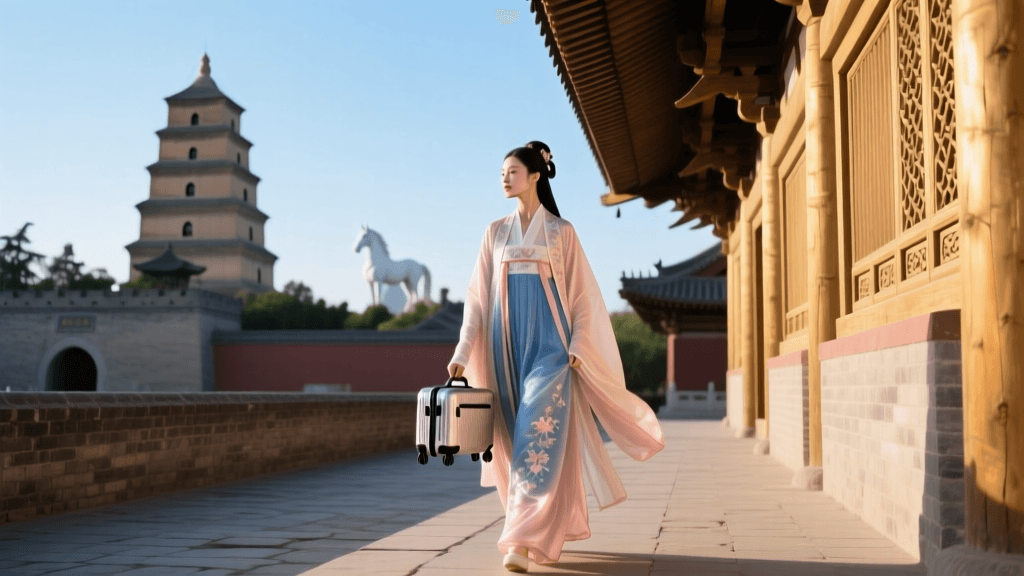
Xi'an is the undisputed capital of Tang Dynasty aesthetics. The city has heavily invested in Hanfu-friendly infrastructure, including dedicated changing rooms, makeup studios, and lighting-optimized photo zones. Datang Everbright City and the Tang Paradise theme park offer spectacular nighttime illumination that perfectly complements the vibrant, heavily embroidered Tang-style Qixiong Ruqun (chest-high skirts) and Yuanlingpao. In 2026, the city wall night-cycling routes have been upgraded with warmer, historically accurate LED lantern lighting, providing a stunning backdrop for dynamic photography.
Luoyang: Wei-Jin Elegance and Buddhist Grottoes
For those who prefer the flowing, ethereal, and minimalist silhouettes of the Wei-Jin period, Luoyang is the ultimate destination. The Luoyi Ancient City offers sprawling traditional courtyards that are less crowded than Xi'an's hotspots. Furthermore, the nearby Longmen Grottoes provide a dramatic, spiritually resonant backdrop. According to the UNESCO World Heritage Centre, the Longmen Grottoes represent the high point of Chinese stone carving, and the towering Vairocana Buddha statue offers a profound, cinematic setting for Wei-Jin style wide-sleeved robes and bamboo hats.
Hangzhou: Song Dynasty Minimalism
Hangzhou embodies the refined, intellectual elegance of the Song Dynasty. The muted tones, slender silhouettes, and subtle textures of Song-style Hanfu blend seamlessly with the misty landscapes of the region. The UNESCO listing for West Lake highlights its profound influence on garden design and poetic aesthetics across East Asia. In 2026, the lesser-known Xiling Seal Art Society and the bamboo-lined paths of Yunqi offer tranquil, highly textured environments perfect for capturing the understated luxury of Song Dynasty fashion.
Destination & Style Comparison Chart
| Destination | Era Focus | Recommended Hanfu Style | 2026 Peak Season | Est. Daily Budget (CNY) |
|---|---|---|---|---|
| Xi'an | Tang Dynasty | Qixiong Ruqun, Yuanlingpao | Spring / Autumn | 800 - 1,200 |
| Luoyang | Wei-Jin / Sui | Wide-sleeved Ruqun, Dahu | April (Peony Fest) | 600 - 900 |
| Hangzhou | Song Dynasty | Beizi, Song Trousers, Pleated skirts | March - May | 900 - 1,400 |
Navigating Transit and Crowds in 2026
China's high-speed rail network, dominated by the Fuxing bullet trains, is the most efficient way to travel between these Hanfu hubs. However, navigating transit with voluminous traditional garments requires foresight. When booking your train, opt for the 'Quiet Car' or first-class seating if possible, as these cabins offer wider seats and more spacious overhead luggage racks, reducing the risk of your garment bags being crushed by heavy backpacks.
When walking through crowded tourist sites like the Xi'an City Wall or Hangzhou's Broken Bridge, manage your train and hemline carefully. In 2026, many Hanfu rental shops and personal tailors offer magnetic hem-clips, a modern innovation that allows you to temporarily hike up your skirt to ankle length for navigating stairs and crowded streets, releasing it instantly for photos.
Caring for Silk on the Road
Proper textile care is essential when traveling with expensive, authentic silk garments. The Canadian Conservation Institute's preventive conservation guidelines for textiles emphasize that silk is highly susceptible to degradation from prolonged exposure to direct ultraviolet light and high humidity. When storing your garments in your hotel room, never leave them draped over chairs in direct sunlight. Instead, store them in breathable cotton garment bags inside the closet. If you encounter a sudden downpour—a common occurrence in Hangzhou during the plum rain season—allow wet silk to air dry at room temperature away from heat sources, and never wring or twist the fabric, as this will permanently distort the silk's natural luster and weave structure.
Conclusion
Traveling with Hanfu in 2026 is a deeply rewarding experience that connects you to centuries of Asian sartorial heritage. By utilizing specialized packing techniques, investing in modern travel steamers, and selecting destinations that complement your chosen historical era, you can ensure your garments remain pristine and your travel experience is seamless. Whether you are capturing the vibrant energy of Tang Dynasty Xi'an or the quiet elegance of Song Dynasty Hangzhou, preparation is the key to a flawless Hanfu journey.