2026 Hanfu Storage Rotation & Seasonal Care Guide
The Evolution of Hanfu Wardrobe Management in 2026
As we move through 2026, the global appreciation for traditional Han Chinese clothing has transitioned from niche hobbyist circles into a robust, everyday fashion movement. With the continued rise of the Xin Zhongshi (new Chinese style) aesthetic, modern enthusiasts now own extensive collections ranging from lightweight summer Ruqun to heavy, intricately woven winter Mamianqun (horse-face skirts). However, managing a diverse textile wardrobe requires more than simply hanging garments in a standard closet. Delicate protein fibers like silk, and cellulose fibers like ramie and linen, demand precise environmental controls to prevent degradation, mold, and structural warping.
Whether you are storing a priceless piece of Xiangyunsha (gambiered Canton gauze) or a daily-wear cotton Song-style blouse, proper seasonal rotation is essential. This comprehensive 2026 guide provides actionable, museum-grade protocols for rotating, cleaning, and storing your Hanfu collection, ensuring your garments remain pristine for generations.
The 2026 Seasonal Rotation Calendar
Rotating your Hanfu wardrobe should align with shifts in humidity and temperature, rather than just the calendar date. In 2026, smart home integration makes it easier than ever to track these micro-climates within your storage spaces.
Spring Transition (March - April)
As winter ends, it is time to pack away heavy wool-blend lined Ao (jackets) and velvet winter skirts. Before storing, inspect all garments for invisible perspiration stains, which can oxidize and turn yellow over the summer months. Transition your active wardrobe to mid-weight silks, cotton-linen blends, and early-spring chiffon.
Summer Peak & Rotation (July - August)
Summer is the most dangerous season for textile storage due to high ambient humidity. Ensure your storage closets are equipped with IoT humidity sensors, such as the latest 2026 SwitchBot Sensor Hub, which can alert your smartphone if closet humidity exceeds the critical 55% threshold. Store your heavy brocades and dark-dyed silks in the deepest, most climate-controlled parts of your home.
Autumn Prep (September - October)
As the air dries, transition back to mid-weight fabrics. This is the ideal time to air out your stored winter garments. Remove them from their archival boxes, gently shake them out, and let them rest in a shaded, well-ventilated room for 24 hours before moving them to your active wardrobe.
Winter Storage (November - December)
Pack away your ultra-lightweight summer linens and raw silks. Winter air can be incredibly dry, especially in homes with central heating, which can make cellulose fibers brittle. Ensure your summer storage boxes are kept away from direct heat vents to prevent fiber desiccation.
Essential Archival Storage Materials for 2026
To properly maintain a Hanfu collection, you must invest in materials that will not off-gas harmful chemicals or trap moisture. Here is what you need to purchase this year:
- Acid-Free Tissue Paper: Brands like Lineco offer archival-grade, unbuffered acid-free tissue paper. Buffered tissue (which contains calcium carbonate) is great for plant-based fibers like cotton and linen, but can damage protein fibers like silk. Always use unbuffered tissue for your silk Hanfu. A standard box costs around $25 in 2026.
- Unbleached Cotton Garment Bags: Never store Hanfu in plastic PVC or vinyl bags. Plastic traps volatile organic compounds (VOCs) and moisture, creating a greenhouse effect that breeds mold. Use breathable, unbleached cotton canvas bags with brass or wooden zippers.
- Archival Coroplast Boxes: For structured garments like heavily pleated Mamianqun, flat storage in corrugated plastic (Coroplast) archival boxes is superior to hanging, which can distort the waistband and pleats over time.
- Natural Pest Deterrents: Avoid traditional naphthalene mothballs, which are toxic and leave a nearly impossible-to-remove odor on porous silks. Instead, use sustainably harvested cedar wood blocks or dried lavender sachets, refreshing the cedar by lightly sanding it every six months.
Fabric-Specific Maintenance Protocols
Different traditional textiles require vastly different care routines. According to guidelines published by the Library of Congress, understanding the chemical makeup of your textile is the first step in preventive conservation.
Xiangyunsha (Gambiered Canton Gauze)
This luxurious, mud-coated silk is highly sensitive to friction and improper folding. The dark, glossy side (coated with iron-rich river mud) can crack if folded sharply. Rule: Never fold Xiangyunsha with hard creases. Use the 'buffer fold' method, rolling thick ropes of acid-free tissue paper into the folds to create soft, rounded curves. Store flat, never hang.
Song Brocade and Zhuanghua (Silk Tapestry)
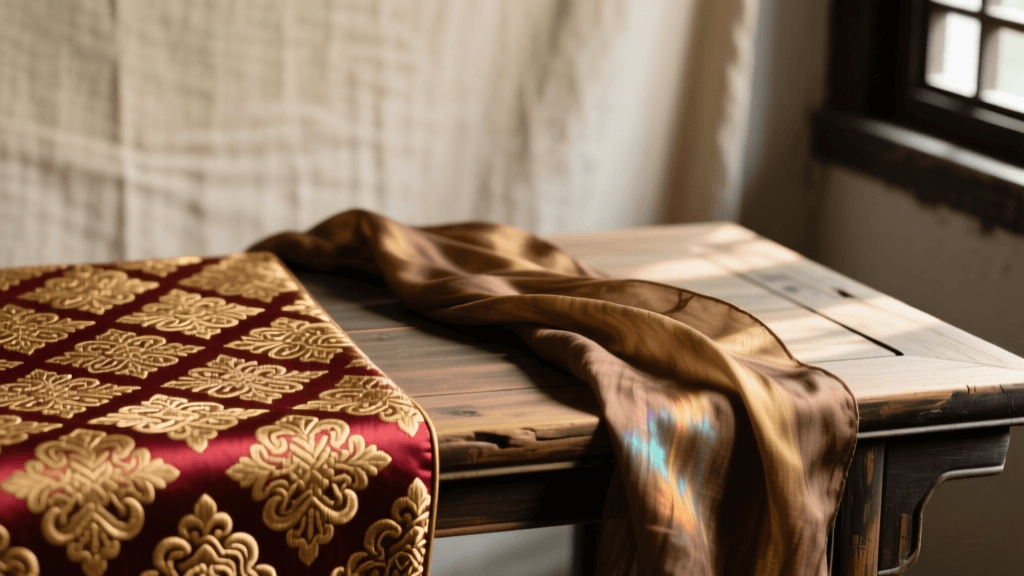
Heavy, multi-layered woven silks are prone to warp-thread breakage if hung on standard hangers. The Victoria and Albert Museum recommends rolling heavy, embellished textiles around acid-free cardboard tubes covered in washed cotton muslin. If you must fold them, limit the folds to no more than three layers deep to prevent permanent crushing of the metallic threads.
Ramie and Linen (Summer Ruqun)
Plant-based fibers are highly susceptible to mold in humid conditions but are generally more resilient to folding than silk. Before storing summer linens for the winter, ensure they are washed with a pH-neutral detergent and completely bone-dry. A trace amount of moisture left in a linen Ruqun will result in black mildew spots within weeks.
2026 Hanfu Storage Reference Chart
| Fabric Type | Storage Method | Ideal Humidity | Cleaning Protocol |
|---|---|---|---|
| Raw Silk / Chiffon | Flat in archival box with unbuffered tissue | 45% - 55% | Professional dry clean only (heritage specialist) |
| Xiangyunsha | Flat, rolled folds with tissue buffers | 50% - 60% | Spot clean with damp cloth; avoid harsh soaps |
| Heavy Brocade | Rolled on muslin-covered tubes | 45% - 50% | Low-suction vacuum through a fiberglass screen |
| Linen / Ramie | Folded in breathable cotton bags | 40% - 50% | Machine wash gentle, pH-neutral soap, air dry |
| Cotton Blends | Hanging on wide, padded wooden hangers | 40% - 55% | Standard gentle wash, low heat tumble dry |
Step-by-Step Seasonal Pack-Away Process
When the season changes, follow this meticulous step-by-step process to prepare your Hanfu for long-term storage:
- The 48-Hour Airing: Before packing, hang the garments in a shaded, climate-controlled room for two days. This allows any trapped body moisture or ambient odors to dissipate.
- Stain Inspection: Use a UV flashlight to check for invisible organic stains (like sweat or food oils). These must be treated before storage, as they will attract silverfish and cause permanent yellowing.
- The Buffer Fold: Lay the garment flat on a clean cotton sheet. Place sheets of acid-free tissue paper over the garment. As you fold the sleeves and skirt, place rolled 'snakes' of tissue paper into the creases to prevent sharp, damaging folds.
- Layering: Place the heaviest garments at the bottom of your archival box and the lightest, most delicate silks at the top. Do not overstuff the box; the textiles need to 'breathe'.
- Environmental Sealing: Close the box and place it in your designated storage area. Ensure the area is equipped with a smart dehumidifier, such as the Yaufey Whisper-Quiet 2026 model, which can be set to automatically maintain a 50% relative humidity baseline.
Critical Mistakes to Avoid
Even seasoned collectors make mistakes that can irreparably damage historical and modern reproduction garments. According to the Canadian Conservation Institute, light, pests, and improper humidity are the primary agents of textile deterioration.
- Never use wire or thin plastic hangers: The weight of a traditional Mamianqun or a lined winter Ao will cause thin hangers to slice through the shoulder seams or waistbands over time. Always use wide, padded wooden hangers if hanging is necessary.
- Avoid direct sunlight at all costs: UV radiation breaks down the molecular bonds in silk fibroin, causing the fabric to shatter. Even when stored, ensure your closet or storage room has UV-blocking window films installed.
- Do not store in attics or basements: These areas experience wild fluctuations in temperature and humidity. A basement may seem cool, but a sudden summer storm can spike the humidity to 80%, triggering rapid mold growth on your silk brocades.
Conclusion
Maintaining a Hanfu wardrobe in 2026 is a rewarding practice that bridges the gap between historical reverence and modern textile science. By investing in archival-grade storage materials, utilizing smart home humidity monitors, and adhering to a strict seasonal rotation calendar, you ensure that every piece in your collection—from the lightest summer chiffon to the heaviest winter brocade—remains vibrant, structurally sound, and ready to be worn. Treat your garments with the care of a museum archivist, and they will continue to tell the story of traditional Asian craftsmanship for decades to come.