Empress Xiaoduan's Fengguan: A Ming Dynasty Hanfu Guide
The Legacy of Empress Xiaoduan and the Dingling Excavation
When discussing the zenith of traditional Chinese formal wear, the Ming Dynasty (1368–1644) stands as a paragon of structured elegance, intricate textiles, and rigid sartorial hierarchy. At the very apex of this hierarchy was Empress Xiaoduan (1565–1620), the beloved wife of the Wanli Emperor. While much of Ming Dynasty fashion history was previously reliant on court paintings and textual records, the 1956 excavation of the Dingling Mausoleum—the joint tomb of the Wanli Emperor and his two empresses—provided an unprecedented, tangible look into the imperial wardrobe. As noted in Britannica's overview of the Ming Dynasty, this era was marked by immense economic prosperity and a rigidification of social classes, which was directly reflected in the sumptuary laws governing clothing.
The Dingling excavation unearthed hundreds of pristine textile artifacts and four magnificent Phoenix Crowns (Fengguan) belonging to Empress Xiaoduan and Empress Xiaojing. These artifacts serve as the foundational blueprint for modern hanfu enthusiasts and historians seeking to recreate authentic Ming Dynasty formal wear. Today, the garments and accessories of Empress Xiaoduan remain the ultimate benchmark for luxury, craftsmanship, and historical accuracy in the hanfu revival movement.
Deconstructing the Fengguan: The Phoenix Crown
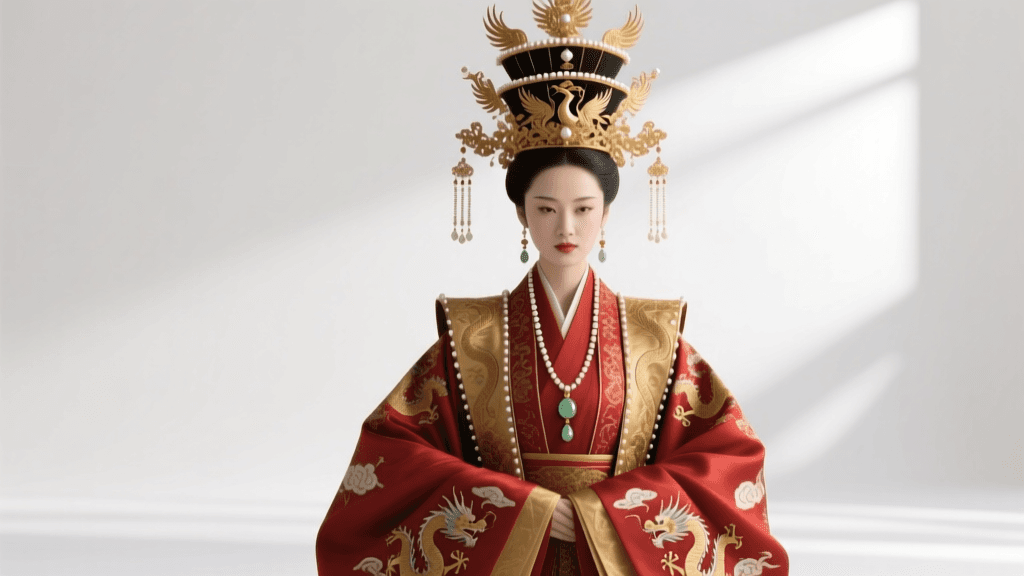
The most iconic artifact recovered from Dingling is undoubtedly the Fengguan, or Phoenix Crown. Empress Xiaoduan’s primary crown is famously known as the "Twelve Dragons and Nine Phoenixes" crown. This towering headdress is a masterclass in Ming Dynasty metalwork and point-blue feather art (Tian-tsui). The structure is built upon a delicate bamboo and wire frame, covered in black silk gauze, and heavily ornamented with gold filigree, thousands of seed pearls, and vibrant blue kingfisher feathers.
The use of kingfisher feathers was a painstaking process. Artisans would carefully glue the iridescent blue feathers onto the gold metal bases to mimic the look of enamel or precious stones like turquoise and lapis lazuli. The crown also featured intricate gold dragons chasing pearls, alongside soaring phoenixes, symbolizing the supreme yin and yang balance of the imperial household. Weighing over 2.3 kilograms (about 5 pounds), the Fengguan was not merely a hat; it was a heavy, structural burden that required immense neck strength and a specialized underlying hair base to support.
The Diyi and Xiapei: Ceremonial Robes of the Ming Elite
Beneath the heavy crown, the Empress would don the Diyi, the highest-ranking ceremonial robe reserved exclusively for empresses and crown princesses during major state rituals and ancestral worship. The Diyi is characterized by its deep, dark blue or black silk fabric, woven or embroidered with pairs of pheasants (zhaihui). The pheasant motif, representing文采 (literary and cultural refinement) and fidelity, was strictly regulated by Ming sumptuary laws.
Layered over the Diyi was the Xiapei, a ceremonial stole that draped over the shoulders and hung down the front of the robe. Unlike the flowing, ethereal silk ribbons of the Tang Dynasty, the Ming Xiapei was a heavy, structured band of brocade, weighted at the bottom with intricate gold or jade pendants. These pendants served a dual purpose: they kept the stole hanging perfectly straight and acted as a physical reminder for the wearer to move with slow, deliberate, and dignified grace. For a deeper look into the preservation of such historical textiles, the Victoria and Albert Museum's Chinese Collections offers extensive insights into Ming-era silk weaving and embroidery techniques that define these garments.
Historical Artifacts vs. Modern Hanfu Replicas
For modern hanfu enthusiasts, acquiring a set inspired by Empress Xiaoduan requires navigating the differences between historical reality and modern manufacturing. Below is a comparison chart detailing the specifications of the original Dingling artifacts versus what is available on today's market.
| Feature | Historical Artifact (Dingling) | Modern High-End Replica | Modern Entry-Level Hanfu |
|---|---|---|---|
| Crown Material | Solid Gold, Kingfisher, Pearls | Silver alloy, Goose feather, Glass | Plastic, printed fabric, alloy |
| Robe Fabric | Silk Zhi (Gauze), Silk Brocade | Silk Brocade, Jacquard Weave | Polyester, Cotton blend |
| Weight | ~2.5 kg (Crown alone) | ~1.2 kg | ~0.3 kg |
| Cost (USD) | Priceless National Treasure | $1,500 - $4,000+ | $80 - $150 |
| Production Time | Years (Imperial Workshops) | 3 - 6 Months | Mass-produced (1-2 Weeks) |
Practical Guide: Commissioning and Wearing Ming Formal Wear Today
If you are looking to purchase, commission, or wear a Ming Dynasty formal hanfu set inspired by Empress Xiaoduan, there are several practical factors to consider regarding fit, cost, and ethical material sourcing.
Measurements and Fit for the Diyi
The Ming Dynasty Diyi is a voluminous, floor-length robe with wide sleeves and a structured collar. When ordering from a hanfu studio, you must provide precise measurements to ensure the garment pools correctly at the floor without causing a tripping hazard. Essential measurements include:
- Bust, Waist, and Hips: Taken at the widest points to ensure the inner layers and the robe itself drape without pulling.
- Shoulder Width and Arm Length: Crucial for the placement of the shoulder seams and ensuring the wide sleeves extend past the fingertips, a hallmark of Ming formal wear.
- Hollow to Hem (Height + Heel): Measure from the hollow of your collarbone to the floor while wearing the exact shoes you plan to wear with the outfit. Ming formal wear often requires cloud-head shoes or elevated heels to support the heavy hem.
Cost, Timelines, and the "Tuan" System
Purchasing high-quality Ming hanfu rarely involves buying off the rack. Most reputable hanfu brands operate on a pre-order system known as a Tuan (group buy).
- Entry-Level ($80 - $150): Made from polyester jacquard. The pheasant motifs are often printed or machine-embroidered. Good for casual cosplay or photography, but lacks historical weight.
- Mid-Tier ($300 - $800): Woven silk-blend brocades with metallic threads. The Xiapei will feature proper metal-weighted pendants. Expect a Tuan wait time of 3 to 4 months.
- Haute Couture / Museum Replica ($1,500 - $4,000+): Hand-woven pure silk, genuine gold-leaf thread wrapping, and hand-embroidered pheasant motifs. Commissioning a custom Fengguan to match can add another $500 to $1,500 and take up to 6 months.
Ethical Alternatives and Styling Etiquette
The historical Tian-tsui technique required the killing of kingfisher birds, a practice that is now strictly illegal and highly unethical due to conservation efforts. Modern hanfu artisans have brilliantly adapted by using dyed goose feathers, peacock feathers, or specialized iridescent silk ribbons to replicate the vibrant, shifting blue hues of the original Fengguan. When shopping for a Phoenix Crown, always look for "goose feather point-blue" (e-mao diancui) to ensure your purchase is cruelty-free.
Styling the Xiapei requires practice. The stole should be draped evenly over both shoulders, with the back panel tucked into the collar of the Diyi or secured with hidden clips to prevent slipping. The heavy front pendants should hang exactly at the knee level, swaying gently with your steps. For those interested in viewing how these garments are preserved and studied in a global context, the Metropolitan Museum of Art's Asian Art Department frequently showcases Ming textiles, highlighting the enduring legacy of these structural and artistic marvels.
By understanding the history, structure, and modern market dynamics of Empress Xiaoduan’s wardrobe, today’s hanfu enthusiasts can respectfully and accurately bring the majestic silhouettes of the Ming Dynasty into the modern era.