2026 Hanfu Storage Rotation & Seasonal Maintenance Guide
Preserving the Threads of History: The 2026 Hanfu Maintenance Standard
As the global appreciation for traditional Chinese clothing continues to flourish in 2026, the modern Hanfu enthusiast's wardrobe has evolved from a few casual sets to extensive, historically accurate collections. With garments crafted from delicate mulberry silks, intricate metallic brocades, and textured ramie linens, proper storage and seasonal rotation are no longer optional—they are essential for preserving these cultural artifacts. Unlike modern fast fashion, Hanfu represents a significant financial and cultural investment. Improper storage can lead to irreversible damage, including silk shattering, brocade snagging, and permanent creasing.
This comprehensive 2026 guide outlines the most current, museum-approved methodologies for rotating, storing, and maintaining your Hanfu collection. By integrating traditional preservation wisdom with the latest smart-home climate control technologies available this year, you can ensure your garments remain pristine for generations.
Understanding Hanfu Fabric Profiles and Vulnerabilities
Before implementing a storage strategy, it is crucial to understand the unique material science behind traditional Hanfu fabrics. According to conservation guidelines established by the Library of Congress, natural protein and cellulose fibers react distinctly to environmental stressors.
- Mulberry Silk (Sangcan Si): A protein fiber highly susceptible to ultraviolet light degradation, moisture-induced mildew, and alkaline substances. Silk requires a stable, slightly acidic environment and should never be stored in direct contact with unbuffered acidic woods or standard cardboard.
- Zhuanghua Brocade: Characterized by complex weave structures and often interwoven with metallic threads. The primary vulnerability of brocade is tension; hanging heavy brocade garments for extended periods causes the warp threads to stretch and the metallic wefts to snap.
- Ramie and Linen (Xia Bu): Cellulose fibers that are highly breathable but prone to hard, permanent creasing if folded tightly under weight. They are also more resistant to pests but can suffer from acid migration if stored in inappropriate enclosures.
The 2026 Seasonal Rotation Strategy
Seasonal rotation is the practice of systematically transitioning garments between active use and deep storage based on the climate and the garment's historical seasonality. In 2026, the standard rotation schedule aligns with the traditional Chinese solar terms, adapted for modern global climates.
Spring Transition (Jingzhe to Qingming)
As humidity rises, it is time to retire heavy winter Aoqun (lined jackets and skirts) and padded Bijia (vests). Before storage, these garments must be professionally cleaned to remove invisible body oils and starches that attract pests during the dormant months.
Autumn Transition (Bailu to Shuangjiang)
Summer garments made of lightweight Luo (gauze) and sheer silks are retired. These delicate fabrics must be rolled rather than folded to prevent the shattering of the fragile open-weave structures. Conversely, autumn is the time to bring out layered Shenyi and heavier brocade outerwear, inspecting them for any signs of moisture damage incurred during the summer months.
Advanced Climate Control and Smart Storage Solutions
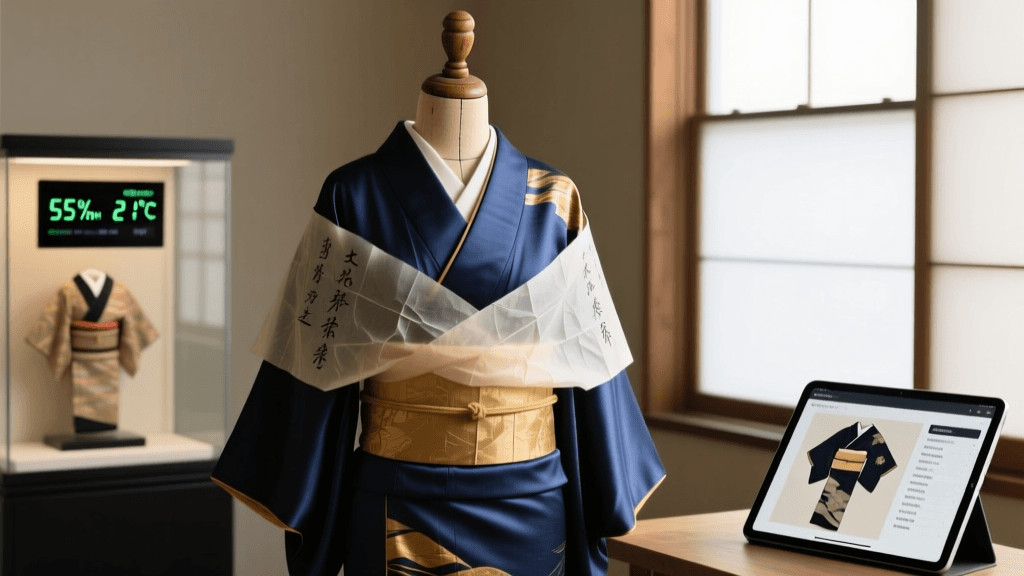
The most significant advancement in textile preservation for 2026 is the accessibility of micro-climate wardrobe systems. Traditional wardrobes often suffer from fluctuating humidity, which causes natural fibers to expand and contract, leading to structural fatigue.
The Victoria and Albert Museum emphasizes in their textile conservation guidelines that maintaining a relative humidity (RH) between 45% and 55%, alongside a stable temperature of around 18°C to 20°C (64°F to 68°F), is the gold standard for mixed-fiber collections. Modern smart-dehumidifying closet inserts introduced this year allow collectors to maintain these exact parameters within standard bedroom wardrobes without the need for dedicated, climate-controlled storage rooms.
Archival Storage Enclosures
Ditch the plastic dry-cleaning bags immediately. Plastic traps off-gassing chemicals and moisture, accelerating the degradation of silk. In 2026, the standard for Hanfu storage involves:
- Unbleached, Washed Cotton Garment Bags: Ideal for hanging garments, allowing the fabric to breathe while protecting against dust and light.
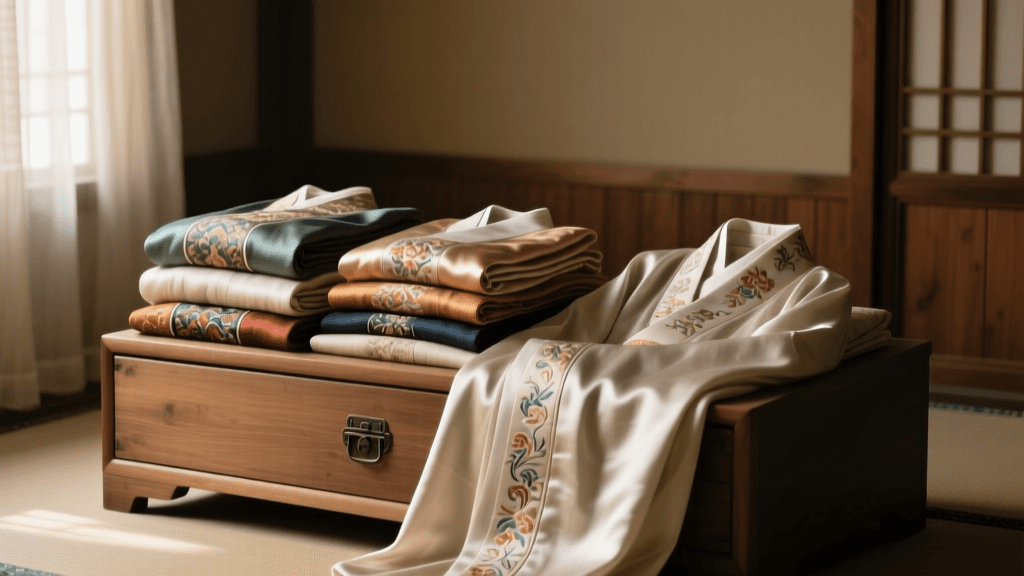
- Acid-Free Archival Boxes: Essential for heavy brocades and embroidered items. Ensure the boxes are lined with unbuffered, acid-free tissue paper to prevent dye transfer and cushion the folds.
- Tyvek Envelopes: For storing detached accessories, such as embroidered Yunjian (cloud shoulders) and Xiapei (stoles), protecting them from snagging on larger garments.
Pest Prevention Without Damaging Delicates
Silverfish, clothes moths, and carpet beetles are the natural enemies of silk and wool. However, traditional chemical mothballs (naphthalene or paradichlorobenzene) are strictly forbidden in modern conservation, as they leave toxic residues and can melt synthetic trims or react with metallic brocade threads.
For 2026, integrated pest management (IPM) relies on natural deterrents and environmental controls:
- Red Cedarwood Blocks: Sustainably sourced cedarwood blocks lightly sanded every six months release natural oils that repel moths. Keep them in breathable cotton sachets so the wood oils do not directly stain the Hanfu silk.
- Dried Lavender and Mugwort (Ai Cao): Historically accurate and highly effective, bundles of dried mugwort placed in the corners of storage boxes provide a traditional aromatic barrier against insects.
- Pheromone Traps: Non-toxic sticky traps placed at the base of the wardrobe monitor for early signs of moth activity without introducing chemicals into the storage environment.
Garment-Specific Storage Methods: Folding vs. Hanging
Not all Hanfu can be treated equally. The decision to hang or fold depends entirely on the garment's cut, weight, and weave structure. Below is the definitive 2026 reference chart for Hanfu storage methodology.
| Garment Type | Primary Fabric Examples | Recommended Storage Method | Maintenance & Rotation Notes |
|---|---|---|---|
| Ruqun (Top & Skirt) | Lightweight Silk, Cotton, Linen | Hanging (Skirt) / Folding (Top) | Use padded hangers for skirts to prevent waistband creasing. Fold tops with acid-free tissue in the sleeves. |
| Aoqun (Lined Jacket & Skirt) | Heavy Brocade, Wool Blends | Flat Archival Box | Never hang heavy lined jackets; the weight will distort the shoulder seams. Refold every 4 months to shift crease lines. |
| Shenyi (Deep Robe) | Mid-weight Silk, Ramie | Hanging (Padded Hanger) | Use wide, contoured wooden hangers wrapped in cotton. Ensure the robe is fully supported to prevent bias stretching. |
| Pifeng (Open Outer Coat) | Sheer Gauze (Luo), Embroidered Silk | Rolled on Acid-Free Tubes | Delicate open-weaves shatter if folded. Roll loosely around archival cardboard tubes covered in washed cotton. |
| Bijia (Padded Vest) | Quilted Cotton, Heavy Silk | Flat Archival Box | Store flat to maintain the integrity of the quilting stitches. Do not compress under heavy items. |
The Art of Archival Folding
When folding Hanfu for box storage, the goal is to minimize sharp creases that can sever silk fibers over time. The traditional Japanese and Chinese method of tatou (flat folding) is highly recommended. Always interleave the garment with unbuffered, acid-free tissue paper. Crumple the tissue paper lightly and stuff it into the sleeves, bodice, and along the fold lines. This creates a soft, rounded cushion at every fold, preventing hard creases and reducing stress on the warp and weft threads.
Pre-Storage Cleaning Protocols
Never store a Hanfu garment that has been worn, even for a few hours. Human perspiration contains salts and acidic compounds that will slowly burn through silk fibers, manifesting as yellow stains and brittle patches months later.
- Hand-Washable Garments: Plain weave silks and linens can be gently hand-washed using a pH-neutral, specialized silk detergent. Rinse thoroughly in cool water and dry flat in the shade. Never wring or twist the fabric.
- Dry-Clean Only: Heavily embroidered pieces, metallic brocades, and structured lined garments must be taken to a specialist dry cleaner who understands historical textiles. Clearly communicate the presence of metallic threads, as standard perc (perchloroethylene) solvents can strip the gilding from traditional brocades. In 2026, liquid silicone-based dry cleaning is the preferred method for delicate Hanfu, as it is gentler on dyes and metallic fibers.
Conclusion: A Commitment to Cultural Stewardship
Maintaining a Hanfu collection in 2026 is an act of cultural stewardship. By adopting museum-grade storage techniques, utilizing modern climate-control technology, and adhering to a strict seasonal rotation schedule, collectors ensure that these magnificent garments remain vibrant and structurally sound. The effort invested in proper maintenance not only protects your financial investment but also honors the centuries of weaving, dyeing, and tailoring traditions embodied in every stitch of your Hanfu.