Hanfu on Global Runways: 2026 International Fashion Week Trends
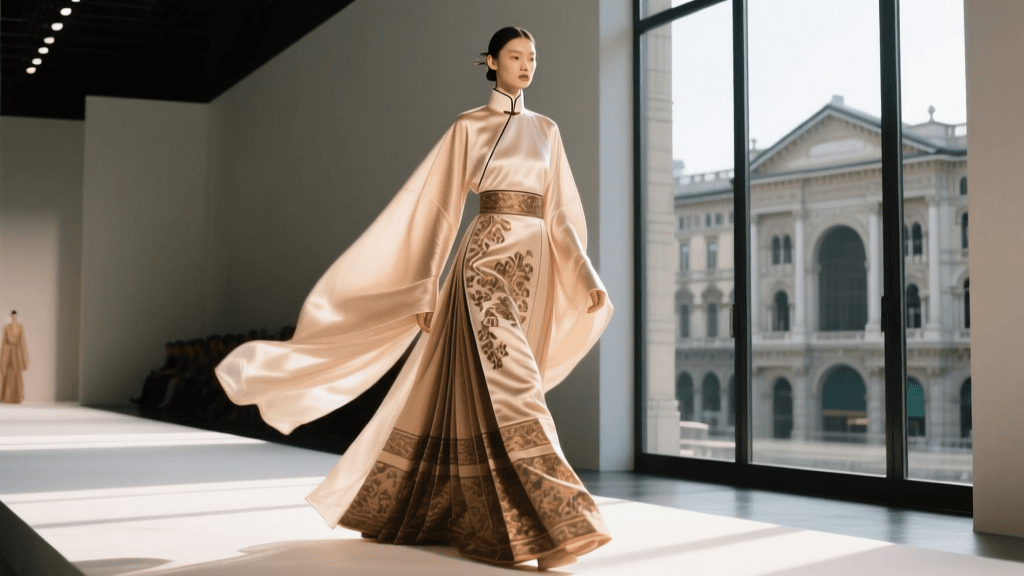
The 2026 Runway Renaissance: Hanfu Meets Haute Couture
The global fashion landscape in 2026 is witnessing an unprecedented integration of traditional Asian garments into mainstream haute couture and ready-to-wear. No longer confined to niche subcultures or historical reenactments, Hanfu—the traditional dress of the Han Chinese—has firmly established its presence on the most prestigious international stages. From the Spring/Summer 2026 collections debuted in Paris to the Fall/Winter 2026 showcases in Milan, designers are reinterpreting ancient silhouettes, weaving centuries-old textile techniques into modern luxury.
This surge is not merely an aesthetic trend; it represents a profound shift in global fashion journalism and consumer demand. International audiences are increasingly seeking garments with deep historical narratives, sustainable production methods, and artisanal craftsmanship. According to recent market analyses tracked by the Business of Fashion's China Market Analysis, the global appetite for heritage-driven Asian fashion has grown exponentially, with European luxury houses actively collaborating with master weavers in Zhejiang and Guangdong to source authentic materials for their 2026 collections.
Key Hanfu Silhouettes Dominating International Fashion Weeks
To understand the impact of Hanfu on the 2026 runways, one must look at the specific historical silhouettes that designers are adapting. The structural genius of traditional Chinese pattern-making—which often relies on geometric, zero-waste cutting rather than complex curved darts—offers a fresh perspective on modern sustainability and fluid tailoring.
| Silhouette | Historical Origin | 2026 Runway Adaptation | Key Styling Elements |
|---|---|---|---|
| Mamianqun (Horse-face Skirt) | Ming Dynasty | Reimagined in heavyweight wool crepe and metallic jacquards for FW26. | Flat front/back panels with deep side pleats; paired with structured blazers. |
| Ruqun (Top and Skirt) | Tang & Song Dynasties | Cropped, cross-collar silk blouses worn over high-waisted, flowing maxi skirts. | Asymmetrical hemlines; sheer organza layering for SS26 evening wear. |
| Beizi (Long Jacket) | Song Dynasty | Minimalist, straight-collar duster coats in matte silk and raw linen. | Worn open as a third piece over modern turtlenecks and tailored trousers. |
| Yisan (One-piece Robe) | Ming Dynasty | Deconstructed and tailored with modern corsetry and utility hardware. | Waist-cinched with wide leather obi belts; prominent pleated lower half. |
Textile Innovation: Xiangyunsha and Eco-Friendly Dyeing
Beyond silhouette, the true luxury of the 2026 Hanfu runway movement lies in its textiles. The most sought-after fabric this season is Xiangyunsha (gambiered Canton gauze), a centuries-old silk dyeing technique that perfectly aligns with the modern demand for natural, eco-friendly dyeing methods. Originating from the Pearl River Delta, this fabric is dyed using the juice of the Dioscorea cirrhosa tuber (a natural plant dye rich in tannins) and subsequently coated in iron-rich river mud.
The result is a stunning, dual-toned silk: a rich, earthy brown on one side and a deep, glossy black on the other. The process is entirely natural, biodegradable, and relies on the specific mineral composition of local river mud and the intense subtropical sun. The cultural and ecological significance of this craft is so profound that it has been recognized by the UNESCO Intangible Cultural Heritage list, which highlights the enduring legacy of Chinese sericulture and silk craftsmanship.
On the Milan runways, Xiangyunsha was featured prominently in outerwear collections, praised for its unique structural memory, water-resistant properties, and the beautiful, organic crackling effect it develops as it ages. Designers are championing this fabric not just for its aesthetic, but as a benchmark for zero-chemical, sustainable luxury.
Sourcing Guide: Where to Buy Authentic Hanfu Textiles in 2026
For independent designers, fashion students, and serious enthusiasts looking to incorporate authentic Hanfu textiles into their own 2026 wardrobes or collections, sourcing directly from heritage ateliers is essential. Here is a practical guide to navigating the market this year:
- Shengzhou (Zhejiang Province): The global capital of silk weaving. For authentic Song brocade (Songjin) and high-grade mulberry silk, buyers should connect with certified mills in Shengzhou. 2026 Pricing: Expect to pay between $40 to $90 USD per meter for premium, heavy-weight brocade suitable for Mamianqun construction.
- Foshan and Shunde (Guangdong Province): The exclusive home of authentic Xiangyunsha. Because the dyeing process requires specific river mud and climate conditions, genuine Xiangyunsha cannot be mass-produced elsewhere. 2026 Pricing: Authentic gambiered gauze ranges from $150 to $300 USD per meter. Beware of synthetic imitations; genuine Xiangyunsha has a distinct, earthy scent and a crisp, paper-like hand feel.
- Suzhou (Jiangsu Province): Renowned for Su embroidery and lightweight silks like Luodi (gauze) and Qiaoqi (crepe). Ideal for the sheer, layered Ruqun styles seen on the Paris SS26 runways. Minimum Order Quantities (MOQs): Many heritage embroidery workshops require MOQs of 50 to 100 meters for custom motifs, but deadstock yardage can often be purchased in 3-to-5-meter increments for personal use.
Styling Neo-Hanfu: Practical Advice for the Modern Wardrobe
Translating runway concepts into everyday wear requires a balance of historical respect and modern practicality. The concept of "Neo-Hanfu" or "Hanfu-inspired daily wear" focuses on integrating traditional elements without requiring the wearer to don a full, historically accurate ensemble, which can be cumbersome for modern commuting.
The Mamianqun as a Statement Piece
The horse-face skirt is arguably the most versatile Hanfu garment for the contemporary wardrobe. A standard Ming-style Mamianqun requires approximately 3.5 to 4.5 meters of fabric to achieve the correct pleat depth and swing. For daily wear in 2026, pair a solid-colored, matte-silk Mamianqun with a fitted, ribbed-knit turtleneck and ankle boots. The flat front panel of the skirt provides a sleek, modern profile, while the side pleats offer dramatic movement.
Layering with the Beizi
The Song dynasty Beizi (long, open-front jacket) is the ultimate transitional layering piece. Cut with straight lines and featuring side slits for ease of movement, a lightweight linen Beizi can be worn over a simple t-shirt and wide-leg trousers. It provides the elegant, elongated vertical lines characteristic of traditional Chinese dress while functioning identically to a modern duster coat or lightweight trench.
Navigating Cultural Appreciation in Global Fashion
As Hanfu continues to capture the attention of international fashion weeks, the conversation surrounding cultural appreciation versus appropriation remains critical. The global fashion industry has a historically fraught relationship with Asian aesthetics, often reducing profound cultural symbols to mere exotic motifs. However, the 2026 runway season has shown a marked improvement in how heritage garments are treated.
Institutions like the Victoria and Albert Museum's Asian Collections have long advocated for the contextualization of historical dress, emphasizing that garments are not just objects of beauty, but artifacts of social history, philosophy, and technological innovation. Leading designers this year are ensuring that their collections credit the specific regional artisans, dynasties, and weaving techniques that inspire their work.
"True appreciation in fashion requires moving beyond superficial orientalism. It demands an understanding of the garment's architecture, the philosophy behind its zero-waste pattern cutting, and the ecological wisdom of its traditional dyeing processes."
For consumers and designers alike, the key to respectful engagement lies in education and direct support. Purchasing from heritage artisans, understanding the difference between a Qing dynasty Manchu garment and a Han dynasty Hanfu garment, and acknowledging the living culture behind the textiles ensures that the global embrace of Hanfu remains a celebration of Asian traditions rather than an extraction of them.
Conclusion
The presence of Hanfu on the 2026 global runways is a testament to the timelessness of Asian traditional garments. By marrying the structural elegance of the Mamianqun and Beizi with the sustainable luxury of Xiangyunsha and Song brocade, the fashion industry is finally giving Chinese heritage dress the platform it deserves. Whether you are a designer sourcing textiles in Guangdong or a fashion enthusiast styling a pleated skirt for a modern wardrobe, the Hanfu movement offers a profound, beautiful connection to history that is firmly rooted in the future of global fashion.