Hanfu Shopping: From Ancient Silk Markets to Modern E-Commerce
The Historical Roots: Chang'an's Bustling Silk Markets
To truly appreciate the modern Hanfu e-commerce boom, one must first look back at the historical procurement of traditional Chinese garments. Long before the advent of digital storefronts and global shipping networks, acquiring traditional Chinese clothing was a deeply localized, tactile, and often lengthy process. During the Tang Dynasty (618–907 CE), the capital city of Chang'an served as the cosmopolitan heart of the Silk Road. The city's famous East Market and West Market were sprawling commercial hubs where merchants from across Asia converged. Here, buyers did not simply purchase ready-to-wear garments off a rack. Instead, they visited specialized stalls to purchase raw materials—bolts of silk, hemp, and ramie—before taking these textiles to local tailors or relying on household weavers to cut and sew the garments according to strict sumptuary laws and seasonal needs.
Silk production and weaving were deeply ingrained in the cultural and economic fabric of China. The meticulous craftsmanship required to produce these textiles was passed down through generations, a legacy so significant that traditional sericulture and silk craftsmanship were eventually added to UNESCO's Intangible Cultural Heritage list. In ancient times, the quality of the silk and the complexity of the weave immediately signaled the wearer's social status, with imperial bureaus strictly controlling the production of brocades and damasks for the aristocracy.
By the Ming Dynasty (1368–1644 CE), the commercialization of textiles had expanded significantly beyond the imperial court. As noted by historical archives at The Metropolitan Museum of Art, Ming era clothing featured intricate weaving techniques, elaborate embroidery, and distinct structural silhouettes like the mamianqun (horse-face skirt). Tailors in bustling urban centers like Suzhou and Hangzhou operated early forms of bespoke ateliers, where wealthy patrons would commission highly customized garments that took weeks or even months to complete. This historical reliance on bespoke, made-to-order craftsmanship is a fascinating precursor to the modern Hanfu market's unique e-commerce model.
The Digital Renaissance: Hanfu on Taobao and Tmall
The transition from physical historical markets to the digital realm began in the early 2000s. What started as a niche interest discussed on internet forums like Baidu Tieba and early blogs quickly evolved into a massive cultural phenomenon known as the Hanfu movement. Today, the Hanfu industry is a multi-billion-dollar market, heavily driven by e-commerce giants like Taobao, Tmall, and independent brand websites. According to cultural institutions such as the Victoria and Albert Museum, the preservation, study, and modern revival of Asian textiles highlight a growing global appetite for traditional garments, bridging the gap between historical artifacts and contemporary fashion.
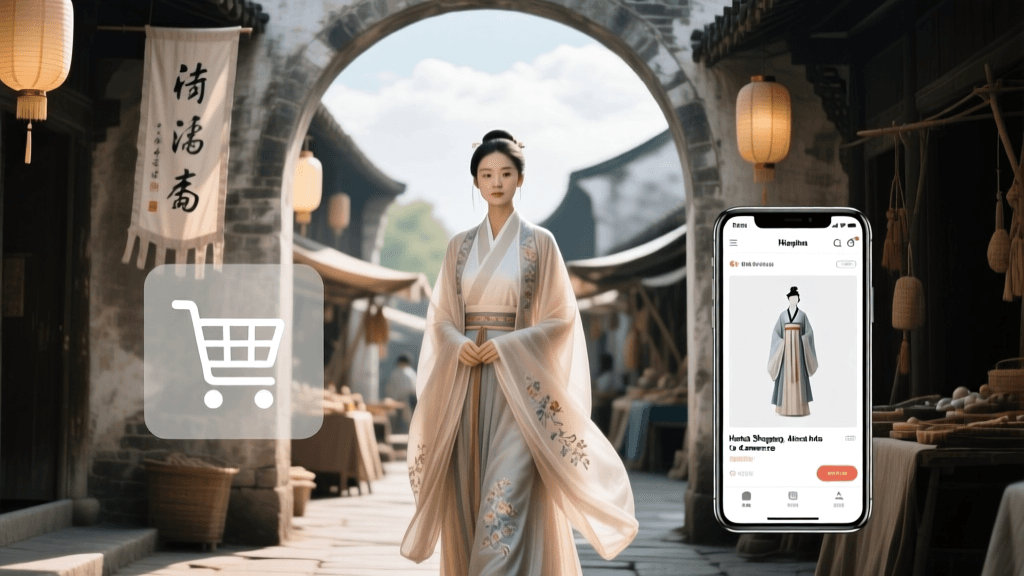
Modern e-commerce has democratized access to Hanfu. Where a Tang Dynasty citizen might have spent weeks negotiating with silk merchants and tailors, today's enthusiast can browse thousands of historically inspired designs from their smartphone. However, the modern Hanfu e-commerce landscape operates differently from standard Western fast-fashion retail. It relies heavily on community feedback, historical accuracy debates, and a unique pre-order ecosystem that mirrors the bespoke nature of ancient tailoring.
Practical Buyer's Guide: Navigating Modern Hanfu E-Commerce
For newcomers and seasoned collectors alike, buying Hanfu online requires an understanding of specific industry practices, sizing paradigms, and seasonal release cycles. Here is actionable advice for navigating the digital marketplace.
Understanding the Pre-Order (Yu Shou) System
Unlike standard retail where items are shipped
- Deposit Phase: Brands release digital renders or prototype photos. Buyers pay a non-refundable deposit (usually 10% to 30% of the total cost) to secure their size.
- Production Phase: The factory weaves the custom fabric and assembles the garments. This typically takes 45 to 90 days.
- Final Payment & Shipping: Once the garments are ready, buyers pay the remaining balance. Items are then shipped within 48 hours.
Actionable Tip: Always check the estimated shipping date on the product page. If you need a Hanfu for a specific festival or event, you must place your order at least three months in advance.
Crucial Measurements for the Perfect Fit
Hanfu sizing does not rely on standard S, M, L conventions. Because traditional garments are designed with flat cutting and generous overlapping, the fit is determined by specific body metrics. When ordering from Taobao or indie studios, have the following measurements ready in centimeters:
- Height & Weight: Used as a baseline for overall garment length and fabric drape.
- Bust & Waist: Crucial for the upper garments (shangyi) and the placement of skirts or trousers.
- Arm Span (Tongxiu): Traditional sleeves are measured from the center of the back of the neck, across the shoulder, down to the wrist. This ensures the iconic long sleeves fall at the correct historical length.
- Skirt Length: Measured from the natural waist to the desired hemline (usually 2-3 cm above the ground to prevent tripping).
E-Commerce Brand Comparison Chart
To help you navigate the market, below is a structured comparison of three highly reputable Hanfu brands available on major e-commerce platforms, categorized by their market tier, pricing, and specialties.
| Brand Name | Market Tier | Price Range (USD) | Specialty & Era Focus | Typical Lead Time |
|---|---|---|---|---|
| Shisan Yu | Budget / Entry | $30 - $80 | Song & Ming daily wear, beginner-friendly sets | In-stock or 15 days |
| Zhongling | Mid-Tier | $80 - $200 | Tang dynasty aesthetics, vibrant colors, floral motifs | 30 - 45 days |
| Minghuatang | High-End / Luxury | $150 - $600+ | Ming dynasty accuracy, genuine silk brocade, gold weaving | 60 - 120 days (Pre-order) |
Strategic Timing: When to Buy
Timing your purchases around major Chinese e-commerce festivals can result in significant savings and exclusive releases.
- 618 Shopping Festival (Mid-June): Ideal for purchasing lightweight summer Hanfu, such as Song dynasty beizi (light jackets) and sheer ramie garments.
- Singles' Day (November 11): The biggest sales event of the year. Brands release heavy winter collections, including wool-lined ruqun and fur-trimmed cloaks (doupeng). Expect heavy discounts on in-stock items and waived deposits on select pre-orders.
- Spring Festival (January/February): Look for limited-edition "New Year" collections featuring auspicious colors like crimson and gold, heavily embroidered with dragons, phoenixes, or peonies.
Tips for International Buyers
For buyers outside of mainland China, purchasing directly from Taobao or brand-specific WeChat mini-programs can be challenging due to language barriers and payment restrictions. The most practical approach is to use a reputable shopping agent (such as Superbuy, CSSBuy, or Sugargoo). These platforms allow you to paste the Taobao product URL into their search bar, pay via international credit cards or PayPal, and have the items shipped to a domestic Chinese warehouse. From there, the agent will take quality-control photos (crucial for checking embroidery alignment and fabric defects) before consolidating your packages for international shipping via DHL, EMS, or specialized e-commerce air freight lines. Always factor in an additional $20 to $50 for international shipping costs, as traditional winter garments and multi-layered sets can be surprisingly heavy.