Building the Perfect Hanfu Capsule Wardrobe: A Beginner's Guide
The Rise of the Hanfu Capsule Wardrobe
The global resurgence of traditional Chinese clothing, widely recognized as the Hanfu movement, has evolved from a niche historical reenactment hobby into a vibrant, everyday fashion subculture. As more enthusiasts seek to integrate these beautiful garments into their daily lives, the concept of a "capsule wardrobe" has become incredibly popular. Rather than purchasing dozens of highly specific, historically rigid outfits that are only worn once a year for festivals, modern practitioners are curating versatile, mix-and-match collections.
A Hanfu capsule wardrobe focuses on cross-dynasty layering, adaptable silhouettes, and durable fabrics. By selecting just five core pieces, you can create dozens of unique outfits suitable for the office, casual weekends, travel, and formal events. This guide will walk you through the essential pieces, fabric choices, sizing nuances, and care instructions needed to build a functional and stunning Hanfu wardrobe.
The Core Philosophy: Mix, Match, and Layer
Traditional Chinese clothing is inherently modular. Unlike Western historical garments that often rely on complex, single-piece tailoring, Hanfu is built on flat-pattern cutting and layering. The fundamental rule of wearing Hanfu is jiao ling you ren (crossing the collar left over right). Beyond this, the system is highly flexible. A skirt from the Ming Dynasty can easily be paired with a lightweight jacket from the Song Dynasty, provided the color palette and fabric weights are harmonious. This modularity is the secret to building a cost-effective and highly wearable capsule collection.
The 5-Piece Essential Capsule Collection
To build a functional wardrobe that spans all four seasons and various social occasions, invest in the following five foundational garments.
1. The Everyday Song Dynasty Beizi (褙子) & Pleated Skirt
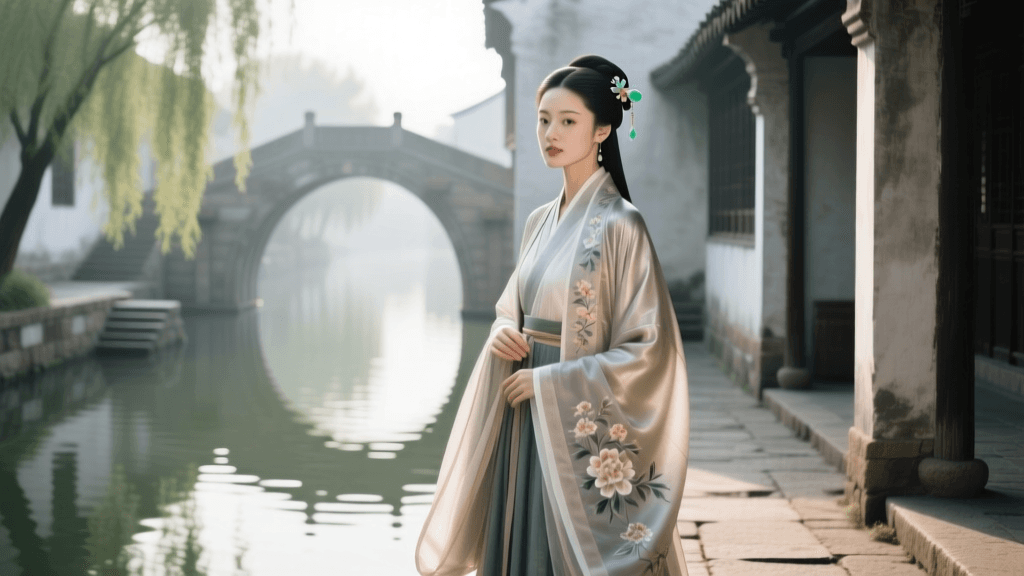
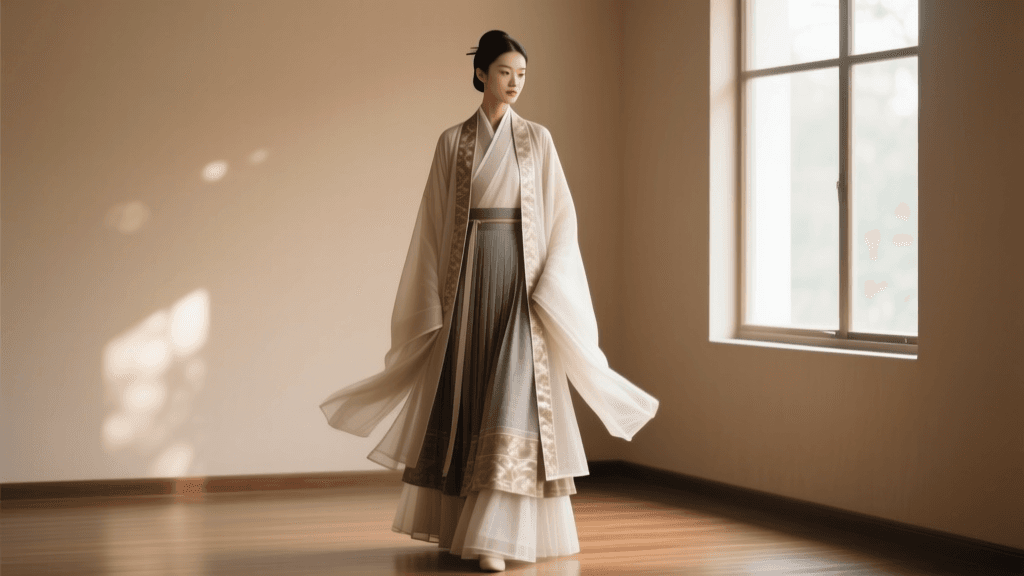
The Beizi is an open-front, long-sleeved jacket that functions similarly to a modern duster or cardigan. It is the ultimate layering piece for spring and summer.
- Measurements: Look for a length of 110cm (falls below the knee) and a sleeve width of 40cm for an elegant drape.
- Pairing: Wear over a modern camisole and a lightweight, solid-colored Song Dynasty pleated skirt (Baizhequn).
- Estimated Cost: $45 - $80 USD for a cotton or linen set.
- Best For: Office casual, museum visits, and warm-weather travel.
2. The Versatile Ming Dynasty Aoqun (袄裙)
When exploring Ming dynasty clothing, the Aoqun (lined jacket and skirt) stands out for its structured elegance and cold-weather practicality. The centerpiece of this look is the Mamianqun (horse-face skirt), featuring flat front and back panels with deeply pleated sides.
- Measurements: Jacket (Ao) length should hit at the hip (approx. 70cm). The Mamianqun should sit at the natural waist and fall to the ankle (approx. 100cm).
- Estimated Cost: $80 - $150 USD. Brocade and jacquard fabrics will push the price higher.
- Best For: Autumn and winter wear, formal dinners, and holiday celebrations.
3. The Classic Tang-Style Qixiong Ruqun (齐胸襦裙)
The high-waisted Ruqun is iconic for its sweeping, romantic silhouette, characterized by a skirt tied above the bust. While historically complex, modern iterations often come with convenient anti-slip silicone strips and pre-tied ribbons.
- Measurements: The skirt length is measured from the armpit to the floor (usually 120cm - 130cm). Ensure the chest circumference allows for a secure wrap.
- Estimated Cost: $60 - $120 USD.
- Best For: Summer festivals, photography, and formal cultural events.
4. Neutral Trousers (Ku) & Short Jacket (Duan Ru)
Skirts are not the only option in traditional Chinese dress. Trousers (Ku) paired with a short, cross-collared jacket (Duan Ru) offer unparalleled mobility.
- Measurements: Trousers should feature a wide, flowing leg (approx. 60cm thigh circumference) with gathered or bound cuffs.
- Estimated Cost: $30 - $50 USD.
- Best For: Loungewear, martial arts or Tai Chi practice, hiking, and windy travel days.
5. The Pifeng (披风) Cape
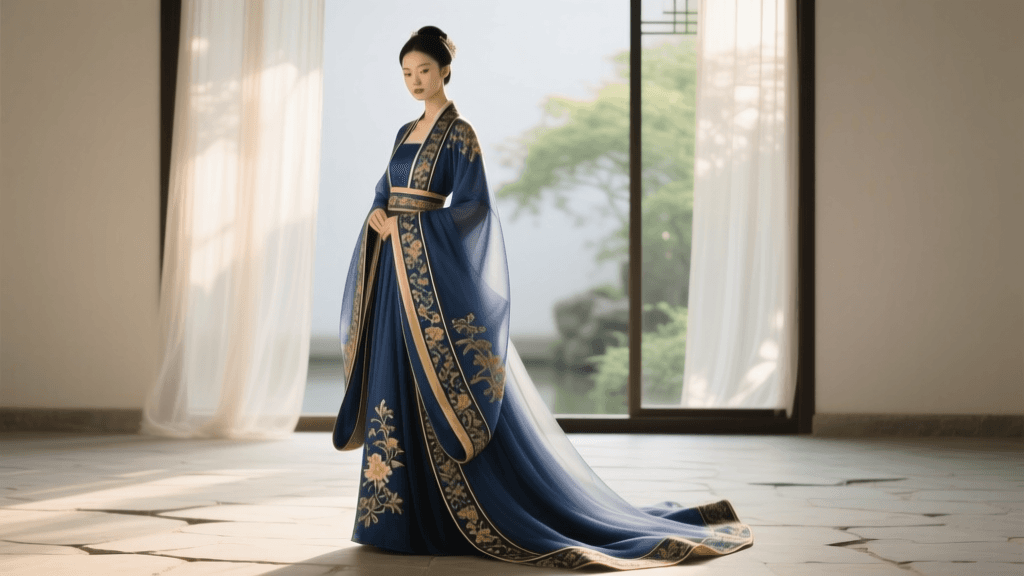
The Pifeng is a traditional cloak with an open front and wide sleeves. It serves as the ultimate transitional outerwear piece, instantly elevating a simple skirt-and-blouse combination into a regal, layered ensemble.
- Measurements: Should fall just above the ankle (115cm) to prevent tripping.
- Estimated Cost: $50 - $100 USD.
- Best For: Winter layering, dramatic photography, and evening events.
Fabric Guide for Your Capsule
Choosing the right textile is critical for comfort and longevity. Below is a comparison chart to help you select fabrics based on your climate and budget.
| Fabric Type | Best Season | Avg. Cost (USD/Yard) | Care Instructions |
|---|---|---|---|
| Mulberry Silk | Summer / Formal | $35 - $80 | Dry clean or gentle hand wash cold; hang dry in shade. |
| Ramie / Linen | Summer / Spring | $15 - $30 | Machine wash gentle; iron while slightly damp to remove wrinkles. |
| Cotton Blends | All Seasons | $10 - $20 | Machine wash warm; tumble dry low; easy to maintain. |
| Jacquard Polyester | Autumn / Winter | $8 - $15 | Machine wash cold; iron on low synthetic setting. |
Sizing, Tailoring, and the Art of the Flat Pattern
Unlike Western clothing, which uses darts and curved seams to contour to the body, traditional Hanfu relies on flat-pattern cutting. This means the garments are naturally oversized and rely on ties, sashes, and layering to create shape. When ordering from overseas vendors or Taobao, pay attention to three critical measurements:
- Shoulder Width (Jian Kuan): While Hanfu shoulders are traditionally dropped, modern adaptations offer tailored shoulder seams. Measure from the edge of one shoulder bone to the other.
- Bust/Waist (Xiong Wei / Yao Wei): For cross-collared tops, the bust measurement must accommodate the overlap of the fabric. Add at least 10-15cm to your actual bust measurement for a comfortable fit.
- Hollow to Hem (Qun Chang): For skirts, measure from your natural waist (or armpit, for Tang styles) down to the floor while wearing the shoes you intend to pair with the garment. Subtract 2cm to prevent the hem from dragging.
Modern Styling and Footwear Integration
You do not need to wear historically accurate, hand-embroidered cloth shoes to complete your look. The modern Hanfu community frequently blends traditional garments with contemporary accessories. For Ming Dynasty Mamianqun, leather Mary Janes or Chelsea boots provide excellent arch support and complement the structured pleats. For Song Dynasty styles, minimalist leather sandals or ballet flats work beautifully. When it comes to hair, modern claw clips, minimalist metal hairpins, and silk scrunchies are widely accepted for daily wear, reserving elaborate wig pieces and heavy metal coronets for conventions and photoshoots.
Care and Maintenance: Preserving the Pleats
The most high-maintenance item in any Hanfu capsule is the Mamianqun. The crisp, knife-pleated sides are achieved through intense heat-setting during manufacturing. To preserve these pleats:
- Washing: Never machine wash a pleated skirt. Hand wash gently in cold water with a mild, pH-neutral detergent.
- Drying: Do not wring the fabric. Gently press out excess water with a towel and hang it on a skirt hanger with clips, ensuring the weight of the wet fabric pulls the pleats straight down.
- Storage: Never fold the skirt in a way that cuts across the pleats. Either hang it in your closet or roll it loosely from the waistband down to the hem before placing it in a drawer.
Conclusion
Building a Hanfu capsule wardrobe is an exercise in mindful consumption and cultural appreciation. By investing in high-quality, versatile pieces like the Song Beizi, the Ming Aoqun, and the traditional Pifeng, you create a sustainable bridge between ancient aesthetics and modern living. Whether you are attending a cultural convention, practicing Tai Chi in the park, or simply enjoying a cup of tea on a quiet afternoon, your capsule collection will ensure you are always dressed with elegance, comfort, and historical reverence.