2026 Hanfu Storage Rotation & Seasonal Fabric Care
Introduction to Hanfu Preservation in 2026
The Hanfu movement has evolved significantly by 2026, transitioning from niche historical reenactment to a sophisticated element of global slow fashion and the Xin Zhongshi (new Chinese style) lifestyle. As collectors and enthusiasts invest heavily in high-end, authentic garments—ranging from delicate mulberry silk Ruqun to heavy, intricate Song brocade Mamianqun (horse-face skirts)—the necessity for museum-grade storage and seasonal rotation has never been more critical. Unlike modern fast fashion, traditional Asian garments utilize natural fibers, complex weaving structures, and delicate metallic threads that demand specialized care. Improper storage can lead to irreversible damage, including silk shattering, brocade warping, and permanent creasing. This comprehensive 2026 guide provides actionable, expert-level strategies for rotating, cleaning, and preserving your Hanfu collection across all four seasons, ensuring your garments remain pristine for generations.
The 2026 Seasonal Rotation Calendar
Rotating your Hanfu wardrobe is not merely about weather appropriateness; it is a vital preservation tactic that gives fibers time to rest and recover their natural structure. In 2026, with climate fluctuations becoming more pronounced, adhering to a strict rotation schedule is essential for textile longevity.
Spring (March to May)
Transitioning from heavy winter wools and padded Ao (jackets) to breathable spring silks and linen blends. This is the time to inspect winter garments for any hidden moisture or localized stains before committing them to long-term storage. Spring cleaning should involve gentle airing and spot-treating any oxidation marks.
Summer (June to August)
The season for lightweight Xiangyunsha (gambiered Canton gauze) and thin ramie. High humidity is the primary enemy here. Garments worn in summer must be aired out immediately after use to prevent sweat and body oils from degrading the natural proteins in silk. Never store summer garments in damp environments.
Autumn (September to November)
The return of layered styles, such as the Beizi (long overcoat) and thicker jacquard weaves. Autumn is the ideal time to perform a deep inventory, condition your storage environment, and prepare your wardrobe for the dry, static-heavy winter months.
Winter (December to February)
Heavy Zhuanghua brocade, velvet, and faux-fur trims dominate. Winter garments are exceptionally heavy and prone to shoulder distortion if hung incorrectly. They require robust support structures during their active season and flat storage during their off-season.
Fabric-Specific Storage Protocols
According to the Victoria and Albert Museum's textile conservation guidelines, natural fibers require distinct microclimates to prevent cellular degradation. Here is how to handle the most common Hanfu textiles in 2026.
Mulberry Silk and Xiangyunsha
Silk is a protein fiber highly sensitive to light, moisture, and acidity. Never store silk in plastic bags, which trap moisture and emit off-gassing chemicals that yellow the fabric. Instead, use unbleached, washed cotton muslin bags or acid-free archival tissue paper. Xiangyunsha, with its unique mud-dyeing and iron-rich coating, requires special attention; it should never be folded sharply, as the stiffened areas can crack over time. Roll Xiangyunsha garments around acid-free cardboard tubes padded with cotton.
Song Brocade and Zhuanghua
These heavy, multi-layered weaves often incorporate metallic threads (gold and silver leaf wrapped around silk cores). The National Park Service Museum Handbook on Textile Preservation warns that metallic threads are highly susceptible to tarnishing and snapping under tension. Brocade Mamianqun should be stored flat in archival boxes with the pleats stuffed with acid-free tissue to maintain their structural knife-pleat integrity without stressing the metallic yarns.
Ramie and Linen
Plant-based cellulose fibers are more resilient to light but prone to hard, permanent creases if folded under weight. Linen Hanfu should be rolled or hung on wide, padded hangers to prevent fiber breakage along fold lines.
Folding vs. Hanging: A Structural Analysis
Choosing the correct physical support method is critical to preventing gravity-induced distortion. Use the table below as a quick reference for your 2026 wardrobe organization.
| Fabric Type | Garment Example | Storage Method | Ideal Support Material | Humidity Target |
|---|---|---|---|---|
| Mulberry Silk | Ruqun, Beizi | Folded with padding | Acid-free tissue paper | 45% - 50% |
| Xiangyunsha | Summer Tops, Skirts | Rolled | Archival cardboard tubes | 50% - 55% |
| Song Brocade | Mamianqun, Winter Ao | Flat / Boxed | Unbleached cotton muslin | 45% - 50% |
| Ramie / Linen | Everyday Hanfu | Hanging (Padded) | Wide velvet hangers | 40% - 50% |
| Metallic Weave | Ceremonial Robes | Flat, Zero Tension | Custom Ethafoam mounts | 40% - 45% |
Climate Control and Smart Pest Management
The modern 2026 smart home ecosystem offers unprecedented tools for textile preservation. Integrating wireless hygrometers into your wardrobe allows you to monitor relative humidity (RH) in real-time. The ideal RH for mixed textile storage is between 45% and 55%. If humidity drops below 40%, silk becomes brittle; above 60%, mold spores activate and metallic threads tarnish rapidly.
The End of Chemical Mothballs
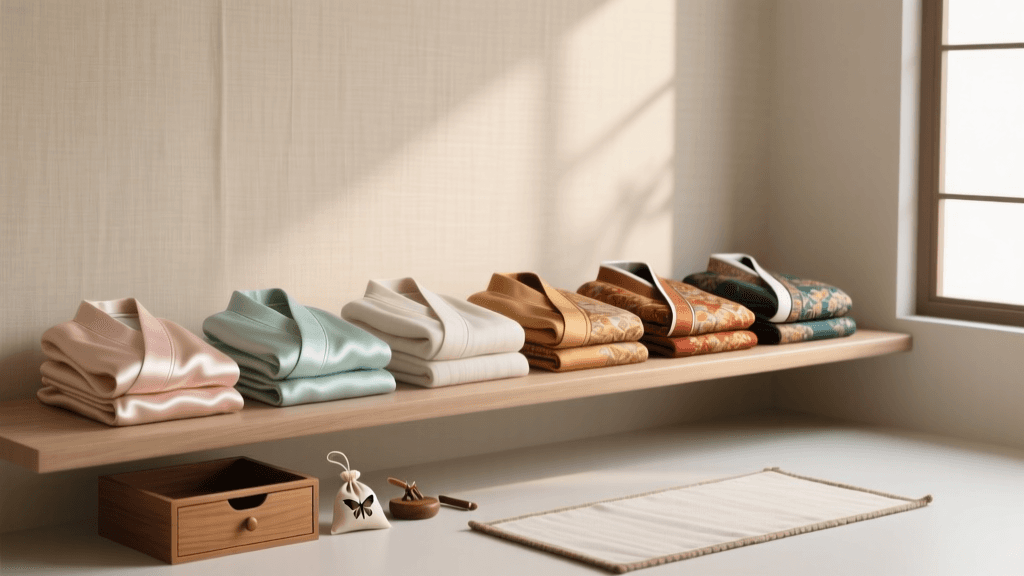
Naphthalene and paradichlorobenzene (traditional mothballs) are now widely recognized as hazardous to both human health and textile dyes. They cause silk to yellow and metallic threads to blacken. In 2026, the gold standard for pest prevention is integrated pest management (IPM). Use untreated cedar wood blocks, which naturally repel insects through their aromatic oils, and refresh them by lightly sanding the surface every six months. Lavender and wormwood (Artemisia) sachets are also traditional, culturally appropriate alternatives that deter silverfish and clothes moths without off-gassing harmful chemicals.
Smart Air Purification
Dust and particulate matter carry acidic pollutants that settle into fabric weaves, acting as abrasives that cut silk fibers over time. Utilizing HEPA air purifiers in your dressing room or storage area significantly reduces the need for frequent, abrasive cleaning cycles.
Pre-Storage Cleaning and Stain Treatment
Never store a worn Hanfu garment, even if it appears clean. Invisible perspiration and skin oils oxidize over time, leading to stubborn brown stains and fiber rot.
Hand-Washing vs. Professional Conservation
While everyday cotton and linen Hanfu can be gently hand-washed using pH-neutral, enzyme-free detergents, structured garments like brocade Mamianqun or heavily embroidered Ao should only be treated by professional textile conservators. Modern 2026 conservation cleaning utilizes liquid carbon dioxide (CO2) technology, which cleans delicate fibers without the harsh agitation or chemical residues of traditional dry cleaning solvents like perchloroethylene.
Airing Out
Before placing a garment into long-term storage, hang it in a shaded, well-ventilated room for 24 hours. This allows any residual moisture from wear or ambient humidity to evaporate, preventing localized mildew growth inside the storage box.
Essential 2026 Archival Storage Investments
Upgrading your storage infrastructure is a one-time investment that saves thousands in textile restoration. In 2026, collectors are moving away from generic plastic bins and embracing specialized archival solutions.
- Coroplast Archival Boxes: Made from inert, corrugated polypropylene, these boxes are the modern standard for flat storage. Unlike cardboard, they do not off-gas acidic compounds, and unlike plastic, they allow the textile to breathe.
- Custom Carved Ethafoam Mounts: For highly structured ceremonial Hanfu or heavy bridal jackets, museum-grade Ethafoam (polyethylene foam) can be carved to support the exact dimensions of the garment, eliminating gravity-induced stress on the shoulders and seams.
- Smart Wardrobe Refreshers: Devices like the 2026 LG Styler feature specialized 'Silk & Delicate Weave' cycles that use gentle steam and low-heat vibration to release odors and sanitize garments without the mechanical agitation that damages loose brocade threads.
Traveling with Hanfu: 2026 Transit Protocols
Attending international design weeks or cultural festivals requires transporting delicate garments safely. In 2026, collectors utilize rigid, waterproof archival transit tubes for rolled silks, preventing crushing in overhead compartments. For structured brocade, custom-fitted hard-shell garment cases with internal suspension straps prevent the weight of the fabric from pulling on the seams during turbulence or transit vibrations. Always pack a portable battery-operated micro-steamer and a few sheets of acid-free tissue paper to address minor creases upon arrival without resorting to harsh hotel irons.
Conclusion
Preserving your Hanfu collection in 2026 requires a blend of ancient wisdom and modern conservation science. By respecting the unique structural needs of silk, brocade, and linen, and by leveraging smart climate monitoring, you ensure that these masterpieces of Asian tradition remain vibrant and wearable. Treat your garments not merely as clothing, but as heirlooms that carry the weight of history and the artistry of the loom.