Hanfu Storage Rotation & Maintenance Guide 2026: Preserve Silk
The Evolution of Hanfu Preservation in 2026
The global renaissance of Hanfu has transformed it from a niche historical interest into a vibrant, everyday wardrobe for millions. As we navigate 2026, the sophistication of Hanfu textiles—from luxurious mulberry silk and intricate gold-leaf embroidery to breathable ramie and textured linen—requires an equally sophisticated approach to garment care. Unlike modern synthetic fast-fashion, traditional Asian garments are crafted from natural, organic fibers that are highly susceptible to environmental fluctuations, protein-hungry pests, and structural degradation. Proper Hanfu storage rotation and seasonal maintenance are no longer just about keeping a tidy closet; they are about acting as a personal archivist for your cultural wardrobe.
In 2026, the integration of smart home technology with traditional textile conservation methods has created a new gold standard for garment care. Whether you are storing a heavy winter Doupeng (cape) or a delicate summer Beizi (jacket), understanding the unique biological and structural needs of your Hanfu is paramount. This comprehensive guide will walk you through the museum-grade techniques, seasonal rotation schedules, and modern climate-control strategies necessary to preserve your collection for generations.
The Science of Natural Fibers: Protein vs. Cellulose
Before diving into storage mechanics, it is critical to understand the chemical nature of your Hanfu fabrics. Traditional garments generally fall into two fiber categories, each requiring a distinct storage environment:
- Protein Fibers (Silk, Wool): Mulberry silk, the cornerstone of luxury Hanfu, is a protein fiber. It is highly sensitive to alkaline substances, direct UV light, and excessive heat. According to the Canadian Conservation Institute, protein-based fibers require unbuffered, acid-free tissue paper for storage, as the alkaline buffers used in standard archival paper can degrade silk proteins over time.
- Cellulose Fibers (Ramie, Linen, Cotton): Plant-based fibers like ramie and linen are highly durable but prone to creasing and mildew if trapped in high-humidity environments. These fibers benefit from buffered acid-free tissue paper, which helps neutralize environmental acids that can cause yellowing and brittleness.
Mixing up your tissue paper types is a common mistake among beginners. In 2026, archival supply companies offer clearly color-coded, pH-tested tissue papers specifically marketed for the modern Hanfu collector, making it easier than ever to separate your silk Ruqun from your linen Songku.
Seasonal Rotation Schedule for Hanfu Wardrobes
A proactive rotation schedule prevents garments from sitting in stagnant environments for too long, which can lead to permanent crease lines and localized fiber weakening. Below is the optimal 2026 seasonal rotation framework for a comprehensive Hanfu wardrobe.
| Season | Primary Hanfu Styles | Storage Action & Preparation | Climate Focus |
|---|---|---|---|
| Spring | Lightweight Beizi, Transitional Aoqun | Transition heavy winter wools to deep storage. Air out spring silks in shaded, breezy areas for 2 hours before wearing. | Monitor for sudden humidity spikes; use silica gel cassettes in drawers. |
| Summer | Banbi (half-sleeves), Ramie Songku, Gauze skirts | Active wear rotation. Wash frequently with pH-neutral detergents. Store in breathable cotton garment bags. | High heat and sweat management. Ensure complete dryness before storing to prevent mildew. |
| Autumn | Layered Ruqun, Light Pifeng (capes) | Prepare for layering. Inspect embroidery for snags. Begin rotating summer gauze into archival boxes. | Temperature fluctuations. Maintain a stable 65-70°F (18-21°C) in the wardrobe. |
| Winter | Wool-lined Mamianqun, Heavy Brocade, Doupeng | Deep clean and store delicate summer silks. Hang heavy winter pieces on wide, padded hangers. | Combat dry indoor heating. Use smart humidifiers to keep ambient humidity above 40%. |
Folding vs. Hanging: Structural Support for Traditional Cuts
The architectural construction of Hanfu dictates how it should be supported in your closet. The flat-cutting method (pingmian caizhi) means that garments lack the darts and structured shoulders of Western tailoring, making them prone to stretching if hung incorrectly.
When to Hang
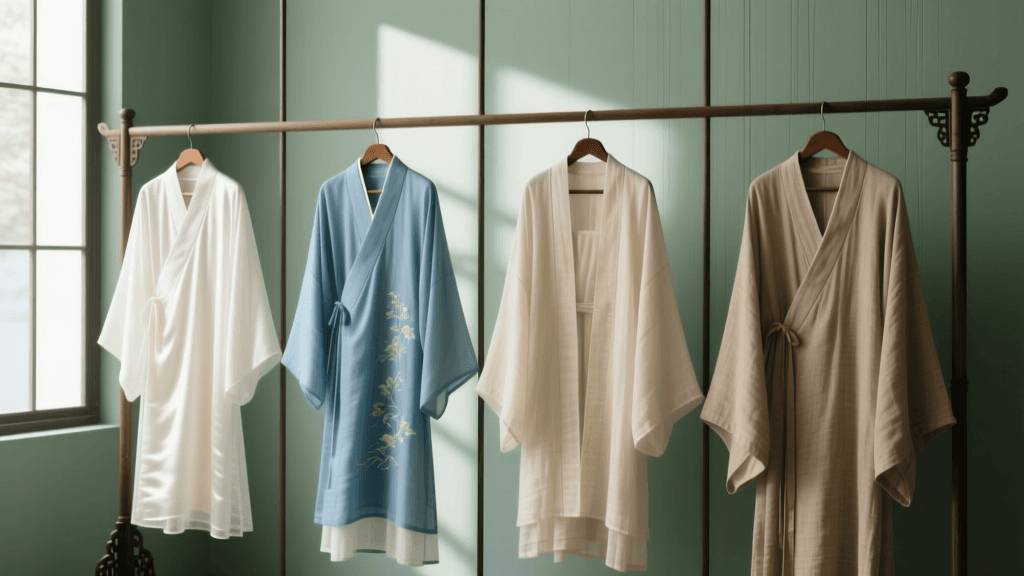
Hanging is suitable for heavy, multi-layered garments and pieces with rigid collars. For example, a heavily embroidered winter Ao (jacket) should be hung on a wide, contoured wooden hanger wrapped in unbleached cotton. Never use wire or thin plastic hangers, as they will create permanent 'dimples' and stress tears in the silk shoulders. The Victoria and Albert Museum's conservation guidelines emphasize that light exposure and fluctuating humidity are primary enemies of hanging textiles, so ensure your hanging garments are kept in dark, UV-filtered closet spaces.
When to Fold
Delicate silks, sheer gauzes, and pleated skirts must be folded to prevent gravity-induced distortion. The Mamianqun (horse-face skirt) presents a unique challenge due to its intricate, knife-pleated side panels. To store a Mamianqun in 2026:
- Lay the skirt flat on a clean, padded surface.
- Align the pleats meticulously using your fingers or a bone folder.
- Place unbuffered acid-free tissue paper inside the folds to prevent the pleats from becoming permanently crushed.
- Roll the skirt loosely around a padded, acid-free tube rather than folding it in half, which will snap the silk threads at the crease line over time.
Climate Control: The 2026 Smart Wardrobe Ecosystem
The days of relying on guesswork for closet humidity are over. In 2026, affordable IoT (Internet of Things) smart hygrometers are a staple for any serious Hanfu collector. These Bluetooth-enabled sensors can be placed inside archival storage boxes and connected to your smartphone, sending push notifications if the relative humidity (RH) drops below 45% or spikes above 55%.
Maintaining an RH of 50% (±5%) is the universal museum standard for mixed textile collections. If the air is too dry, silk becomes brittle and embroidery threads can snap. If the air is too damp, cellulose fibers like ramie will attract mold spores. For walk-in closets, integrating a smart dehumidifier that automatically triggers when your wardrobe sensors detect excess moisture is a highly recommended investment for the modern collector.
Natural Pest Deterrents and Cleaning Protocols
Protein-eating insects, such as carpet beetles and clothes moths, are the natural predators of silk and wool. Historically, collectors relied on toxic mothballs (naphthalene or paradichlorobenzene), which not only damage delicate fibers but also pose severe health risks. The 2026 standard for Hanfu pest control relies entirely on natural, non-toxic botanical repellents.
Building a Botanical Defense
- Virgin Cedarwood Blocks: Sanded cedarwood releases natural oils that repel insects. Lightly sand the blocks every six months to refresh the scent, and ensure they do not directly touch the silk by wrapping them in muslin.
- Lavender and Neem Sachets: Dried lavender buds mixed with a few drops of neem oil create a potent, pleasant-smelling deterrent. Replace the botanical matter annually, as the essential oils evaporate over time.
- Pheromone Traps: Place non-toxic sticky pheromone traps in the corners of your closet to monitor and intercept male moths before they can mate, breaking the reproductive cycle without chemicals.
The Pre-Storage Cleaning Imperative
Never store a Hanfu garment that has been worn, even for just an hour. Human sweat, skin oils, and microscopic food particles act as a beacon for pests and will oxidize into permanent yellow stains over time. For everyday cleaning, use a pH-neutral, enzyme-free silk wash in cold water. Avoid wringing the fabric; instead, roll the garment in a clean, dry cotton towel to press out excess moisture, then lay it flat on a mesh drying rack away from direct sunlight. For heavily structured pieces or those with metallic gold-leaf embroidery, professional dry cleaning by a specialist who understands traditional Asian garments is the only safe option.
Conclusion: Stewardship of Cultural Heritage
Treating your Hanfu collection with museum-grade respect ensures that these garments remain vibrant, structurally sound, and ready to be worn for years to come. By adopting the 2026 standards of smart climate monitoring, utilizing the correct archival materials, and adhering to a strict seasonal rotation schedule, you transition from merely owning clothes to stewarding cultural heritage. Whether you are carefully rolling a pleated Mamianqun or monitoring your closet's humidity via your smartphone, every action you take preserves the intricate artistry of Asian textile traditions for the future.