2026 Hanfu Storage Rotation and Maintenance Guide
The Art and Science of Hanfu Preservation in 2026
As the global appreciation for traditional Chinese clothing continues to flourish in 2026, the Hanfu wardrobe has evolved from a niche collection to a sophisticated array of historical textiles. From the intricate metallic threads of Ming dynasty-style Aoqun (jacket and skirt sets) to the delicate, breathable layers of Tang dynasty Ruqun, these garments are masterpieces of textile engineering. However, the very materials that make Hanfu so breathtaking—mulberry silk, gold-wrapped threads, and natural plant dyes—are highly susceptible to environmental degradation.
Proper Hanfu storage rotation and seasonal maintenance are no longer just about keeping clothes neat; they are about active conservation. In 2026, collectors and everyday wearers alike are adopting museum-grade preservation techniques combined with smart home technology to protect their investments. This comprehensive guide will walk you through the exact methodologies required to rotate, store, and maintain your Hanfu collection across all four seasons, ensuring these cultural treasures remain vibrant for generations.
The Science of Silk and Brocade Preservation
To understand why specific storage methods are required, one must understand the chemical nature of traditional Hanfu fabrics. Silk is a natural protein fiber composed of amino acids. According to the Canadian Conservation Institute, protein fibers are particularly vulnerable to fluctuating relative humidity (RH), direct ultraviolet (UV) light, and alkaline environments. When silk is exposed to high humidity, it can absorb up to 30% of its weight in moisture, creating an ideal breeding ground for mold and mildew. Conversely, excessively dry conditions cause the fibroin proteins to become brittle, leading to irreversible micro-fractures along fold lines.
Brocades, such as the renowned Song Brocade (Song Jin) and Zhuanghua brocade, introduce metallic elements and complex raised weaves. The metallic threads, often made from silver or copper alloys coated in gold, can tarnish rapidly when exposed to sulfur compounds in the air or acidic off-gassing from standard cardboard storage boxes. Therefore, the 2026 standard for Hanfu care strictly mandates the use of archival, acid-free, and lignin-free materials.
The 2026 Seasonal Rotation Strategy
The traditional Chinese practice of Shaiyi (airing out clothes) has been modernized for the contemporary Hanfu enthusiast. Seasonal rotation is critical to prevent permanent creasing and to allow fibers to 'rest' and recover their natural elasticity.
Spring Transition: Preparing for Heat and Humidity
As you transition from heavy winter garments to lightweight spring and summer pieces, your winter Hanfu must be meticulously prepared for long-term storage. Never store a garment that has been worn, even for a few hours. Human perspiration contains salts and urea, which will oxidize over time, leaving permanent yellow stains on silk. In 2026, professional eco-friendly dry cleaning services specializing in heritage textiles are widely available and highly recommended for heavily structured garments like the Mamianqun (horse-face skirt) with stiffened pleats.
Autumn Transition: Reviving Winter Textiles
When bringing out your autumn and winter Hanfu, avoid immediate wear. Unbox the garments in a clean, shaded room with good air circulation. Allow them to breathe for at least 48 hours. This process releases any trapped odors and allows the fibers to acclimatize to the ambient room temperature and humidity, reducing the risk of condensation forming on the fabric.
Advanced Climate and Humidity Control
The single most important factor in Hanfu preservation is climate stability. The ideal environment for silk and brocade is a stable temperature of 65°F to 70°F (18°C to 21°C) with a Relative Humidity (RH) of exactly 50%. In 2026, achieving this is easier than ever thanks to smart wardrobe integrations.
- Smart Hygrometers: Place Bluetooth-enabled temperature and humidity sensors inside your storage closets and archival boxes. Modern apps will alert your smartphone if the RH deviates by more than 5%, allowing for immediate intervention.
- Renewable Silica Gel Units: For enclosed archival boxes, use wireless, renewable silica gel dehumidifiers. These units absorb excess moisture and can be recharged simply by plugging them into a wall outlet, eliminating the need for disposable chemical desiccants that can leak and damage fabrics.
- UV-Blocking Window Films: If your wardrobe or storage area is near a window, apply 99% UV-blocking architectural films to the glass. UV radiation is the primary catalyst for the photodegradation of natural plant dyes used in traditional Hanfu.
Fabric-Specific Maintenance Matrix
Different Hanfu fabrics require vastly different storage and maintenance protocols. Use the following matrix to organize your wardrobe rotation:
| Fabric Type | Garment Example | Storage Method | Pest Vulnerability | Maintenance Frequency |
|---|---|---|---|---|
| Song Brocade (Song Jin) | Ming-style Aoqun | Flat archival box with unbuffered tissue | Moderate (Silverfish) | Inspect and refold every 4 months |
| Xiangyunsha (Gambiered Gauze) | Summer Ruqun | Hanging on padded hangers in breathable cotton bags | Low | Air out bi-annually; avoid folding |
| Silk Chiffon / Georgette | Tang-style Banbi | Loose rolling with acid-free tissue in drawers | High (Clothes Moths) | Inspect every 2 months during summer |
| Ramie / Hemp Blends | Song dynasty Beizi | Folded in cedar-lined drawers | Low | Wash and starch annually |
Pest Management Without Chemicals
Historically, mothballs containing naphthalene or paradichlorobenzene were used to protect textiles. In 2026, these chemicals are strictly forbidden in heritage garment care. Not only are they toxic to humans, but their aggressive off-gassing can chemically alter silk proteins and dissolve the delicate adhesives used in metallic thread brocades.
Instead, modern conservationists rely on integrated pest management (IPM) strategies. According to research on textile preservation from Penn State Extension, natural repellents and environmental controls are far safer and highly effective. Implement the following natural defenses:
- Eastern Red Cedar: Use untreated, aromatic Eastern Red Cedar blocks or rings. Cedar contains natural oils that repel adult clothes moths. Sand the wood lightly every six months to release fresh oils.
- Lavender and Neem: Sachets of dried lavender and neem leaves provide a secondary layer of pest deterrence while imparting a subtle, historically appropriate fragrance to the wardrobe.
- Pheromone Traps: Place non-toxic clothes moth pheromone traps in the corners of your storage room. These traps catch male moths, disrupting the breeding cycle and serving as an early warning system for infestations.
The Art of Folding vs. Hanging
One of the most debated topics in the 2026 Hanfu community is whether to fold or hang. The answer depends entirely on the garment's structure and weight.
When to Hang
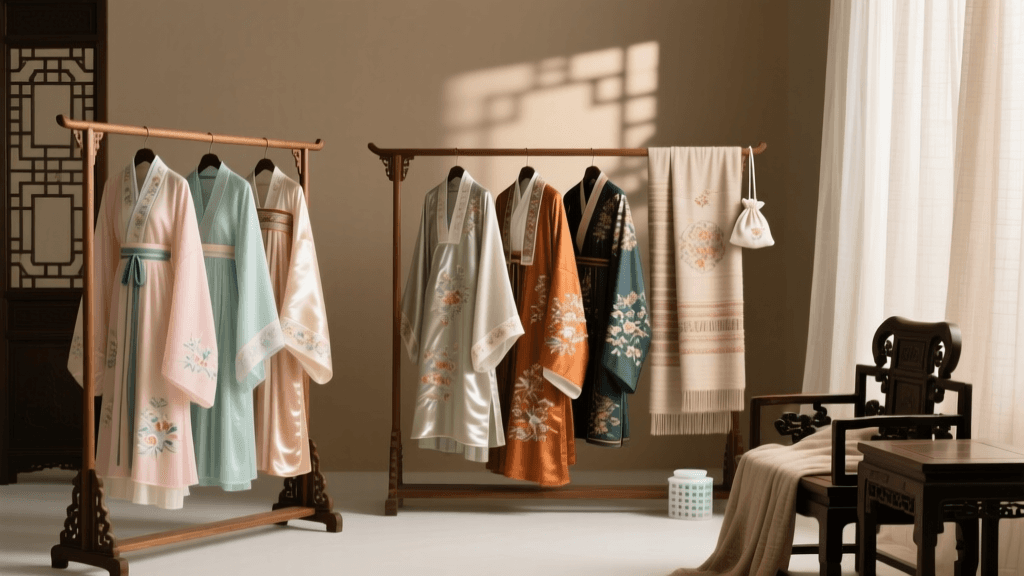
Garments with structured shoulders, such as the Yuanlingpao (round-collar robe) or heavily layered Xiangyunsha pieces, should be hung. However, never use wire or thin plastic hangers. The weight of the silk will cause the fabric to stretch and tear at the shoulder seams over time. Invest in wide, contoured wooden hangers wrapped in washed, unbleached cotton muslin to provide adequate support and prevent acidic wood resins from contacting the fabric.
When to Fold and Roll
Heavy skirts, particularly the pleated Mamianqun, should never be hung, as the sheer weight of the fabric will pull the pleats out of alignment and stress the waistband. Instead, use the 'roll' method. Lay the skirt flat, stuff the pleats loosely with unbuffered, acid-free archival tissue paper to maintain their shape, and gently roll the garment around a sturdy, acid-free cardboard tube wrapped in muslin. This eliminates hard fold lines and prevents permanent creasing.
'A garment cared for in the spring will shine in the winter. The preservation of silk is not merely a chore, but a dialogue with the artisans who wove it.' — Traditional Textile Proverb
Conclusion: A Commitment to Cultural Heritage
Maintaining a Hanfu wardrobe in 2026 requires a blend of ancient respect and modern science. By implementing a strict seasonal rotation schedule, utilizing smart climate monitoring, and adhering to archival storage standards, you are doing more than protecting clothing; you are safeguarding a living cultural heritage. Whether you are a collector of rare antique weaves or a daily wearer of modern reproductions, these maintenance practices will ensure your Hanfu remains as breathtaking tomorrow as it was the day it was first woven.