The Hanfu Revival: A Beginner’s Guide to Everyday Hanfu Styling
The Hanfu Revival: From Niche Hobby to Mainstream Streetwear
The Hanfu revival movement, known in Chinese as Hanfu Yundong (汉服运动), is one of the most fascinating cultural phenomena of the 21st century. What began in the early 2000s as a niche internet forum discussion about the lost sartorial heritage of the Han Chinese has blossomed into a multi-billion-dollar fashion industry. Unlike historical reenactment or theatrical costuming, the modern Hanfu movement is deeply rooted in everyday wearability. Young people across China—and increasingly around the world—are integrating traditional garments into their daily wardrobes, wearing them to universities, offices, and cafes.
According to the comprehensive timeline documented by researchers on Wikipedia's Hanfu Movement page, the catalyst for the modern revival is widely attributed to Wang Letian, who in 2003 walked the streets of Zhengzhou in a self-made traditional Hanfu. This act of cultural reclamation sparked online communities on Baidu Tieba, eventually migrating to visual platforms like Weibo, Xiaohongshu, and Douyin (TikTok). Today, the movement is less about strict historical dogmatism and more about cultural confidence, aesthetic expression, and the seamless blending of ancient silhouettes with modern lifestyles.
Choosing Your First Hanfu: Song vs. Ming Dynasty Styles
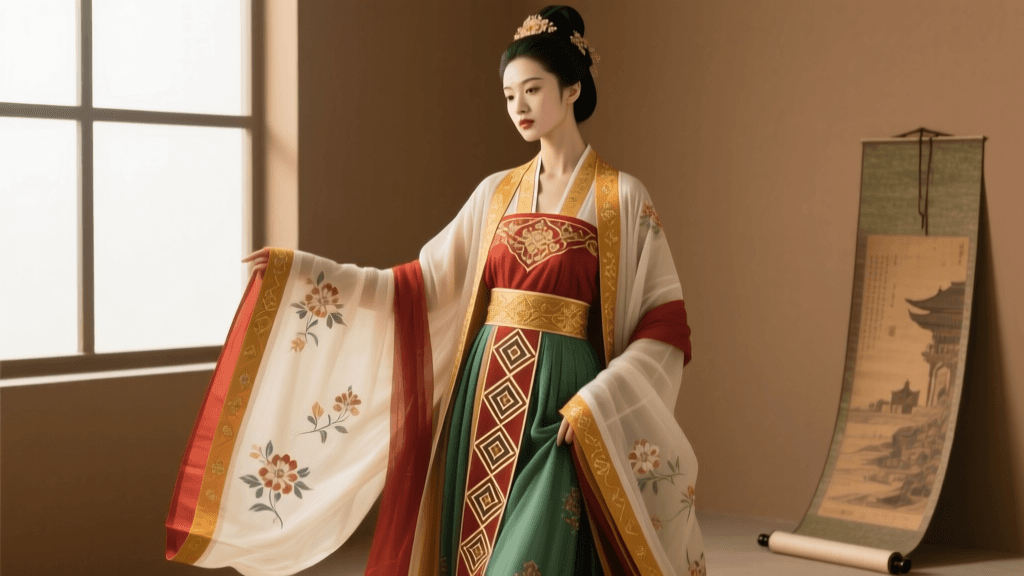
For beginners looking to transition Hanfu from a ceremonial costume to a practical daily wardrobe, the Song (960–1279 AD) and Ming (1368–1644 AD) dynasties offer the most versatile and accessible silhouettes. While the Tang Dynasty is famous for its opulent, sweeping sleeves and vibrant silks, its garments are often too cumbersome for modern commuting. Song and Ming styles, conversely, align beautifully with contemporary fashion sensibilities.
The Song Dynasty: Minimalist Elegance for Warmer Months
Song Dynasty clothing is characterized by its slender, understated, and highly layered aesthetic. It is the ultimate choice for spring and summer everyday wear. The core trio of a Song wardrobe includes the Moxiong (a structured tube top or camisole), the Baidiequn (a pleated skirt with a wrapped front panel), and the Beizi (an open-front, long-sleeved jacket that drapes elegantly over the body). The Beizi functions remarkably well as a modern duster coat or lightweight cardigan, making it incredibly easy to layer over contemporary blouses or even denim.
The Ming Dynasty: Structured Sophistication for Cooler Weather
Ming Dynasty Hanfu is renowned for its structured tailoring, high collars, and intricate textiles. It is the gold standard for autumn and winter fashion. The foundational piece of the Ming wardrobe is the Mamianqun (horse-face skirt), a wrap skirt featuring flat front and back panels with deep pleats on the sides. Paired with an Ao (a lined jacket with a stand-up collar and front fastenings) or a Pifeng (a wide-sleeved cape or cloak), Ming Hanfu offers warmth, modesty, and a striking architectural silhouette that commands attention in any modern urban setting.
| Feature | Song Dynasty Hanfu | Ming Dynasty Hanfu |
|---|---|---|
| Key Garments | Moxiong, Beizi, Baidiequn | Ao, Pifeng, Mamianqun |
| Silhouette | Slender, flowing, A-line, layered | Structured, A-line, voluminous, high-collared |
| Best Season | Spring and Summer | Autumn and Winter |
| Modern Equivalents | Slip dresses, duster coats, pleated midi skirts | Blazers, capes, wrap skirts, turtlenecks |
| Entry Cost (USD) | $45 - $85 | $70 - $150 |
Navigating the Market: Taobao, Pre-orders, and Terminology
Purchasing authentic Hanfu requires understanding the unique e-commerce ecosystem of Chinese platforms like Taobao and Tmall. Unlike Western fast fashion, the Hanfu market operates heavily on a pre-order model. Understanding the following terminology is crucial for international buyers:
- Xianhuo (现货): In-stock items. These will ship within 48 hours and are ideal for beginners who want immediate gratification.
- Yushou (预售): Pre-order items. Brands release digital renders or samples, and buyers place deposits. The manufacturing process typically takes 30 to 60 days. This system prevents overproduction and waste but requires immense patience.
- Zheng (正) vs. Shan (山): Zheng refers to original, authentic designs from established brands. Shan refers to counterfeit or stolen designs. The Hanfu community strictly boycotts Shan to protect the intellectual property of independent designers and traditional textile researchers.
Budgeting for Your Wardrobe
The cost of Hanfu varies wildly based on fabric quality, historical accuracy, and brand prestige. Entry-level brands like Shisan Yu (十三余) and Zhongling (钟灵记) offer beautiful, mass-produced sets ranging from $40 to $90 USD. These are perfect for beginners. Mid-tier brands like Tingyue Fengming offer superior jacquard weaves and better tailoring for $100 to $250 USD. At the pinnacle of the market sits Ming Hua Tang (明华堂), a luxury brand that meticulously researches historical artifacts to recreate museum-grade Ming garments. A single Mamianqun or Pifeng from Ming Hua Tang can cost anywhere from $500 to over $2,000 USD, representing an investment in wearable heritage.
Essential Measurements for a Perfect Fit
Hanfu sizing does not always align with standard Western S/M/L charts. Because traditional garments are often cut from flat, rectangular pieces of fabric designed to drape rather than cling, specific measurements are required to ensure the sleeves and skirts fall correctly. When ordering from Taobao, have a tailor's tape measure ready and record the following in centimeters:
- Xiongwei (Bust): Measure around the fullest part of your chest. For Ming dynasty jackets (Ao), add 4-6 cm for comfortable layering over modern undergarments.
- Yaowei (Waist): Measure your natural waist (the narrowest part of your torso). This is crucial for the placement of the skirt ties.
- Tunwei (Hips): Measure the fullest part of your hips. Essential for ensuring the flat panels of a Mamianqun do not pull open awkwardly when walking.
- Skirt Length: Measure from your natural waist down to your ankle bone. Most ready-to-wear Mamianqun come in lengths of 100cm, 105cm, or 110cm. The hem should ideally hover 2-3 cm above the ground to prevent tripping and fabric damage.
- Arm Span (Sleeve Length): Hanfu sleeves are categorized by their return length. Ban Xiu (half-return) sleeves end at the wrists or mid-hand, ideal for typing and commuting. Quan Xiu (full-return) sleeves extend past the fingertips and fold back, reserved for formal events and photography. Measure from the base of your neck, over the shoulder, down to the wrist to determine your ideal sleeve drop.
Modern Styling: Blending Tradition with Contemporary Fashion
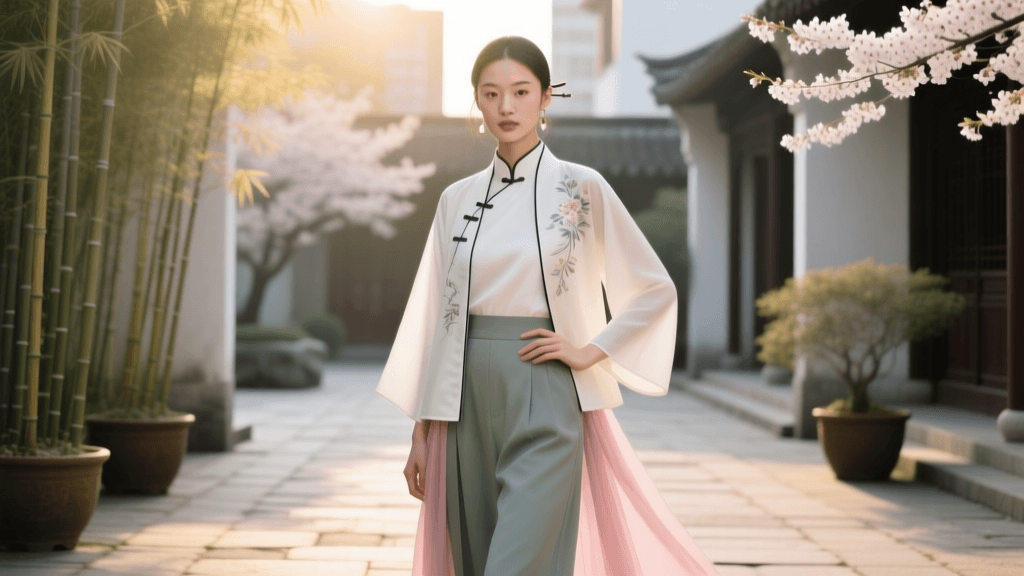
The true success of the Hanfu revival lies in its adaptability. Purists may advocate for head-to-toe historical accuracy, but the modern street-style movement encourages eclectic mixing. As noted by cultural journalists at The World of Chinese, the new generation of Hanfu enthusiasts are redefining Chinese fashion by treating these garments as modular components of a global wardrobe.
Footwear and Accessories
You do not need traditional embroidered cloth shoes (Xiuhua Xie) to wear Hanfu. In fact, modern footwear often grounds the outfit, making it suitable for city streets. For Song Dynasty skirts, pair them with leather Mary Janes, loafers, or even clean white sneakers for a casual, youthful look. For the heavier, structured Ming Dynasty Mamianqun, Chelsea boots or combat boots provide a striking, avant-garde contrast that emphasizes the architectural pleats of the skirt.
When it comes to bags, modern leather handbags, canvas totes, and structured briefcases work seamlessly. The key to styling is balancing the volume of the Hanfu. If you are wearing a wide-sleeved Pifeng, keep your hairstyle relatively neat—such as a modern low bun or a sleek ponytail—to avoid looking overwhelmed by fabric.
Garment Care: Preserving Your Investment
Traditional textiles require specific care to maintain their structural integrity and vibrant colors. Many modern Hanfu pieces, particularly Ming Dynasty skirts, utilize Zhi Jin (woven metallic threads) or delicate jacquard weaves. Never machine wash a Mamianqun. The agitation will destroy the pleats and cause the metallic threads to fray or tarnish.
"The Hanfu movement is not just about wearing old clothes; it is an active dialogue with history, requiring us to understand the craftsmanship, the textiles, and the philosophy of harmony that dictated how these garments were originally made and maintained." — Community guidelines from New Hanfu, a leading English-language Hanfu educational platform.
For routine cleaning, spot clean with a damp cloth or hand wash gently in cold water using a pH-neutral silk detergent. To maintain the sharp, knife-like pleats of a Mamianqun, hang the skirt on a specialized multi-clip hanger immediately after washing, allowing the weight of the wet fabric to pull the pleats straight. Use a handheld garment steamer rather than a flat iron, as direct heat can melt synthetic fibers and flatten the intricate woven patterns.
The Future of Everyday Hanfu
The Hanfu revival has successfully transitioned from a niche historical society to a vibrant, living fashion subculture. By understanding the distinctions between dynastic styles, mastering the nuances of traditional sizing, and embracing modern styling techniques, anyone can participate in this sartorial renaissance. Whether you are stepping out in a breezy Song Dynasty Beizi for a summer coffee run or wrapping yourself in a luxurious Ming Dynasty Mamianqun for a winter gallery opening, wearing Hanfu today is a profound, beautiful way to carry centuries of Asian tradition into the modern world.