Hanfu Revival Movement: A Practical Guide to Authentic Styling
The Rise of the Hanfu Revival Movement
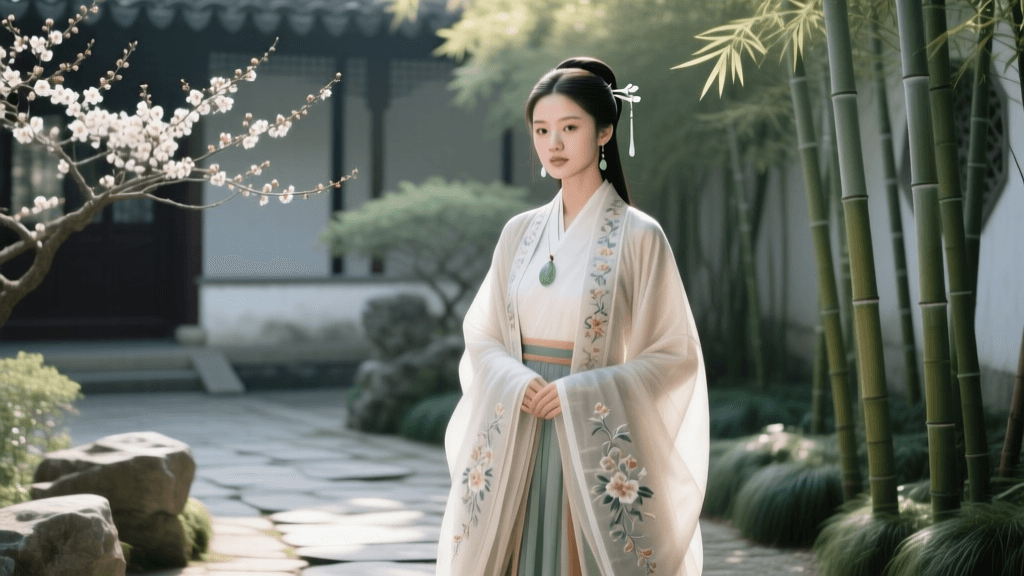
The Hanfu revival movement, known in Chinese as Hanfu Yundong (汉服运动), is a grassroots cultural phenomenon that has transformed the fashion landscape of China and the global Asian diaspora. What began in the early 2000s as a niche online forum discussion about reclaiming pre-Qing dynasty Han Chinese clothing has blossomed into a multi-billion-dollar industry. Today, millions of young enthusiasts, known as Tongpao (同袍, meaning 'companions of the same robe'), wear Hanfu not just for festivals, but as everyday streetwear, office attire, and high fashion.
According to cultural observers and industry reports, the movement is driven by a desire for cultural identity and aesthetic appreciation. As noted by Wikipedia's comprehensive overview of the Hanfu Movement, the revival seeks to restore the traditional dress of the Han ethnic group, which was largely suppressed during the Qing Dynasty (1644–1911) due to the Tifayifu policy. Today, the movement emphasizes historical accuracy, textile craftsmanship, and modern adaptability.
Understanding Authentic Hanfu Silhouettes
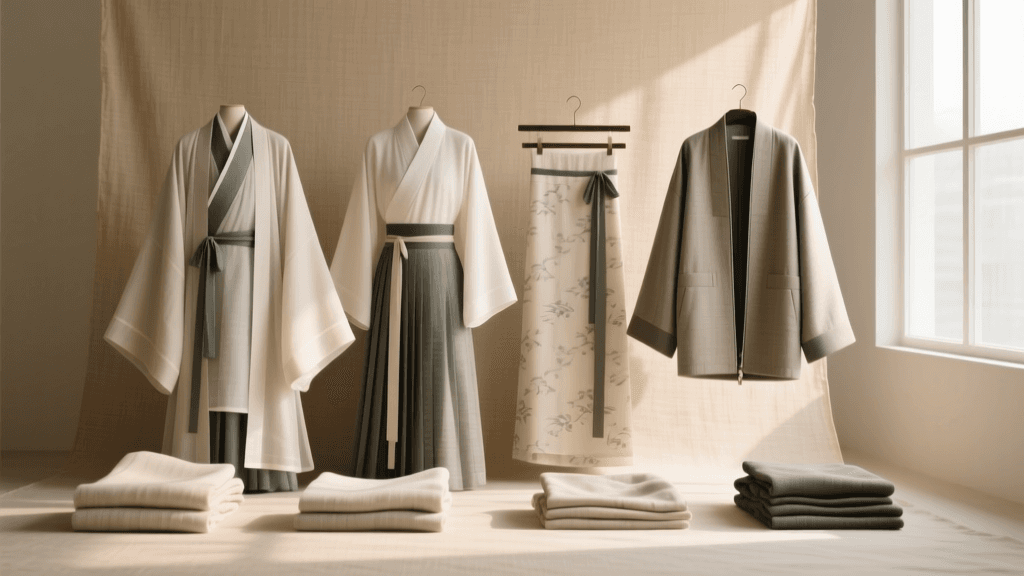
To participate in the revival authentically, one must understand the foundational silhouettes of Hanfu. Unlike modern Western tailoring, which relies on darts and structured seams to fit the body's contours, traditional Hanfu utilizes flat-pattern cutting. The fabric is draped, tied, and layered, creating a flowing, elegant silhouette that accommodates various body types.
| Silhouette Name | Era / Origin | Key Characteristics | Best For |
|---|---|---|---|
| Ruqun (襦裙) | Pre-Qin to Ming | A short top (Ru) paired with a high-waisted or waist-level skirt (Qun). | Summer wear, beginners, casual outings. |
| Aoqun (袄裙) | Ming Dynasty | A lined, longer top (Ao) worn over a pleated skirt (Mamianqun). | Autumn/Winter, formal events, office wear. |
| Shenyi (深衣) | Han Dynasty | A one-piece robe where the top and bottom are sewn together, wrapping the body deeply. | Scholarly aesthetics, ceremonies, tea rituals. |
| Yuanlingpao (圆领袍) | Tang / Song / Ming | A round-collared robe, often worn with a leather belt and boots. | Gender-neutral styling, equestrian looks, travel. |
| Beizi (褙子) | Song Dynasty | A long, open-front coat with straight collars, worn over inner garments. | Spring layering, elegant and minimalist aesthetics. |
Practical Buying Guide: Costs, Fabrics, and Sizing
Entering the Hanfu market can be overwhelming due to the sheer volume of options on platforms like Taobao and Tmall. To build a functional and historically respectful wardrobe, you must navigate sizing, fabric choices, and price tiers.
Navigating Measurements and Sizing
Hanfu sizing differs vastly from Western sizing (S, M, L). Most reputable Hanfu brands require specific body measurements in centimeters. When ordering, you will need to provide:
- Chest (Xiong / 胸围): Measure around the fullest part of your bust. For cross-collar tops (Jiaoling Youren), add 5-10 cm to your actual measurement to ensure the collar lies flat without gaping.
- Waist (Yao / 腰围): Crucial for Mamianqun (horse-face skirts). Measure your natural waist or where you intend the skirt to sit (often higher than modern waistlines).
- Height (Shengao / 身高) & Skirt Length: A standard Mamianqun should hit just above the ankle bone. If you are 165 cm tall, a 100-105 cm skirt length is typically ideal.
- Arm Length (Bi / 臂长): Traditional Hanfu sleeves (especially Pipa sleeves or Guangxiu) are meant to extend past the fingertips. Measure from the base of your neck, over the shoulder, to your wrist, then add 10-15 cm for the traditional drape.
Cost Tiers and Recommended Brands
Based on market analyses detailed in resources like China Highlights' cultural guides, the Hanfu market is segmented into distinct price tiers:
- Entry-Level ($30 - $60 USD): Brands like Shisan Yu (十三余) and Hantiange offer affordable, mass-produced sets. These are often made from polyester blends or cotton-linen. They are excellent for beginners, cosplay-adjacent photoshoots, and casual wear, though they may lack historical precision in patterns.
- Mid-Tier ($80 - $150 USD): Brands such as Zhongni (钟灵记) and Tingyue (听月小筑) focus on better fabric quality (like jacquard weaves and rayon-silk blends) and historically accurate motifs derived from museum artifacts. This is the sweet spot for dedicated Tongpao.
- High-End & Custom ($200 - $1,000+ USD): Brands like Minghuatang (明华堂) are the gold standard for Ming Dynasty reproduction. They use authentic silk brocades, real gold thread, and traditional weaving techniques. A single Mamianqun from Minghuatang can take months to produce and cost upwards of $500 USD.
Essential Taobao Search Terms
If you are sourcing directly from Chinese e-commerce platforms, using the correct terminology is vital to avoid cheap, inaccurate costumes (often labeled as 'ancient costume' or 古装). Always search for 汉服 (Hanfu) paired with specific dynasty names or garment types. For example, search 明制汉服 (Ming Dynasty Hanfu) for structured, elegant winter sets, or 宋制汉服 (Song Dynasty Hanfu) for lightweight, minimalist summer layers. Look for the 正品 (authentic/original) tag to support original designers and avoid stolen patterns.
Styling and Accessorizing for Modern Wear
The Hanfu revival is not about wearing a museum replica in a vacuum; it is about integrating traditional aesthetics into modern life. Proper styling bridges the gap between ancient elegance and contemporary practicality.
Inner Garments and Modesty
Traditional cross-collar tops can sometimes slip or gape. Modern Hanfu wearers solve this by wearing a Moxiong (抹胸), a traditional tube top, or a modern camisole in a matching or neutral color underneath. For Mamianqun, wearing a cotton slip skirt underneath prevents the pleats from clinging to your legs in windy weather and adds volume to the silhouette.
Hair and Accessories
You do not need to spend hours constructing elaborate historical updos to wear Hanfu. The modern revival embraces practicality. A simple half-up, half-down style secured with a Zan (single-prong hair stick) or a Chai (double-prong hairpin) is highly acceptable. For those with short hair, purchasing a high-quality synthetic silk wig from Taobao (search term: 汉服假发) allows you to achieve the traditional flowing look. Finish the outfit with Yuntouxie (cloud-head shoes), which are traditional embroidered flats that provide comfort for all-day walking while maintaining the historical aesthetic.
Caring for Your Hanfu Wardrobe
Investing in Hanfu requires a commitment to proper garment care, especially when dealing with delicate traditional textiles.
- Washing: Never machine-wash silk or brocade Hanfu. Hand wash in cold water using a pH-neutral detergent (like Eucalan or specialized silk wash). For heavily embroidered Mamianqun, spot clean or dry clean only to prevent the metallic threads from tarnishing or fraying.
- Drying: Never wring out Hanfu. Gently press the water out in a clean towel and lay the garment flat to dry away from direct sunlight, which can fade natural dyes.
- Ironing and Pleat Maintenance: The iconic knife pleats of a Ming Dynasty Mamianqun require maintenance. After washing, use a low-heat steam iron. To keep the pleats sharp during storage, hang the skirt using a specialized skirt hanger with clips, and place a piece of cardboard folded along the pleat lines before pressing.
The Future of the Movement
As reported by major cultural publications, including insights found in South China Morning Post's coverage of the Hanfu trend, the movement is expanding beyond China's borders. International Hanfu clubs in universities across North America, Europe, and Southeast Asia are hosting lantern festivals, tea ceremonies, and archery events in full traditional dress. The Hanfu revival is no longer just a fashion trend; it is a living, breathing renaissance of Asian material culture. By understanding the silhouettes, investing in quality garments, and styling them with respect for their origins, you can actively participate in this beautiful cultural continuum.