The Evolution of Hanfu Retail: From Silk Markets to E-Commerce
The Historical Roots: Silk Markets, Guilds, and the Silk Road
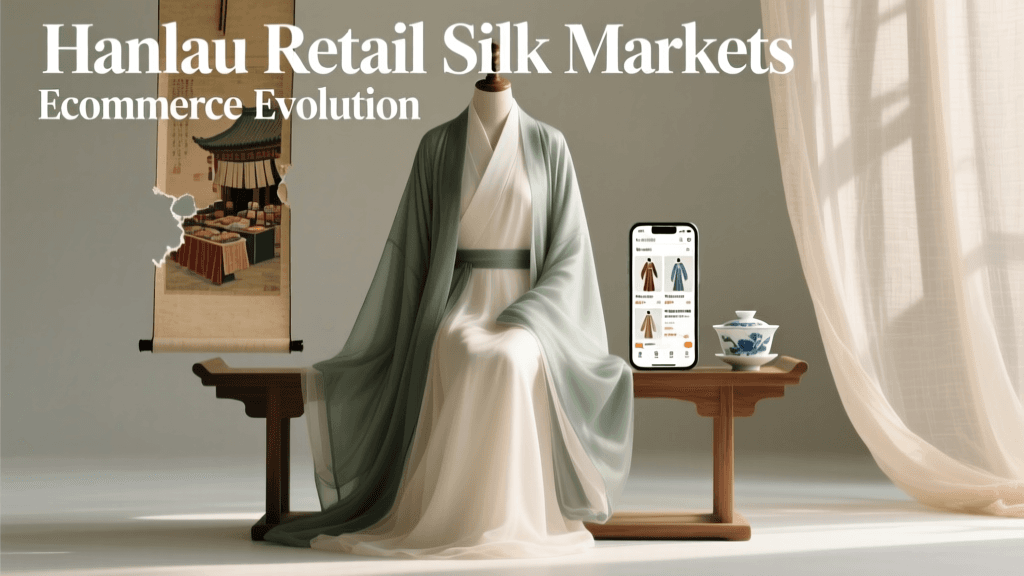
Long before the advent of digital storefronts and global shipping networks, the acquisition of traditional Chinese garments was a deeply tactile, localized, and highly regulated experience. During the Tang Dynasty (618–907 CE), the capital city of Chang'an (modern-day Xi'an) was the cosmopolitan heart of the Silk Road. The city's West Market was a sprawling, labyrinthine hub where international merchants, local artisans, and imperial officials converged. Here, the trade of silk, hemp, and ramie was not merely a commercial transaction but a cornerstone of the imperial economy.
According to The Metropolitan Museum of Art, the Silk Road facilitated an unprecedented exchange of textiles, motifs, and weaving technologies between China, Central Asia, and the Mediterranean. However, for the everyday citizen or the local aristocrat, purchasing clothing meant visiting specialized market districts. Garments were rarely bought 'off the rack.' Instead, consumers purchased raw bolts of fabric—often heavily taxed and strictly regulated by sumptuary laws that dictated which colors and patterns could be worn by specific social classes. These fabrics were then entrusted to local tailors or household servants who cut and sewed the garments using traditional flat-pattern techniques. The retail experience was defined by the sensory evaluation of the textile: the drape of the silk, the tightness of the weave, and the vibrancy of natural dyes like indigo and madder root.
The Digital Renaissance: Hanfu on Modern E-Commerce
Fast forward to the 21st century, and the landscape of traditional Chinese garment retail has undergone a radical transformation. The modern 'Hanfu Movement' (Hanfu Yundong), which began in the early 2000s as a grassroots effort to revive the clothing of the Han Chinese, has exploded into a multi-billion-dollar industry. This revival was largely catalyzed not by brick-and-mortar boutiques, but by China's booming e-commerce ecosystem.
Platforms like Taobao, Tmall, and later, social-commerce apps like Douyin (the Chinese version of TikTok), democratized access to traditional clothing. Niche makers and historical enthusiasts, who previously struggled to find local customers, could suddenly reach a national audience. This digital shift also gave rise to specialized manufacturing hubs. Caoxian, a county in Shandong province, transformed from a rural area into the undisputed capital of Hanfu production, accounting for over a third of China's online Hanfu sales. E-commerce allowed rural artisans and modern factories alike to participate in the cultural renaissance, bridging the gap between ancient craftsmanship and modern consumer demand.
Actionable Guide: Buying Hanfu Online Today
For international enthusiasts and modern consumers, navigating the e-commerce landscape of Hanfu can be daunting. The market is saturated with everything from mass-produced costumes to museum-grade reproductions. Here is a practical guide to sourcing authentic traditional garments online.
Navigating Platforms and Identifying Authentic Makers
The most robust marketplace for authentic Hanfu remains Taobao. While international sites like AliExpress or Amazon carry Hanfu, they often stock lower-quality, mass-produced items known in the community as 'Xianfu' (fairy clothes or costumes), which prioritize fantasy aesthetics over historical accuracy. When searching on Taobao or specialized proxy sites, use precise terminology:
- Mamianqun (马面裙): The iconic pleated wrap skirt, highly popular for daily modern wear.
- Ruqun (襦裙): A traditional ensemble consisting of a top (ru) and a skirt (qun), prevalent in Tang and Song dynasty styles.
- Beizi (褙子): A long, open-front jacket popularized during the Song Dynasty, ideal for elegant, minimalist layering.
To ensure authenticity, look for established boutique brands such as Shisanyu, Zhongling, and Tingyue. These brands employ historical consultants and base their patterns on extant archaeological artifacts.
Understanding Price Tiers and Fabric Quality
The Hanfu e-commerce market is distinctly tiered. Understanding these tiers will help you align your budget with your expectations regarding fabric, historical accuracy, and wait times.
| Tier | Price Range (USD) | Fabric & Craftsmanship | Wait Time | Best For |
|---|---|---|---|---|
| Entry-Level | $25 - $60 | Polyester blends, machine embroidery, mass-produced patterns | In stock (3-7 days) | Beginners, casual wear, photography |
| Mid-Tier (Boutique) | $70 - $180 | Cotton, linen, rayon, detailed machine embroidery, historical accuracy | Pre-sale (30-45 days) | Enthusiasts, festivals, daily wear |
| High-End (Artisan) | $250 - $1,000+ | 100% Mulberry silk, Xiangyunsha, hand-woven brocade, hand-embroidery | Pre-sale (60-120 days) | Collectors, formal rites, heritage preservation |
The 'Yushou' (Pre-Sale) System
One of the most critical aspects of buying mid-to-high-tier Hanfu online is understanding the Yushou (pre-sale) model. Because authentic Hanfu requires complex embroidery and specialized fabrics, boutique brands operate on a made-to-order basis to minimize waste and manage costs. When you purchase a pre-sale item, you typically pay a non-refundable deposit (often around 20-30% of the total cost). The brand then manufactures the batch, and you pay the final balance before shipping. This process requires patience, often taking 30 to 90 days from deposit to delivery, but it guarantees a high-quality, meticulously crafted garment.
Sizing, Shipping, and Customs
Unlike Western fashion, which relies on complex darts and tailored curves, traditional Hanfu utilizes flat-pattern cutting. This makes the garments incredibly forgiving and largely 'one-size-fits-most.' Tops and jackets are secured with ties rather than buttons or zippers, allowing for adjustable fits. However, skirt length is a crucial measurement. A standard Mamianqun might come in lengths of 100cm, 105cm, or 115cm. A 105cm skirt will gracefully hit the ankle on a person who is 160cm (5'3") tall, but will sit awkwardly at the mid-calf on someone who is 175cm (5'9"). Always measure from your natural waist to your desired hemline before ordering.
For international buyers, direct shipping from Taobao can be expensive and complex regarding customs. It is highly recommended to use a consolidated shipping agent (such as Superbuy or CSSBuy). These agents purchase the items on your behalf, receive them at a domestic Chinese warehouse, provide quality-control photos, and then repack your Hanfu into a single parcel for international freight, significantly reducing shipping costs and navigating customs declarations smoothly.
Preserving Intangible Heritage in the Digital Age
The e-commerce boom has done more than just popularize a fashion trend; it has become a vital economic lifeline for ancient textile crafts. As consumer demand for high-end, historically accurate Hanfu has grown, so too has the market for traditional, labor-intensive fabrics. Techniques that were on the verge of extinction are now thriving due to online patronage.
A prime example is Xiangyunsha (gambiered Guangdong silk), a luxurious, rustling fabric dyed with river mud and the juice of the薯莨 (Dioscorea cirrhosa) plant. Recognized by UNESCO as an Intangible Cultural Heritage, the sericulture and silk craftsmanship of China require immense skill and specific environmental conditions. Historically, the market for such expensive, difficult-to-produce textiles was limited to a wealthy elite. Today, a global community of Hanfu enthusiasts pooling their resources through online pre-sales provides the necessary capital to keep these ancestral looms running and to pay master artisans a living wage.
Museums and cultural institutions have also noted this digital shift. The Victoria and Albert Museum and other global archives have seen increased public interest in their Asian textile collections, driven largely by younger generations seeking reference materials to verify the historical accuracy of the garments they purchase online. This symbiotic relationship between digital retail, historical research, and artisanal craftsmanship ensures that traditional Chinese clothing is not merely preserved behind glass, but remains a living, breathing, and evolving part of global material culture.
Conclusion
The journey of Hanfu from the bustling, sensory-rich silk markets of ancient Chang'an to the algorithm-driven, globalized storefronts of modern e-commerce is a testament to the enduring appeal of traditional Asian garments. While the mechanisms of trade have evolved from physical bolts of silk exchanged for silver to digital deposits placed via smartphone, the core desire remains unchanged: to drape oneself in the artistry, history, and cultural identity woven into every thread. By understanding the nuances of online retail, from navigating pre-sale tiers to appreciating the intangible heritage behind the fabrics, modern consumers can participate in a cultural renaissance that honors the past while embracing the future of global fashion.