Hanfu on Global Runways: 2026 Fashion Week Trends & Top Designers
The 2026 Runway Shift: From Subculture to Haute Couture
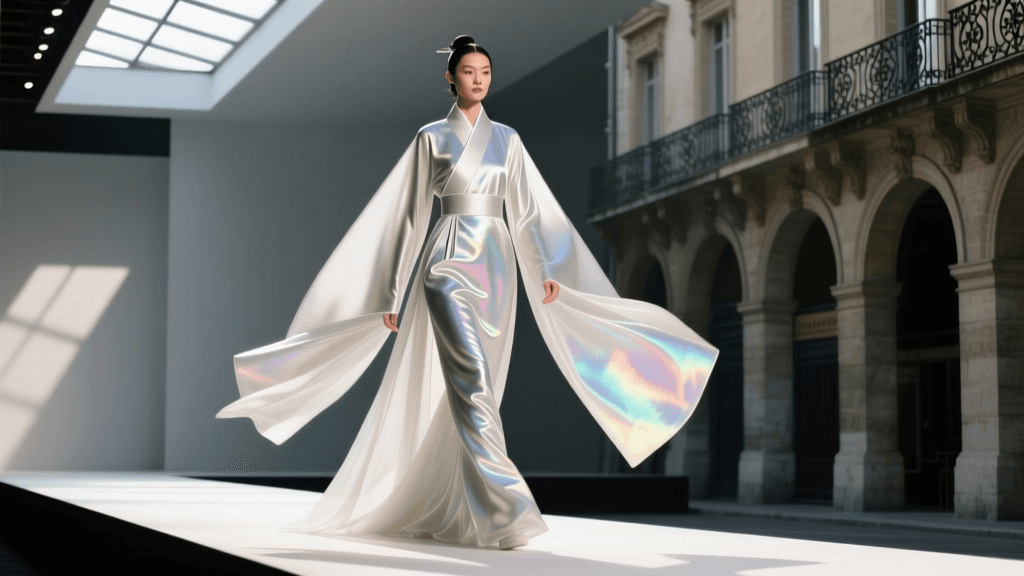
The global fashion landscape in 2026 is witnessing an unprecedented renaissance of traditional Asian garments, with Hanfu taking center stage at Paris, Milan, and New York Fashion Weeks. No longer confined to historical reenactments, niche subcultures, or domestic streetwear, the traditional clothing of the Han Chinese has been elevated to haute couture and luxury ready-to-wear. This year, international fashion houses and avant-garde Asian designers are seamlessly blending ancient weaving techniques with modern silhouettes, creating a cross-cultural dialogue that is redefining luxury fashion.
According to industry analysis by the Business of Fashion, the integration of heritage garments into mainstream luxury has accelerated significantly in 2026, driven by a global consumer base that values artisanal craftsmanship, sustainability, and deep cultural narratives. Designers are moving beyond superficial motifs, instead deconstructing the foundational architecture of Hanfu—such as the flat-cutting technique (biancai) and the cross-collar (jiaoling youren)—to create garments that resonate on the world’s most prestigious catwalks.
Key Hanfu Textiles Dominating International Catwalks
The true star of the 2026 fashion week circuit is not just the silhouette, but the extraordinary textiles utilized in these collections. Designers are sourcing rare, heritage-protected fabrics to lend authenticity and unparalleled texture to their runway pieces.
Xiangyunsha (Gambiered Canton Gauze)
Recognized by UNESCO’s Intangible Cultural Heritage lists, Xiangyunsha is a luxurious silk dyed using the juice of the Dioscorea cirrhosa yam and the iron-rich mud of the Pearl River Delta. In 2026, this fabric has become a highly sought-after material for luxury outerwear and flowing evening gowns. Its distinctive crackled, leather-like texture and waterproof qualities make it a favorite for designers looking to merge traditional ecology with high fashion. Runway pieces featuring authentic Xiangyunsha often command prices upwards of $4,500 due to the labor-intensive, sun-dependent dyeing process that can only be executed during specific humid months.
Song Brocade (Song Jin)
Originating from the Song Dynasty, this intricate jacquard-woven silk is characterized by its subtle, elegant patterns and soft, matte finish. Unlike the flashy gold threads of later dynasties, Song Brocade relies on complex structural weaves to create tone-on-tone geometric and floral motifs. On the 2026 Milan runways, Song Brocade is being heavily utilized in structured bodices, tailored blazers, and corsetry, providing a stiff yet breathable foundation that rivals traditional European coutil.
Kesi (Silk Tapestry)
The "cut silk" technique of Kesi creates unbroken, vivid patterns that look identical on both sides of the fabric. In 2026, Kesi is being used as an applique and paneling technique on minimalist wool coats and silk slip dresses, acting as a focal point of color and cultural storytelling amidst otherwise austere, modern silhouettes.
2026 Fashion Week Hanfu Designer Spotlight
To understand how traditional garments are being adapted for the global stage, we must look at the designers spearheading this movement. The following table highlights key designers who showcased Hanfu-inspired or Hanfu-integrated collections during the major Fashion Weeks of 2026.
| Designer / Brand | Signature Hanfu Element | 2026 Fashion Week Debut | Runway Price Range (USD) |
|---|---|---|---|
| Guo Pei | Couture Mamianqun (Horse-face skirt) with metallic Kesi embroidery | Paris Haute Couture | $15,000 - $45,000 |
| Samuel Gui Yang | Modernized Ruqun (blouse and skirt) with Western tailoring darts | London Fashion Week | $2,500 - $5,500 |
| Ming Ma | Xiangyunsha draping and voluminous Aoqun (jacket and skirt) sleeves | Paris Ready-to-Wear | $3,000 - $6,500 |
| Uma Wang | Song Brocade outerwear with distressed, avant-garde hemlines | Milan Fashion Week | $4,000 - $8,000 |
| Caroline Hu | Deconstructed cross-collars (Jiaoling) integrated into tulle gowns | Paris Ready-to-Wear | $2,800 - $5,000 |
Sourcing and Styling Runway-Inspired Hanfu in 2026
For collectors, fashion enthusiasts, and buyers looking to incorporate these global runway trends into their personal wardrobes, understanding the nuances of sourcing and styling is critical in 2026. The market has bifurcated into mass-market costume reproductions and high-end, artisanal fashion.
A Buyer’s Guide to Authentic Pieces
When sourcing runway-quality Hanfu, buyers must look beyond standard e-commerce platforms. In 2026, the most reliable avenues for acquiring authentic, high-quality garments include:
- Direct Atelier Commissions: Many independent Chinese designers operating out of Shanghai and Hangzhou accept bespoke commissions. Expect a lead time of 3 to 6 months for hand-woven textiles. Prices for a bespoke, runway-grade Mamianqun start at $1,200.
- Luxury Consignment Platforms: Platforms like Vestiaire Collective and specialized Asian auction houses have dedicated "Heritage Couture" categories in 2026, where archived pieces from Guo Pei or early Uma Wang collections frequently appear.
- Heritage Brand Pop-Ups: During Paris and Milan fashion weeks, heritage brands like Shanshan and Minghuatang host exclusive pop-up showrooms, offering limited-edition capsule collections that bridge traditional weaving with modern sizing.
Styling the Mamianqun for the Modern Wardrobe
The Mamianqun, or horse-face skirt, is arguably the most adaptable Hanfu garment for contemporary styling. Characterized by its flat front and back panels with densely pleated sides (typically 12 to 24 knife pleats), it offers a dramatic, architectural silhouette. In 2026, the most prominent styling trend on the streets of Paris and Tokyo involves pairing a heavy, woven-silk Mamianqun with minimalist, structured tops. A fine-gauge merino turtleneck or a sharply tailored, oversized wool blazer creates a striking contrast between the fluid, historical volume of the skirt and the rigid, modern lines of the upper body. Footwear has also shifted; rather than traditional embroidered slippers, fashion insiders are pairing these skirts with chunky, lug-sole leather boots or sleek, pointed-toe mules to ground the outfit in contemporary urban aesthetics.
Understanding Flat-Cutting vs. Western Draping
When purchasing traditional Hanfu, it is vital to understand that authentic garments utilize biancai (flat-cutting). Unlike Western clothing, which relies on darts, seams, and curved cutting to contour to the body’s three-dimensional shape, flat-cutting uses straight lines and rectangular pieces of fabric. The garment only takes shape when wrapped, tied, and belted on the body. This results in a distinct, relaxed drape with wide, sweeping sleeves and a lack of shoulder seams. Buyers accustomed to Western sizing must focus on garment length, sleeve span, and waist tie placements rather than standard S/M/L bust and hip measurements. A traditional jacket will have a sleeve span (measured from cuff to cuff across the back) of 130cm to 160cm, creating the iconic elegant drape when the arms are lowered.
The Investment Value of Heritage Garments
Beyond their aesthetic appeal, runway-grade Hanfu pieces have emerged as alternative investment assets in 2026. As the raw materials required for heritage textiles—such as the specific river mud for Xiangyunsha or the wild silkworm cocoons for certain brocades—become increasingly scarce due to environmental regulations and urbanization, the value of authenticated, pristine garments has surged. Collectors view these pieces not merely as clothing, but as wearable art and preserved cultural artifacts. Auction houses in Hong Kong and Geneva have reported a 35% year-over-year increase in the hammer prices for 20th-century antique Hanfu and contemporary haute couture pieces that utilize extinct or highly restricted weaving techniques.
The Future of Traditional Garments in Global Fashion
The presence of Hanfu on global runways in 2026 signifies a maturation of cross-cultural fashion appreciation. It is no longer about exoticism or superficial cultural borrowing; it is a profound engagement with centuries of textile engineering, philosophical dressing, and artisanal mastery. As international fashion weeks continue to embrace the depth of Asian traditions, the boundary between "traditional costume" and "global luxury fashion" will continue to dissolve, ensuring that the elegant lines of the Han Chinese wardrobe remain a vital, evolving force in the global sartorial lexicon for decades to come.