Traveling With Hanfu In 2026: Packing Tips & Top Destinations
The Rise of Immersive Hanfu Tourism in 2026
The cultural renaissance of traditional Chinese clothing has transformed domestic and international travel across Asia. In 2026, traveling with Hanfu is no longer a niche hobby but a mainstream tourism phenomenon. From the bustling night markets of Xi'an to the serene, mist-covered pavilions of Hangzhou, millions of travelers are now curating their itineraries around historical immersion. However, traveling with delicate silks, structured pleats, and intricate hair accessories requires meticulous planning. Whether you are a seasoned Hanfu enthusiast or a first-time traveler looking to participate in the Xin Zhongshi (new Chinese style) movement, this comprehensive 2026 guide will ensure your garments remain pristine and your journey is culturally enriching.
Essential Hanfu Packing Guide for Travelers
Packing traditional garments is vastly different from packing modern Western clothing. The structural integrity of a Ming Dynasty Mamianqun (horse-face skirt) or the delicate drape of a Tang Dynasty Banbi (half-arm jacket) can be easily compromised by standard folding methods. Here is how to pack your Hanfu for 2026 travel.
Choosing the Right Luggage and Organizers
Hard-shell carry-on luggage is highly recommended for Hanfu travel, as it prevents crushing from external pressure in overhead compartments or train racks. Inside the suitcase, abandon standard packing cubes. Instead, invest in cylindrical garment rolls and acid-free tissue paper. For 2026 travelers, brands like Eagle Creek and specialized Hanfu storage companies have released silk-lined compression tubes specifically designed to accommodate the wide hems of traditional skirts without creating hard crease lines.
The Roll and Fold Technique for Delicate Silks
Never fold a Mamianqun flat. The signature knife and box pleats will lose their sharpness if compressed against other items. To pack a pleated skirt:
- Lay the skirt flat on a clean surface and align the pleats perfectly.
- Place a sheet of acid-free tissue paper over the pleats to reduce friction.
- Roll the skirt gently from the waistband down to the hem, treating it like a delicate scroll.
- Secure the rolled skirt with soft, snag-free silk ribbons or specialized velvet scrunchies.
- Store the rolled skirt in a dedicated garment tube or place it in the center of your suitcase, surrounded by softer items like cotton Zhongyi (inner garments) to act as a shock absorber.
For tops like the Ao (jacket) or Ru (blouse), fold them along their natural seam lines. Place tissue paper between the layers of the collar and cuffs to maintain their stiff, structured appearance upon arrival.
Portable Garment Care: Steamers and Wrinkle Release
Even with perfect packing, humidity and transit will introduce minor wrinkles. A portable, dual-voltage travel steamer is non-negotiable for Hanfu travelers in 2026. The Panasonic NI-GSD090 and the Deerma HS200 remain top choices this year due to their rapid heat-up times and specialized silk-safe steam plates. Always use distilled water in your steamer to prevent mineral buildup, which can spit and stain delicate brocades. When steaming a Mamianqun, hang it on a sturdy, velvet-lined hanger and steam the pleats from the inside out to preserve the crisp outer edges.
Securing Hairpins and Accessories
Traditional Hanfu hairstyles require an array of Zan (hairpins), Shu (combs), and Buyao (dangling ornaments). These items are easily bent or tangled. Pack a hard-shell EVA electronics case lined with foam. Poke small holes in the foam to insert the prongs of the hairpins, keeping the ornate heads suspended and protected from crushing.
Top Hanfu-Friendly Destinations for 2026
China's high-speed rail network has made multi-city Hanfu tours more accessible than ever. In 2026, several cities have optimized their infrastructure, offering dedicated Hanfu rental hubs, historical makeup studios, and photography-friendly transit routes.
Xi'an: The Tang Dynasty Immersion
As the ancient capital of Chang'an, Xi'an is the undisputed epicenter of Tang Dynasty Hanfu tourism. The Datang Everbright City (Great Tang All Day Mall) is a sprawling pedestrian district where wearing Hanfu is practically the dress code after sunset. In 2026, the city has expanded its 'Hanfu Green Lanes' at major historical sites, allowing travelers in verified traditional attire to bypass long ticketing queues at locations like the City Wall and the Huaqing Palace. For the most authentic experience, opt for a Qixiong Ruqun (chest-high skirt) paired with a Pibo (shawl), reflecting the cosmopolitan and opulent aesthetic of the Tang era.
Hangzhou: Song Dynasty Elegance at West Lake
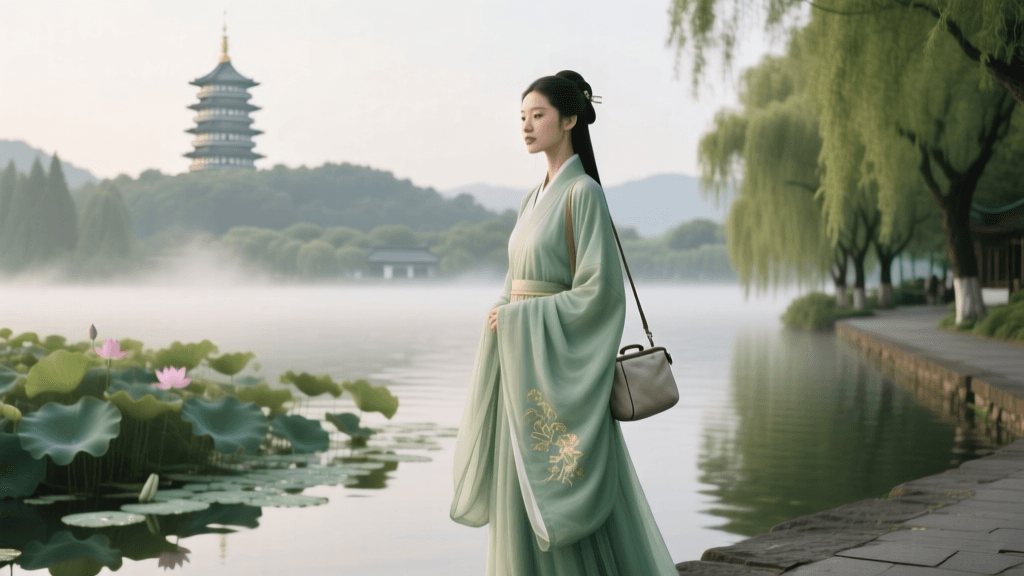
Hangzhou offers a stark contrast to the bold colors of Xi'an, favoring the minimalist, refined elegance of the Song Dynasty. The West Lake Cultural Landscape, officially recognized by the UNESCO World Heritage Centre, provides a breathtaking backdrop of weeping willows, lotus ponds, and ancient pagodas. For a 2026 visit, travelers should pack a Song-style Beizi (long, open-front jacket) over a simple, pleated skirt in muted, celadon, or pearl tones. Early morning photography along the Su Causeway offers the best misty, ethereal lighting, free from the midday crowds. Many local tea houses around Longjing Village now offer specialized Hanfu tea ceremonies, allowing travelers to integrate garment appreciation with traditional culinary arts.
Luoyang: Wei, Jin, and Northern Wei Aesthetics
Luoyang is rapidly emerging as a premier destination for travelers interested in the Wei and Jin dynasties, as well as the Buddhist-influenced aesthetics of the Northern Wei. The Longmen Grottoes provide a majestic, spiritual backdrop. The flowing, wide-sleeved garments characteristic of the Wei-Jin period, often featuring overlapping collars and wide sashes, photograph beautifully against the massive limestone Buddha statues. Luoyang's 2026 cultural festivals frequently feature night-time illuminations of the ancient city ruins, making it a paradise for low-light Hanfu photography.
Beijing: Ming Dynasty Grandeur
For those who prefer the structured, regal silhouettes of the Ming Dynasty, Beijing is the ultimate destination. The architectural symmetry of the Forbidden City, meticulously maintained and documented by The Palace Museum, perfectly complements the dignified lines of the Ming Aoqun (jacket and skirt) and the iconic Mamianqun. The deep red walls and golden roof tiles provide a high-contrast background that makes the intricate woven gold threads (Zhuanghua) of Ming-style brocades truly pop on camera.
Destination Comparison Chart for Hanfu Travelers
| Destination | Best Hanfu Style | Ideal Season | Photography Hotspot | Transit Accessibility |
|---|---|---|---|---|
| Xi'an | Tang Dynasty (Qixiong Ruqun, Yuanlingpao) | Spring & Autumn | Datang Everbright City at Night | Excellent (Major HSR Hub) |
| Hangzhou | Song Dynasty (Beizi, Moxiong) | Early Summer & Autumn | Su Causeway & Longjing Tea Villages | Excellent (Direct HSR from Shanghai) |
| Luoyang | Wei-Jin (Wide sleeves, flowing sashes) | Late Spring | Longmen Grottoes & Luoyi Ancient City | Good (Connected via Zhengzhou HSR) |
| Beijing | Ming Dynasty (Mamianqun, Ao, Pifeng) | Autumn (Crisp weather) | The Forbidden City & Temple of Heaven | Excellent (National Transit Hub) |
Navigating Transit and Cultural Etiquette
Traveling in full Hanfu through modern transit hubs requires a blend of spatial awareness and cultural respect. When navigating airport security or high-speed rail turnstiles, be mindful of trailing sleeves and long skirts. In 2026, many major Chinese train stations have installed wider accessibility gates; travelers wearing voluminous historical garments should use these wider lanes to avoid catching delicate fabrics in standard turnstile mechanisms.
Cultural etiquette is equally important. While Hanfu is celebrated in public spaces, it is crucial to respect the sanctity of active religious sites. When visiting active Buddhist or Taoist temples, avoid wearing overly revealing Tang-style cuts or garments featuring inappropriate modern motifs. Always carry a modest, plain-colored cloak or Pifeng (cape) in your day bag to drape over your shoulders when entering sacred halls. Furthermore, when participating in historical reenactments or renting garments from local studios, ensure you are wearing the correct historical undergarments; modern underwear lines can easily ruin the historical silhouette and drape of authentic silk garments.
Conclusion
Traveling with Hanfu in 2026 is a deeply rewarding experience that bridges the gap between ancient artistry and modern exploration. By mastering the art of garment preservation, selecting the right portable care tools, and choosing destinations that honor the historical context of your clothing, you transform a simple vacation into a living, breathing cultural exhibition. Whether you are watching the sun set over the pagodas of Hangzhou or walking the illuminated streets of Xi'an, your carefully packed Hanfu will ensure you are not just observing history, but beautifully participating in it.