Eco-Friendly Chinese Natural Plant Dyes For Hanfu 2026
The 2026 Hanfu Sustainability Shift
As we navigate 2026, the global Hanfu movement has undergone a profound transformation. What began as a revival of historical silhouettes has evolved into a rigorous pursuit of material authenticity and environmental stewardship. Today's discerning Hanfu enthusiasts and designers are moving away from mass-produced, synthetic-dyed polyester and embracing cao mu ran—the ancient Chinese art of natural plant dyeing. This shift is not merely aesthetic; it is a direct response to the fashion industry's ecological footprint. According to the Ellen MacArthur Foundation, the transition toward circular fashion systems in 2026 heavily relies on eliminating toxic synthetic dyes and returning to biodegradable, botanically sourced pigments that safely re-enter the earth's biosphere.
Traditional Chinese clothing, with its flowing silks, crisp linens, and elegant hemp blends, serves as the perfect canvas for these natural pigments. Unlike harsh chemical dyes that degrade protein fibers over time, plant-based dyes actually condition the silk and linen, giving the garments a luminous, living depth that synthetics simply cannot replicate. Furthermore, the historical significance of colors in Chinese culture—where specific hues denoted seasons, virtues, and social harmony—adds a layer of profound cultural resonance to every dyed thread.
The Big Four Chinese Dye Plants
To authentically recreate historical Hanfu color palettes in 2026, artisans rely on four foundational botanical sources. Each plant requires specific extraction methods and mordants to achieve its signature hue.
1. Indigo (Lan Cao - 蓝草)
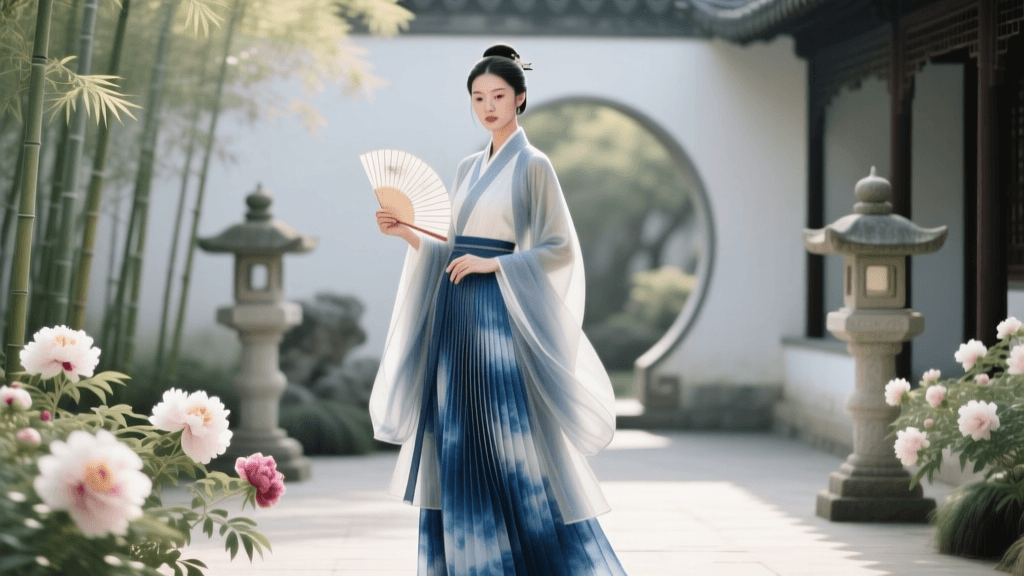
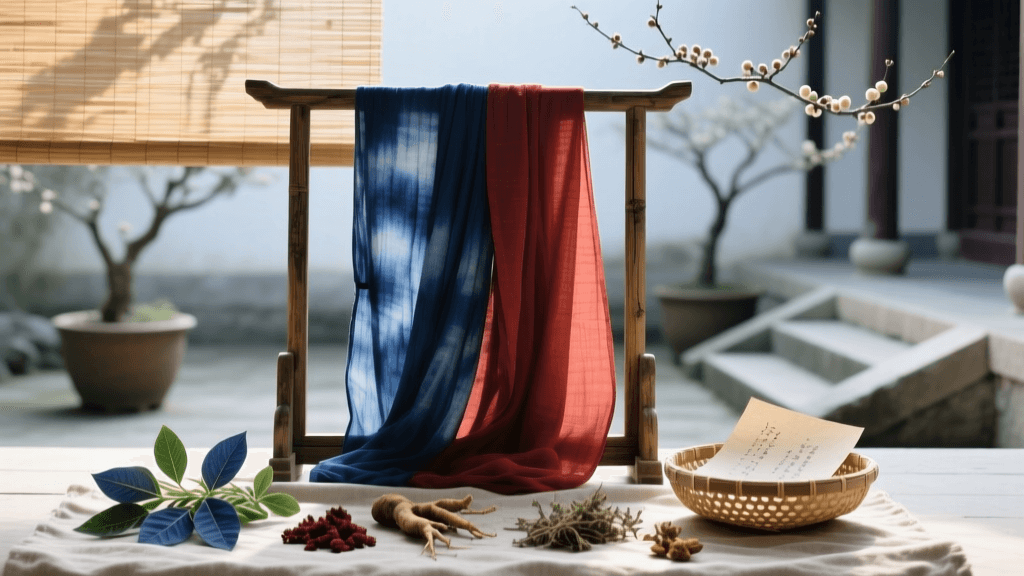
Derived primarily from Persicaria tinctoria (Chinese indigo) and Isatis tinctoria (woad), Lan Cao is the undisputed king of traditional blue dyes. Unlike other plant dyes that require heat extraction, indigo is a vat dye. The leaves are fermented in an alkaline solution to create leuco-indigo, which is soluble in water. When the Hanfu silk is submerged in the 2026 modern closed-loop vats and then exposed to oxygen, the magical oxidation process turns the fabric from yellow-green to a deep, resplendent blue. Multiple dips yield shades ranging from pale moonlight blue (yue bai) to deep navy.
2. Madder (Qian Cao - 茜草)
The roots of Rubia cordifolia have been used in China for over three millennia to produce rich, earthy reds. Madder contains alizarin and purpurin, which bind beautifully to silk when assisted by an alum mordant. In 2026, sustainably harvested madder root powder is prized for producing the iconic 'rouge' and 'cinnabar' shades seen in Ming Dynasty-style Mamianqun (horse-face skirts). The historical Victoria and Albert Museum notes that madder's complex chemical profile allows it to produce a spectrum of reds, oranges, and even deep purples depending on the water's pH and the mordant used.
3. Gardenia (Zhi Zi - 栀子)
The dried fruits of the gardenia bush yield a brilliant, warm, and highly saturated yellow. Historically reserved for imperial garments and high-ranking officials, Zhi Zi is a substantive dye, meaning it can bind directly to silk fibers without the strict need for a metallic mordant, though alum is often used to improve lightfastness. In 2026, gardenia yellow is highly sought after for dyeing lightweight summer Hanfu made of raw silk gauze, offering a cheerful, sunlit aesthetic.
4. Pagoda Tree (Huai Hua - 槐花)
The unopened flower buds of the Japanese pagoda tree (Styphnolobium japonicum) produce a stunning, vivid yellow-green. When combined with an iron mordant, the color shifts dramatically to a deep, melancholic olive or dark forest green. This dual-nature makes Huai Hua incredibly versatile for creating the muted, nature-inspired greens favored in Song Dynasty-style Hanfu, which prioritize understated elegance over ostentatious display.
2026 Plant Dye Comparison Chart
For modern Hanfu makers and sustainable fashion studios, understanding the technical specifications and current market costs of these botanicals is essential. Below is the 2026 market comparison for artisanal dye studios:
| Plant Source | Primary Color | Recommended Mordant | Lightfastness | 2026 Avg Cost (per 100g extract) |
|---|---|---|---|---|
| Indigo (Lan Cao) | Blue Spectrum | None (Alkaline Vat) | Excellent | $18.50 USD |
| Madder (Qian Cao) | Red/Orange | Alum (Potassium Aluminum Sulfate) | Good | $24.00 USD |
| Gardenia (Zhi Zi) | Warm Yellow | Alum or None | Fair (Fades to cream) | $15.00 USD |
| Pagoda (Huai Hua) | Yellow-Green | Alum (Green) / Iron (Olive) | Good | $21.00 USD |
Step-by-Step Eco-Dyeing Process for Silk and Linen
Achieving museum-quality, colorfast results on natural fibers requires precision. Here is the standard 2026 eco-friendly protocol used by leading Hanfu ateliers for dyeing 500 grams of silk charmeuse or linen.
Step 1: Scouring (Preparation)
Natural fibers contain oils, waxes, and pectins that repel water and dye. Scouring opens the fiber structure. For silk, use a mild, pH-neutral organic soap at 40°C for 45 minutes. For linen or hemp, a more alkaline bath using 5 grams of washing soda (sodium carbonate) per liter of water at 80°C for one hour is required. Rinse thoroughly in warm water. Never shock natural fibers with cold water, as it can cause uneven dye uptake later.
Step 2: Mordanting (The Anchor)
Except for indigo and gardenia, most plant dyes require a mordant to chemically bond the pigment to the fiber. We recommend using Alum (Potassium Aluminum Sulfate) as it is non-toxic and keeps colors bright.
- Ratio: Use 15% Weight of Fiber (WOF). For 500g of fabric, use 75g of alum.
- Process: Dissolve the alum in hot water, add to a dye pot with enough warm water to cover the fabric. Submerge the wet, scoured fabric.
- Timing: Heat slowly to 60°C (for silk) or 80°C (for linen) and hold for 60 minutes. Let the fabric cool in the bath overnight for maximum penetration.
Step 3: Extraction and Dyeing
For madder root, place the powdered root in a muslin bag and simmer in water at 70°C for two hours. Critical 2026 Tip: Do not let madder boil (100°C), as this extracts brown tannins that will muddy your red. Once the dye bath is a rich ruby color, remove the bag, let the liquid cool to 60°C, and add your mordanted, wet Hanfu fabric. Agitate gently for the first 20 minutes to prevent splotching, then leave for 2 hours. For deeper shades, leave the fabric in the cooling bath overnight.
Step 4: Washing and pH Balancing
Rinse the dyed fabric in lukewarm water until the water runs clear. To lock in the color and restore the silk's natural pH, perform a final rinse with a splash of white vinegar or a citric acid solution (1 teaspoon per liter). Hang to dry in a shaded, well-ventilated area. Direct UV sunlight will rapidly degrade gardenia yellows and madder reds before they fully set.
Water Conservation and Closed-Loop Systems
A major criticism of traditional dyeing is its high water consumption. However, the 2026 artisanal dyeing sector has pioneered 'closed-loop' water systems. Modern eco-studios now utilize multi-stage filtration systems where dye bath wastewater is passed through bio-charcoal and sand filters, neutralized with natural enzymes, and reused for scouring new batches of fabric or irrigating dye-plant gardens. Organizations like Fashion Revolution have heavily promoted these localized, water-conscious micro-mills, proving that historical techniques can be adapted to meet the stringent ecological standards of the modern era. By reusing the indigo vat for months and composting exhausted madder roots, the zero-waste Hanfu atelier is now a reality.
Sourcing Authentic Botanicals in 2026
The surge in demand for authentic Hanfu has led to a boom in organic botanical farming in China's Yunnan and Guizhou provinces, where indigenous communities are reviving heritage dye-crop agriculture. When sourcing materials in 2026, look for suppliers that provide GC-MS (Gas Chromatography-Mass Spectrometry) testing certificates to ensure the plant extracts are pure and free from synthetic adulterants or heavy metal contaminants. Avoid ultra-cheap 'natural' dye powders on mass-market e-commerce platforms, as these are frequently cut with synthetic reactive dyes. Instead, partner directly with certified organic textile cooperatives or specialized botanical dye houses that transparently track their supply chain from seed to pigment.
Conclusion
Dyeing Hanfu with traditional Chinese natural plant dyes is more than a crafting technique; it is an act of cultural preservation and environmental defiance. By embracing the slow, deliberate processes of indigo fermentation, madder extraction, and alum mordanting, we honor the artisans of the past while safeguarding the ecosystems of the future. As the sustainable fashion landscape continues to evolve in 2026, the vibrant, living colors of cao mu ran stand as a testament to the enduring harmony between humanity, culture, and nature.