Hanfu Fabric Drape and Comfort Analysis: 2026 Textile Guide
The Evolution of Hanfu Textiles in 2026
As we navigate the fashion landscape of 2026, the Hanfu movement and the broader Xin Zhongshi (new Chinese style) trend have matured far beyond mere historical reenactment or occasional photoshoots. Today, traditional Chinese garments are integrated into daily wardrobes, corporate environments, and international travel itineraries. This shift has placed an unprecedented demand on textile performance. Modern enthusiasts are no longer satisfied with garments that only look authentic; they require fabrics that offer superior drape, all-day comfort, and climate adaptability. Understanding the intersection of traditional aesthetics and modern textile engineering is crucial for anyone looking to invest in high-quality Hanfu this year.
The silhouette of traditional Chinese clothing relies heavily on flat-cutting techniques. Unlike Western tailoring, which uses darts, shoulder seams, and complex patterning to mold fabric to the body's three-dimensional curves, Hanfu utilizes straight grain cuts and relies entirely on the natural drape of the fabric to create its elegant, flowing lines. Consequently, the choice of textile dictates not just the comfort of the garment, but its fundamental structural integrity and visual authenticity.
The Physics of Drape: How Fabric Moves
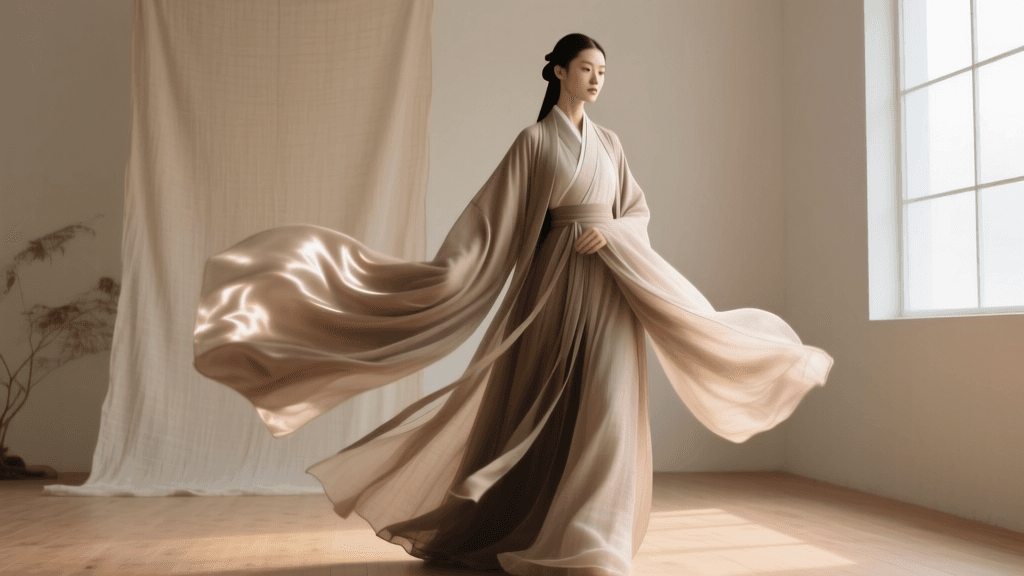
In textile engineering, 'drape' refers to the ability of a fabric to hang gracefully under its own weight and conform to underlying forms. It is measured by flexural rigidity and bending length. For Hanfu, a high drape coefficient is often desirable for garments like the Ruqun (chest-high skirts) and Beizi (open-front jackets), allowing the fabric to cascade fluidly and create the ethereal movement associated with Wei and Jin dynasty aesthetics. Conversely, structured garments from the Ming dynasty, such as the Ao (jacket) and the heavily pleated Mamianqun (horse-face skirt), require textiles with higher flexural rigidity to hold sharp pleats and maintain architectural collars.
In 2026, textile mills specializing in heritage fabrics have introduced advanced finishing techniques that allow for customizable drape within the same fiber family. Enzyme washing, bio-polishing, and sand-washing are now routinely applied to natural fibers to alter their hand-feel and bending properties, giving consumers a wider spectrum of comfort and silhouette options than ever before.
2026 Hanfu Fabric Drape and Comfort Matrix
To help you navigate the current market, we have compiled a comprehensive analysis of the most prominent Hanfu fabrics available in 2026, evaluating their weight, drape quality, breathability, and ideal applications.
| Fabric Type | Weight (GSM) | Drape Quality | Breathability | Ideal Hanfu Garment | 2026 Avg. Price/Meter |
|---|---|---|---|---|---|
| 16 Momme Silk Crepe de Chine | 68 GSM | High Fluidity | Excellent | Summer Ruqun, Light Beizi | $35 - $45 |
| 22 Momme Silk Charmeuse | 95 GSM | Heavy Fluidity | Moderate | Ceremonial Mamianqun, Outerwear | $60 - $85 |
| Enzyme-Washed Ramie | 150 GSM | Low (Structured) | Superior | Song Dynasty Pants, Ao Jackets | $20 - $30 |
| Tencel-Lyocell Blend | 120 GSM | Medium-High | Excellent | Daily Xin Zhongshi, Commuter Wear | $15 - $25 |
| Xiangyunsha (Gambiered Silk) | 80 GSM | Medium (Crisp) | High | Luxury Autumn Jackets, Vests | $120 - $200 |
Mulberry Silk and Xiangyunsha: Luxury Fluidity
Silk remains the undisputed gold standard for traditional Chinese garments. According to historical records documented by Encyclopædia Britannica, sericulture has been a cornerstone of Chinese culture for millennia, and the 2026 market continues to elevate this heritage. For garments requiring maximum fluidity, such as the flowing sleeves of a Wei dynasty Daxiushan (large-sleeve robe), 16-momme silk crepe de chine is the optimal choice. Its slightly textured surface diffuses light beautifully, and its lightweight nature prevents the garment from feeling burdensome during extended wear.
However, the most significant luxury trend in 2026 is the resurgence of Xiangyunsha, or Gambiered Canton Gauze. This extraordinary textile is created through a labor-intensive process where mulberry silk is dyed with the tannin-rich juice of the Dioscorea cirrhosa tuber and then coated with iron-rich river mud. The resulting chemical reaction creates a fabric that is uniquely crisp, water-resistant, and exceptionally cool against the skin. While its drape is less fluid than charmeuse, its structured yet lightweight nature makes it the premier choice for high-end autumn outerwear and structured Mamianqun skirts that require pleat retention without the weight of heavy brocades.
Ramie and Linen: Structured Breathability
For summer Hanfu and garments requiring architectural stiffness, plant-based bast fibers are indispensable. Ramie, often referred to as 'China grass,' has been cultivated for thousands of years. The Food and Agriculture Organization (FAO) highlights ramie as one of the oldest and most durable natural textile fibers available. In its raw state, ramie is highly rigid, making it perfect for the stiff, stand-up collars of Ming dynasty Ao jackets and the sharp, permanent pleats of a Mamianqun.
Historically, the stiffness of ramie could lead to chafing and discomfort. However, 2026 textile innovations have largely solved this issue. Modern Hanfu brands now utilize advanced enzyme-washing and mechanical softening techniques that break down the harsh outer bark of the fiber while retaining its core structural integrity. The result is a fabric that offers the cooling, moisture-wicking breathability of traditional ramie but with a softened hand-feel comparable to washed linen. This makes enzyme-washed ramie blends the top recommendation for historical summer layering, where maintaining a structured silhouette in high heat is paramount.
Modern Semi-Synthetics: Cupro and Tencel in Xin Zhongshi
The Xin Zhongshi movement of 2026 heavily embraces sustainable semi-synthetics for daily commuter wear. While purists may argue for natural fibers only, the practicalities of modern urban life—subway commutes, office environments, and the need for machine-washable garments—have propelled Cupro and Tencel (Lyocell) to the forefront of the Hanfu market. Tencel, a brand of lyocell fiber produced by Lenzing AG, is derived from sustainably sourced wood pulp and produced in a closed-loop solvent system.
Tencel and Cupro offer a drape that closely mimics heavy silk charmeuse but at a fraction of the cost and with vastly superior durability. They are highly hygroscopic, meaning they absorb moisture efficiently, making them incredibly comfortable for the inner layers (Zhongyi) of Hanfu ensembles. For the modern enthusiast who wants the sweeping, dramatic drape of a Song dynasty Beizi without the anxiety of dry-cleaning and water-spotting associated with silk, a high-GSM Tencel blend is the undisputed champion of 2026 daily wear.
Layering Strategies for Year-Round Comfort
A complete Hanfu ensemble often involves multiple layers, including the inner Zhongyi (undergarment), the main skirt or pants, and an outer jacket or cloak. In 2026, with shifting global climate patterns bringing unseasonal heatwaves, managing thermal comfort through strategic fabric layering is essential.
- The Base Layer (Zhongyi): Always opt for high-wicking, lightweight materials. Bamboo-charcoal infused cotton or ultra-fine 8-momme silk habotai are ideal. They provide a frictionless base that allows outer layers to drape correctly while pulling sweat away from the skin.
- The Core Layer (Skirt/Pants): This is where you can introduce weight and structure. A mid-weight Tencel or enzyme-washed ramie Mamianqun provides the necessary volume to support the outer layers without trapping excessive heat.
- The Outer Layer (Jacket/Cloak): Choose fabrics based on the desired silhouette. For a flowing, ethereal look, use silk crepe de chine or sheer organza. For a commanding, structured presence, opt for gambiered silk or heavy linen-cotton blends.
Maintenance and Storage for Optimal Drape
Preserving the drape and texture of your Hanfu requires meticulous care. Silk garments must be hand-washed in cool water using pH-neutral detergents specifically formulated for protein fibers; alkaline detergents will strip the silk's natural sericin, leading to a loss of luster and increased brittleness. Ramie and linen garments should be steam-pressed rather than ironed directly, as the introduction of moisture and heat relaxes the fibers and restores their natural drape after washing.
When storing your Hanfu for the season, avoid wire hangers, which will distort the shoulder seams and ruin the flat-cut drape. Instead, use wide, padded wooden hangers for jackets and cloaks. Skirts, particularly heavily pleated Mamianqun, should be folded along their original pleat lines, interleaved with acid-free tissue paper, and stored flat in breathable cotton garment bags to prevent the pleats from relaxing and the fibers from developing permanent creases. By understanding and respecting the unique properties of these textiles, you ensure that your Hanfu collection remains comfortable, authentic, and visually stunning for years to come.