The C-Drama Effect: Recreating Iconic Hanfu Looks from TV
The Rise of the 'C-Drama Effect' on Hanfu Fashion
Over the past decade, Chinese historical television dramas, affectionately known as 'C-dramas', have transcended mere entertainment to become powerful catalysts for cultural revival. Shows like 'The Longest Day in Chang'an', 'The Story of Minglan', and 'Nirvana in Fire' have captivated global audiences not only with their intricate plotting but with their breathtaking wardrobe departments. This phenomenon has birthed what cultural sociologists now call the 'C-Drama Effect'—a direct pipeline from screen costumes to real-world fashion trends, specifically driving the explosive growth of the modern Hanfu movement.
According to a comprehensive report by BBC Culture, the Hanfu revival is deeply intertwined with a renewed sense of national pride and the visual accessibility provided by streaming platforms. Viewers no longer just want to watch the drama; they want to inhabit it. As noted by CNN Style, the market for traditional Han clothing has expanded into a multi-billion-dollar industry, fueled heavily by fans seeking to recreate the exact silhouettes, fabrics, and color palettes of their favorite on-screen characters.
For enthusiasts and newcomers alike, translating cinematic fantasy into wearable reality requires an understanding of historical garment structures, modern fabric equivalents, and strategic sourcing. This guide will decode the most influential C-drama costume eras and provide actionable advice on how to curate your own screen-accurate Hanfu wardrobe.
Decoding Iconic C-Drama Costume Eras
Costume designers for top-tier C-dramas often spend months researching museum artifacts and historical texts to achieve a grounded, authentic aesthetic. However, the three most prominent dynasties featured in television—the Tang, Song, and Ming—each offer vastly different silhouettes and styling requirements for the modern wearer.
Tang Dynasty Opulence: 'The Longest Day in Chang'an'
The Tang Dynasty (618–907 AD) is synonymous with cosmopolitan wealth, vibrant colors, and bold silhouettes. In 'The Longest Day in Chang'an', costume designers showcased the iconic 'Qixiong Ruqun' (chest-high skirt) paired with the 'Banbi' (half-sleeve jacket) and draped 'Pibo' (silk shawl). The on-screen looks are characterized by high-contrast color blocking, intricate floral brocades, and heavily structured bodices.
Actionable Advice: To recreate this look without looking like you are wearing a cheap Halloween costume, avoid shiny polyester satins. Instead, seek out 'Shisanyu' or 'Zhongzheng' brand replicas on Taobao that utilize jacquard-woven cotton or heavy silk blends. A proper Tang chest-high skirt requires a skirt length of at least 115cm to pool elegantly at the floor, and the waistband must be at least 15cm wide to provide adequate support. Expect to spend between $80 and $150 for a high-quality, multi-piece Tang ensemble.
Song Dynasty Elegance: 'The Story of Minglan'
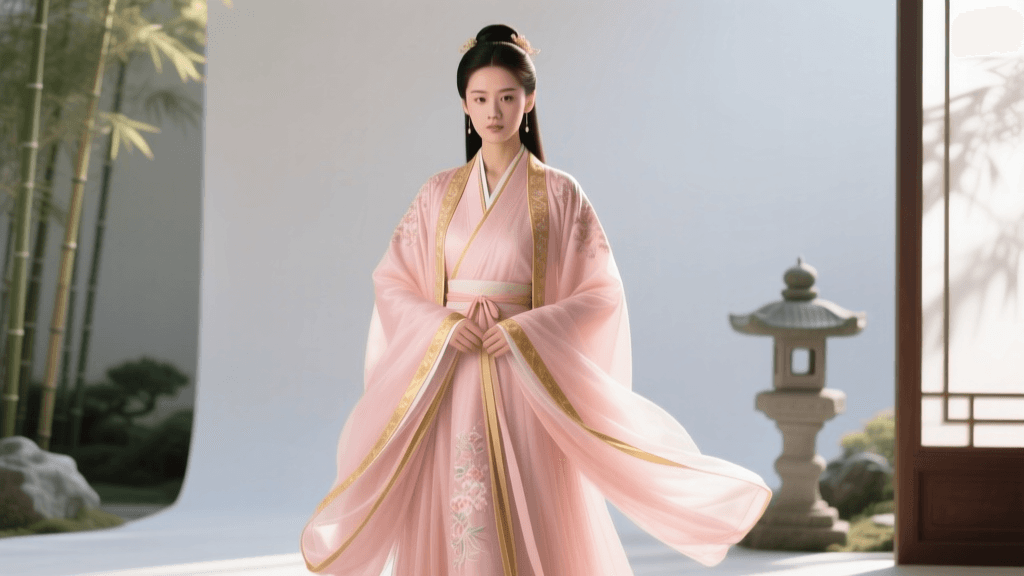
Contrasting sharply with Tang exuberance, the Song Dynasty (960–1279 AD) aesthetic, popularized by 'The Story of Minglan', is rooted in intellectual minimalism, subdued elegance, and refined layering. The defining garment is the 'Beizi'—a long, open-front outer jacket with side slits, worn over a 'Baizhe' (hundred-pleat skirt) or wide-leg trousers. The color palette relies heavily on muted pastels, jade greens, soft lotus pinks, and ink-wash grays.
Actionable Advice: The Song 'Beizi' is arguably the most versatile Hanfu piece for modern integration. It can easily be styled over a contemporary turtleneck or a modern slip dress. When shopping, prioritize natural fibers like raw silk, linen, and lightweight ramie. The drape is everything; stiff fabrics will ruin the scholarly, relaxed silhouette. Look for 'Chuanhua' (traditional embroidery) on the collar and cuffs. Budget around $60 to $120 for a premium linen-blend Song set.
Ming Dynasty Grandeur: 'Ming Dynasty' and 'The Sleuth of the Ming Dynasty'
The Ming Dynasty (1368–1644 AD) represents the pinnacle of structured, imposing traditional tailoring. Dramas set in this era heavily feature the 'Mamianqun' (horse-face skirt) and the 'Aoqun' (long jacket and skirt combination). The 'Mamianqun', with its flat front and back panels and heavily pleated sides, has become the undisputed crossover star of the Hanfu movement, frequently spotted on city streets and in corporate offices alike. C-drama costuming highlights the use of 'Zhijin' (woven gold) and intricate metal buttons.
Actionable Advice: If you are investing in one historical piece, make it a Ming 'Mamianqun'. Top-tier brands like 'Minghuatang' are famous for their screen-accurate, museum-quality replication of Ming garments. For everyday wear, a cotton-blend or polyester-jacquard 'Mamianqun' is durable, machine-washable, and holds its pleats beautifully. Ensure the skirt sits precisely at your natural waist. High-quality Ming jackets feature structured collars ('Liling') that require precise neck measurements. Budget $150 to $300+ for authentic, woven-gold Ming pieces.
C-Drama Era vs. Modern Wearable Equivalents
Understanding the practical differences between screen costumes and daily wear is crucial for building a functional wardrobe. Below is a comparison chart to help you align your C-drama inspiration with practical purchasing decisions.
| Dynasty / Era | Signature C-Drama | Key Garments | Best Modern Fabric | Estimated Cost (USD) | Styling Difficulty |
|---|---|---|---|---|---|
| Tang | The Longest Day in Chang'an | Qixiong Ruqun, Pibo | Heavy Silk, Brocade | $80 - $150 | High (Requires precise tying) |
| Song | The Story of Minglan | Beizi, Baizhe Skirt | Linen, Raw Silk | $60 - $120 | Low (Easily mixed with modern wear) |
| Ming | The Sleuth of the Ming Dynasty | Mamianqun, Aoqun | Jacquard, Woven Gold | $150 - $300+ | Medium (Structured layering) |
Sourcing Screen-Accurate Hanfu: A Buyer's Guide
Acquiring garments that rival C-drama quality requires navigating the unique e-commerce landscape of Chinese traditional fashion. Unlike Western fast fashion, the Hanfu market operates heavily on a 'pre-order' (yushou) model due to the complexity of the weaving and embroidery processes.
- Navigating Pre-Orders: Top brands release 'drops' or design concepts. Fans pay a deposit, and the manufacturing process takes anywhere from 30 to 90 days. If you need a garment for a specific convention or photoshoot, you must plan at least three months in advance.
- Measurements Matter: C-drama costumes are tailored to the millimeter. When ordering a Ming 'Ao' (jacket), you must provide your bust, waist, and 'Arm Length' (measured from the base of the neck, over the shoulder, to the wrist). For skirts, provide your exact natural waist and desired length (usually measured from the navel to the floor while wearing your intended shoes).
- Global Sourcing: While Taobao is the primary hub, international buyers can use proxy services like Superbuy or CSSBuy to navigate the platform. Alternatively, dedicated global retailers like 'Newhanfu' or 'Hanfu Time' offer curated, screen-inspired collections with direct international shipping, albeit at a 20-30% markup.
- The Second-Hand Market: Because of the long pre-order wait times, a robust second-hand market exists on platforms like Xianyu (China's equivalent to eBay). Searching for the brand name plus the keyword 'second-hand' can yield unworn, canceled-order garments at retail or even discounted prices.
Styling and Accessories: Completing the Cinematic Illusion
A C-drama costume is never complete without its accompanying accessories. The difference between a basic outfit and a cinematic masterpiece lies in the details of hair and footwear.
Hair Ornaments and 'Buyao'
In shows like 'Empresses in the Palace', the subtle movement of a 'Buyao' (step-shake hairpin) conveys a character's emotional state. For modern wear, heavy metal replicas can cause neck strain and hair damage. Opt for lightweight resin, velvet-wrapped, or enamel hairpins. The 'Zanzi' (single-prong hair stick) is essential for securing a traditional 'Banfa' (half-up) hairstyle, which is highly practical for daily wear while maintaining historical accuracy.
Footwear Considerations
While C-drama actors often wear platform 'flower basin' shoes (especially in Qing dynasty dramas) or hidden modern sneakers beneath floor-length skirts, the modern Hanfu enthusiast should invest in 'Yunjian' shoes. These are traditional cloth shoes with upturned toes and embroidered cloud motifs. They are remarkably comfortable for walking and provide the correct historical silhouette when your skirt lifts slightly in the wind. Expect to pay around $25 to $45 for a high-quality, hand-embroidered pair.
'The true magic of the C-Drama effect is not that it turns modern youth into historical reenactors, but that it gives them a visual vocabulary to express their cultural identity in a contemporary world. The screen provides the dream; the streets become the canvas.'
— Cultural Historian, Journal of Asian Fashion Studies
Conclusion
The influence of Chinese television dramas on traditional fashion is a testament to the power of visual storytelling. By understanding the historical contexts of the Tang, Song, and Ming dynasties, and by approaching the acquisition of Hanfu with a strategic, informed mindset, anyone can capture the magic of the screen. Whether you are draping a Tang silk shawl for a weekend festival or wearing a Ming horse-face skirt to the office, the 'C-Drama Effect' ensures that these ancient garments remain a vibrant, living part of modern Asian fashion.