Hanfu for Life Milestones: 2026 Rites & Ceremony Guide
The Revival of Rites: Hanfu in 2026
As we navigate 2026, the Hanfu movement has evolved from a niche historical interest into a deeply integrated cultural practice. No longer confined to casual streetwear or photography, traditional Chinese garments are now the centerpiece of major life milestones. Driven by the sophisticated Xin Zhongshi (New Chinese Style) movement, modern celebrants are blending historical accuracy with contemporary comfort. According to cultural analysts featured in BBC Travel, the desire to reconnect with ancestral roots through clothing has fundamentally shifted how young adults approach their most significant life transitions.
Whether you are planning a coming-of-age ceremony, a traditional wedding, or participating in the newly formalized academic graduation rites, selecting the correct Hanfu requires an understanding of historical precedent, fabric behavior, and modern tailoring. This comprehensive guide will walk you through the essential garments, styling rules, and practical considerations for celebrating life's milestones in traditional attire in 2026.
Ji Li and Guan Li: The Coming of Age Ceremonies
The transition from childhood to adulthood is marked by the Ji Li (for women, traditionally at age 15) and the Guan Li (for men, traditionally at age 20). In 2026, these ceremonies are frequently held on university campuses or at ancestral temples, featuring the 'San Jia' (Three Additions) ritual, where the celebrant changes into progressively more formal garments.
Garment Selection for Ji Li (Women)
For the first addition, a simple, unlined Ruqun (blouse and skirt) in light cotton or linen represents the innocence of youth. The second addition requires a more structured Aoqun (lined jacket and skirt) in deeper hues like azure or plum, symbolizing growing maturity. The final addition is a grand, formal court-style dress, often a heavily embroidered Daxiushan (large-sleeved robe).
- Fabric Recommendation: Opt for 19-momme mulberry silk for the final layer to ensure a luxurious drape without excessive weight.
- Accessories: The hair is styled into a topknot and secured with a Zan (hairpin). In 2026, artisan-crafted resin and enamel hairpins are highly popular, offering the look of kingfisher feather (Tian-tsui) inlay without the ethical and financial burdens of antique pieces.
Garment Selection for Guan Li (Men)
Men begin with a simple Zhiduo or Shenyi (deep robe), progress to a formal Xuanduan (dark formal robe), and conclude with a court-style Yuanlingpao (round-collar robe). The defining accessory is the Guan (cap), which is added during the final stage. A well-fitted Futou (official's hat) or a scholarly Jin (scarf) must be measured precisely to the wearer's head circumference to prevent slipping during the bowing rituals.
Hun Li: The Traditional Hanfu Wedding
The Hanfu wedding (Hun Li) is perhaps the most visually spectacular milestone. While Tang Dynasty styles (characterized by vibrant reds, greens, and golds) remain popular for their photographic brilliance, the Ming Dynasty aesthetic has dominated the 2026 wedding season. The Ming style is revered for its dignified silhouettes and the iconic Fengguan Xiapei (Phoenix Crown and Cloud Shoulder).
Navigating the Phoenix Crown and Cloud Shoulder
The traditional Fengguan is a masterpiece of filigree, pearls, and kingfisher feathers, often weighing upwards of three kilograms. Wearing this for a multi-hour ceremony requires significant physical preparation. However, 2026 has seen a revolution in ceremonial accessories. Master artisans now utilize aerospace-grade 3D-printed resins and lightweight titanium wireframes to recreate the intricate gold filigree of the Ming Dynasty. These modern replicas weigh less than 400 grams, allowing brides to move comfortably and enjoy their reception without neck strain.
The Xiapei (cloud shoulder) and the embroidered Mamianqun (horse-face skirt) require meticulous pleat maintenance. When ordering a bespoke Mamianqun for a wedding, ensure the tailor uses a high-temperature steam-pleating technique combined with a silk-wool blend interlining. This 2026 tailoring standard ensures the pleats remain razor-sharp even after sitting through long banquet ceremonies.
'The beauty of traditional Chinese dress lies not just in its visual splendor, but in the profound symbolism woven into every motif and silhouette, reflecting a harmony between humanity and the cosmos.' - Encyclopedia Britannica
Xue Li: The Modern Academic Graduation
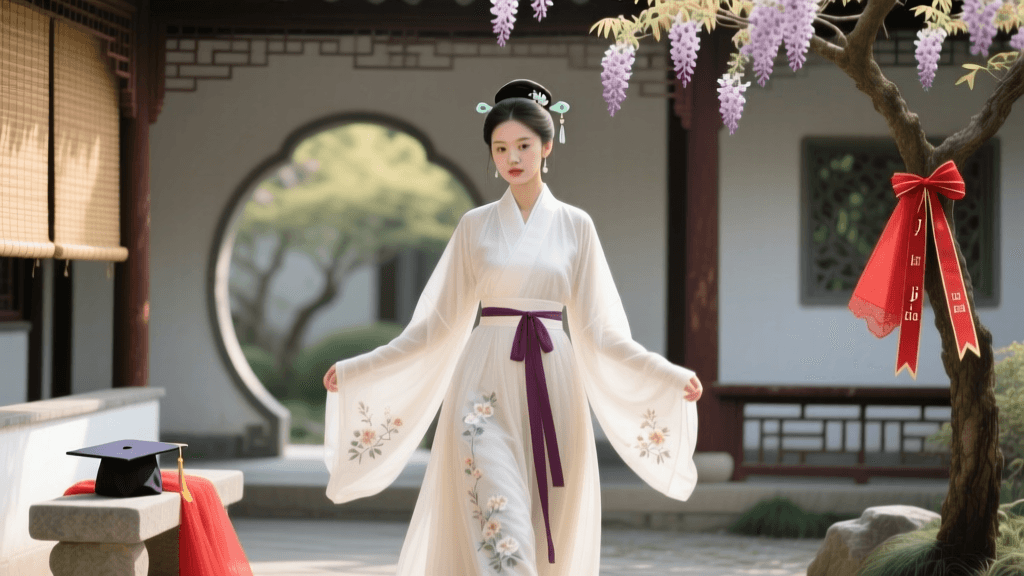
A fascinating development in recent years is the formalization of the Xue Li, or academic graduation ceremony, utilizing Hanfu. In 2026, numerous universities across Asia and international student associations have adopted the Lanshan (scholar's robe) or the Shenyi as official alternative academic dress.
The Lanshan, with its distinctive black trim and flowing sleeves, perfectly mirrors the solemnity of Western academic gowns while rooting the achievement in Confucian scholarly traditions. For graduates, the key to styling the Lanshan is the 'Jiaoling Youren' rule: the left lapel must always cross over the right lapel. Pairing the Lanshan with a traditional scholar's cap and a simple jade pendant at the waist creates a dignified, historically grounded silhouette for the stage.
2026 Hanfu Milestone Comparison Chart
To help you budget and plan, below is a detailed comparison of the primary garments, accessories, and current market costs for bespoke and premium off-the-rack Hanfu in 2026.
| Milestone Rite | Primary Garment Style | Essential Accessories | 2026 Avg. Cost (USD) | Tailoring Lead Time |
|---|---|---|---|---|
| Ji Li (Women's Coming of Age) | Ruqun transitioning to Daxiushan | Enamel Hairpins, Silk Sash | $250 - $600 | 4 - 6 Weeks |
| Guan Li (Men's Coming of Age) | Shenyi transitioning to Yuanlingpao | Scholar's Cap, Jade Belt | $200 - $550 | 4 - 6 Weeks |
| Hun Li (Ming Dynasty Wedding) | Aoqun, Mamianqun, Xiapei | Lightweight 3D Phoenix Crown | $1,200 - $3,500+ | 3 - 5 Months |
| Xue Li (Academic Graduation) | Lanshan or Formal Shenyi | Scholar's Scarf, Jade Pendant | $120 - $300 | 2 - 3 Weeks |
Sizing, Tailoring, and Fabric Drape Analysis
The elegance of Hanfu relies entirely on the drape of the fabric and the precision of the cut. Unlike Western tailoring, which emphasizes close-fitting silhouettes, traditional Chinese garments rely on flat-pattern cutting and the natural fall of the textile. According to historical textile analyses by The Metropolitan Museum of Art, the structural integrity of the garment is maintained through the alignment of the fabric grain and the strategic placement of seams.
Crucial Measurements for Your Tailor
When ordering bespoke Hanfu for a milestone event, providing standard Western measurements (bust, waist, hips) is insufficient. You must provide the following specific metrics:
- Shoulder to Wrist (Arm Drop): Measure from the base of the neck, over the shoulder, down to the wrist bone. For ceremonial Hanfu, add 10 to 15 centimeters to this measurement to allow for the traditional sleeve drape that covers the hands when resting.
- Back Length (C7 to Floor): Measure from the prominent vertebra at the base of the neck (C7) straight down to the floor. This ensures the back hem of robes like the Yuanlingpao grazes the floor perfectly without tripping the wearer.
- Skirt Rise and Hem: For a Mamianqun, the skirt should sit at the natural waist (above the navel). The hem should end exactly 3 centimeters above the floor when wearing your planned ceremonial footwear (typically cloud-toe shoes or embroidered flats).
Fabric Drape and Movement
For milestone ceremonies, you will be walking, bowing, and sitting. The 'walk test' is vital. Heavy Song brocade (Zhuanghua) provides a majestic, structured drape ideal for winter weddings and formal court-style garments, but it restricts rapid movement. For summer ceremonies or events requiring significant mobility, opt for Xiangyunsha (Gambiered Canton Gauze). This heritage silk, treated with river mud and yam juice, offers a crisp, paper-like rustle and a fluid drape that is highly breathable and naturally stain-resistant—a massive advantage for multi-day wedding festivities.
Storage and Maintenance for Ceremonial Silks
Ceremonial Hanfu is an investment and often becomes a family heirloom. Proper storage in 2026 goes beyond simple garment bags. Heavy embroidery and metallic threads can crush under their own weight if hung on standard hangers.
- Folding Technique: Never hang heavily embroidered Mamianqun or Xiapei. Fold them along the original tailor's creases, placing acid-free, unbuffered tissue paper between the folds to prevent the metallic threads from oxidizing or transferring color to the silk base.
- Climate Control: Store the garments in a cedar-lined, breathable cotton canvas box. In 2026, many collectors use small, battery-operated RFID hygrometers placed inside the storage boxes, which send alerts to your smartphone if the humidity drops below 45% or exceeds 55%, the optimal range for preserving protein-based silk fibers.
- Post-Ceremony Care: Do not attempt to dry-clean Xiangyunsha or raw silks with standard chemical solvents. Seek out a specialist heritage textile cleaner who utilizes liquid carbon dioxide cleaning technology, which removes organic stains without degrading the delicate natural sericin coating of the silk.
Conclusion
Celebrating life's milestones in Hanfu is a profound way to honor cultural heritage while creating deeply personal memories. Whether you are stepping into adulthood through the Ji Li, exchanging vows in a magnificent Ming Dynasty wedding ensemble, or crossing the graduation stage in a scholar's Lanshan, the key to success lies in meticulous preparation. By understanding the historical context, investing in modern 2026 tailoring innovations, and respecting the drape and care of traditional textiles, you ensure that your ceremonial garments are as timeless and enduring as the milestones they celebrate.