The Hanfu Boom: From Local Markets to Global E-Commerce
The Renaissance of Traditional Chinese Garments
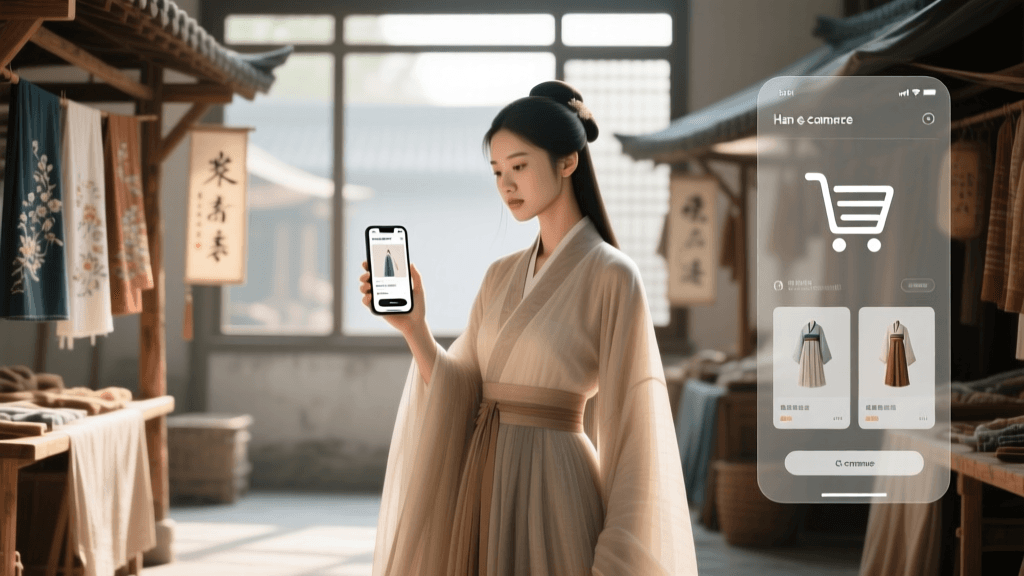
The resurgence of traditional Chinese clothing, commonly known as the Hanfu movement, has transformed from a niche subculture into a multi-billion-dollar global industry. For centuries, the procurement of traditional garments was strictly localized, relying on regional textile markets, specialized tailors, and family heirlooms. Today, however, the landscape has shifted dramatically. The intersection of cultural pride and digital innovation has moved the epicenter of Hanfu commerce from the bustling, physical silk markets of Suzhou and Beijing to the sophisticated, algorithm-driven storefronts of global e-commerce platforms.
Understanding this evolution is crucial for modern enthusiasts, historians, and consumers. Navigating the transition from tactile, in-person market haggling to digital shopping carts requires a new set of skills, particularly when dealing with historical silhouettes, specialized fabrics, and unique production timelines. This guide explores the historical shift from physical markets to e-commerce and provides actionable advice for purchasing authentic Hanfu in the digital age.
The Historical Marketplace: Sourcing Hanfu Before the Digital Age
Before the widespread adoption of online retail, acquiring traditional Chinese garments was a highly localized and often arduous process. In the early 2000s, when the modern Hanfu movement was in its infancy, enthusiasts relied heavily on physical wholesale markets. Locations such as the Muxiyuan textile market in Beijing or the extensive silk wholesale districts in Guangzhou and Suzhou were the primary hubs.
Shopping in these physical markets offered distinct advantages, most notably the tactile experience. Buyers could physically inspect the drape of a heavy Song brocade, feel the breathability of summer linen, and verify the authenticity of Xiangyunsha (gambiered canton gauze) by checking its distinctive crackled texture and earthy scent. Furthermore, local tailors provided immediate, in-person measurements, ensuring that complex garments like the Ming dynasty Aoqun (jacket and skirt) fit perfectly across the shoulders and chest.
However, the physical market model had severe limitations. Inventory was heavily restricted by geography, and the cost of custom tailoring was prohibitively high for young students and early adopters. Moreover, finding historically accurate patterns required deep personal networks within local theatrical costume departments or university history faculties, as mainstream commercial markets primarily catered to modern fashion or cheap, mass-produced tourist souvenirs.
The E-Commerce Revolution: Algorithms and Accessibility
The true democratization of Hanfu occurred alongside the explosive growth of China's e-commerce sector. Platforms like Taobao and Tmall became the digital incubators for the Hanfu movement. According to industry analyses of platforms like Taobao, the marketplace allowed small, independent designers and historical reconstructionists to bypass traditional retail gatekeepers and connect directly with a nationwide, and eventually global, audience.
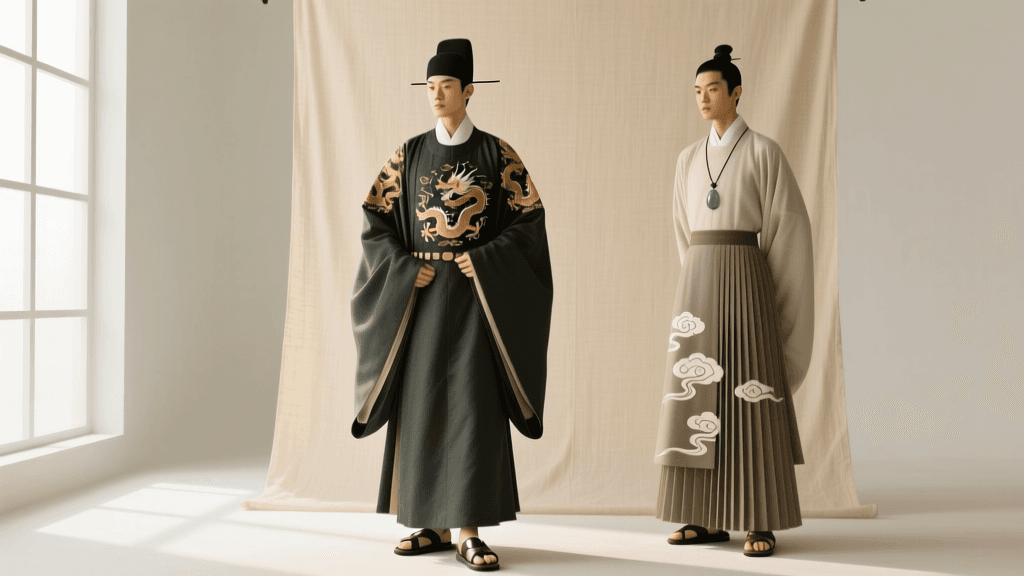
Social media integration further accelerated this boom. Visual platforms like Xiaohongshu (Little Red Book) and Douyin (TikTok) allowed brands to showcase the intricate details of historical weaving techniques, the flow of silk in motion, and comprehensive styling guides. This digital ecosystem transformed Hanfu from a localized hobby into a mainstream fashion phenomenon, with the market valuation reaching tens of billions of RMB annually. E-commerce enabled brands to scale production, offer diverse historical dynasty styles (from the ethereal Tang dynasty Ruqun to the structured Song dynasty Beizi), and ship globally to the diaspora and international enthusiasts.
Comparing the Channels: Physical Markets vs. Digital Storefronts
While e-commerce dominates the current landscape, physical markets and independent brick-and-mortar boutiques still exist. Understanding the operational differences between these channels is essential for making informed purchasing decisions.
| Feature | Physical Markets (e.g., Muxiyuan, Silk Street) | Mainstream E-Commerce (Taobao / Tmall) | Independent Hanfu Brands (Boutiques) |
|---|---|---|---|
| Price Range | $40 - $150 (Often negotiable) | $25 - $200 (Fixed, tiered pricing) | $100 - $800+ (Premium, artisan pricing) |
| Customization | High (In-person tailoring and fabric selection) | Low (Standardized S/M/L sizing) | Medium (Made-to-measure options available) |
| Wait Time | Immediate (or 1-2 weeks for custom tailoring) | Immediate to 45 days (Pre-order models) | 30 - 90 days (Batch production cycles) |
| Fabric Verification | Tactile (Feel the silk, linen, and weave) | Visual (Rely on reviews, videos, and specs) | Visual + Swatch mailing options for premium lines |
| Historical Accuracy | Low to Medium (Often mixed with modern cuts) | Medium to High (Driven by consumer demand) | Very High (Based on archaeological textiles) |
Practical Guide to Buying Hanfu Online
Transitioning from browsing historical art to clicking 'checkout' on a digital storefront requires specific knowledge. Here is a comprehensive guide to navigating the modern Hanfu e-commerce landscape.
1. Navigating the 'Yushou' (Pre-Order) System
One of the most critical aspects of Hanfu e-commerce is the Yushou (pre-order) system. Because historical garments require specialized jacquard looms and intricate embroidery, holding large physical inventory is financially risky for brands. Instead, brands release digital renderings or sample photos, open a pre-order window for 15 to 30 days, and then manufacture the garments in a single batch.
- Deposit Phase: Buyers pay a non-refundable deposit (usually 10% to 20% of the total cost).
- Production Phase: The brand manufactures the garments, which typically takes 30 to 45 days.
- Balance Phase: Buyers are notified to pay the remaining balance before the item ships.
- Actionable Advice: Always check the estimated shipping date on the product page. If you need a garment for a specific festival or event, you must order at least two months in advance to account for production and international shipping delays.
2. Sizing and Measurements for Historical Silhouettes
Western sizing (S, M, L) is largely inadequate for traditional Chinese garments, particularly those with cross-collars (Jiaoling) or wide sleeves. When buying online, you must rely on exact garment measurements provided in the product description.
- Chest and Waist: For cross-collar tops, the chest measurement must be at least 10-15 cm larger than your actual body measurement to allow for the proper overlap and tying of the inner and outer layers.
- Shoulder Width: Crucial for Ming dynasty jackets (Ao). A drooping shoulder seam will ruin the structured, dignified silhouette characteristic of the era.
- Arm Span / Sleeve Length: Traditional Hanfu sleeves often extend past the fingertips. Measure your arm span (fingertip to fingertip with arms outstretched) and compare it to the garment's sleeve length to ensure the elegant drape is achieved without tripping over the fabric.
- Skirt Length: Measure from your natural waist (or where you intend to tie the skirt) down to your ankle bone. Most e-commerce listings offer skirts in fixed lengths (e.g., 95cm, 100cm, 105cm).
3. Fabric Selection by Season and Climate
China's diverse climate historically dictated strict seasonal fabric choices, a tradition maintained by modern Hanfu brands. Reading the fabric composition on e-commerce listings is vital for comfort.
- Spring/Summer: Look for pure linen, cotton-linen blends, lightweight chiffon, and Luo (gauze). These fabrics offer high breathability. Avoid heavy polyester blends, which trap heat and cause excessive sweating in humid weather.
- Autumn/Winter: Seek out heavy silk brocade, wool blends, velvet, and thick jacquard weaves. For extreme cold, modern brands offer insulated linings and faux-fur trims on traditional Doupu (cloaks) and Pifeng (capes).
- Premium Investment: If budget allows, seek out Xiangyunsha (gambiered silk) for summer. It is an intangible cultural heritage fabric that is naturally cooling, antibacterial, and becomes softer with wear. Expect to pay upwards of $300 for an authentic piece online.
The Future of Traditional Garment Retail
The journey of Hanfu from the physical stalls of local textile markets to the sophisticated digital storefronts of global e-commerce represents a triumph of cultural preservation through modern technology. While the tactile joy of browsing a physical silk market remains irreplaceable, the digital realm has provided unprecedented access, affordability, and historical accuracy to millions of consumers worldwide. By understanding the mechanics of online pre-orders, mastering traditional measurement techniques, and respecting seasonal fabric choices, modern consumers can confidently curate a historically rich and authentic wardrobe, bridging the gap between ancient artistry and the digital age.