The Hanfu E-Commerce Boom: From Local Markets to Digital Retail
The Origins: Physical Markets and Early Hanfu Forums
The modern Hanfu movement, which seeks to revive the traditional clothing of the Han Chinese, began in the early 2000s as a grassroots cultural initiative. In its infancy, acquiring authentic Hanfu was a formidable challenge. Enthusiasts relied heavily on niche online forums like Hanwang to share historical research, pattern drafts, and styling advice. Because commercial production was virtually non-existent, early adopters had to navigate physical textile markets—such as the sprawling Zhongda Fabric Market in Guangzhou or the Silk Market in Beijing—to source raw materials like silk, linen, and brocade.
After purchasing fabric, buyers would take their materials to local tailors, providing them with historical diagrams and forum-sourced measurements. This process was expensive, time-consuming, and prone to structural errors, as most modern tailors were unaccustomed to the flat-cutting techniques and complex layering of traditional Chinese garments. The barrier to entry was high, keeping Hanfu confined to a dedicated but small subculture.
The Taobao Era: Scaling Traditional Garments
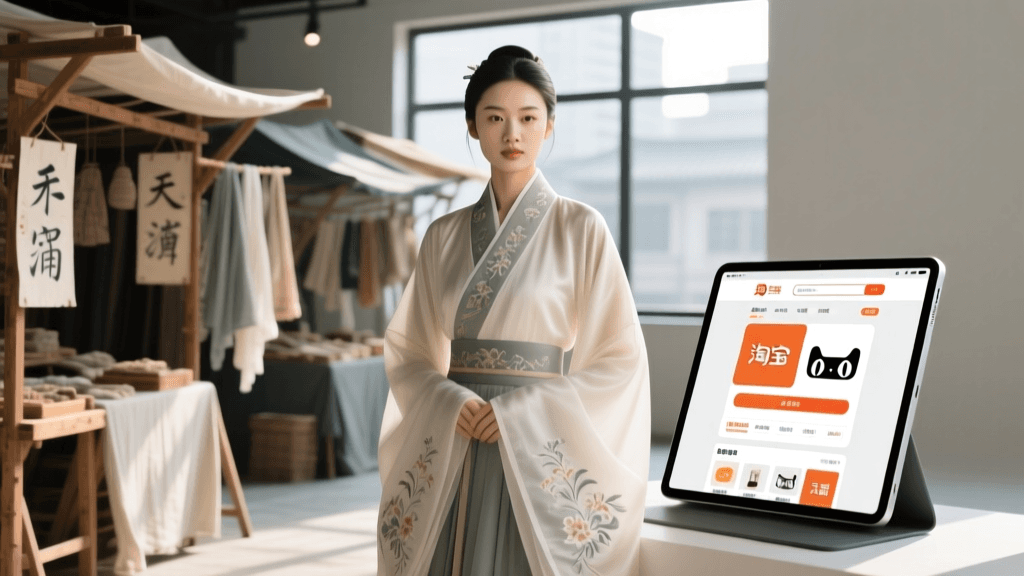
The landscape shifted dramatically with the rise of Taobao and Tmall in the late 2000s and 2010s. E-commerce platforms provided a direct-to-consumer pipeline that allowed small, specialized workshops to reach a national audience. The most profound geographic shift in this supply chain was the rise of Caoxian, a county in Shandong province. Once primarily known for performance costumes and photography backdrops, Caoxian pivoted to mass-produce Hanfu, eventually accounting for a massive percentage of China's online Hanfu sales.
This e-commerce boom democratized access to traditional garments. Instead of sourcing fabric and hiring a tailor, consumers could now browse hundreds of shops, compare historical accuracy, and read community reviews. The digital marketplace also fostered a new ecosystem of independent designers who blended rigorous historical research with modern manufacturing capabilities, bridging the gap between museum replicas and wearable daily fashion.
Livestreaming and Douyin: The Visual Marketplace
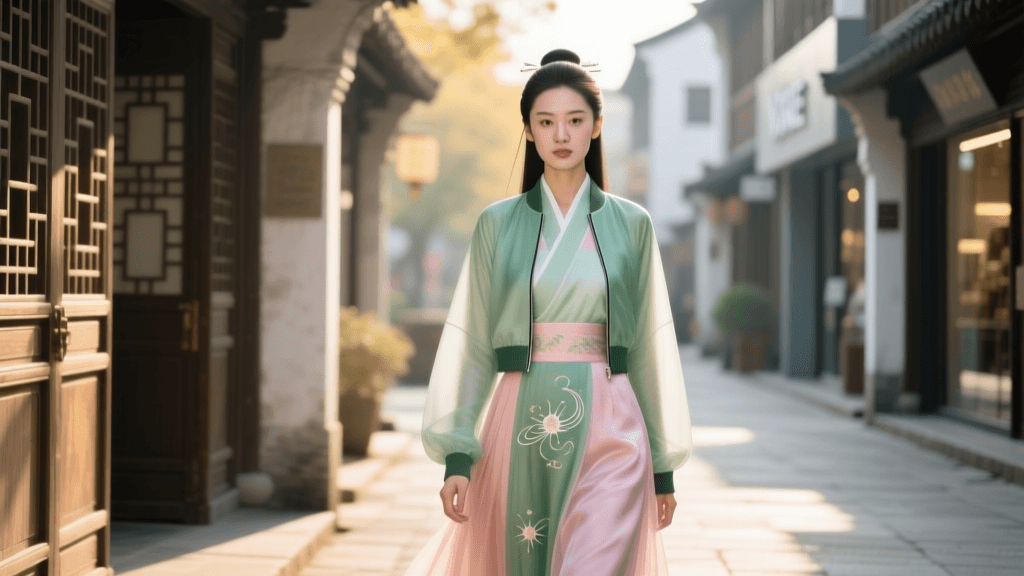
While static images on Taobao revolutionized accessibility, the advent of Douyin (the Chinese counterpart to TikTok) and livestream e-commerce solved a critical problem in traditional garment retail: visualizing the drape, movement, and structural layering of the clothing. Hanfu is inherently dynamic; garments like the Mamianqun (horse-face skirt) or the sweeping sleeves of a Daxiushan (large-sleeved robe) only reveal their true elegance in motion.
Livestreamers now demonstrate how to properly tie complex sashes, layer inner and outer garments, and style hair accessories in real-time. This visual education has drastically reduced return rates and accelerated the adoption of Hanfu among younger demographics who learn styling techniques through short-form video content.
Practical Guide: Navigating Hanfu E-Commerce Today
For international buyers and newcomers looking to purchase Hanfu on Chinese e-commerce platforms like Taobao or Tmall, understanding the digital marketplace's unique mechanics is essential. Here is actionable advice for securing high-quality traditional garments:
1. Master the Measurement System
Unlike Western sizing (S, M, L), authentic Hanfu brands rely on precise metric measurements. Before ordering, you must know your:
- Height and Weight: Crucial for determining skirt length and overall garment proportions.
- Bust, Waist, and Hip: Essential for the fit of the inner garments (Zhongyi) and the wrap-around skirts.
- Arm Span: Measured from wrist to wrist with arms outstretched, this dictates the sleeve length and the depth of the armholes, which are cut much deeper in traditional flat-pattern tailoring than in modern Western clothing.
2. Understand the 'Yushou' (Pre-Sale) Model
High-quality Hanfu is rarely kept in ready stock due to the complexity of the embroidery and the financial risk of holding inventory. Most top-tier brands operate on a Yushou (pre-sale) model. When you purchase a pre-sale item, expect a waiting period of 30 to 45 days, and sometimes up to 90 days for intricate brocade or hand-embroidered pieces. Always check the estimated shipping date listed on the product page.
3. Budgeting for Quality Tiers
- Entry-Level (150–300 RMB / $20–$40 USD): Typically made from polyester blends or basic cotton. Ideal for casual wear, summer festivals, and beginners. Often mass-produced in Caoxian.
- Mid-Tier (300–800 RMB / $40–$110 USD): Features better structural integrity, jacquard weaves, and machine embroidery. Brands in this tier often collaborate with historical consultants for accurate patterning.
- High-End & Intangible Heritage (1,000–5,000+ RMB / $140–$700+ USD): Utilizes pure mulberry silk, real gold thread, and traditional weaving techniques like Kesi (silk tapestry) or Su embroidery. These are investment pieces and wearable art.
Comparison Chart: Traditional Tailoring vs. Modern E-Commerce
| Feature | Early 2000s Physical Tailoring | Modern E-Commerce Brands |
|---|---|---|
| Sourcing | Manual fabric market hunting | Direct-to-consumer digital storefronts |
| Historical Accuracy | Variable; relied on forum guesswork | High; brands employ historical researchers |
| Production Time | 2 to 4 weeks (local tailor) | Ready stock or 30-90 day pre-sale |
| Cost | High (fabric + bespoke tailoring fees) | Scalable (Mass market to luxury tiers) |
| Community Support | Niche forums and local meetups | Livestreams, video tutorials, social media |
Preserving Intangible Heritage in a Digital Age
The e-commerce boom has not merely commercialized Hanfu; it has actively funded the preservation of ancient textile techniques. As consumer demand for historical accuracy has grown, so has the appreciation for authentic craftsmanship. The Metropolitan Museum of Art notes that the history of Chinese textiles is deeply intertwined with the evolution of the silk trade and regional weaving specializations, highlighting the immense cultural weight these fabrics carry The Metropolitan Museum of Art.
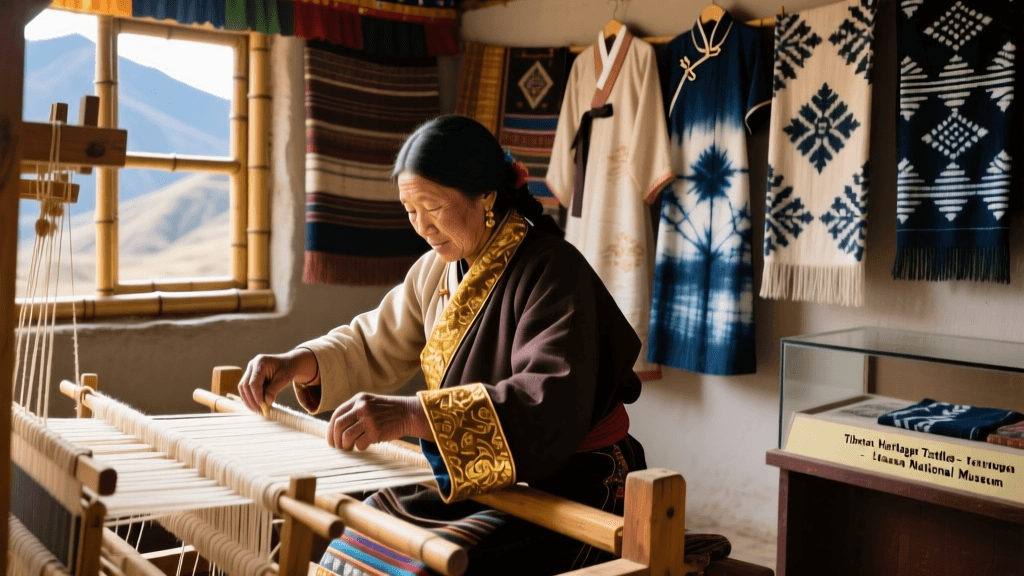
Today, premium Hanfu brands partner directly with artisans recognized by the state for their mastery of Intangible Cultural Heritage (ICH) crafts. Techniques such as Xiangyunsha (a complex, mud-dyed silk gauze from Guangdong) and traditional sericulture are experiencing a renaissance, funded by the high margins of luxury e-commerce. The UNESCO Intangible Cultural Heritage registry specifically highlights the sericulture and silk craftsmanship of China as a vital, living tradition that encompasses everything from mulberry cultivation to the weaving of complex brocades UNESCO Intangible Cultural Heritage.
Museums and cultural institutions also play a pivotal role in this digital ecosystem. Institutions like the Asian Art Museum provide extensive digital archives of historical textiles, which modern Hanfu designers use as primary source material to recreate accurate color palettes, motif placements, and weave structures for their e-commerce lines Asian Art Museum.
Conclusion: A Digital Renaissance
The journey of Hanfu from the fabric stalls of local markets to the algorithmic feeds of modern e-commerce is a testament to the power of digital communities. What began as a fragmented, DIY hobby has matured into a sophisticated retail sector that honors centuries of sartorial history. For the modern consumer, the digital marketplace offers unprecedented access to traditional Chinese garments, provided they navigate the platforms with an understanding of historical structures, precise measurements, and the patience required for authentic craftsmanship. As e-commerce continues to evolve, it ensures that the rich tapestry of Asian textile traditions remains not just a museum artifact, but a vibrant, living wardrobe.