Hanfu for Extreme Climates 2026: Desert, Tropical & Cold Weather
The Global Expansion of Hanfu in 2026
The traditional Chinese clothing movement has transcended its geographical and climatic origins. As we navigate through 2026, Hanfu is no longer confined to the temperate, four-season environments of East Asia. Today, a vibrant global community of enthusiasts wears these historical garments in some of the most unforgiving environments on Earth—from the sweltering, high-humidity streets of Southeast Asia and the American South, to the sun-baked, arid dunes of the Middle Eastern deserts, and the sub-zero, wind-swept winters of Northern Europe and Canada. Adapting Hanfu for extreme climates requires a delicate balance: maintaining the integrity of historical silhouettes while integrating modern textile science and strategic layering techniques.
In this comprehensive 2026 guide, we explore how to authentically and comfortably wear Hanfu across tropical, desert, and extreme cold regions. By understanding the historical precedents for climate adaptation and leveraging the latest fabric innovations, you can build a versatile Hanfu wardrobe that withstands the elements without sacrificing elegance or cultural accuracy.
Tropical and Humid Climates: Beating the Heat and Moisture
Wearing layered traditional garments in tropical climates—such as Singapore, Kuala Lumpur, or Miami—presents a unique challenge. High humidity prevents sweat evaporation, making heavy, restrictive fabrics unbearable. The key to tropical Hanfu lies in maximizing airflow, utilizing moisture-wicking materials, and selecting historical styles designed specifically for summer heat.
Historical Styles for High Humidity
The Song Dynasty (960–1279) offers the most practical silhouettes for tropical weather. The Beizi (an open-front, long jacket) is a staple for hot climates. Unlike cross-collared robes that wrap tightly around the torso, the Beizi features side slits that extend up to the armpit, allowing for maximum cross-breeze and ventilation. Pairing a lightweight Beizi with a narrow-sleeved MoXiong (tube top) and a breathable skirt creates a historically accurate ensemble that functions similarly to modern resort wear.
Fabric Innovations and Selections
Historically, wealthy elites relied on Xiangyunsha (gambiered Guangdong gauze). As documented in the Victoria and Albert Museum's Chinese textile archives, this unique silk is dyed with river mud and plant juices, creating a crisp, rustling fabric that naturally repels moisture, dries incredibly fast, and resists mold in humid conditions. However, authentic Xiangyunsha can be expensive and stiff.
For 2026, the market has seen a surge in cupro-linen and bamboo-viscose blends. These modern fabrics mimic the drape of traditional silk but offer superior moisture management. When shopping for tropical Hanfu, look for fabric weights between 90 and 120 GSM (grams per square meter). A high-quality bamboo-silk Beizi set in 2026 typically retails between $85 and $140 USD, offering an excellent balance of historical drape and modern cooling technology.
Desert and Arid Regions: Sun Protection and Temperature Swings
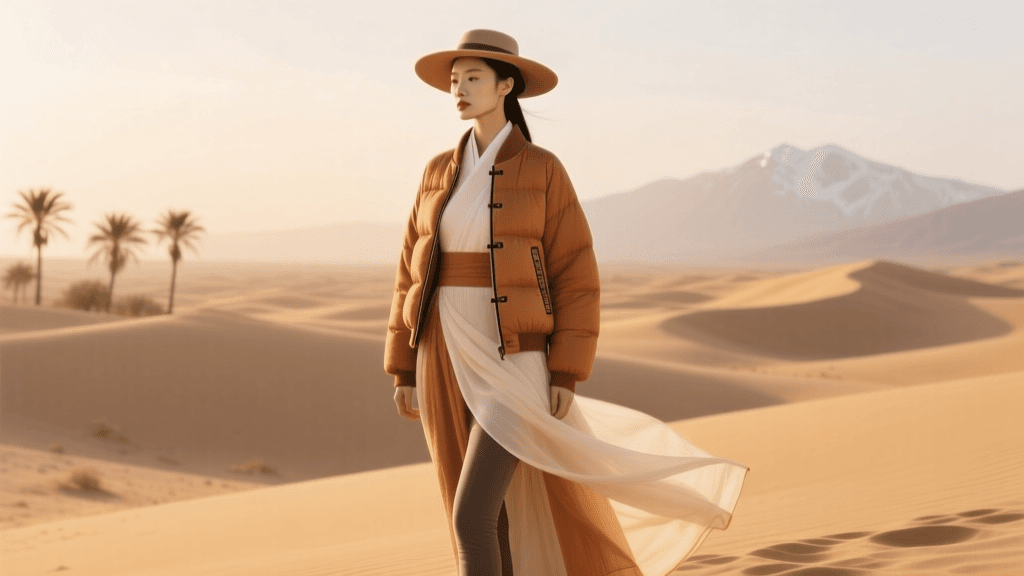
Desert environments, such as those found in Dubai, the American Southwest, or Northwest China, are defined by intense UV radiation, dry heat, and extreme diurnal temperature shifts—where daytime highs can plummet to near-freezing at night. Hanfu for the desert must act as a shield against the sun while providing adaptable insulation.
Historical Styles for Arid Zones
The Ming Dynasty Daopao (a cross-collared robe with side pleats) is exceptionally well-suited for desert travel. The loose, flowing sleeves and voluminous skirt protect the skin from direct UV exposure while trapping a layer of cool air close to the body. Furthermore, the side pleats allow for a wide range of motion, which is essential when navigating uneven, sandy terrain. To protect the face and neck from harsh sun and blowing sand, the Weimao (a wide-brimmed hat with a sheer veil) is both a stunning historical accessory and a highly functional piece of desert gear.
Fabric Innovations and Selections
Cotton and raw silk are your best allies in the desert. According to the Encyclopædia Britannica's guide to sericulture, raw, un-degummed silk (such as Tussah or Shantung) retains a slightly textured, porous quality that provides excellent breathability and natural UV resistance. In 2026, several heritage brands have introduced UPF 50+ treated hemp and raw silk blends specifically designed for outdoor enthusiasts. These fabrics block harmful rays without the need for synthetic, non-breathable chemical coatings. For evening desert wear, layering a lightweight wool-blend Bijia (sleeveless vest) over your Daopao provides the necessary warmth as the sun sets, without adding bulk to the arms.
Extreme Cold Regions: Insulation Without Losing Silhouette
Wearing Hanfu in sub-zero climates—like Reykjavik, Harbin, or Montreal—requires serious thermal engineering. The historical concept of layering (Yi Guan) is pushed to its limits here. The goal is to integrate modern extreme-weather technology invisibly beneath traditional garments, ensuring the outer silhouette remains fluid and historically recognizable.
Historical Styles for Freezing Temperatures
The Doupeng (a sleeveless, bell-shaped windbreaker cloak) is the ultimate winter Hanfu staple. Because it lacks sleeves, it easily conceals modern, heavily insulated puffer jackets or heated vests worn underneath. For the lower body, the Mamianqun (horse-face skirt) is ideal. Its flat front and pleated sides provide ample room to wear thick, fleece-lined thermal leggings or even modern heated pants underneath without distorting the skirt's elegant drape. For the upper body, the padded Ao (jacket) with a standing collar (Liling) protects the neck from biting winds.
Fabric Innovations and Selections
As documented in the Metropolitan Museum of Art's Heilbrunn Timeline of Art History, silk has long been prized for its natural thermoregulatory properties, serving as an excellent base layer that traps heat. In 2026, the integration of graphene-infused linings and phase-change materials (PCM) into traditional wool and cashmere outer layers has revolutionized winter Hanfu. Graphene linings reflect body heat back to the wearer, providing the warmth of heavy down without the Michelin-man bulk that ruins the drape of a Doupeng. Expect to invest between $250 and $400 USD for a high-end, graphene-lined wool Doupeng from leading 2026 heritage brands.
2026 Hanfu Climate Adaptation Comparison Chart
| Climate Zone | Primary Historical Style | 2026 Fabric Innovation | Key Accessory | Estimated Cost (USD) |
|---|---|---|---|---|
| Tropical / Humid | Song Dynasty Beizi | Bamboo-Viscose / Cupro Blends (90-120 GSM) | Bamboo-charcoal inner sash | $85 - $140 |
| Desert / Arid | Ming Dynasty Daopao | UPF 50+ Treated Raw Hemp & Tussah Silk | Weimao (Veil Hat) | $150 - $220 |
| Extreme Cold | Doupeng (Cloak) & Mamianqun | Graphene-Infused Wool & PCM Linings | Concealed USB-heated vest | $250 - $400 |
Modern Tech Meets Ancient Weaves: Care and Maintenance
Adapting Hanfu for extreme climates also means adapting your garment care routine. Tropical bamboo-silk blends should be hand-washed in cool water with a pH-neutral detergent to preserve their moisture-wicking micro-structures; never wring them out, as this breaks the bamboo fibers. Desert-worn raw silk and hemp must be brushed down with a soft-bristled garment brush after exposure to sand and dust, and stored in breathable cotton garment bags to prevent the dry heat from making the fibers brittle over time.
For extreme cold gear, graphene-lined wool cloaks and padded Ao jackets should be dry-cleaned or spot-cleaned only. If you are using modern heated under-layers or battery-powered thermal vests beneath your Hanfu, always remove the electronic components before washing the base garments. As the Hanfu community continues to grow globally in 2026, the fusion of ancestral aesthetics with cutting-edge climate technology ensures that these beautiful garments can be worn proudly, comfortably, and safely, no matter where the wind blows.