Hanfu vs Peking Opera Costumes: 2026 Kunqu Stage Guide
The Theatrical Divide: Historical Hanfu vs. Jingju Xifu
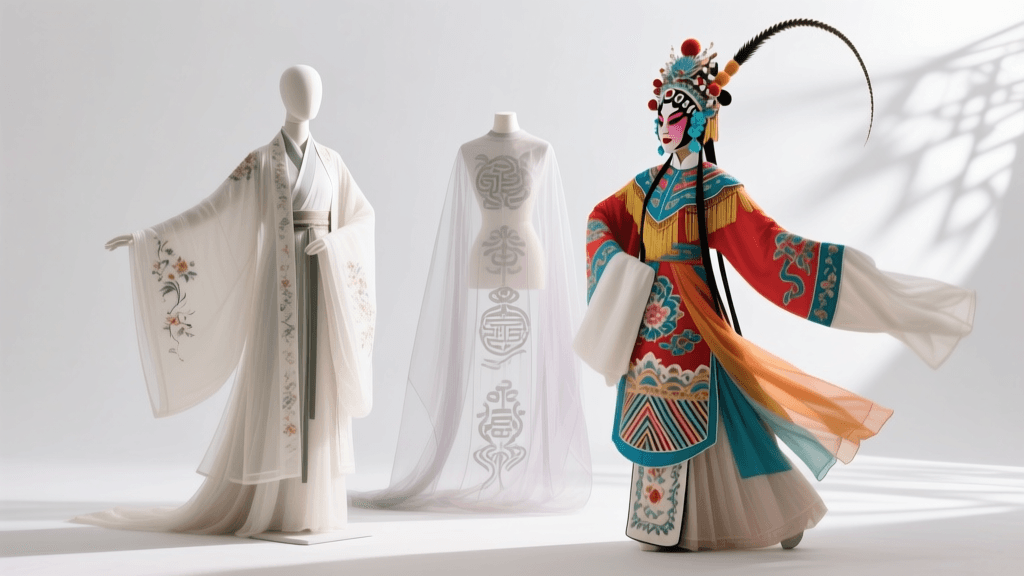
When exploring the rich tapestry of Asian traditional garments, enthusiasts and performers often encounter a fascinating intersection: the relationship between historical Hanfu and the theatrical costumes (Xifu) used in traditional Chinese performing arts. While both share roots in China’s sartorial history, they serve vastly different purposes. Historical Hanfu refers to the daily, ceremonial, and court dress of the Han ethnic group across dynasties such as the Tang, Song, and Ming. In contrast, Peking Opera (Jingju) costumes are highly stylized, exaggerated theatrical garments designed for visibility, character archetypes, and acrobatic mobility under bright stage lights.
According to the Encyclopedia Britannica, Peking Opera costumes, or Xifu, are largely based on Ming dynasty clothing but heavily modified with Qing dynasty influences and theatrical exaggerations. For instance, the蟒 (Mang, or python robe) worn by emperors and high officials on stage features exaggerated padding, stiffened silhouettes, and vibrant, contrasting colors that denote specific character traits rather than historical accuracy. In 2026, as the global Hanfu revival matures, a growing number of traditional performing arts troupes are re-evaluating this divide, seeking to bridge the gap between historical authenticity and theatrical expression.
Kunqu Opera: The Ming Dynasty Aesthetic Bridge
If Peking Opera represents theatrical exaggeration, Kunqu Opera represents lyrical elegance. Recognized by the UNESCO Intangible Cultural Heritage list as one of the oldest and most refined forms of Chinese opera, Kunqu predates Jingju and relies heavily on the sophisticated aesthetics of the Ming dynasty. Because Kunqu emphasizes subtle facial expressions, fluid sleeve movements, and poetic storytelling over the martial acrobatics of Peking Opera, its costumes have historically remained closer to actual Ming-era Hanfu.
In traditional Kunqu, female roles (Dan) often wear garments that closely resemble the historical 袄裙 (Aoqun, a layered jacket and skirt) or 披风 (Pifeng, a translucent outer cloak). However, even in Kunqu, theatrical modifications exist. The most notable is the 水袖 (Shuixiu, or water sleeves). While historical Ming portraits show sleeves extending slightly past the hands, traditional Kunqu stage costumes feature white silk extensions that can reach up to 90 centimeters, allowing performers to execute the intricate 'water sleeve' choreography that conveys deep emotional states.
2026 Stage Trends: The 'Fuyuan' Authenticity Movement
The year 2026 has ushered in a major paradigm shift within China’s traditional performing arts scene, widely referred to as the 'Fuyuan' (Restoration to the Source) movement. Directors of prominent Kunqu and classical dance troupes are increasingly moving away from standard, mass-produced theatrical Xifu in favor of historically accurate, stage-adapted Hanfu. This trend is heavily influenced by the massive Hanfu enthusiast community, which now demands historical rigor even in theatrical settings.
In the 2026 National Kunqu Theatre season, audiences are seeing leading actresses performing in meticulously recreated Ming dynasty 马面裙 (Mamianqun, or horse-face skirts) crafted from authentic Song brocade and Zhang velvet, rather than the standard theatrical pleated skirts. These garments are tailored to withstand the rigors of stage performance while maintaining the precise drape, pleat structure, and silhouette of historical artifacts. This crossover has created a booming niche market for 'stage-ready Hanfu'—garments that pass the scrutiny of historical reenactors while surviving the physical demands of a two-hour theatrical performance.
Sourcing and Commissioning Stage-Ready Hanfu in 2026
For amateur troupes, university traditional arts societies, and independent performers in 2026, sourcing stage-ready Hanfu requires navigating a specialized market. Standard Hanfu boutiques often use lightweight chiffons or thin silks that become transparent or cling awkwardly under hot stage lighting. Conversely, traditional opera costume shops use heavy, stiff synthetic brocades that lack the fluid drape required for Kunqu’s lyrical movements.
To bridge this gap, performers are commissioning directly from heritage studios in Suzhou and Nanjing that specialize in theatrical-grade natural fibers. Here is what you need to know about commissioning stage-ready Hanfu in 2026:
- Fabric Selection: Opt for heavy-weight mulberry silk (minimum 22 momme) or authentic Song-style Jacquard brocade. These fabrics catch stage lighting beautifully, resist wrinkling during floor-work (Woju), and provide the necessary weight for sleeve choreography.
- Pleat Reinforcement: A historical Mamianqun relies on flat, unstitched pleats. For stage performances involving rapid turns or dance sequences, request 'stage-locking'—a technique where the inner pleats are lightly tacked with invisible silk thread at the hip to prevent the skirt from blooming open inappropriately during high kicks or deep bends.
- Sleeve Weighting: If your performance requires water sleeve techniques but you are wearing a historical Hanfu silhouette, studios in 2026 offer hidden lead-free copper weighting in the cuffs. This provides the centrifugal momentum needed for sleeve tosses without requiring the exaggerated 90cm white silk extensions of traditional Xifu.
- Cost Expectations: As of 2026, a custom-fitted, stage-grade Ming-style Aoqun set (jacket, skirt, and Pifeng cloak) utilizing genuine silk brocade ranges from $450 to $850 USD. Mass-produced theatrical polyester alternatives cost around $80 to $120 USD but are increasingly frowned upon in serious amateur and semi-professional circles.
Garment Comparison for Performers
Understanding the structural differences between historical dress, traditional opera costumes, and modern stage-adapted Hanfu is crucial for choreographers and costume designers. Below is a detailed comparison to guide your 2026 production choices.
| Feature | Historical Ming Hanfu | Traditional Jingju Xifu | 2026 Stage-Adapted Hanfu |
|---|---|---|---|
| Silhouette | Natural drape, A-line skirts, relaxed jackets. | Stiffened, padded, exaggerated shoulders and hemlines. | Historical drape with hidden structural tacking for movement. |
| Sleeves | Pipa or straight sleeves, extending 5-10cm past hands. | Shuixiu (water sleeves) adding 60-90cm of white silk. | Extended historical cuffs with weighted hems for choreography. |
| Skirt Pleats | Unstitched, flat pleats that bloom when walking. | Often stitched down or replaced with stylized wrap skirts. | Deep pleats with hidden hip-tacking to prevent stage exposure. |
| Collars | Soft, overlapping Yuanling (round) or Jiaoling (cross) collars. | Stiffened, high-contrast white protector collars. | Reinforced historical collars with sweat-wicking inner linings. |
| Primary Use | Daily wear, ceremonies, historical reenactment. | Acrobatics, martial arts, highly stylized character acting. | Lyrical dance, Kunqu opera, classical instrument performance. |
Choreography and Movement Considerations
Transitioning from traditional Xifu to stage-adapted Hanfu fundamentally alters a performer's movement vocabulary. In Peking Opera, the stiffened蟒 (Mang) robe requires the performer to use broad, sweeping arm movements and distinct, grounded footwork to manipulate the heavy fabric. The garment dictates the choreography. When performing in a 2026 stage-adapted Mamianqun and Aoqun set, the choreography must shift to reflect the garment's natural fluidity.
For Kunqu performers, the focus returns to the 'Yunshou' (cloud hands) and subtle torso rotations that allow the natural silk brocade to catch the light. Because stage-adapted Hanfu lacks the extreme length of traditional water sleeves, performers must rely more on wrist articulation and the drape of the Pifeng (cloak) to express emotion. Furthermore, the footwear changes dramatically. Traditional Jingju relies on thick-soled 靴子 (Xuezi, or stage boots) to elevate the actor and provide a stable base for martial arts. Stage-adapted Hanfu performances in 2026 favor authentic 弓鞋 (Gongxie, or cloud-tipped shoes) or soft-soled embroidered flats, which require a softer, gliding step (Yuanba) that keeps the hem of the Mamianqun floating just millimeters above the stage floor.
Footwear and Accessories for the Modern Stage
No stage-ready Hanfu ensemble is complete without the correct accessories. In 2026, the market for historically accurate yet stage-durable accessories has expanded significantly. For headwear, traditional opera relies on the heavy, jewel-encrusted 凤冠 (Fengguan, or phoenix crown) which can weigh several kilograms and requires immense neck strength. For stage-adapted Hanfu, performers are opting for lightweight, 3D-printed titanium-alloy hairpins coated in enamel and faux kingfisher feather (Tian-tsui) finishes. These provide the visual opulence of a Ming dynasty court headdress under stage lights without causing cervical strain during a two-hour performance.
Belts and sashes also require adaptation. Historical Hanfu utilizes silk sashes or jade-inlaid leather belts that sit naturally on the waist. For stage visibility, 2026 costume designers are integrating subtle, battery-operated LED threading into the woven patterns of the sashes, allowing the garment to subtly shift in color temperature to match the lighting design of modern theatrical productions. This seamless blend of ancient silhouette and 2026 stage technology represents the cutting edge of Asian traditional garment evolution, proving that historical clothing is not a static relic, but a living, breathing art form capable of captivating modern audiences.