Haori Street Style: Styling the Traditional Japanese Jacket
The Haori's Journey from Samurai Armor to Streetwear
The haori is a traditional Japanese hip- or thigh-length kimono-style jacket, worn open over a base layer. Originally emerging during the Sengoku period (1467–1615) as a practical, sleeveless or short-sleeved garment worn by samurai over their armor for warmth and identification, the haori evolved significantly during the Edo period (1603–1867). As Japan entered an era of prolonged peace, the merchant class adopted the haori, transforming it into a canvas for subtle luxury and intricate lining designs, adhering to the strict sumptuary laws of the time. According to the Metropolitan Museum of Art, the structural foundation of modern Japanese dress was solidified during this era, prioritizing T-shaped silhouettes that draped elegantly over the body rather than conforming to it.
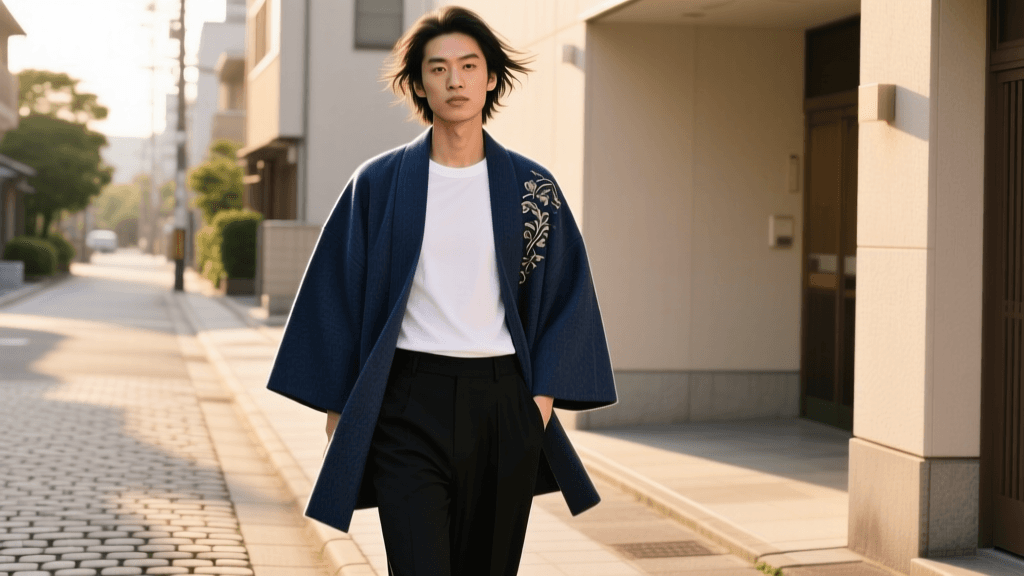
Today, the haori has transcended its ceremonial and historical roots to become a staple in modern streetwear and avant-garde fashion. The 'Neo-Kimono' movement, heavily centered in Tokyo's Harajuku and Shimokitazawa districts, has recontextualized the haori as a versatile outerwear piece. Designers and streetwear enthusiasts alike appreciate its architectural drape, gender-neutral silhouette, and the effortless layering it provides. Whether thrown over a vintage band t-shirt or paired with technical cargo pants, the haori bridges the gap between Edo-period craftsmanship and contemporary urban aesthetics.
Decoding the Haori: Anatomy, Measurements, and Fit
One of the most common hurdles for Western enthusiasts adopting traditional Japanese garments is the sizing system. Unlike Western tailoring, which relies on precise chest, waist, and inseam measurements, the haori is designed with a 'one-size-fits-most' philosophy, relying on the concept of haba (width) and yuki (sleeve length). Because the haori is worn open and meant to drape loosely, the chest and waist measurements are largely irrelevant. Instead, the shoulder drop and sleeve length dictate the garment's silhouette.
The Victoria and Albert Museum notes that the structural genius of the T-shaped kimono and haori lies in its flat pattern cutting, which allows the fabric to hang dynamically based on the wearer's frame. For modern streetwear, an oversized, dropped-shoulder look is highly desirable, meaning vintage haori often fit perfectly into contemporary oversized fashion trends.
| Measurement Term | English Equivalent | Ideal Streetwear Fit & Notes |
|---|---|---|
| Yuki | Sleeve Length (Center back to cuff) | 60cm - 68cm. Should hit the wrist bone or slightly past for a modern drape. |
| Katahaba | Shoulder Width | 28cm - 32cm. Look for a dropped shoulder seam that falls onto the upper bicep. |
| Mitake | Back Length | 75cm - 85cm. Should hit mid-thigh; shorter lengths (65cm) read more like modern boleros. |
| Sodeguchi | Sleeve Opening | Wide openings create a dramatic, flowing silhouette when walking or gesturing. |
Fabric Choices for the Urban Environment
The material of your haori dictates not only its seasonality but also its integration into a streetwear wardrobe. While vintage silk haori are breathtaking, they require careful maintenance and are prone to water damage. For daily urban wear, modern textiles and specific vintage weaves are often more practical.
- Silk (Kinu): Best for evening wear, gallery openings, or high-fashion editorial looks. Vintage silk haori from the mid-20th century often feature incredible yuzen dyeing or jacquard weaves. However, they are fragile and difficult to clean.
- Cotton (Momen) & Linen (Asa): The undisputed kings of casual streetwear. Brands like Sou-Sou and Muji have popularized cotton and linen haori that are machine-washable, breathable, and perfect for spring and summer layering over t-shirts.
- Wool (Uru) & Polyester Blends: Ideal for autumn and winter. Vintage wool haori, often featuring subtle houndstooth or plaid patterns, mimic the texture of Western overcoats while maintaining the Japanese silhouette. They are durable, water-resistant, and provide excellent insulation.
Three Actionable Streetwear Styling Formulas
Integrating a haori into a modern wardrobe requires balancing its traditional volume with contemporary proportions. Here are three actionable styling formulas tailored for different streetwear aesthetics:
1. The Techwear Ninja (Utilitarian & Tactical)
Pair a solid black or dark indigo cotton haori with technical nylon cargo pants and chunky tactical boots. The wide sleeves of the haori contrast beautifully with the tapered, articulated knees of techwear trousers. Pro Tip: Instead of leaving the haori completely open, use a modern carabiner or a tactical paracord strap in place of the traditional haori himo (front ties) to cinch the waist slightly and add a utilitarian hardware element.
2. Vintage Americana (Heritage & Workwear)
Layer a vintage, patterned silk or wool haori over a heavyweight white loopwheel t-shirt and raw selvedge denim. Finish the look with Goodyear-welted engineer boots or canvas sneakers. The juxtaposition of delicate Japanese craftsmanship (like a subtle crane or wave motif on the haori's lining) with rugged American workwear creates a globally minded, eclectic silhouette. Roll the cuffs of the denim to highlight the footwear and maintain a clean vertical line.
3. Minimalist Avant-Garde (Architectural & Monochrome)
Channel designers like Yohji Yamamoto or Issey Miyake by opting for a monochrome palette. Wear a textured linen or matte-black polyester haori over wide-leg pleated trousers and chunky leather loafers. The key here is the 'drop' of the shoulder and the movement of the fabric. Keep the base layers fitted or tucked in to ensure the haori remains the focal point of the outfit's architecture.
Sourcing, Costs, and Garment Care
Acquiring a haori is easier and more affordable than ever, thanks to the global vintage market and specialized online retailers. The Kyoto Costume Institute frequently highlights how historical garments are preserved and reinterpreted in modern fashion, emphasizing the value of authentic construction techniques found in vintage pieces.
- Vintage Markets (Shimokitazawa, Koenji, Online): Vintage silk and wool haori can be found on eBay, Etsy, or specialized sites like Kimono Yukata Market Sakura. Cost: $30 to $120 depending on condition and rarity. Always check for 'shimi' (stains) and weak seams along the shoulders.
- Modern Retailers (Sou-Sou, Muji, Uniqlo): For brand-new, easily maintainable cotton and linen haori, modern Japanese lifestyle brands are the best choice. Cost: $80 to $250. These are cut slightly more like Western cardigans but retain the traditional collar and sleeve shape.
Care Instructions: Never machine-wash vintage silk. Spot clean with a damp cloth and store folded in a breathable cotton bag with cedar blocks to deter moths. Modern cotton and linen haori can be machine-washed on a gentle, cold cycle and hung to dry, but avoid direct sunlight to prevent the indigo or natural dyes from fading.
Conclusion
The haori is a testament to the timelessness of Japanese garment design. Its transition from the battlefields of the Sengoku period to the neon-lit streets of modern Tokyo speaks to its unparalleled versatility. By understanding its unique sizing system, choosing the right fabric for your lifestyle, and applying contemporary streetwear styling formulas, you can seamlessly integrate this piece of Asian tradition into your daily rotation. The haori is not merely a costume or a relic; it is a living, breathing garment that continues to evolve alongside the people who wear it.