2026 Hanfu Coming-of-Age Rites: Ji Li & Guan Li Guide
The Resurgence of Traditional Milestones in 2026
As we navigate through 2026, the Asian traditions landscape is experiencing a profound cultural renaissance. The Xin Zhongshi (New Chinese Style) movement has evolved far beyond everyday streetwear and casual office attire, firmly establishing itself as the premier choice for life milestone celebrations. Today’s young adults and their families are increasingly turning away from Western-style proms and generic graduation parties in favor of deeply rooted, historically accurate coming-of-age ceremonies. According to cultural analysts and reports from BBC Travel, the modern revival of Hanfu is no longer just a fashion subculture; it is a vital mechanism for reconnecting with ancestral heritage and marking life’s most critical transitions with profound intentionality.
For high school graduates and university students in 2026, the ancient rites of Ji Li (笄礼) for women and Guan Li (冠礼) for men have become the ultimate expression of maturity, responsibility, and cultural pride. This comprehensive guide provides actionable, up-to-date advice on planning, sourcing, and executing these magnificent milestone ceremonies in the current year.
Decoding Ji Li and Guan Li: Historical Context and Modern Adaptation
Historically, the Guan Li (capping ceremony) was performed for young men at the age of 20, signifying their entry into adulthood, societal responsibilities, and the right to marry and participate in ancestral worship. The Ji Li (hair-pinning ceremony) was traditionally held for young women at the age of 15. As documented in historical archives and summarized by encyclopedic records on traditional Chinese rites, these ceremonies were highly structured, involving specific ritual roles, sacred garments, and solemn blessings.
In 2026, these ages have been pragmatically adapted to align with modern educational milestones. Most families now host the Ji Li or Guan Li on a youth’s 18th birthday, coinciding with high school graduation, or at age 22 upon completing a university degree. The core philosophy remains unchanged: the physical act of binding the hair and donning formal, multi-layered Hanfu serves as a somatic marker of psychological and social maturation.
The Core Ritual: San Jia (The Three Additions)
The centerpiece of both the Ji Li and Guan Li is the San Jia (三加), or the "Three Additions." This ritual involves the initiate changing into three progressively more formal and complex Hanfu ensembles, each symbolizing a different stage of life and a new set of responsibilities. Understanding the textile drape, fabric weight, and layering rules for each stage is critical for an authentic 2026 ceremony.
1. Chu Jia (First Addition): The Garment of Innocence
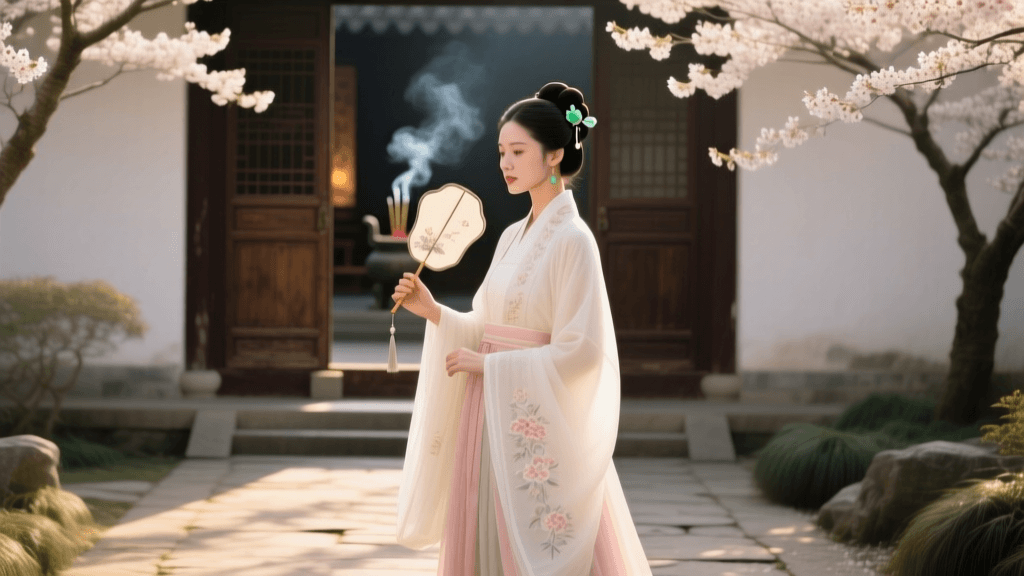
The first outfit represents childhood and innocence. For women, this is typically a simple, lightweight Ruqun (a blouse and skirt combination) or a basic cotton-linen Shenyi (deep robe). For men, it is a simple, unadorned cotton or linen Shenyi. The fabrics are deliberately plain, featuring minimal embroidery, to reflect the unburdened nature of youth. The drape is soft and unstructured, allowing for ease of movement.
2. Er Jia (Second Addition): The Garment of Youth and Education
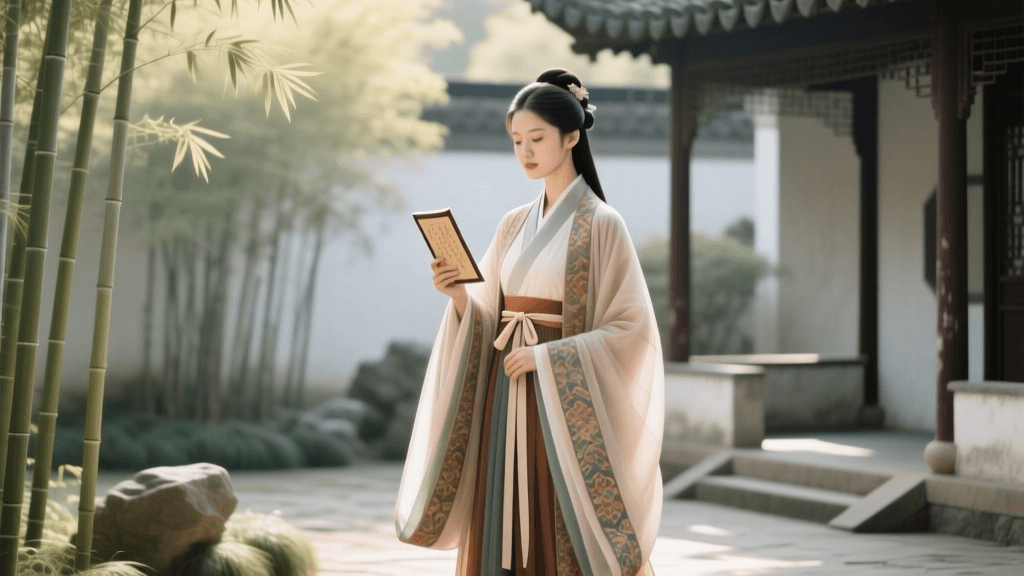
The second outfit signifies the transition into youth, education, and the preparation for societal duties. Women often transition into a formal Aoqun (a lined jacket and pleated skirt, such as the Mamianqun) or a Song-dynasty style Beizi over a dress. Men don the Lanshan (a scholar’s robe with a distinctive black brim and flowing sleeves). The textiles here introduce subtle damask weaves, jacquard patterns, and heavier silk blends, providing a more structured silhouette that commands respect.
3. San Jia (Third Addition): The Garment of Adulthood and Duty
The final addition is the pinnacle of the ceremony, representing full adulthood, civic duty, and ancestral reverence. This requires the most formal, heavyweight, and opulent garments in the Hanfu wardrobe. Women wear the grand Dayi (great robe) or a heavily embroidered Ming-style formal court dress, often utilizing Xiangyunsha (gambiered Guangdong silk) or heavy silk brocade. Men are adorned in the Daofu or formal court robes with structured shoulder lines and sweeping, floor-grazing hems. The drape of these garments is rigid, architectural, and majestic, requiring the wearer to adopt a slow, deliberate, and dignified gait.
2026 Hanfu Garment & Budget Guide for Milestone Rites
Sourcing authentic, high-quality Hanfu in 2026 requires careful planning. The market has matured significantly, offering distinct tiers of craftsmanship. Below is a comparative breakdown of the estimated costs and garment requirements for a complete San Jia ceremony in 2026.
| Ritual Stage | Women’s Garment (Ji Li) | Men’s Garment (Guan Li) | Symbolism | 2026 Avg. Cost (USD) |
|---|---|---|---|---|
| First Addition | Cotton/Linen Ruqun or simple Shenyi | Plain Linen Shenyi | Innocence, Childhood, Purity | $80 - $180 |
| Second Addition | Song-style Beizi or formal Aoqun | Scholar’s Lanshan (Silk blend) | Youth, Education, Preparation | $200 - $450 |
| Third Addition | Ming-style Daofu or heavy Brocade Dayi | Formal Daofu or Court Robe | Adulthood, Duty, Lineage | $400 - $1,200+ |
| Accessories | Hairpins (Ji), Silk Shoes, Jewelry | Caps (Guan), Leather Belt, Boots | Binding of the Past, Crown of Future | $150 - $500 |
Textile and Drape Analysis: Choosing the Right Fabrics
When commissioning or purchasing the Third Addition garments, the choice of textile dictates the success of the ceremony’s visual impact. In 2026, premium Hanfu ateliers emphasize historical accuracy in fabric drape and weight.
- Xiangyunsha (Gambiered Silk): Treated with yam juice and river mud, this fabric has a unique, papery stiffness and a subtle, dark luster. It is highly prized for formal outer robes because it holds its architectural shape brilliantly, preventing the heavy sleeves from collapsing against the body.
- Song Luo (Gauze): For summer ceremonies, authentic Luo weave provides a breathable, sheer layering effect. When layered over a solid Zhongyi (inner garment), it creates a sophisticated depth of color and texture without causing the wearer to overheat.
- Zhicheng (Brocade): Heavy, multi-colored woven brocades are essential for the Mamianqun (horse-face skirt) worn during the final addition. The dense weave ensures the pleats remain razor-sharp and swing with a heavy, pendulum-like momentum during the ritual bows.
Sourcing Authentic Hanfu in 2026
The 2026 Hanfu market is dominated by specialized brands that cater specifically to ceremonial needs. For the highest level of historical accuracy and premium textiles, Minghuatang remains the gold standard for Ming-dynasty formalwear, though their custom commission wait times can exceed six months. For accessible, high-quality ready-to-wear ceremonial sets, brands like Shisan Yu and Zhongling offer dedicated "Coming-of-Age" collections that include pre-matched accessories and ritual caps. Pro Tip: Always order your Third Addition garments at least four months prior to the ceremony date to allow for bespoke tailoring, particularly for the precise sleeve length and hem measurements required to avoid tripping during the ritual kneeling.
Step-by-Step Ceremony Execution
Executing a flawless Ji Li or Guan Li requires coordinating several key participants and ritual items. Here is the standard sequence for a modern 2026 ceremony:
- Role Assignment: Appoint a Zanli (ritual assistant, usually a close peer or sibling), a Guest of Honor (a respected elder, teacher, or community leader who will perform the capping/pinning), and the Hosts (the parents).
- The Purification: The ceremony begins with the initiate washing their hands and face in a bronze or ceramic basin, symbolizing the shedding of childhood impurities.
- The First Addition: The initiate enters in simple garments. The Guest of Honor recites a blessing of innocence, and the first hairpin or cap is placed.
- The Second Addition: The initiate retreats to a changing screen, emerges in the scholar’s or youth’s formalwear, and receives the second blessing focusing on academic and moral cultivation.
- The Third Addition: The final, grand robe is donned. The Guest of Honor places the final, most ornate hairpin (Ji) or formal cap (Guan). The blessing now focuses on civic duty, family honor, and societal contribution.
- The Sweet Wine and Naming: The initiate is offered a cup of sweet rice wine (Lijiu). Following this, the parents or Guest of Honor bestow a Zi (courtesy name), which the initiate will use in formal and adult settings moving forward.
- Ancestral and Parental Bows: The ceremony concludes with the initiate performing deep, formal bows to the ancestors (or a symbolic scroll) and to the parents, expressing profound gratitude for their upbringing.
Venue Selection and Logistics
The environment in which the ceremony takes place is just as important as the garments. In 2026, the most sought-after venues for these rites are traditional architectural spaces. Renting a private courtyard in a Beijing Siheyuan or securing a pavilion in the classical gardens of Suzhou provides the necessary historical ambiance. Expect to pay between $1,500 and $4,000 USD for a half-day private venue rental, which often includes basic ritual props like woven mats, low wooden tables, and bronze incense burners. Ensure the venue has a discreet, climate-controlled changing area, as the layering of the San Jia garments requires significant time and assistance from the Zanli.
Final Thoughts on Preserving Milestones
The decision to honor a young adult’s transition with a Ji Li or Guan Li is a powerful statement of cultural continuity. By investing in historically accurate textiles, respecting the solemnity of the San Jia additions, and executing the ritual with care, families in 2026 are not merely wearing costumes; they are actively weaving themselves into the enduring tapestry of Asian traditions. These garments, heavy with silk and history, serve as a beautiful, tangible armor as the next generation steps confidently into their future.