The 2026 Hanfu Ji Li Ceremony: Coming of Age Rites
The Resurgence of the Ji Li Ceremony in 2026
In 2026, the Hanfu movement has transcended its origins as a niche internet subculture to become a deeply ingrained aspect of contemporary Asian cultural expression. Among the most profound manifestations of this renaissance is the revival of the Ji Li (笄礼), the traditional Han Chinese coming-of-age ceremony for young women. Historically performed when a girl reached the age of fifteen or twenty, the modern 2026 iteration is frequently aligned with a young woman’s eighteenth birthday or her university graduation. This milestone marks the transition from childhood to adulthood, carrying immense cultural weight and offering a beautiful opportunity to reconnect with ancestral heritage.
The Ji Li is not merely a photo opportunity or a costume party; it is a solemn rite of passage. According to cultural safeguarding frameworks outlined by UNESCO’s Intangible Cultural Heritage initiatives, the active practice and transmission of traditional rites are essential for maintaining community identity and intergenerational continuity. By meticulously recreating these ceremonies, modern families and cultural societies are ensuring that the philosophical and aesthetic values of ancient China remain vibrant and relevant today.
Understanding the San Jia (Three Additions)
The core of the Ji Li ceremony revolves around the San Jia (三加), or the “Three Additions.” During the ritual, the honoree changes her garments and hairstyle three separate times, each transition symbolizing a deeper level of maturity, responsibility, and societal readiness. Sourcing historically accurate garments for these three stages is paramount for an authentic 2026 ceremony.
First Addition (Chu Jia): The Colors of Youth
The first garment change features a Ruqun (a traditional blouse and skirt ensemble), typically in bright, lively colors such as pastel pinks, light greens, or soft yellows. This outfit represents the innocence, vitality, and purity of childhood. The hair is initially styled in a simple twin-bun or left partially down, signifying that the girl has not yet fully entered the adult world. The fabric of choice in 2026 for this stage is often lightweight silk chiffon or breathable cotton-linen blends, reflecting the freshness of youth.
Second Addition (Er Jia): Stepping into Responsibility
For the second addition, the honoree changes into a more structured and formal outfit, most commonly a Ming dynasty-style Aoqun (a lined or padded jacket paired with a skirt). The colors become deeper and more subdued, such as navy blues, rich burgundies, or deep emeralds. This stage symbolizes the young woman’s transition into youth, where she begins to shoulder familial and societal responsibilities. The skirt is often a Mamianqun (horse-face skirt), featuring intricate woven patterns that denote elegance and growing maturity.
Third Addition (San Jia): The Grand Ceremonial Attire
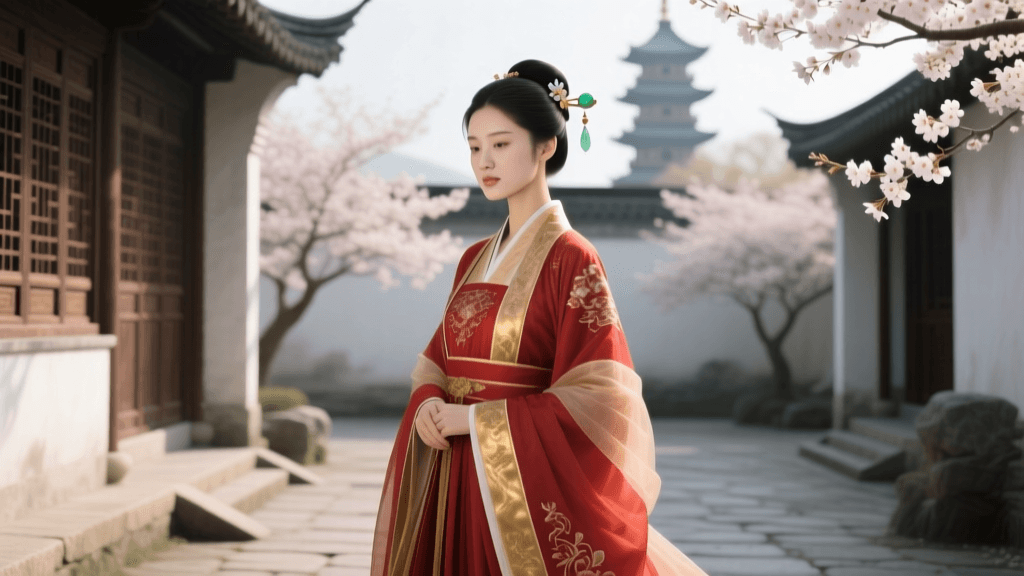
The final and most crucial change involves the grand ceremonial gown, known as the Da Shan or a highly formalized court-style robe. This garment is heavily embroidered with auspicious motifs like phoenixes, peonies, or cranes. It represents full adulthood, dignity, and the readiness to participate in ancestral worship and major societal events. Historical silhouettes and weaving techniques for these grand robes are often verified using archival resources like the Metropolitan Museum of Art’s Asian Art Department, ensuring that modern weavers replicate the drape and structure accurately.
2026 Garment Sourcing and Budgeting Guide
Planning a Ji Li requires careful budgeting, especially when prioritizing authentic materials like Xiangyunsha (gambiered Canton gauze) or Song brocade. Below is a comprehensive breakdown of the estimated costs and styling requirements for the Three Additions in 2026.
| Ceremony Stage | Garment Type | Recommended Fabric (2026) | Estimated Cost (USD) | Hairstyle & Accessories |
|---|---|---|---|---|
| First Addition (Chu Jia) | Qixiong Ruqun or Jiaoling Ruqun | Silk Chiffon, Tencel, Cotton-Linen | $120 - $250 | Simple buns, small floral hairpins, silk ribbons. |
| Second Addition (Er Jia) | Ming Aoqun with Mamianqun | Woven Brocade, Heavy Silk, Jacquard | $300 - $600 | Half-up styling, jade hairpins, pearl accents. |
| Third Addition (San Jia) | Da Shan or Formal Court Robe | Heavy Silk Satin, Hand-embroidered Xiangyunsha | $800 - $2,500+ | Full updo, elaborate gold/jade Ji (hairpin), Buyao (step-shake). |
Step-by-Step Ritual Flow
To host a seamless and respectful ceremony, the flow of the Ji Li must be carefully choreographed. In 2026, many cultural centers and specialized event planners offer comprehensive packages, but understanding the traditional steps is essential for the family.
- The Preparation and Fasting: The honoree traditionally undergoes a period of quiet reflection and fasting the morning of the ceremony to purify the mind and body.
- Welcoming the Zhengbin: The Zhengbin is the female elder or respected guest of honor who performs the hairpinning. The family formally welcomes her at the entrance of the venue, offering tea and gifts as a sign of deep respect.
- The First Pinning: The honoree kneels on a woven mat. The Zhengbin washes her hands, approaches the honoree, and adds the first hairpin, reciting a traditional blessing wishing her a life of virtue and health.
- The Garment Changes: After each pinning, the honoree retreats to a changing room to don the next layer of the San Jia, returning to bow to the Zhengbin and the audience.
- The Naming (Zi): Upon completing the third addition, the Zhengbin or the family patriarch bestows a Zi (courtesy name) upon the young woman. This name is used by peers and society, marking her official entry into the adult world.
- The Tea Ceremony and Ancestral Veneration: The newly minted adult serves tea to her parents and elders, expressing gratitude for their upbringing, followed by a brief moment of silence or incense offering to the ancestors.
Hair Accessories: The Significance of the Ji
The Ji (笄), or hairpin, is the literal and metaphorical centerpiece of the ceremony. The word Ji Li itself translates to “the rite of the hairpin.” In ancient times, the material of the hairpin denoted social status, with royalty using jade, gold, and ivory, while commoners used wood or bone. In 2026, there is a massive surge in demand for ethically sourced nephrite jade and recycled gold hairpins. Many families choose to commission a bespoke Ji engraved with the young woman’s new courtesy name or a family motto, transforming the accessory into a priceless heirloom that will be passed down to future generations.
Venue Selection and Atmosphere
The setting of the Ji Li profoundly impacts the solemnity of the rite. While private banquets in luxury hotels are common, the 2026 trend heavily favors historically resonant locations. Confucian temples, traditional courtyard gardens (Siheyuan), and dedicated cultural heritage centers provide the architectural backdrop necessary for the ceremony’s gravitas. The auditory atmosphere is equally important; live performances of the Guzheng (zither) or Xiao (vertical flute) playing classical Yayin (elegant music) are preferred over recorded tracks, grounding the event in living musical traditions.
Integrating Xin Zhongshi for the Banquet
While the ritual demands strict historical adherence, the celebratory banquet that follows offers room for contemporary expression. The Xin Zhongshi (New Chinese Style) movement has completely revolutionized post-ceremony fashion in 2026. After the exhausting and heavy formal robes are carefully stored away, the honoree often changes into a Xin Zhongshi ensemble for the dinner and socializing. These garments blend traditional elements like Mandarin collars, Pan Kou (knotted buttons), and Song dynasty pleating with modern, ergonomic tailoring and contemporary fabrics. This allows the young woman to move freely, dance, and celebrate with her peers while maintaining a distinct, elegant cultural identity.
“When a girl comes of age, she is pinned and takes a courtesy name. This is the beginning of her journey to understand her place in the family and the world.” — Adapted from the Book of Rites (Liji).
Final Thoughts on Preserving the Milestone
Hosting a Ji Li in 2026 is a profound investment in cultural memory. It requires meticulous attention to textile history, ritual protocol, and familial bonding. By honoring the San Jia and the deep symbolism of the hairpin, families do more than celebrate a birthday; they weave the next generation into the enduring tapestry of Asian heritage. Whether you are sourcing a hand-woven Mamianqun or selecting the perfect jade hairpin, every detail serves as a bridge between the ancient past and a vibrant, culturally rooted future.