Hanfu on Global Runways: 2026 International Fashion Week Trends
The Rise of Hanfu in 2026 Haute Couture
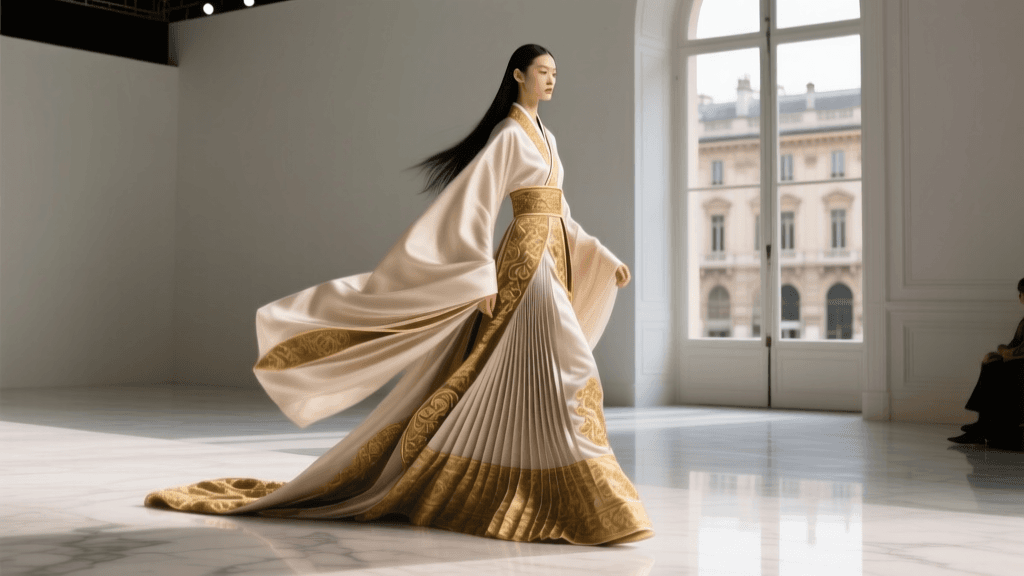
As the global fashion calendar unfolds across the Spring/Summer and Fall/Winter 2026 seasons, a profound shift is occurring on the world's most prestigious catwalks. Hanfu, the traditional clothing system of the Han Chinese, has transcended its roots as a niche cultural revival movement to become a foundational pillar of international haute couture. No longer confined to historical reenactments or localized street style, Hanfu on global runways is now a dominant force, dictating silhouettes, textile innovations, and structural design from Paris to Milan.
In 2026, luxury fashion houses and avant-garde designers are looking eastward, drawing deep inspiration from the Ming and Song dynasties. This is not mere appropriation; it is a sophisticated collaboration with master artisans in Suzhou, Hangzhou, and Guangzhou. The integration of traditional Chinese garment architecture into contemporary high fashion represents a maturation of the global luxury market, where heritage craftsmanship is valued as highly as modern branding. According to the Metropolitan Museum of Art's Heilbrunn Timeline of Art History, the structural continuity of Chinese dress has always offered a unique counter-narrative to Western tailoring, a fact that 2026 designers are leveraging to create entirely new paradigms of luxury.
Key Hanfu Elements Dominating the 2026 Runways
The translation of ancient garments into modern couture requires a meticulous understanding of historical construction. Three specific elements have defined the 2026 international fashion week circuit.
The Mamianqun (Horse-Face Skirt)
Originating in the Song dynasty and popularized during the Ming, the Mamianqun is characterized by its flat front and back panels with deeply pleated sides. In 2026, global designers have reimagined the horse-face skirt using laser-cutting technology and modern interlinings to maintain the garment's architectural volume without the historical weight. On the Milan runways, we are seeing Mamianqun crafted from structured vegan leathers and metallic jacquards, transforming the traditional skirt into a powerful symbol of modern femininity and structural defiance.
The Beizi (Song Dynasty Outer Jacket)
Aligning perfectly with the 2026 'quiet luxury' and minimalist trends, the Beizi is a long, straight-cut outer jacket with a parallel collar and side slits. Unlike the heavily embroidered robes of later dynasties, the Song Beizi relies on impeccable drape and subtle textile textures. High-fashion houses in Paris have adopted the Beizi's silhouette for evening wear, elongating the hemlines to the floor and utilizing sheer, layered silks to create an ethereal, column-like effect that moves fluidly with the wearer.
Xiangyunsha (Gambiered Canton Gauze)
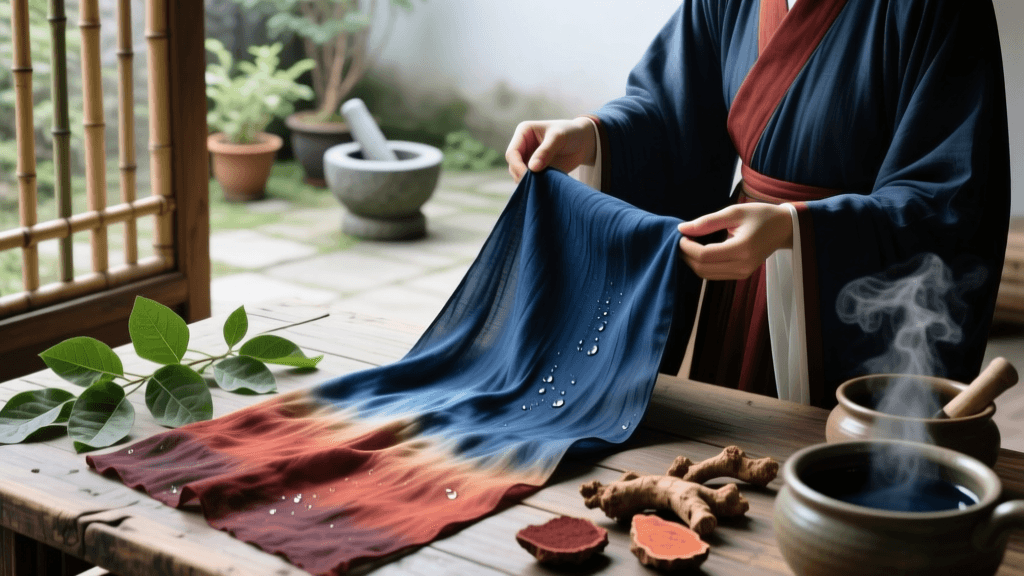
Perhaps the most coveted textile of the 2026 couture season is Xiangyunsha, a silk fabric dyed with yam juice and coated with iron-rich river mud, then baked in the sun. Recognized by UNESCO's Intangible Cultural Heritage list, this 'soft gold' of the silk world offers a unique, paper-like rustle and a rich, dual-toned finish. Due to the labor-intensive, weather-dependent production process, authentic Xiangyunsha is incredibly scarce, making it the ultimate status symbol for 2026 couture houses seeking sustainable, hyper-exclusive materials.
Designer Spotlights: East Meets West in 2026
The integration of Hanfu into global fashion weeks is being spearheaded by a hybrid generation of designers who possess deep fluency in both Eastern heritage and Western tailoring.
- Guo Pei: Known for her architectural extravagance, Guo Pei's 2026 Paris Haute Couture collection featured exaggerated Ming dynasty collars and Yunjin brocade woven with real gold threads, pushing the boundaries of wearable art.
- Huishan Zhang: Operating out of London and showing in Paris, Zhang has masterfully fused the delicate lace-making traditions of Europe with the slender, romantic silhouettes of the Tang and Song dynasties, creating a cross-cultural dialogue that resonates with global elites.
- Shang Xia: Backed by luxury conglomerates, Shang Xia's 2026 ready-to-wear line focused on the everyday elegance of the Hanfu cross-collar (Jiaoling Youren), adapting it into sleek, modern outerwear suited for the contemporary cosmopolitan wardrobe.
Runway Data: Hanfu Influences by Fashion Capital
The adoption of Hanfu elements varies significantly across the four major fashion capitals. Below is a breakdown of how traditional Chinese garments are influencing the 2026 runway landscape.
| Fashion Capital | Primary Hanfu Influence | Key Textile Focus | 2026 Market Adoption Rate |
|---|---|---|---|
| Paris | Ming Dynasty Silhouettes (Mamianqun) | Yunjin Brocade, Xiangyunsha | High (Haute Couture) |
| Milan | Structural Outerwear (Beizi, Pifeng) | Heavy Silk Crepe, Vegan Leather | Medium-High (Ready-to-Wear) |
| London | Tang/Song Romanticism, Cross-Collars | Sheer Organza, Embroidered Tulle | Medium (Avant-Garde) |
| New York | Streetwear Fusion, Deconstructed Hanfu | Technical Nylons, Upcycled Silk | Growing (Urban Contemporary) |
Sourcing and Styling Runway-Inspired Hanfu for 2026
For enthusiasts and collectors looking to bring the 2026 runway trends into their personal wardrobes, sourcing authentic, high-quality Hanfu requires an understanding of current market dynamics and precise measurements.
Measurement and Fit
Unlike Western tailoring, which relies on darts and seams to contour the body, traditional Hanfu is cut from flat planes of fabric. When ordering a runway-inspired Beizi or Mamianqun in 2026, accurate measurements are critical:
- Mamianqun: Measure your natural waist (where the skirt will sit) and the desired length. The 2026 trend favors floor-grazing lengths, so measure from the waist to the floor while wearing your preferred heel height. Ensure the waistband is at least 2 inches longer than your waist measurement to allow for the traditional overlapping tie closure.
- Beizi: Measure the shoulder width, sleeve length (from the nape of the neck to the wrist for traditional drop-shoulder cuts), and bust. Because the Beizi is meant to hang straight, the bust measurement is primarily used to ensure the cross-collar lays flat without pulling.
2026 Pricing and Sourcing
The cost of authentic, artisan-crafted Hanfu has risen significantly due to global demand. As of 2026, buyers should expect the following price tiers:
- Entry-Level Commercial (Machine-made): $120 - $250. Suitable for daily wear, utilizing synthetic blends and machine embroidery.
- Independent Artisan (Hand-finished): $400 - $900. Features natural fibers like mulberry silk, hand-woven details, and traditional plant dyeing.
- Couture / Heritage Grade: $2,500 - $10,000+. Includes authentic Xiangyunsha silk, which now commands upwards of $450 per yard, and hand-embroidered Suzhou silk work that takes hundreds of hours to complete.
When styling these pieces for modern events, the 2026 approach favors contrast. Pair a heavy, brocade Ming-style skirt with a sleek, minimalist silk camisole, or layer a sheer Song dynasty jacket over a tailored, contemporary turtleneck. This juxtaposition honors the historical weight of the garment while grounding it in modern utility.
The Cultural Impact and Future of Hanfu Couture
The presence of Hanfu on global runways in 2026 is more than a fleeting aesthetic trend; it is a reclamation of cultural narrative. For decades, the global fashion industry viewed Asian dress through a lens of exoticism or costume. Today, the meticulous integration of Hanfu architecture into high fashion demands respect for the engineering, philosophy, and artistry inherent in these garments.
Institutions like the Victoria and Albert Museum have long documented the evolution of Chinese dress, noting how clothing historically communicated social status, philosophy, and cosmic harmony. By elevating these garments to the highest echelons of the global fashion week circuit, contemporary designers are ensuring that the profound cultural heritage of the Han people is preserved, studied, and celebrated on a worldwide stage. As we look toward the latter half of the decade, the fusion of ancient Chinese sartorial wisdom with sustainable, forward-thinking design will undoubtedly continue to shape the very definition of global luxury.