Chinese Natural Dye Plants 2026: Indigo & Madder Hanfu Guide
The 2026 Renaissance of Eco-Friendly Hanfu
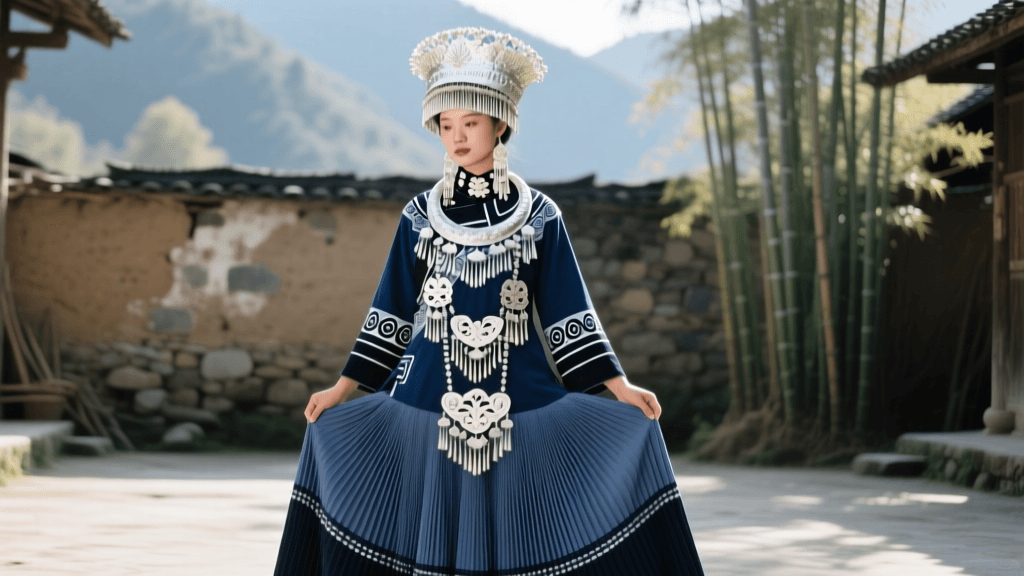
The global resurgence of traditional Chinese garments has entered a new, deeply conscientious phase in 2026. As the 'Guochao' (national trend) movement matures, Hanfu enthusiasts, independent designers, and heritage studios are increasingly rejecting synthetic azo dyes in favor of botanical alternatives. This shift is not merely aesthetic; it is a direct response to the 2026 Global Textile Sustainability Mandates, which heavily penalize water-polluting synthetic dye houses. Today, the revival of traditional Chinese natural dye plants—specifically Liao Lan (Chinese Indigo) and Qian Cao (Madder Root)—represents the pinnacle of eco-friendly fashion. By combining ancient extraction techniques with modern water-saving protocols, artisans are creating vibrant, colorfast Hanfu that honors both cultural heritage and environmental stewardship.
Liao Lan: Cultivating Chinese Indigo (Persicaria tinctoria)
While the Western world often associates indigo with the Indigofera genus, traditional Chinese indigo, known as Liao Lan, is derived from Persicaria tinctoria (formerly Polygonum tinctorium), a plant in the knotweed family. According to the Royal Botanic Gardens, Kew, this specific species is uniquely adapted to the temperate climates of northern and central China, making it highly resilient and ideal for organic cultivation.
In 2026, boutique Hanfu studios in Hangzhou and Suzhou are utilizing climate-adapted greenhouse techniques to extend the growing season of Liao Lan. The leaves are harvested in late summer when the indican (the precursor to indigo dye) concentration is at its peak. The traditional extraction process involves soaking the fresh leaves in alkaline water, followed by vigorous aeration to oxidize the indican into insoluble indigotin. Modern eco-studios have replaced harsh chemical lyes with food-grade calcium hydroxide (slaked lime), ensuring the resulting dye paste is entirely biodegradable and safe for aquatic ecosystems.
Qian Cao: Harvesting Madder Root (Rubia cordifolia)
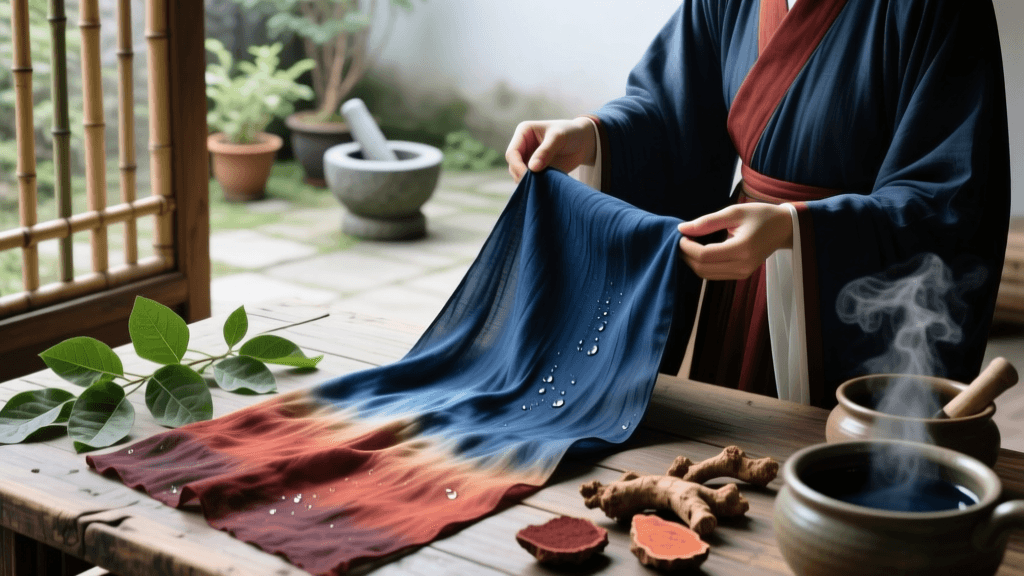
For the iconic crimson and deep terracotta hues seen in Ming Dynasty-style Mamianqun (horse-face skirts), Qian Cao (Rubia cordifolia, or Chinese Madder) remains the undisputed botanical champion. Unlike synthetic reds that fade into dull pinks, madder root contains alizarin and purpurin, which bond deeply with natural fibers to create complex, lightfast colors that actually improve with age.
Cultivating Qian Cao requires patience. The roots must mature in sandy, well-draining loam for at least three years before they are harvested. In 2026, regenerative agriculture cooperatives in Yunnan province are pioneering 'polyculture madder farming,' where the madder vines are grown alongside nitrogen-fixing legumes to maintain soil health without synthetic fertilizers. Once harvested, the roots are washed, sun-dried, and aged for a minimum of six months to allow the enzymatic breakdown of the root structure, which significantly increases the dye yield during the decoction phase.
Modern Bio-Mordanting: Ditching Heavy Metals
Historically, heavy metal salts like alum, chrome, and tin were used as mordants to bind natural dyes to fibers. However, as highlighted by Fashion Revolution, consumer demand for total supply chain transparency in 2026 has pushed heritage brands to eliminate toxic heavy metals entirely. The modern eco-dyer now relies on bio-mordants and plant-based alternatives.
- Soy Milk Protein Binder: Summer Hanfu is frequently crafted from cellulose fibers like ramie, hemp, and linen. Cellulose lacks the natural protein sites that animal fibers (like silk) have for dye absorption. Soaking the fabric in a 20% soy milk solution for 24 hours coats the fibers in plant protein, allowing madder and indigo to bond permanently without metallic salts.
- Symplocos (Plant Alum): For silk Hanfu, dyers are increasingly using Symplocos, a tropical plant whose dried leaves naturally accumulate high levels of bio-available aluminum. Boiling silk in a symplocos leaf bath provides the mordanting power of traditional alum with zero heavy metal runoff.
- Pomegranate Rind Tannin: Rich in natural tannins, discarded pomegranate rinds from the juice industry are upcycled into a powerful bio-mordant that shifts madder dyes toward deeper, richer burgundy tones.
Comparative Data: Liao Lan vs. Qian Cao
| Attribute | Liao Lan (Chinese Indigo) | Qian Cao (Madder Root) |
|---|---|---|
| Botanical Name | Persicaria tinctoria | Rubia cordifolia |
| Primary Color Yield | Deep Navy, Cerulean, Teal | Crimson, Terracotta, Burgundy |
| Extraction Method | Fermentation & Oxidation (Vat Dye) | Hot Water Decoction (Mordant Dye) |
| Ideal Bath Temperature | Room Temperature (20°C - 25°C) | Strictly 60°C (Do not exceed 70°C) |
| Best Fiber Affinity | Cellulose (Ramie, Linen, Cotton) | Protein (Silk, Wool) & Tannin-treated Cellulose |
Step-by-Step Water-Saving Dyeing Protocol
Water scarcity is a critical issue in textile manufacturing. The 2026 standard for artisanal Hanfu dyeing involves closed-loop water systems and highly concentrated dye baths. Below is an actionable protocol for dyeing 500 grams of raw silk using Qian Cao (Madder).
Step 1: Scouring and Bio-Mordanting
Wash the silk in a pH-neutral, biodegradable detergent at 40°C to remove sericin and natural waxes. Prepare a bio-mordant bath using 100g of dried Symplocos leaves per 5 liters of water. Simmer the leaves for one hour, strain, and steep the damp silk in the warm liquid for 12 hours. Do not rinse; dry the silk in the shade.
Step 2: The Madder Decoction
For a vibrant crimson, use a 100% Weight of Fiber (WOF) ratio. Grind 500g of aged, dried madder root into a coarse powder. Place the powder in a mesh bag and submerge it in 10 liters of soft water. Slowly raise the temperature to exactly 60°C. Critical Note: If the water exceeds 70°C, the yellow/brown pigments in the root will extract alongside the red alizarin, resulting in a muddy, rust-colored Hanfu rather than a pure crimson. Maintain 60°C for two hours.
Step 3: Dyeing and Oxidation
Enter the pre-mordanted, damp silk into the 60°C madder bath. Agitate gently for 45 minutes. Turn off the heat and allow the silk to cool in the bath overnight. This slow cooling process encourages the dye molecules to crystallize within the fiber structure, vastly improving colorfastness.
Step 4: Water Recycling
Once the silk is removed and rinsed in cold water until the runoff is clear, the exhausted madder bath should not be discarded. In 2026, eco-studios route this spent, nutrient-rich, and mildly acidic botanical water directly into irrigation systems for local community gardens, achieving a zero-liquid-discharge workflow.
Troubleshooting Natural Dye Variations
Natural dyeing is an organic chemistry experiment influenced by terroir, water pH, and seasonal variations. If your Liao Lan indigo vat fails to reduce (turning from blue to a yellow-green liquid), your pH may be too low. Test the vat with litmus paper; it should read between 9 and 11. If it is low, add small increments of calcium hydroxide. Conversely, if your madder dye yields a pale orange instead of a deep red, your water may be too acidic or lacking in calcium. Adding a pinch of food-grade chalk (calcium carbonate) to the madder bath can instantly shift the color toward a brilliant, deep scarlet.
Sourcing and Sustainability in 2026
As the demand for naturally dyed Hanfu skyrockets, ethical sourcing has become paramount. For modern practitioners outside of Asia, sourcing high-quality, ethically harvested roots and botanical extracts from certified suppliers like Botanical Colors ensures that the agricultural practices supporting these ancient plants remain sustainable and fair-trade. Furthermore, the UN Environment Programme's comprehensive report on textile circularity notes that the shift toward localized, botanical dye supply chains reduces water toxicity by up to 85% compared to conventional synthetic dyeing.
By embracing Liao Lan and Qian Cao, the 2026 Hanfu community is proving that traditional Asian garments are not just relics of the past, but vital, living components of a sustainable, eco-conscious future. Whether you are dyeing a flowing Wei-Jin era robe or a structured Ming Dynasty jacket, the earth provides all the color you need.