Hanfu On Global Runways: 2026 Fashion Week Trends
The Intersection of Antiquity and Avant-Garde: Hanfu in 2026
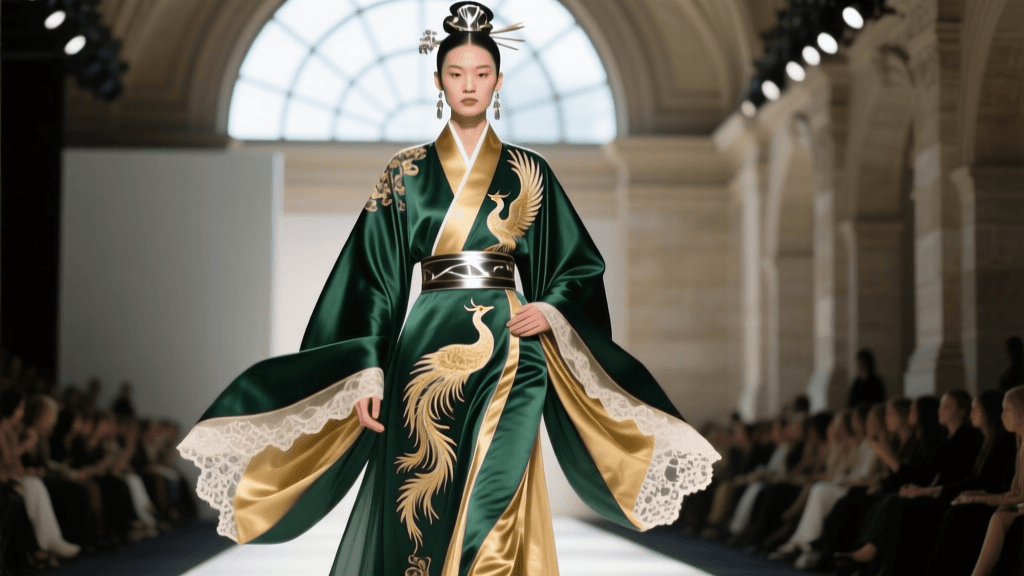
The global fashion landscape in 2026 has witnessed an unprecedented embrace of Hanfu, the traditional clothing of the Han Chinese. Once relegated to historical reenactments and niche subcultures, Hanfu has decisively broken through the glass ceiling of Western haute couture. As we navigate the Spring/Summer and Fall/Winter 2026 Fashion Weeks in Paris, Milan, and New York, it is clear that traditional Chinese silhouettes are no longer just 'inspiration' for Western designers; they are being reimagined and championed by a new vanguard of Asian designers who are dictating global trends. The integration of Hanfu on global runways represents a profound shift in the fashion industry, merging millennia-old sartorial engineering with contemporary sustainability and avant-garde tailoring.
The Evolution of Hanfu in Haute Couture
Historically, the global fashion industry's relationship with Asian garments was often fraught with superficial appropriation. However, the 2026 runway season marks a definitive turning point. According to market analyses from the Business of Fashion China Market, the luxury sector has seen a massive pivot toward authentic cultural representation, driven by the immense purchasing power and cultural pride of the Gen Z and Gen Alpha demographics in Asia. Designers are now meticulously studying historical texts and textile archives to ensure structural accuracy before applying modern deconstructivist techniques.
This evolution is evident in the shift from costume-like replicas to high-fashion interpretations. The traditional flat-cutting techniques of Hanfu, which prioritize the drape and flow of the fabric over the contour of the body, are being juxtaposed with Western corsetry and structured tailoring. The result is a hybrid silhouette that honors the modesty and fluidity of traditional Asian garments while providing the dramatic, architectural volume demanded by modern haute couture.
Key Hanfu Silhouettes Dominating the 2026 Runways
1. The Mamianqun (Horse-Face Skirt)
The Mamianqun has arguably been the breakout star of the 2026 runway season. Characterized by its flat front and back panels with intricate knife pleats on the sides, this skirt offers a canvas for unparalleled textile artistry. On the runways of Milan, we have seen the Mamianqun reimagined in heavy, eco-friendly vegan leathers and metallic jacquards. Designers are playing with the pleat structures, utilizing heat-setting technologies to create permanent, asymmetrical folds that defy gravity while maintaining the skirt's iconic modesty panels.
2. The Daxiushan (Large Sleeve Shirt)
Traditionally worn by royalty and nobility during the Tang and Song dynasties, the Daxiushan is defined by its sweeping, floor-grazing sleeves. In 2026, Parisian runways have adapted the Daxiushan using ultra-lightweight, biodegradable silk organza. The sheer volume of the sleeves creates a dramatic, ethereal effect as models walk, but designers have introduced hidden internal wiring and weighted hems to control the drape, ensuring the garment photographs flawlessly from every angle.
3. The Yuanlingpao (Round Collar Robe)
The Yuanlingpao has become the focal point for gender-fluid fashion in 2026. Its circular neckline and side closures offer a versatile foundation that transcends traditional gender binaries. Runway stylists are layering these robes over structured trousers or pairing them with combat-style leather boots, creating a striking contrast between ancient elegance and modern grit.
Material Innovation: Ancient Techniques Meet 2026 Tech
The true luxury of Hanfu lies in its textiles. The Metropolitan Museum of Art's Heilbrunn Timeline of Art History notes that Chinese silk weaving techniques have been the gold standard of global textiles for centuries. In 2026, these ancient techniques are being merged with cutting-edge material science.
- Xiangyunsha (Gambiered Canton Gauze): Known as 'soft gold,' this fabric is dyed with yam juice and coated with river mud. In 2026, luxury houses have partnered with heritage artisans in Guangdong to produce Xiangyunsha that is treated with nano-coatings, making it water-resistant and stain-proof without losing its signature crackled, leather-like patina.
- Suzhou Embroidery (Su Xiu): Runway pieces this year feature Su Xiu integrated with fiber-optic threads. As the lighting changes on the runway, the embroidered dragons, phoenixes, and lotus motifs subtly shift in color, creating a dynamic, living garment.
- Lotus Silk: Harvested from the stems of lotus flowers, this ultra-rare, breathable fiber is being used for the inner layers of Hanfu, providing unparalleled comfort for models and clients during high-stress fashion week events.
Data Table: 2026 Runway Hanfu vs. Traditional Hanfu
To understand the practical differences between historical garments and their modern high-fashion counterparts, we must look at the structural and material adaptations made for the runway.
| Feature | Traditional Hanfu (Historical) | 2026 Runway Adaptation | Estimated Haute Couture Price (USD) |
|---|---|---|---|
| Closure System | Fabric ties and sashes (Yin-Yang knots) | Hidden magnetic closures and structural hook-and-eye | $4,500 - $12,000 |
| Mamianqun Pleats | Hand-pressed, requires careful storage | Laser-cut, heat-set synthetic-silk blends for permanent structure | $3,800 - $8,500 |
| Sleeve Volume | Unstructured, relies on arm movement | Internal crinoline and silk-wire armatures for static volume | $6,000 - $15,000 |
| Embroidery | Hand-stitched silk thread (takes months) | AI-assisted loom weaving mixed with hand-finished Su Xiu | $10,000 - $45,000 |
How to Source and Style Runway-Inspired Hanfu
For fashion enthusiasts, editors, and collectors looking to incorporate 2026 runway-inspired Hanfu into their own wardrobes for galas, fashion weeks, or high-end cultural events, a strategic approach is required. The gap between the runway and the consumer market has narrowed significantly, with many Shanghai-based independent labels offering made-to-measure services.
Sizing and Proportions
Unlike Western clothing, which is tailored to the body's three-dimensional curves, traditional Hanfu is cut flat. When ordering a modern, runway-inspired piece, you must provide your shoulder width, arm span (crucial for Daxiushan sleeves), and waist-to-floor measurements. Do not rely on standard S/M/L sizing. Opt for made-to-measure services that accommodate the 'cross-collar right-over-left' (Jiaoling Youren) rule, ensuring the lapel overlaps correctly according to Han tradition.
Layering for High-Fashion Events
The key to the 2026 Hanfu aesthetic is deliberate layering. A standard Ruqun (blouse and skirt) can be elevated by adding a Banbi (half-sleeve vest) in a contrasting texture. For evening events, pair a heavy, brocade Mamianqun with a sheer, silk-chiffon Daxiushan. The contrast between the opaque, structured bottom and the ethereal, flowing top creates the dramatic silhouette favored by current runway stylists.
Accessorizing: The Buyao and Hairpins
Runway hair styling in 2026 has moved away from heavy, theatrical wigs toward minimalist, architectural hair accessories. Invest in modern Buyao (buyao translates to 'don't shake,' but modern versions are designed with kinetic, dangling elements). Look for hairpins crafted from recycled aerospace-grade aluminum or ethically sourced jade, which provide a contemporary edge to traditional up-dos. The Victoria and Albert Museum's Asian Collections provides excellent historical context on how these accessories were originally worn, allowing you to adapt them with historical reverence rather than costume-like imitation.
The Future of Asian Traditions in Global Fashion
As the 2026 fashion weeks conclude, the message from the global runways is unequivocal: Hanfu is not a passing trend, nor is it merely a source of exotic inspiration. It is a complex, highly engineered sartorial system that offers a viable, sustainable, and breathtaking alternative to Western-centric fashion norms. The designers leading this charge are not just making clothes; they are engaging in a profound act of cultural reclamation, ensuring that the elegance of the Han people is understood, respected, and celebrated on the world's most prestigious stages. For the global consumer, embracing these garments means participating in a rich, living history that continues to evolve with every stitch.