Hanfu Milestones 2026: Guide to Rites of Passage Ceremonies
The 2026 Landscape of Hanfu Milestones
As we navigate through 2026, the Hanfu movement has transitioned from a niche historical hobby into a deeply ingrained cultural practice, particularly for life milestones. The integration of traditional Chinese garments into rites of passage—such as coming-of-age ceremonies, weddings, and academic graduations—reflects a profound societal desire to reconnect with ancestral heritage. Today, families and individuals are not merely wearing historical costumes; they are actively reviving the philosophical and societal weight of ancient rituals, adapting them to modern sensibilities while maintaining strict adherence to historical silhouettes and etiquette.
The modern Xin Zhongshi (New Chinese Style) movement has heavily influenced this space, introducing sustainable textiles, ergonomic tailoring, and climate-appropriate layering. Whether you are planning a Ji Li (hair-pinning ceremony) for a young woman, a Guan Li (capping ceremony) for a young man, or a historically accurate Ming-dynasty wedding, understanding the nuances of these garments is essential. This comprehensive guide details the specific styles, layering rules, and 2026 market realities for dressing appropriately during life's most significant transitions.
Ji Li and Guan Li: The Coming-of-Age Rites
The coming-of-age ceremonies in traditional Chinese culture mark the transition from childhood to adulthood, carrying immense familial and societal significance. In 2026, these ceremonies are frequently held on a youth's 18th or 20th birthday, often blending ancient ritual structures with contemporary family gatherings.
Ji Li (Hair-Pinning Ceremony for Women)
The Ji Li traditionally involves the San Jia (Three Additions), where the young woman's hair is styled and adorned progressively to symbolize her growing maturity and societal responsibilities. For the first addition, a simple Ruqun (a short jacket paired with a high-waisted skirt) in pastel or muted tones is worn, representing the innocence of youth. The second addition features a more structured Shenyi (deep robe), symbolizing the discipline required of adulthood. The final addition is a formal, sweeping Da Xiu Shan (large-sleeved robe) accompanied by an intricate hairpin, often crafted from jade or sustainably sourced gold in 2026, signifying her full integration into adult society.
Guan Li (Capping Ceremony for Men)
The male equivalent, Guan Li, also follows a three-tiered progression. The young man begins in a simple Bian Fu (everyday scholarly wear), progresses to a formal Shenyi, and concludes in a ceremonial court-style robe complete with a formal cap (Guan). In 2026, the most sought-after caps for the final addition are replicas of the Ming-dynasty Wusha Mao or the elegant Tang Jin, tailored using lightweight, breathable structural meshes that maintain historical volume without causing discomfort during lengthy ceremonies.
Hanfu Weddings: Choosing Your Historical Era
Weddings remain the most prominent milestone for Hanfu adoption. Unlike Western wedding traditions that largely favor a single aesthetic, Hanfu weddings allow couples to choose a specific historical era, each carrying distinct philosophical meanings and visual profiles. According to the Victoria and Albert Museum's Chinese textile archives, the evolution of Chinese ceremonial dress showcases a fascinating shift from solemn restraint to vibrant opulence, a spectrum that modern couples navigate based on their personal values.
Zhou Dynasty: Solemnity and Reverence
Couples seeking a deeply spiritual, solemn, and understated ceremony often choose Zhou-dynasty styles. The color palette is dominated by dark, earthy tones—primarily black and deep crimson. The garments lack elaborate embroidery, relying instead on the impeccable drape of heavy, unadorned silk and the structural purity of the Shenyi. This style emphasizes the sacred, almost religious weight of the marital union, focusing on reverence for ancestors and the heavens rather than outward celebration.
Tang Dynasty: Opulence and Vibrancy
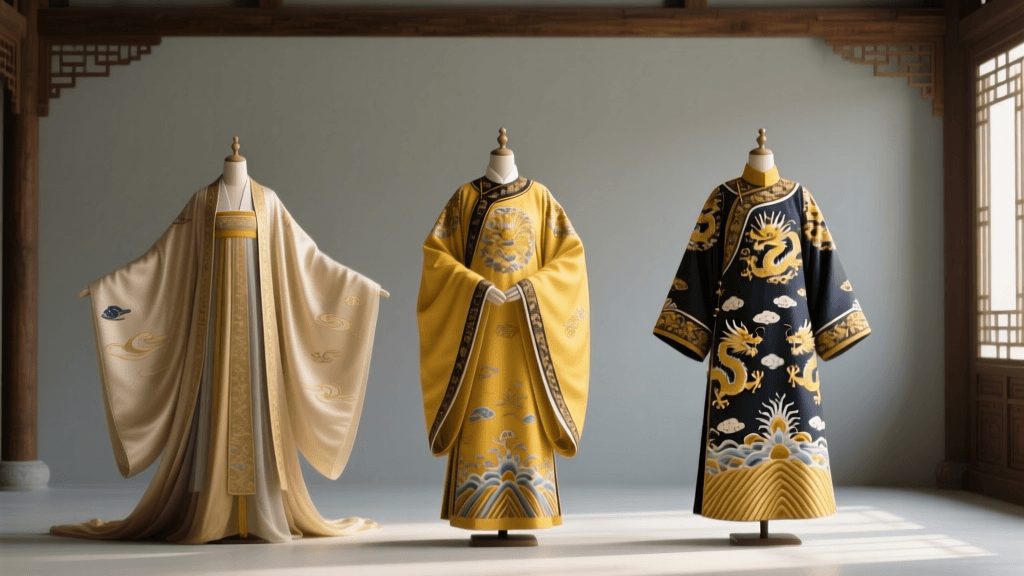
For couples desiring a festive, joyous, and visually striking celebration, the Tang-dynasty aesthetic is the premier choice. Characterized by bold color blocking (often vibrant greens, crimsons, and golds), wide sleeves, and elaborate floral embroidery, Tang wedding Hanfu exudes confidence and cosmopolitan flair. The 2026 trend in Tang bridal wear incorporates 3D-woven gold threads that catch the light dynamically, replacing the heavier, stiffer bullion threads of the past decade.
Ming Dynasty: The 2026 Classic Standard
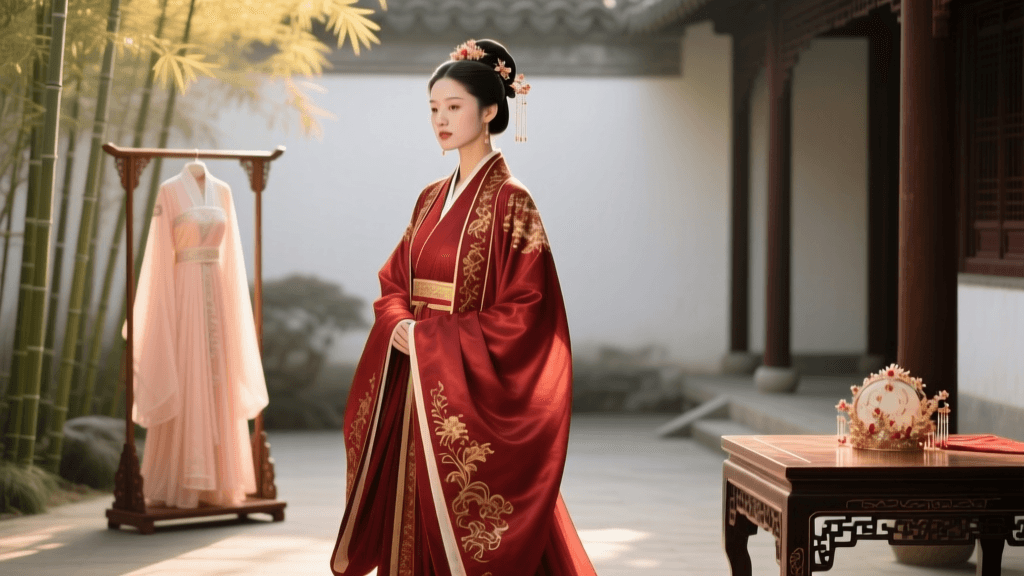
The Ming-dynasty wedding attire remains the most popular choice for traditional ceremonies today. The quintessential bridal ensemble is the Feng Guan Xia Pei (Phoenix Crown and Cloud Cape). The groom typically wears a dark, round-collared robe with a Bu Zi (mandarin square) featuring a Qilin or crane. In 2026, artisans have perfected the use of ethically sourced peace silk (Ahimsa silk) for the Xia Pei, ensuring the heavy, embroidered stoles drape elegantly without the environmental toll of traditional sericulture. For a deeper understanding of the historical context of these Ming silhouettes, the Metropolitan Museum of Art's Ming Dynasty overview provides excellent visual references for the era's rigid yet majestic tailoring.
Academic Milestones: Graduation Hanfu
A massive trend solidifying in 2026 is the use of Hanfu for university graduations. Moving away from standard Western academic gowns, thousands of graduates are donning the Lanshan (scholar's robe) and the Bian Mao (scholar's cap). The Lanshan features a distinctive crossed collar and wide sleeves, traditionally dyed in deep blues or blacks. Modern universities in Asia and abroad now frequently accommodate Hanfu under their academic dress codes, allowing students to wear their departmental stoles over the Lanshan. This fusion beautifully bridges ancient scholarly reverence with modern academic achievement.
2026 Fabric Innovations and Sourcing
The textile industry supporting the Hanfu market has seen remarkable innovations by 2026. The focus has shifted heavily toward sustainability and climate adaptability. The traditional reliance on heavy brocades for winter ceremonies has been supplemented by smart-weave thermal silks that provide insulation without the bulk. Furthermore, the global recognition of traditional silk-making, as highlighted by its placement on the UNESCO Intangible Cultural Heritage list for sericulture and silk craftsmanship, has driven a consumer demand for traceable, heritage-crafted fabrics. Buyers in 2026 routinely scan QR codes on garment tags to verify the ethical sourcing of the silk and the specific regional weaving technique employed, such as Song Brocade or Shu Embroidery.
2026 Milestone Hanfu Comparison Chart
| Milestone | Recommended Style | Key Garment Components | Avg. 2026 Custom Cost (USD) |
|---|---|---|---|
| Ji Li (Coming of Age) | Song or Ming Ruqun | Short jacket, pleated skirt, jade hairpin | $350 - $600 |
| Guan Li (Coming of Age) | Ming Shenyi | Deep robe, formal scholar cap, leather belt | $400 - $700 |
| Wedding (Solemn) | Zhou Shenyi | Black/crimson robe, unadorned silk, simple crown | $800 - $1,200 |
| Wedding (Opulent) | Ming Feng Guan Xia Pei | Phoenix crown, cloud cape, embroidered Ao Qun | $1,500 - $3,500+ |
| Graduation | Ming Lanshan | Scholar's robe, Bian Mao cap, modern stole | $150 - $300 |
Budgeting and Commissioning Custom Pieces
For life milestones, off-the-rack Hanfu is rarely sufficient due to the strict requirements for precise drape and personal symbolism. Commissioning a custom piece in 2026 requires a lead time of at least three to four months. The process begins with a consultation on historical accuracy versus modern comfort, followed by the selection of base fabrics and embroidery motifs. For weddings, couples must budget not only for the outer robes but also for the essential inner layers (Zhongyi), which are critical for achieving the correct structural silhouette. A complete, high-quality Ming wedding set, including under-layers, outer robes, cloud capes, and bespoke headwear, typically ranges from $1,500 to over $3,500 USD, depending on the density of the hand-embroidery and the pedigree of the silk.
Conclusion
Dressing in Hanfu for life milestones in 2026 is a profound declaration of cultural continuity. Whether marking the transition into adulthood through the Ji Li and Guan Li, uniting in marriage under the vibrant auspices of Tang or Ming aesthetics, or crossing the stage at graduation in a scholar's robe, these garments elevate fleeting moments into timeless rituals. By understanding the historical context, respecting the layering rules, and investing in sustainable, high-quality textiles, individuals can ensure their milestone ceremonies are both deeply authentic and perfectly suited to the modern era.