Heian Court Fashion: The Junihitoe and Kimono Layering Art
The Zenith of Japanese Court Fashion: The Heian Period (794–1185)
The Heian period represents a golden age of Japanese art, literature, and courtly refinement. As the imperial court moved to Heian-kyo (modern-day Kyoto), Japan began to distance itself from the heavy cultural influence of China's Tang Dynasty. This shift birthed kokufu bunka, or indigenous Japanese culture, which placed an immense premium on aesthetic sensitivity, poetic expression, and the subtle beauty of nature. According to The Metropolitan Museum of Art, the Heian aristocracy developed a highly codified society where one's rank, taste, and even moral character were judged almost entirely by their sartorial choices and handwriting.
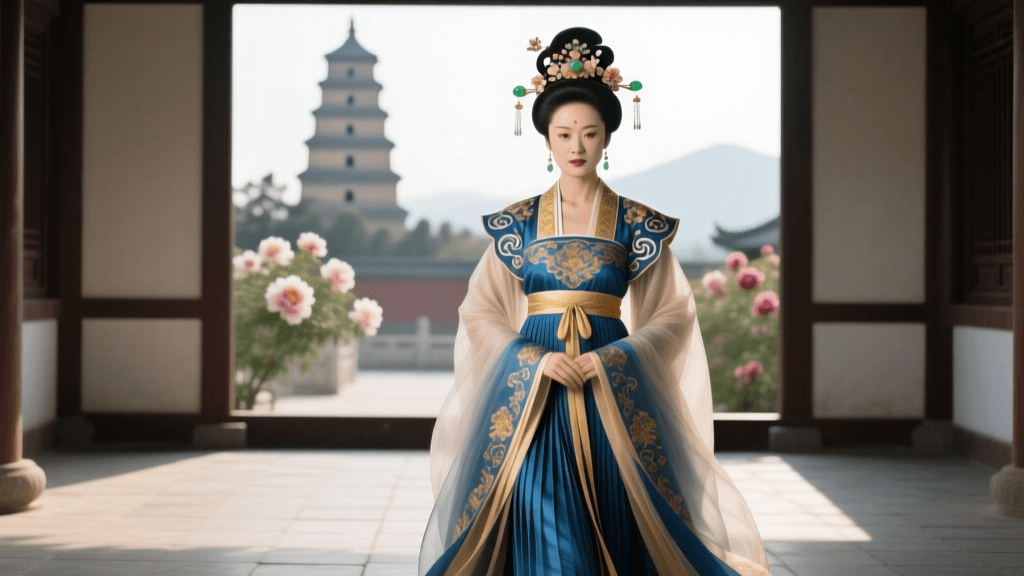
In this rarefied atmosphere, clothing was not merely functional; it was a living canvas of seasonal poetry and political statement. The most iconic garment to emerge from this era was the junihitoe, a breathtakingly complex ensemble of layered silk robes that remains the pinnacle of traditional Japanese textile history. To understand the junihitoe is to understand the very soul of historical Japanese aesthetics.
Deconstructing the Junihitoe (Twelve-Layer Robe)
Despite its name, which translates literally to "twelve-layer robe," the junihitoe did not strictly consist of twelve layers. The number of layers fluctuated based on the season, the wearer's court rank, and the specific occasion, ranging anywhere from five to over twenty layers of unlined and lined silk. The ensemble was an engineering marvel of textile draping, designed to obscure the physical form of the wearer while presenting a stunning cascade of colors at the sleeves, hems, and neckline.
Wearing a full Heian court ensemble was a physically demanding endeavor. A complete junihitoe could weigh between 15 and 20 kilograms (33 to 44 pounds). The sheer volume of silk restricted movement significantly, requiring court ladies to adopt a slow, gliding gait that became synonymous with aristocratic elegance. Let us break down the foundational layers of this magnificent garment:
| Layer Name | Function & Description | Typical Fabric |
|---|---|---|
| Kosode | The basic under-robe with small sleeve openings. Worn closest to the skin. | Plain weave silk or hemp |
| Nagabakama | Extremely long, flowing trousers that trail behind the wearer, creating a train. | Heavy silk twill |
| Hitoe | An unlined robe worn over the undergarments, serving as the base for layering. | Lightweight silk crepe |
| Uchigi | The colorful layered robes. Multiple uchigi were worn to create color contrasts. | Patterned silk damask |
| Uwagi | The outermost patterned robe, featuring elaborate woven or dyed motifs. | Brocade or heavy silk |
| Karaginu | A short, stiff jacket with a Chinese-inspired cut, worn on the most formal occasions. | Stiff silk gauze |
| Mo | A pleated, apron-like skirt worn at the back, often decorated with dyed patterns. | Sheer silk with metallic threads |
Kasane no Irome: The Poetry of Layered Colors
The true genius of Heian fashion lay not in the tailoring, but in the color combinations. Because the robes were cut in identical, wide-sleeved shapes, the aesthetic focus shifted entirely to the edges where the layers peeked through. This practice was known as kasane no irome (layered color combinations). Aristocratic women spent hours curating these color palettes to reflect the exact micro-season, the weather, and even their current romantic mood.
In The Tale of Genji, Murasaki Shikibu frequently pauses the narrative to describe the rustling of silk and the poignant color combinations of her characters' sleeves, proving that fashion was inextricably linked to emotional resonance and literary beauty.
A poorly matched kasane no irome could lead to social ruin and mocking poems, while a masterful combination could elevate a woman's status at court. The colors were achieved through complex dyeing techniques, utilizing plant-based dyes like safflower for reds, gromwell for purples, and indigo for blues, often layered over differently colored silk linings to create optical color mixing.
| Season | Theme | Outer Layer (Face) | Inner Layer (Lining) |
|---|---|---|---|
| Early Spring | Cherry Blossom (Sakura) | Pale Pink | Deep Crimson |
| Late Spring | Wisteria (Fuji) | Light Lavender | Soft Green |
| Autumn | Maple Leaves (Momiji) | Bright Orange | Golden Yellow |
| Winter | Frost on Pine (Matsu) | Ice Blue | Stark White |
Translating Heian Aesthetics to Modern Kimono Styling
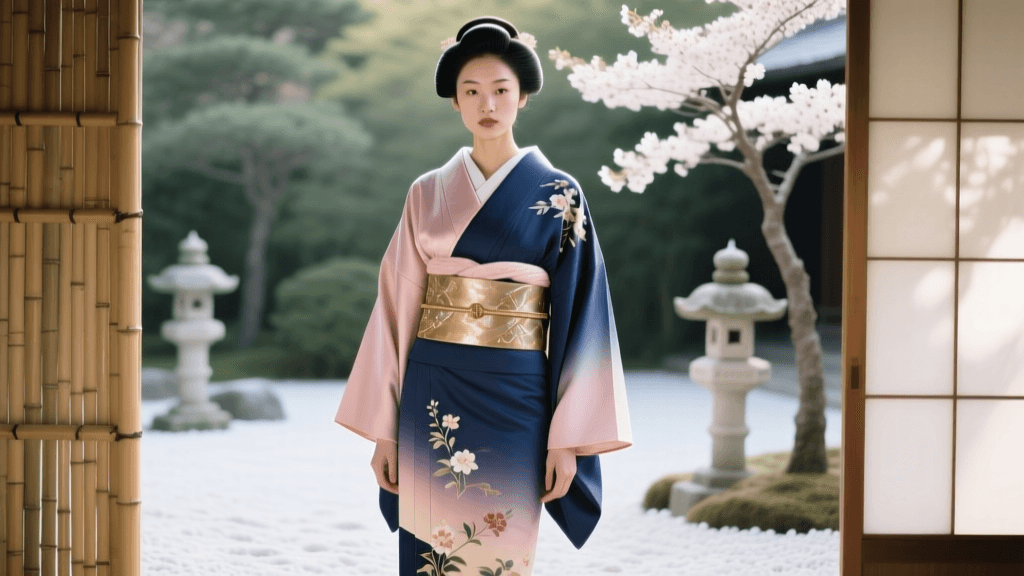
While the junihitoe is now reserved exclusively for the Japanese Imperial Family during the most formal state ceremonies, the underlying philosophy of kasane no irome remains highly relevant for modern kimono wearers and fashion enthusiasts. As noted by the Victoria and Albert Museum, the evolution of the kimono from the Heian under-robe (kosode) to the Edo period outerwear retained the deep cultural obsession with layered aesthetics and seasonal motifs.
For contemporary practitioners, applying Heian color theory to modern kimono styling is both an art and a practical skill. Here is how you can incorporate these historical techniques into your wardrobe today:
- The Kasane-eri (Layered Collar): Modern kimono wearers use a kasane-eri (a decorative, layered collar) placed between the main collar and the haneri (collar cover). To mimic Heian aesthetics, choose a kasane-eri in a contrasting seasonal color. For autumn, pair a deep orange kimono with a golden-yellow kasane-eri and a crimson haneri.
- Obi-age and Obi-jime Coordination: The obi-age (silk sash bustle) acts as a modern proxy for the hidden linings of the junihitoe. Allow exactly 2 to 3 centimeters of a brightly colored, patterned obi-age to peek out from beneath a darker, more subdued obi sash, creating a modern kasane no irome effect at the waist.
- Haori Linings: When wearing a haori (kimono jacket), select one with a richly dyed, contrasting silk lining. As you walk and the jacket falls open, the flash of the inner silk mimics the movement of Heian court sleeves.
Sourcing, Measurements, and Costs for Modern Layering
If you wish to build a wardrobe that honors Heian layering traditions, understanding the specific measurements and market costs is essential. Authentic vintage silk accessories offer the best drape and historical accuracy, but modern reproductions provide affordability and ease of care.
Essential Measurements
When shopping for layering accessories online or in Kyoto vintage markets, keep these standard measurements in mind:
- Haneri (Collar Cover): Standard dimensions are 16 cm wide by 100 cm long. This is sewn onto the juban (under-kimono).
- Kasane-eri (Layered Collar): Usually 11 cm wide by 100 cm long. The narrower width ensures it sits perfectly inside the haneri, showing exactly 2.5 cm of color.
- Obi-age (Sash Scarf): Typically measures 28 cm wide by 120 cm long. Silk crepe (chirimen) is preferred for its grip and volume.
Cost Breakdown (USD / JPY)
| Item | Vintage Silk (Authentic) | Modern Polyester (Reproduction) |
|---|---|---|
| Haneri (Embroidered) | $40 - $120 (¥6,000 - ¥18,000) | $15 - $30 (¥2,500 - ¥4,500) |
| Kasane-eri (Ombré Dyed) | $25 - $60 (¥4,000 - ¥9,000) | $10 - $20 (¥1,500 - ¥3,000) |
| Obi-age (Shibori Silk) | $50 - $150 (¥7,500 - ¥22,000) | $20 - $40 (¥3,000 - ¥6,000) |
Practical Tips for Wearing Heavy and Layered Garments
Emulating the layered look of the Heian period, even with modern, lighter garments, requires an understanding of posture and climate management. The traditional Japanese aesthetic values a straight, upright posture with a slightly tucked pelvis, which helps distribute the weight of multiple silk layers and the obi sash evenly across the core.
When layering a nagajuban (under-kimono), a kimono, and a haori, the friction between silk layers can cause the garments to shift during wear. To combat this, modern kitsuke (kimono dressing) experts recommend using a koshi-himo (tying sash) made of cotton or bamboo-blend fabric rather than pure silk for the innermost ties. The natural fibers grip the skin and undergarments, preventing the heavy outer silk layers from sliding down the shoulders.
Furthermore, consider the thermal properties of silk. While a single layer of silk is highly breathable, three or more layers trap significant body heat. If you are attending an outdoor tea ceremony or a festival in late spring or early autumn, utilize modern, moisture-wicking hadajuban (skin undergarments) made from specialized cooling synthetics. This allows you to maintain the visual volume and color-layering of the Heian aesthetic without succumbing to heat exhaustion, bridging the gap between ancient courtly elegance and modern practicality.