Hanfu on Global Runways: 2026 Fashion Week Trends
The 2026 Runway Renaissance: Hanfu Goes Global
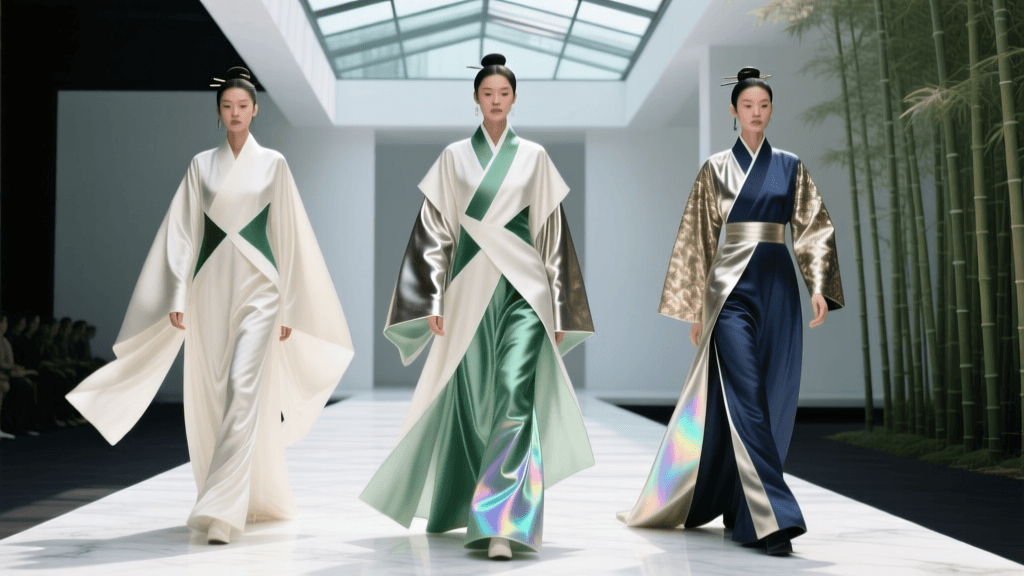
The global fashion landscape has undergone a seismic shift as we navigate the Spring/Summer 2026 fashion week circuit. No longer confined to niche historical revival communities or relegated to mere costume, Hanfu has firmly established itself as a formidable force in international haute couture and ready-to-wear. From the grand ateliers of Paris to the avant-garde showrooms of Shanghai, designers are meticulously deconstructing and reimagining traditional Chinese garments for the modern luxury consumer. This 2026 runway season marks a definitive turning point where cultural appreciation, historical accuracy, and high-fashion innovation intersect seamlessly.
According to luxury market analysts tracking the sector on the Business of Fashion, the integration of Asian traditional garments into Western fashion houses has evolved from superficial motif borrowing to a deep, structural appreciation of indigenous tailoring. The sartorial lexicon of 2026 is heavily influenced by the fluid drapery, intricate pleating, and philosophical color palettes inherent in Hanfu. This movement is deeply rooted in the historical significance of Hanfu, which encompasses the diverse clothing systems of the Han people across millennia, offering a vast archive of silhouettes for contemporary designers to explore.
Key Hanfu Elements Dominating 2026 Collections
The Mamian Qun (Horse-Face Skirt) Evolution
The Mamian Qun, characterized by its flat front and back panels with intricately pleated sides, is arguably the most exported Hanfu silhouette of 2026. European heritage houses have adopted this skirt, transforming it from a traditional ceremonial piece into a staple of modern power dressing. On the Milan runways, we are seeing Mamian Qun constructed from heavyweight wool crepe and structured leather, featuring asymmetrical hems and subtle, tonal jacquard weaves. The traditional pleat count, often ranging from 12 to 24 folds, is being manipulated to create architectural volume that moves dynamically with the wearer, offering a striking alternative to the standard tailored trouser.
Cross-Collar (Jiaoling Youren) Tailoring
The Jiaoling Youren, or cross-collar right-over-left closure, is a foundational element of Hanfu that carries deep cultural and philosophical meaning. In 2026, New York and Paris designers are incorporating this neckline into evening wear and outerwear. By adding hidden internal boning and utilizing stiffened silk taffeta, the soft, flowing cross-collar is being given a corset-like structure. This adaptation provides a sharp, geometric V-neckline that frames the face beautifully while maintaining the historical integrity of the right-over-left closure, a vital detail that distinguishes authentic Hanfu from other regional garments.
Luxurious Song Brocade and Xiangyun Sha
Fabric innovation is at the heart of the 2026 Hanfu runway narrative. Designers are moving away from synthetic brocades and investing heavily in heritage textiles. Xiangyun Sha (mud silk), a labor-intensive fabric dyed with yam juice and river mud, is highly prized this season for its leather-like patina and water-resistant properties. Meanwhile, Song Brocade (Song Jin) is being woven with metallic threads and lightweight mulberry silk bases, reducing the fabric's traditional weight while retaining its luminous, multi-dimensional patterns. These textiles echo the profound cross-cultural dialogues and material exchanges historically explored in The Metropolitan Museum of Art archives, proving that ancient techniques can meet modern luxury demands.
2026 Global Fashion Week Hanfu Integration Chart
To understand how different fashion capitals are interpreting these traditional garments, we have compiled a comprehensive overview of the dominant Hanfu trends across the major 2026 fashion weeks.
| Fashion Capital | Key Hanfu Element | 2026 Fabric Innovation | Runway Styling Approach |
|---|---|---|---|
| Paris | Beizi (Cloak/Coat) | Sheer Silk Organza & Velvet | Layered over minimalist slip dresses; avant-garde deconstruction. |
| Milan | Mamian Qun (Skirt) | Heavyweight Wool Crepe & Leather | Paired with sharp, tailored blazers; focus on architectural pleats. |
| New York | Ruqun (Top & Skirt) | Denim & Technical Nylon | Streetwear fusion; cropped tops with high-waisted utility skirts. |
| Shanghai | Shenyi (Deep Robe) | Authentic Xiangyun Sha (Mud Silk) | Traditional accuracy meets 3D-printed structural accessories. |
Actionable Guide: Styling Hanfu for the Modern Wardrobe
Integrating runway-inspired Hanfu pieces into your 2026 wardrobe requires a balance of historical respect and contemporary styling. Here is a practical guide to adopting these trends with precision and elegance.
- The Modern Mamian Qun Measurement Guide: When ordering a bespoke or made-to-measure Mamian Qun, accuracy is paramount. Measure your natural waist and add exactly 4cm for ease and overlap. For the length, measure from your navel to the ankle bone, then subtract 3cm to ensure the hem clears the ground when wearing standard 5cm heels. The waistband should be 6cm wide to provide adequate support without digging in.
- Fabric Weight Selection: Avoid lightweight, flimsy materials that cling to the body and ruin the structural silhouette. For everyday luxury, opt for mulberry silk with a minimum weight of 19 momme. For outerwear like the Beizi or cross-collar jackets, seek out 30 momme silk or silk-linen blends that offer the necessary drape and durability.
- Color Palette Strategy: The 2026 runway color stories heavily favor traditional Chinese mineral and botanical dyes. Invest in pieces featuring 'Celadon Green' (a soft, grayish-green), 'Cinnabar Red' (a deep, earthy vermilion), and 'Moon White' (a very pale, cool-toned off-white). These shades integrate seamlessly with neutral Western wardrobe staples like camel, charcoal, and navy.
- Proportional Balancing: Because Hanfu silhouettes are inherently voluminous and flowing, balance is key. Pair a wide-sleeved, flowing Song dynasty Beizi with slim-fitting, high-waisted wool trousers or a tailored pencil skirt. Conversely, if you are wearing a voluminous Mamian Qun, keep the top half streamlined with a fitted turtleneck or a structured, modern corset top.
Sourcing Authentic 2026 Runway-Inspired Hanfu
Acquiring high-quality, runway-level Hanfu requires navigating a specialized market. In 2026, the divide between mass-produced fast fashion and authentic, artisanal Hanfu is wider than ever. Here is what you need to know about sourcing, costs, and timelines.
- Entry-Level Luxury ($250 - $600): At this price point, you can find excellent ready-to-wear Mamian Qun and cross-collar blouses from established contemporary brands. These pieces typically utilize machine-woven jacquard silks and polyester-blend brocades. They are ideal for everyday wear and offer a good introduction to the silhouette.
- Bespoke and Artisanal ($1,500 - $4,000+): For true runway quality, you must commission bespoke pieces from master weavers and tailors. A jacket made from authentic Xiangyun Sha, woven on traditional wooden looms and dyed in the pearl river delta, will fall into this upper tier. The craftsmanship involves hand-stitched hems, authentic silk thread embroidery, and natural horn or jade buttons.
- Lead Times and Patience: Authentic heritage textiles cannot be rushed. If you are commissioning a piece utilizing traditional Song Brocade or hand-loomed Xiangyun Sha, expect a lead time of 45 to 90 days. The weaving process alone for complex brocades can take several weeks per meter. Plan your wardrobe acquisitions well in advance of major events or seasonal transitions.
The Future of Asian Traditions in Haute Couture
The 2026 fashion week season has unequivocally proven that Hanfu is not a fleeting trend, but a permanent addition to the global luxury vocabulary. By respecting the intricate tailoring, philosophical underpinnings, and heritage textiles of these garments, international and domestic designers alike are forging a new path for Asian traditions in high fashion. As consumers become more educated and demanding of authenticity, the runway will continue to serve as a vital bridge between ancient sartorial wisdom and the cutting edge of modern design. Embracing Hanfu in your personal wardrobe is no longer just about wearing a beautiful garment; it is about participating in a living, evolving global dialogue.