Global Runway Hanfu: 2026 Fashion Week Trends & Brands
The 2026 Hanfu Renaissance on International Runways
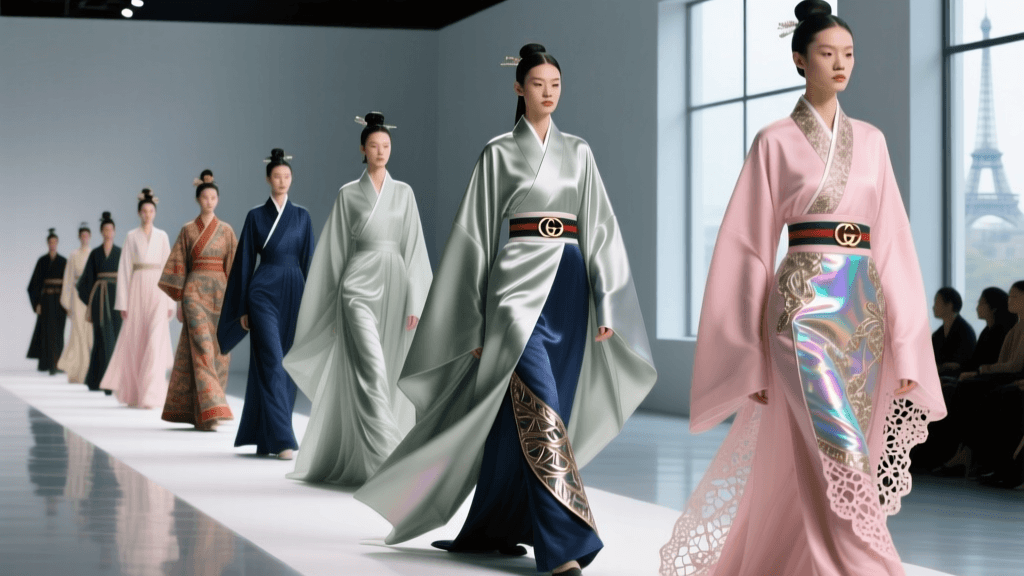
The global fashion landscape has undergone a profound sartorial shift in 2026. No longer confined to niche cultural revivals or historical reenactments, traditional Chinese Hanfu has firmly established itself as a structural and aesthetic cornerstone on the world’s most prestigious runways. From the Spring/Summer 2026 collections in Paris to the Fall/Winter 2026 showcases in Milan, international fashion houses and avant-garde Chinese designers are integrating Hanfu silhouettes into haute couture with unprecedented authenticity and technical mastery.
This 2026 movement is defined by a departure from superficial orientalism. Instead, designers are focusing on the intricate engineering of traditional garments, such as the Jiaoling Youren (cross-collar right lapel) and the complex pleating systems of the Mamianqun (horse-face skirt). As documented by the Victoria and Albert Museum, the structural integrity and historical continuity of Chinese dress offer a rich vocabulary for modern tailoring, providing a stark contrast to the Western reliance on darts and fitted seams. In 2026, the global fashion elite are finally embracing this flat-cutting mastery, resulting in garments that drape, flow, and move with a liquid grace that defines the current luxury zeitgeist.
Key Designers Bridging Hanfu and Haute Couture
The 2026 Fashion Week circuit has been dominated by a new vanguard of designers who treat Hanfu not merely as inspiration, but as a living, evolving textile science.
Guo Pei: Ming Dynasty Opulence Meets Modern Couture
For her 2026 Paris Haute Couture presentation, Guo Pei turned to the Ming Dynasty’s imperial wardrobes. Utilizing authentic Zhuanghua (brocade weaving) techniques, her collection featured exaggerated cloud shoulders (Yunjian) reimagined as structural, architectural capes. By integrating gold-wrapped threads into heavy silk satins, Pei created garments that weigh upwards of 15 kilograms, demanding a runway presence that is both regal and imposing.
Huishan Zhang: Song Dynasty Minimalism
While Pei embraces maximalism, Huishan Zhang’s 2026 London and Milan collections champion the refined minimalism of the Song Dynasty. Zhang’s interpretation of the Beizi (a long, open-front overcoat) features elongated, floor-sweeping lines crafted from ultra-sheer, 12-momme silk organza. His work highlights the Hanfu philosophy of 'leaving space' (liubai), allowing the wearer’s movement to complete the silhouette.
Minghuatang: The Luxury Standard
Often referred to as the 'Hermès of Hanfu,' Minghuatang has transitioned from a premium domestic brand to a global luxury powerhouse in 2026. Their recent collaborations with European textile mills have resulted in hybrid fabrics—such as cashmere-blended Zhijin (woven gold) velvets—that cater to the climate demands of Northern Hemisphere fashion weeks while maintaining strict historical accuracy in pattern and motif.
2026 Runway Trends: Silhouettes, Fabrics, and Motifs
The 2026 runway season is characterized by a deep reverence for intangible cultural heritage textiles. The most sought-after fabric this year is Xiangyunsha (Gambiered Canton Gauze). This mud-dyed silk, which requires dozens of cycles of dyeing with river mud and薯莨 (Dioscorea cirrhosa) juice, has become the ultimate status symbol in luxury fashion. The Metropolitan Museum of Art notes that historical Chinese silk weaving and dyeing techniques represent some of the most complex textile technologies in human history, a fact that 2026’s luxury consumers are eager to invest in.
- The Asymmetric Mamianqun: Designers are playing with the traditional horse-face skirt by introducing asymmetric hemlines and varying pleat depths, transitioning the garment from daytime modesty to evening avant-garde.
- Layered Ruqun with Corsetry: A controversial but highly visible 2026 trend involves pairing the traditional high-waisted Qixiong Ruqun (chest-high skirt and top) with subtle, external corsetry to bridge Western hourglass silhouettes with Eastern draping.
- Botanical Motifs: Moving away from the ubiquitous dragon and phoenix, 2026 runways favor hyper-realistic, oversized botanical embroidery—specifically lotus, plum blossom, and bamboo—rendered in tonal, monochromatic threads.
Data Table: 2026 Runway Adaptations vs. Traditional Hanfu
| Garment Element | Traditional Historical Form | 2026 Runway Adaptation | Key Designer / Brand Example |
|---|---|---|---|
| Mamianqun (Skirt) | Flat front/back panels with deep side pleats; ankle-length. | Micro-pleating, asymmetric hems, and metallic thread integration. | Dior (Cruise 2026), Shisanyu |
| Jiaoling Youren (Collar) | Cross-collar wrapping right over left; tied with internal sashes. | Exaggerated lapel widths, structured with hidden boning for sharp lines. | Huishan Zhang |
| Yunjian (Cloud Shoulder) | Detachable embroidered capelet resting on the shoulders. | 3D-printed resin frameworks draped in raw silk; architectural capes. | Guo Pei |
| Xiangyunsha (Fabric) | Mud-dyed silk with a dark, crackled, leathery texture. | Reversible dyeing techniques creating two-tone black/copper garments. | Minghuatang, Uma Wang |
Sourcing and Styling Runway-Inspired Luxury Hanfu in 2026
For collectors, stylists, and fashion enthusiasts looking to acquire runway-grade Hanfu in 2026, the market has matured significantly. Mass-produced costume pieces have been entirely eclipsed by bespoke, atelier-crafted garments. Here is your actionable guide to sourcing and styling luxury Hanfu this year.
Where to Source Luxury Hanfu
To acquire pieces that mirror the quality seen at Paris and Milan Fashion Weeks, you must look to specialized ateliers. Brands like Minghuatang and Zhibo offer made-to-measure services using authentic Song Brocade and Xiangyunsha. Expect to pay between $1,800 and $5,500 USD for a complete, luxury-grade ensemble (skirt, top, and outer robe). For true haute couture pieces featuring hand-loomed gold threads, prices easily exceed $15,000 USD.
Pro Tip: Authentic Xiangyunsha silk is highly dependent on the summer drying season in Guangdong. Orders placed in late 2026 for custom mud-dyed silk will not be fulfilled until mid-2027. Plan your gala wardrobe accordingly.
Styling for International Galas and Red Carpets
Styling Hanfu for a modern red carpet (such as the Cannes Film Festival or the Met Gala) requires balancing historical volume with contemporary grooming.
- Footwear: Abandon traditional cloth shoes. In 2026, top stylists are pairing floor-sweeping Mamianqun with architectural, minimalist heels from brands like Mach & Mach or custom Jimmy Choo mules that peek out just enough to elevate the hemline.
- Outerwear as the Focal Point: The Pifeng (cape or cloak) is the ultimate red-carpet statement piece. Opt for a floor-length, unlined silk gauze Pifeng with subtle metallic embroidery to create a 'halo' effect under paparazzi flashbulbs.
- Hair and Accessories: The 2026 trend favors sleek, modern updos adorned with a single, monumental piece of jewelry—such as a jade and gold Zan (hairpin)—rather than the heavy, traditional multi-pin crowns. This keeps the focus on the garment's neckline and the wearer's face.
The Cultural Impact and Future of Hanfu in High Fashion
The integration of Hanfu into the 2026 global runway circuit represents a monumental victory for cultural preservation and sartorial diplomacy. By elevating traditional Chinese garments to the echelon of haute couture, designers are ensuring that ancient weaving, dyeing, and pleating techniques remain economically viable and culturally relevant. As we look toward the Fall/Winter 2027 previews, it is clear that Hanfu is no longer a fleeting trend; it is a permanent, foundational pillar of global luxury fashion, demanding the same respect, study, and reverence as the finest European tailoring traditions.