Best Hanfu Styles for Qigong and Meditation Retreats 2026
The Intersection of Hanfu and Mindful Movement in 2026
As the global wellness economy continues to evolve in 2026, practitioners of traditional Chinese arts are increasingly recognizing the profound connection between what we wear and how we move. The resurgence of Hanfu (traditional Han Chinese clothing) is no longer confined to photography, historical reenactments, or street fashion. Today, it has deeply permeated the wellness sector, with meditation and Qigong retreats actively encouraging participants to don traditional garments to enhance their practice. But not all Hanfu is created equal when it comes to mindful movement. The flowing sleeves of a ceremonial Ming Dynasty robe, while breathtaking, may impede the precise, grounded stances required in Tai Chi and Qigong. Selecting the right silhouette, fabric weight, and fit is essential for allowing your body's vital energy, or Qi, to circulate unimpeded.
The Philosophy of Dress and Meridian Flow
Traditional Chinese Medicine (TCM) posits that Qi flows through a network of meridians located just beneath the skin and through the body's major joints. Restrictive clothing, tight waistbands, and rigid synthetic fabrics can create physical and energetic blockages, stifling this natural circulation. According to the National Center for Complementary and Integrative Health, the gentle, flowing movements of Qigong and Tai Chi are specifically designed to stretch and stimulate these meridian pathways, improving balance, flexibility, and mental clarity. When you pair these movements with historically accurate, loosely draped Hanfu, you create a micro-environment that supports deep diaphragmatic breathing and energetic grounding. In 2026, leading wellness retreats from Wudang Mountain to boutique studios in Kyoto and California are integrating 'Sartorial Qigong'—the practice of aligning your wardrobe with your energetic goals.
Top Hanfu Silhouettes for Mindful Movement
When curating a wellness wardrobe, historical accuracy must be balanced with kinetic functionality. Here are the most highly recommended Hanfu styles for Qigong and meditation in 2026:
1. The Daopao (Taoist Robe)
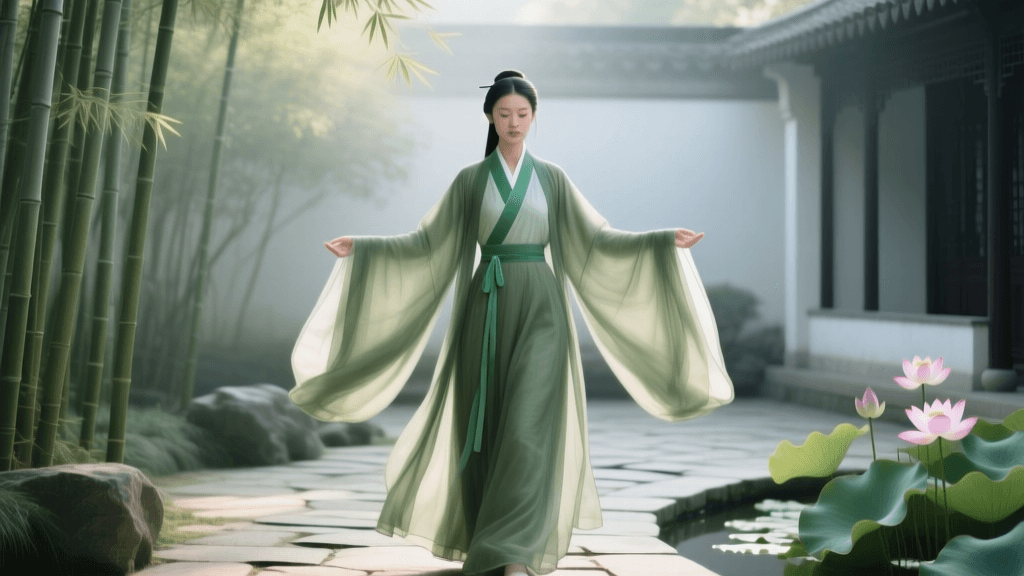
The Daopao is the quintessential garment for internal martial arts and deep meditation. Characterized by its wide sleeves, cross-collar (Jiaoling Youren), and side slits that reveal inner pleats, the Daopao allows for maximum air circulation and unrestricted limb movement. The side pleats are particularly ingenious; they provide structural weight that helps the garment drape beautifully and stay in place even during deep horse stances (Ma Bu) or sweeping arm movements. For 2026 wellness retreats, lightweight linen or raw silk Daopao in muted, natural tones like slate, moss green, or undyed ivory are the top choices.
2. Song Dynasty Duijin (Symmetrical Jacket) and Songku (Trousers)
While the Daopao is excellent for flowing forms, practitioners engaging in more rigorous Qigong sets or outdoor Tai Chi often prefer the minimalism of the Song Dynasty aesthetic. A Duijin (a front-opening symmetrical jacket) paired with a narrow-sleeved inner shirt and Songku (straight-leg trousers) offers a streamlined silhouette. This combination prevents excess fabric from catching the wind during outdoor mountain retreats while maintaining the elegant, understated aesthetic that promotes a calm, focused mind.
3. Banbi (Half-Sleeve Vest) for Layering
Temperature regulation is critical during meditation, as the body's metabolic rate drops during deep states of stillness, while Qigong generates internal heat. The Banbi, a short-sleeved or sleeveless vest worn over an inner garment, is perfect for layering. It keeps the core and vital organs (specifically the Dantian, the body's energetic center located below the navel) warm without restricting the shoulders and arms.
The 2026 Fabric Guide: Breathing with Your Body
The textile you choose acts as the boundary between your internal energy field and the external environment. In 2026, the wellness community has largely rejected synthetic blends in favor of heritage, eco-friendly textiles that support thermoregulation and grounding.
- Xiangyunsha (Gambiered Canton Gauze): This luxurious, sustainably harvested silk is dyed with river mud and the juice of the薯莨 (Dioscorea cirrhosa) plant. It is naturally cooling, antibacterial, and produces a soft, grounding rustle during movement. It is the premier choice for summer meditation retreats.
- Organic Ramie and Linen: For practitioners who generate a lot of heat during active Qigong forms, mid-weight linen (around 180-200 GSM) or traditional ramie offers unparalleled breathability. These plant-based fibers are excellent for 'earthing' or grounding practices, as they do not hold static electricity like synthetic polyester blends.
- Unbleached Organic Cotton: Ideal for inner layers (Zhongyi). Unbleached cotton sits softly against the skin, preventing irritation during long hours of seated Zazen or Daoist meditation.
Measurement Guide: The 'Wellness Ease' Allowance
Standard Hanfu tailoring already incorporates more ease than modern Western clothing, but Qigong and meditation require a specialized 'Wellness Ease' allowance. When ordering bespoke Hanfu for your practice in 2026, provide your tailor with the following adjustments to ensure your meridians remain uncompressed.
| Garment Area | Standard Hanfu Fit | Qigong & Meditation Fit | Reasoning for Adjustment |
|---|---|---|---|
| Chest / Bust | + 4 to 6 inches ease | + 8 to 10 inches ease | Allows for deep, expansive diaphragmatic breathing without fabric tension. |
| Waistband | Snug at natural waist | Tie loosely at lower Dantian | Prevents compression of the lower abdomen, crucial for abdominal breathing. |
| Armhole Drop | Standard historical drop | + 2 inches deeper drop | Prevents the garment from riding up during overhead arm raises (e.g., 'Holding the Ball'). |
| Trouser Rise | Standard historical rise | + 3 inches higher back rise | Accommodates deep squatting and horse stances without pulling the waistband down. |
Grounding and Footwear: Completing the Circuit
Your connection to the earth is paramount in Qigong. Modern rubber-soled shoes act as insulators, severing your energetic connection to the ground. In 2026, traditional cloth shoes (Bu Xie) with layered cotton soles, or 'cloud-toe' shoes, have become the standard for indoor meditation halls and dry outdoor environments. For practitioners engaging in outdoor grounding exercises on morning dew-covered grass, barefoot practice is preferred, but when footwear is necessary, thin-soled leather or tightly woven hemp shoes provide the necessary sensory feedback to maintain balance and root your stance.
Caring for Your Wellness Hanfu
Just as you cleanse your mind during meditation, your wellness garments require mindful maintenance. The World Health Organization's ongoing integration of traditional medicine and holistic wellness practices emphasizes the importance of environmental harmony. Wash your linen and cotton Hanfu using pH-neutral, plant-based detergents. Avoid high-heat tumble drying, which damages natural fibers and creates static. Instead, line-dry your garments in the early morning sun. In traditional Chinese culture, allowing your clothes to absorb the morning Yang energy of the sun is believed to infuse the fabric with vitality, which is then transferred to your body when you dress for your morning Qigong routine.
Final Thoughts on Sartorial Mindfulness
Integrating Hanfu into your Qigong and meditation practice is more than an aesthetic choice; it is a commitment to holistic alignment. By selecting the Daopao or Song Dynasty minimalism, prioritizing natural, breathable textiles like Xiangyunsha and ramie, and adjusting your measurements for optimal Qi flow, you transform your clothing into a tool for wellness. As you step onto your mat in 2026, let the drape of your silk and the weave of your linen remind you to breathe deeply, move gently, and remain profoundly grounded.