Hanfu for Extreme Climates: Tropical, Desert & Cold 2026
The Global Hanfu Renaissance: Adapting to Extreme Environments
The global resurgence of Hanfu in 2026 has transcended its traditional geographic and climatic boundaries. Once primarily worn in the temperate zones of East Asia, traditional Chinese garments are now a common sight in the sweltering humidity of Southeast Asia, the arid expanses of the Middle East, and the freezing winters of North America and Northern Europe. This globalization of the Hanfu movement presents a unique sartorial challenge: how to maintain historical authenticity and aesthetic elegance while surviving extreme weather conditions.
In this comprehensive 2026 guide, we explore the historical precedents and modern textile innovations that allow enthusiasts to wear Hanfu comfortably in tropical, desert, and cold climates. By understanding the engineering of traditional Chinese garments, wearers can adapt their wardrobes to any environment on Earth.
Navigating Tropical and Humid Climates
In high-humidity and high-heat environments like Singapore, Jakarta, or Miami, the primary goal of any garment is to facilitate airflow and wick moisture. The Song Dynasty (960–1279) aesthetic is the undisputed champion of tropical Hanfu. Characterized by slender silhouettes, lightweight layers, and minimalist elegance, Song-style garments prioritize breathability without sacrificing modesty.
Key Garments for the Tropics
The quintessential tropical garment is the Beizi, an open-front jacket with side slits that allow maximum air circulation against the body. When paired with a lightweight Baidie (pleated skirt) or wide-leg Kuzhe (trousers), the ensemble creates a microclimate of cooling airflow. The narrow sleeves of the Song style also prevent excess fabric from trapping heat against the forearms.
Tropical Fabric Innovations
The choice of textile is paramount. According to extensive historical textile archives documented by the Victoria and Albert Museum, traditional Chinese weavers mastered the art of creating sheer, breathable silks. For 2026, the most coveted fabric for tropical Hanfu is Xiangyunsha (Gambiered Canton Gauze). This intangible cultural heritage fabric is dyed with shulang yam juice and coated with iron-rich river mud, resulting in a crisp, rustling textile that does not cling to sweaty skin and possesses natural antibacterial properties.
Modern 2026 innovations have also introduced bamboo-silk and Tencel-linen blends to the market. These contemporary textiles offer the elegant drape of traditional silk but feature the aggressive moisture-wicking and quick-drying capabilities required for equatorial heat.
Surviving Arid and Desert Environments
Arid and desert climates, such as those found in Dubai, Phoenix, or Xinjiang, present a dual challenge: blistering daytime UV radiation and rapid, severe temperature drops at night. Furthermore, windblown sand and dust require garments that offer full-body coverage without causing heat exhaustion.
Desert Silhouettes and Sun Protection
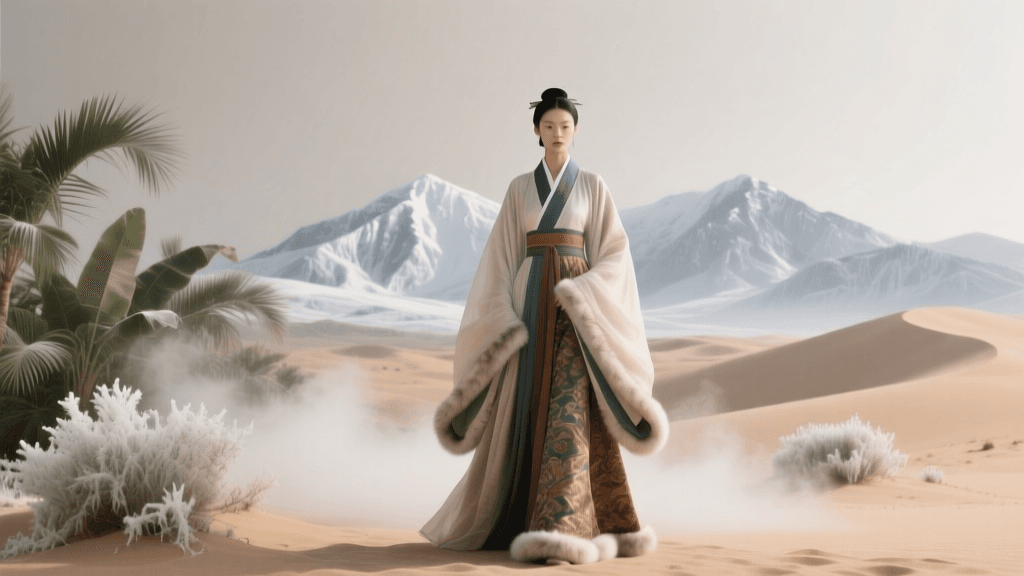
The Wei-Jin and Tang Dynasty styles, with their sweeping sleeves and dramatic draping, are surprisingly well-suited for desert environments when adapted correctly. The Ruqun (a top and skirt ensemble) with wide, flowing sleeves acts as a physical sunshade. By keeping the skin completely covered, the garment prevents direct UV exposure and sunburn, while the trapped layer of air insulates the wearer from the external heat. The Pibo (a long, flowing shawl draped over the arms and shoulders) transitions from a decorative accessory to an essential windbreaker and light insulator as evening temperatures plummet.
Textiles for the Dunes
Tussah silk (wild silk) and tightly woven, high-thread-count cotton are the premier fabric choices for 2026 desert Hanfu. Tussah silk is naturally UV-resistant, highly durable, and possesses a slightly textured surface that prevents it from sticking to the skin. Dense cotton prevents fine desert dust from penetrating the weave, keeping the wearer clean during sandstorms.
Conquering Freezing and Cold Regions
Surviving freezing temperatures in cities like Toronto, Harbin, or Moscow requires a fundamental shift toward the robust, structured silhouettes of the Ming Dynasty (1368–1644). Ming-style Hanfu was designed for the harsh winters of Northern China and features high collars, thick linings, and extensive layering capabilities.
Winter Armor: Aoqun and Pifeng
The cornerstone of the winter wardrobe is the Aoqun (a lined, long-sleeved jacket paired with a skirt). Modern 2026 reproductions often feature inner linings of sustainable faux-fur, quilted cotton, or merino wool blends. The high, standing collar of the Ming Ao protects the neck from biting winds, eliminating the need for modern scarves that can disrupt the historical silhouette.
The Mamianqun (horse-face skirt) is exceptionally practical for extreme cold. Its overlapping, flat panels allow wearers to conceal thick thermal leggings, fleece-lined tights, or even modern heated pants beneath the skirt without disrupting the garment's elegant exterior drape. To combat sub-zero winds, the Pifeng (a heavy, floor-length cloak) is worn over the entire ensemble. As highlighted by the extensive winter textile collections at the Royal Ontario Museum, historical winter cloaks were often lined with animal pelts or heavily padded with raw silk floss. Today’s 2026 winter Pifeng utilizes advanced aerogel insulation and heavyweight wool-cashmere blends, providing arctic-level warmth while maintaining a regal, flowing silhouette.
2026 Extreme Climate Hanfu Comparison Chart
| Climate Zone | Recommended Era/Style | Best Fabrics for 2026 | Key Garments & Accessories |
|---|---|---|---|
| Tropical / Humid | Song Dynasty | Xiangyunsha, Bamboo-Silk, Raw Linen | Beizi, Baidie, Bamboo Hand Fans |
| Arid / Desert | Wei-Jin / Tang Dynasty | Tussah Silk, Dense Cotton, UV-Weave | Wide-Sleeve Ruqun, Pibo, Wide-Brim Hats |
| Freezing / Cold | Ming Dynasty | Wool-Cashmere, Quilted Cotton, Velvet | Aoqun, Mamianqun, Pifeng, Fur Muffs |
Color, Dye, and Climate Considerations
Beyond fabric weight, the color and dyeing methods of your Hanfu play a critical role in thermal regulation. In tropical and desert environments, light-reflective colors such as ivory, pale celadon, and soft lotus pink are essential. These hues bounce solar radiation away from the body. Furthermore, traditional plant dyes like indigo and madder root offer subtle UV-protective qualities that synthetic 2026 dyes are only just beginning to replicate.
Conversely, in freezing climates, deep, saturated colors like obsidian black, crimson, and navy blue absorb and retain what little solar heat is available during short winter days. The visual weight of these darker colors also complements the heavier, structured fabrics used in Ming-style winter wear.
Modern Base Layers and Footwear Adaptations
The secret to wearing Hanfu in extreme climates in 2026 lies in the invisible base layers. The traditional Hanfu silhouette is forgiving, allowing for significant modern undergarment integration. In tropical zones, ultra-thin, ice-silk cooling sleeves and bamboo-viscose camisoles prevent chafing and absorb perspiration, protecting the delicate outer silk layers from salt and oil damage.
In freezing climates, the integration of smart-wear is a game-changer. Battery-operated heated vests worn beneath a Ming-style Ao provide hours of active warmth without adding physical bulk. Footwear has also evolved; while traditional cloud-toe shoes (Yuntou Xie) are beautiful, 2026 winter adaptations feature insulated, waterproof leather uppers with high-traction grip soles to navigate icy streets safely while maintaining the aesthetic of traditional embroidered boots.
Conclusion
The adaptability of traditional Chinese clothing is a testament to the ingenuity of historical tailors and weavers. As noted in the historical records of The Metropolitan Museum of Art, Chinese textiles have always evolved to meet environmental demands, shifting from sheer gauzes to padded silks as the seasons changed. By applying these historical principles alongside 2026 textile technology, modern Hanfu enthusiasts can confidently wear their heritage garments anywhere in the world, regardless of the extremes Mother Nature has to offer.