Hanfu for Family Ceremonies in 2026: Birth, Weddings & Rites
The 2026 Hanfu Renaissance in Family Life
As we navigate through 2026, the Hanfu movement has transcended its origins as a niche internet subculture to become a deeply rooted pillar of modern Asian family traditions. No longer confined to street fashion or tourism, traditional Chinese clothing is now the preferred attire for life's most profound milestones. Families are increasingly turning to historically accurate garments to honor their lineage, celebrate new life, and pay respects to their ancestors. According to cultural historians and institutions like the Metropolitan Museum of Art, the intersection of historical dress and modern identity continues to shape contemporary Asian fashion, proving that these ancient silhouettes hold timeless significance.
This comprehensive guide explores the specific Hanfu styles, fabrics, and etiquette required for birth ceremonies, weddings, and ancestral rites in 2026, ensuring your family's milestones are celebrated with authenticity and grace.
Welcoming New Life: Birth and First-Year Ceremonies
In traditional Chinese culture, the birth of a child and their subsequent first-year milestones are celebrated with immense joy and protective symbolism. In 2026, parents are moving away from mass-produced modern baby clothes in favor of artisan-crafted infant Hanfu, particularly for the Zhuazhou (first birthday grab) ceremony.
Infant Garments and Protective Symbols
For newborns and infants, the focus is on comfort, natural fibers, and auspicious embroidery. The most iconic items are the Huxie (tiger shoes) and Humao (tiger hats). The tiger is considered a protective deity in Chinese folklore, capable of warding off evil spirits and childhood illnesses. Modern 2026 iterations of these items utilize organic, unbleached cotton and bamboo-silk blends to ensure breathability and prevent skin irritation.
- Baobao Hanfu (Baby Hanfu): Simplified, cross-collared tops with soft, elasticized waistbands. These avoid the use of hard buttons or ties that could pose a choking hazard.
- Hundred Families Coat (Baijia Yi): A patchwork jacket traditionally made from fabric scraps donated by one hundred different families, symbolizing a community's collective blessing and protection over the child.
- Lotus and Peony Embroidery: For young girls, lotus motifs symbolize purity, while peonies represent wealth and honor. For boys, qilin and tiger motifs are favored to encourage bravery and success.
Sourcing these items in 2026 typically involves commissioning local artisans on specialized heritage platforms. A bespoke, hand-embroidered tiger shoe and hat set currently averages between $150 and $300, reflecting the intensive hand-stitching required.
The Sacred Union: Hanfu for Weddings
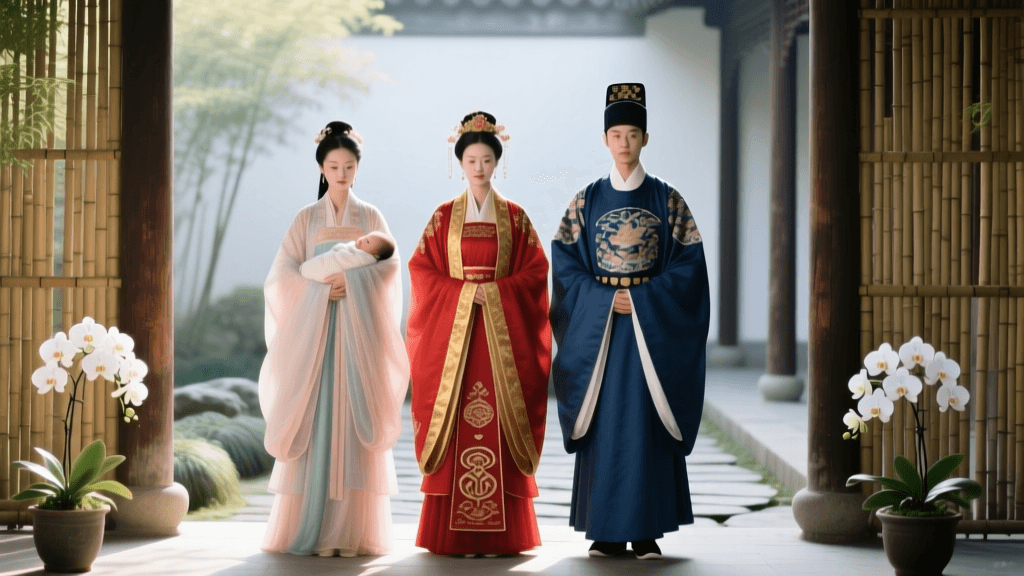
The traditional Chinese wedding is a spectacular display of familial union, and the bridal attire is the centerpiece of the event. While the Western white gown had its era of dominance, 2026 has seen a massive resurgence in the Ming Dynasty Aoqun and the elaborate Fengguan Xiapei (phoenix crown and cloud cape) as the gold standard for formal Hanfu weddings. For a deeper understanding of the evolution of these garments, resources detailing the history of the Chinese wedding dress provide excellent historical context.
The Bride: Fengguan Xiapei and Aoqun
The Ming Dynasty aesthetic remains the most popular choice for brides due to its regal structure and vibrant color palette. The Aoqun consists of a structured, high-collared jacket (Ao) paired with a sweeping Mamianqun (horse-face skirt). In 2026, sustainable textile innovations have allowed for the creation of cruelty-free 'kingfisher feather' hair accessories, utilizing ethically sourced dyed silk threads and recycled glass beads to mimic the historic Tian-tsui technique without harming wildlife.
The Groom: Yuanlingpao and Futou
Grooms typically wear the Yuanlingpao, a round-collared robe that originated in the Tang Dynasty but was formalized in subsequent eras. For a 2026 wedding, grooms often select deep crimson, navy, or black robes adorned with subtle tone-on-tone brocade patterns. The outfit is completed with a Futou (official's hat) and a leather or jade-studded belt.
Ceremonial Hanfu Comparison Chart
| Style | Dynasty Origin | Best For | Key Features | 2026 Avg. Bespoke Cost |
|---|---|---|---|---|
| Fengguan Xiapei | Ming | Formal Bridal | Phoenix crown, embroidered cloud cape, Mamianqun | $3,500 - $8,000 |
| Yuanlingpao | Tang / Ming | Groom's Attire | Round collar, structured shoulders, leather belt | $800 - $1,500 |
| Qungua | Qing / Modern | Tea Ceremonies | Two-piece jacket and skirt, heavy gold/red embroidery | $1,200 - $4,000 |
| Beizi | Song | Engagement Banquets | Straight collar, lightweight, elegant draping | $400 - $900 |
Honoring the Past: Ancestral Rites and Mourning
Ancestral worship, particularly during the Qingming Festival (Tomb-Sweeping Day) and the Zhongyuan Festival (Ghost Festival), requires a starkly different sartorial approach than weddings or births. The core principles of ancestral dress are modesty, solemnity, and respect. Flashy colors, excessive jewelry, and overly structured silhouettes are considered inappropriate.
The Solemnity of Song Dynasty Styles
For ancestral rites, the Song Dynasty Beizi (a long, parallel-collared overcoat) and the ancient Shenyi (deep robe) are the most culturally appropriate choices. The Shenyi is particularly significant, as its construction—separating the top and bottom before sewing them together—symbolizes the harmony of heaven and earth, a core tenet of ancestral reverence.
Color palettes for these ceremonies in 2026 lean heavily into unbleached hemp, muted indigo, slate grey, and pure white. The use of Xiangyunsha (gambiered silk), a heritage fabric dyed using river mud and plant extracts, is highly favored for its matte finish, subdued earthy tones, and eco-friendly production process. As documented by historians tracking the broader Hanfu movement, the return to natural, plant-based dyes aligns perfectly with the respectful, grounded nature of mourning and remembrance ceremonies.
Etiquette and Accessories for Rites
When participating in ancestral rites, hair must be neatly tied up using simple wooden or jade hairpins; gold and glittering metals are avoided. The sleeves of the Shenyi or Beizi are designed to be long, covering the hands when the arms are folded in front of the body during the traditional Kowtow (kneeling and bowing) or deep standing bows. This sleeve length is not merely aesthetic; it serves as a physical reminder to restrain one's ego and show humility before the ancestors.
Sourcing and Tailoring Ceremonial Hanfu in 2026
The market for ceremonial Hanfu has matured significantly. While off-the-rack options are available for casual wear, family ceremonies demand bespoke tailoring to ensure historical accuracy and perfect fit.
The Bespoke Process
- Consultation (6 Months Prior): Meet with a heritage tailor to discuss the specific ceremony, dynasty preference, and family color taboos.
- Fabric Selection (5 Months Prior): Choose from heritage textiles like Song brocade, Xiangyunsha silk, or sustainable organic linen blends.
- Fittings (3 Months Prior): Ceremonial Hanfu involves complex layering. Fittings ensure the inner garments (Zhongyi) do not bunch uncomfortably beneath the outer robes.
- Final Delivery (1 Month Prior): Allows time for steaming, accessory matching, and practicing the specific movements and bows required in the heavy garments.
Investment and Preservation
Ceremonial Hanfu is an investment in family heirlooms. A high-quality, hand-embroidered Ming Dynasty wedding set can easily exceed $5,000 in 2026, but it is designed to be preserved and passed down to future generations. Proper storage in acid-free tissue paper, away from direct sunlight, and utilizing natural camphor wood blocks instead of chemical mothballs will ensure these garments survive for centuries.
Conclusion
As 2026 unfolds, the integration of Hanfu into family ceremonies represents a beautiful synthesis of past and present. Whether wrapping a newborn in protective tiger motifs, exchanging vows beneath the weight of a phoenix crown, or bowing in quiet reverence to those who came before, traditional Chinese clothing offers a profound, tactile connection to heritage. By understanding the specific styles, fabrics, and etiquette required for each milestone, families can ensure their traditions are honored with the utmost authenticity and respect.