2026 Hanfu Fabric Drape & Comfort Analysis: Top Textiles
The Evolution of Hanfu Textiles in 2026
As the global appreciation for traditional Asian garments continues to surge in 2026, the Hanfu and Xin Zhongshi (new Chinese style) movements have evolved from niche historical reenactment into a sophisticated, everyday fashion ecosystem. At the heart of this evolution is a deep, scientific understanding of fabric drape, texture, and thermal comfort. Modern enthusiasts and designers no longer rely solely on historical guesswork; instead, they utilize advanced textile engineering to recreate the majestic silhouettes of the Tang, Song, and Ming dynasties while optimizing for contemporary comfort.
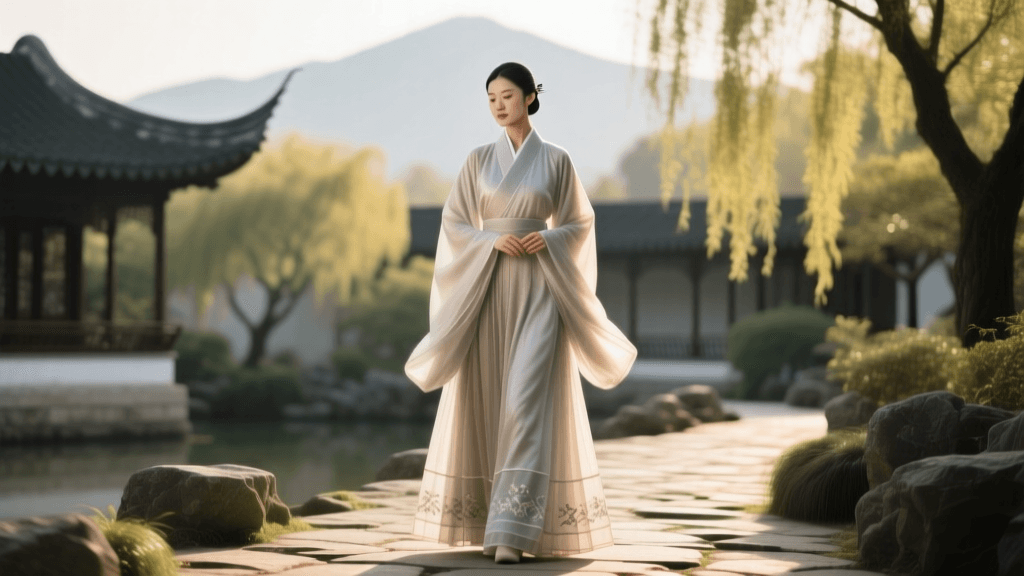
The way a fabric falls, folds, and moves—its drape—is the single most critical factor in determining the authenticity and aesthetic success of a Hanfu garment. A chest-high Qixiong Ruqun requires a fluid, cascading drape to mimic the romantic frescoes of the Tang era, whereas a Ming Dynasty Mamianqun (horse-face skirt) demands a fabric with high shear stiffness to hold its razor-sharp pleats. In this comprehensive 2026 analysis, we break down the physics of Hanfu fabric drape, compare the leading textiles on the market, and provide actionable guidance for selecting the perfect material for your traditional wardrobe.
The Physics of Hanfu Drape and Comfort
Before diving into specific fabrics, it is essential to understand the metrics that textile engineers and Hanfu tailors use in 2026 to evaluate garment behavior:
- Drape Coefficient: Measured as a percentage, this indicates how much a fabric folds under its own weight. A lower percentage means a stiffer, more structured fabric, while a higher percentage indicates a fluid, clingy drape.
- Bending Length: This measures how far a fabric can extend horizontally before bending under its own weight. It is crucial for determining how wide Hanfu sleeves will flare when the arms are raised.
- Moisture Vapor Transmission Rate (MVTR): A key comfort metric, especially for summer Hanfu. It measures the fabric's breathability and its ability to wick sweat away from the skin.
- Shear Stiffness: This dictates how well a fabric resists diagonal distortion. High shear stiffness is non-negotiable for garments that require permanent or semi-permanent pleating.
By balancing these four metrics, modern weavers are able to produce textiles that honor the historical context of Chinese sericulture and weaving—recognized globally by institutions like the UNESCO Intangible Cultural Heritage registry—while meeting the rigorous demands of modern daily wear.
Comprehensive Hanfu Fabric Comparison Chart (2026)
The following table outlines the performance characteristics and current market pricing for the most popular Hanfu fabrics available in 2026.
| Fabric Type | Drape Quality | Breathability (MVTR) | Weight (GSM) | 2026 Avg. Cost per Meter |
|---|---|---|---|---|
| Mulberry Silk (22 Momme Crepe) | Fluid (High Drape) | High | 90 - 110 | $45 - $65 USD |
| Ramie (Xia Bu / Summer Cloth) | Crisp (Structured) | Very High | 120 - 150 | $25 - $40 USD |
| Tencel-Silk Blend (Eco-Weave) | Very Fluid | High | 130 - 145 | $30 - $45 USD |
| Cotton-Linen Blend | Moderate (Semi-Crisp) | Moderate | 140 - 160 | $15 - $25 USD |
| Heavy Silk Brocade (Zhuanghua) | Stiff (Highly Structured) | Low | 250 - 300+ | $120 - $200+ USD |
Mulberry Silk: The Gold Standard of Fluidity
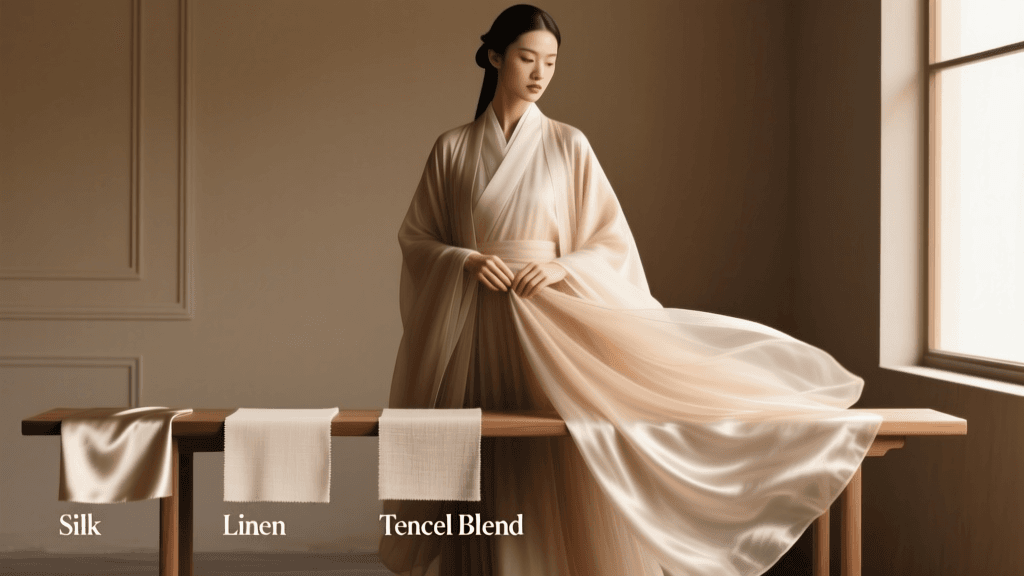
Historically, silk has been the undisputed king of Asian traditional garments. The Victoria and Albert Museum's extensive archives highlight how Chinese silk textiles shaped global trade and fashion for centuries. In 2026, Mulberry silk remains the premier choice for garments requiring a luxurious, liquid drape.
Best Applications
Silk is the ideal candidate for Tang Dynasty Qixiong Ruqun (chest-high skirts), Song Dynasty Beizi (open-front jackets), and flowing Daxiushan (large-sleeve robes). The 22-momme silk crepe de chine is particularly favored because its slight pebbled texture reduces the slippery nature of traditional charmeuse, making it easier to tie and secure at the waist without the garment sliding out of place.
Comfort and Drawbacks
While silk offers unparalleled thermal regulation—keeping the wearer cool in summer and warm in winter—it requires meticulous care. The protein fibers are susceptible to UV degradation and sweat stains. In 2026, many high-end Hanfu brands treat their silk with eco-friendly, bio-based water-repellent finishes to improve durability without sacrificing the natural hand-feel of the textile.
Ramie and Linen: The Architecture of Summer
Known historically as Xia Bu (summer cloth), ramie is a bast fiber native to East Asia that has been used for thousands of years. Unlike silk, ramie possesses a naturally high bending length and shear stiffness, giving it a crisp, paper-like drape that holds its shape exceptionally well.
Best Applications
Ramie is the absolute best choice for Ming Dynasty silhouettes, particularly the Mamianqun (horse-face skirt) and structured Aoqun (jacket and skirt sets). The stiffness of the fiber ensures that the intricate, overlapping pleats of the Mamianqun do not collapse when the wearer sits or walks. Furthermore, modern enzyme-washed ramie available in 2026 has eliminated the historical itchiness associated with the fiber, resulting in a soft, breathable textile that feels like cool linen against the skin.
Comfort and Drawbacks
Ramie boasts the highest MVTR of any natural Hanfu fabric, making it a lifesaver in humid, subtropical climates. However, it wrinkles notoriously. Enthusiasts must embrace the 'lived-in' aesthetic of natural bast fibers or invest time in steam-pressing their garments before wear.
Tencel and Cupro Blends: The 2026 Innovators
The most significant textile breakthrough in the 2026 Hanfu market is the widespread adoption of semi-synthetic cellulosic fibers like Tencel (lyocell) and Cupro. Derived from sustainably sourced wood pulp, these fibers are engineered to mimic the molecular structure of silk. According to industry leaders like Lenzing's Tencel division, modern lyocell fibers offer superior moisture management and a significantly lower environmental footprint compared to traditional sericulture.
Best Applications
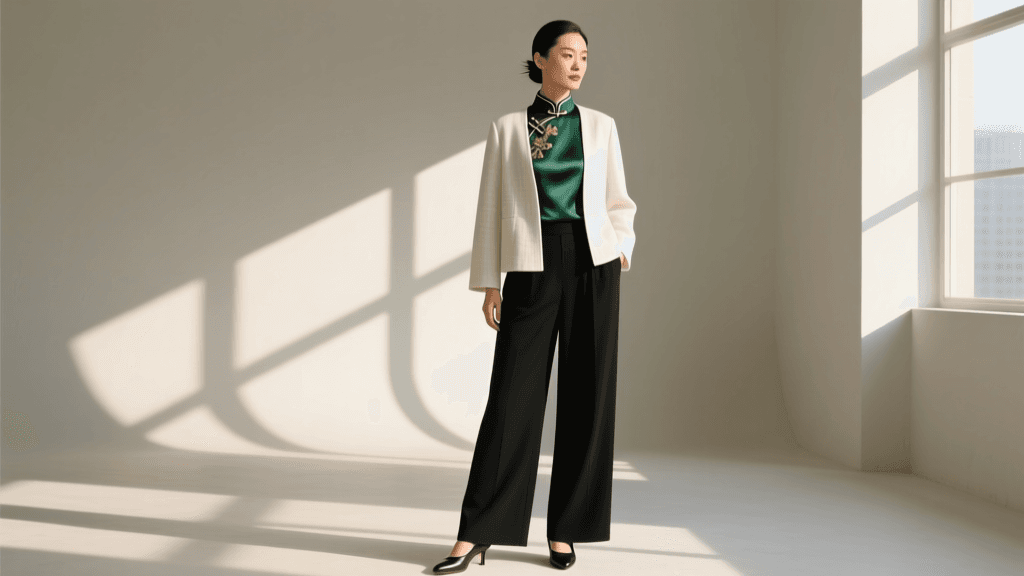
Tencel-silk blends (typically 70% Tencel, 30% silk) are currently dominating the everyday Hanfu and Xin Zhongshi market. They provide the heavy, fluid drape necessary for Song Dynasty pleated skirts and wide-leg trousers, but at a 40% lower cost than pure mulberry silk. Tencel is also highly resistant to wrinkles and can be machine-washed on gentle cycles, making it the top choice for commuters who wear modernized Hanfu to the office.
Comfort and Drawbacks
Tencel is exceptionally cool to the touch and wicks moisture faster than cotton. The primary drawback is its weight; Tencel garments tend to be heavier than their silk counterparts, which can cause fatigue if wearing multiple layers during the peak of summer.
The Physics of the Pleat: Mamianqun Drape Dynamics
To truly understand Hanfu fabric analysis, one must look at the Mamianqun. This iconic skirt consists of two overlapping panels with deep, alternating pleats. The drape dynamics required here are complex:
- The Waistband: Requires a stiff, non-stretch fabric (like cotton-canvas or heavy linen) to anchor the skirt and prevent the pleats from pulling open at the hips.
- The Pleat Body: Requires high shear stiffness. If a fabric is too fluid (like lightweight silk chiffon), the pleats will 'blow out' and lose their geometric symmetry when the wearer walks. Therefore, 2026 tailors heavily favor worsted wool blends, heavy ramie, or synthetic-organza interlinings for Mamianqun construction.
- The Hem: A slight weight at the hem (often achieved through hidden lead-free weighted tapes or thick embroidered borders) is utilized to increase the pendulum effect, ensuring the skirt swings elegantly and returns to a neat, closed position when standing still.
Seasonal Drape and Comfort Recommendations
Selecting the right fabric based on the season is critical for maintaining both comfort and the structural integrity of the garment's drape.
Spring and Summer (High Heat, High Humidity)
- Primary Choice: Enzyme-washed Ramie, lightweight Linen, and Silk Gauze (Luo).
- Styling Tip: Opt for Song Dynasty styles like the Beizi over a slip dress. The open-front design combined with high-MVTR ramie creates a natural ventilation system.
- Avoid: Heavy brocades and thick Tencel blends, which will trap heat and cause the garment to cling uncomfortably to perspiring skin.
Autumn and Winter (Cool, Dry)
- Primary Choice: Mulberry Silk Crepe, Wool-Silk Blends, and Heavy Cotton Brocade.
- Styling Tip: Layering is key. Use a crisp cotton-linen Zhongyi (inner garment) to provide a structural base, followed by a fluid silk Shan (shirt), and topped with a thick, padded Ao (jacket) for Ming Dynasty winter sets.
- Avoid: Unlined ramie, which provides zero thermal insulation and feels excessively cold against the skin in low temperatures.
Caring for High-Drape Hanfu Fabrics
Maintaining the specific drape characteristics of your Hanfu requires specialized care routines that have been refined by conservationists and modern enthusiasts alike.
- Washing: Never machine-wash pure silk or structured brocades. Use a pH-neutral detergent specifically formulated for protein fibers. For ramie and Tencel, use a mesh laundry bag and wash on a delicate, cold-water cycle to prevent fiber breakage.
- Drying: The weight of water can permanently stretch the bias of a silk skirt. Always dry Hanfu flat on a mesh rack in the shade. Direct sunlight will not only fade natural dyes but also brittle the fibers, destroying the fabric's natural flexibility and drape.
- Storage: Do not hang heavy Mamianqun or fully embroidered garments on standard hangers; the sheer weight of the textile will cause the waistband to stretch and the pleats to distort over time. Instead, fold them along their natural pleat lines using acid-free tissue paper to buffer the folds, and store them flat in a breathable cotton drawer.
- Pressing: Use a steam iron on a low setting. For ramie and linen, press while the garment is still slightly damp to achieve the sharpest possible pleats and structural lines. For silk, always use a pressing cloth to prevent water spots and heat shine.
Conclusion
The 2026 Hanfu landscape is a beautiful intersection of ancient artistry and modern textile science. Whether you are seeking the ethereal, liquid cascade of Tang Dynasty mulberry silk, the architectural precision of Ming Dynasty ramie, or the sustainable, everyday practicality of Tencel blends, understanding the physics of fabric drape is the key to unlocking the true magic of traditional Asian garments. By selecting the right textile for the right silhouette and season, you ensure that your Hanfu not only looks historically magnificent but feels exceptionally comfortable in the modern world.