Styling Modern Cheongsam Tops & Tang Jackets for 2026 Workwear
The Rise of Heritage Fusion in 2026
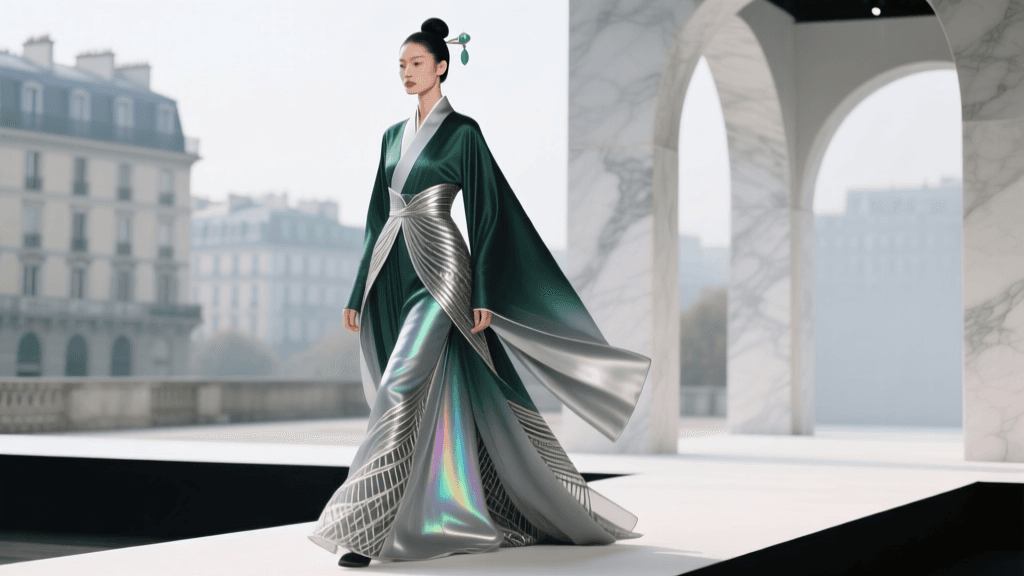
The landscape of global fashion in 2026 is defined by 'heritage fusion'—the deliberate, respectful integration of traditional cultural garments into everyday contemporary wardrobes. As professionals seek to express their cultural identities while adhering to modern corporate and smart-casual dress codes, traditional Asian silhouettes have moved from the realm of ceremonial wear to everyday staples. Among the most versatile of these are the modern cheongsam top (a cropped evolution of the traditional qipao) and the Tang jacket (Tangzhuang).
Mixing these historically rich pieces with modern Western basics requires an understanding of proportion, fabric, and styling. When executed correctly, the Mandarin collar and the intricate pankou (frog buttons) offer a sophisticated, structured alternative to the standard button-down shirt or blazer. This guide explores how to seamlessly incorporate these traditional Asian pieces into your 2026 workwear and smart-casual rotation.
The Anatomy of the Modern Cheongsam Top
The traditional full-length qipao is a masterpiece of tailoring, characterized by its high collar, asymmetrical opening, and side slits. However, for daily office wear, the modern shangyi (cheongsam top) is far more practical. In 2026, designers are favoring cropped silhouettes that hit exactly at the natural waistline or the high hip, making them ideal for tucking into high-waisted trousers or layering under blazers.
The structural origins of the pankou (knotted buttons) and the Mandarin collar are deeply rooted in Qing dynasty garments, a history extensively documented by the Victoria and Albert Museum's Asian collections archive. Today, these elements are scaled down for subtlety. A modern cheongsam top might feature only two or three decorative knot buttons at the neckline, with hidden zippers or snaps along the side seam for ease of wear. The collar itself is often softened, standing at a modest 1 to 1.5 inches rather than the restrictive 2.5-inch collars of the past.
3 Office-Ready Cheongsam Top Outfits for 2026
Transitioning the cheongsam top into a professional environment is all about balancing its ornate details with minimalist, structured Western pieces.
Look 1: The Power Suit Pairing
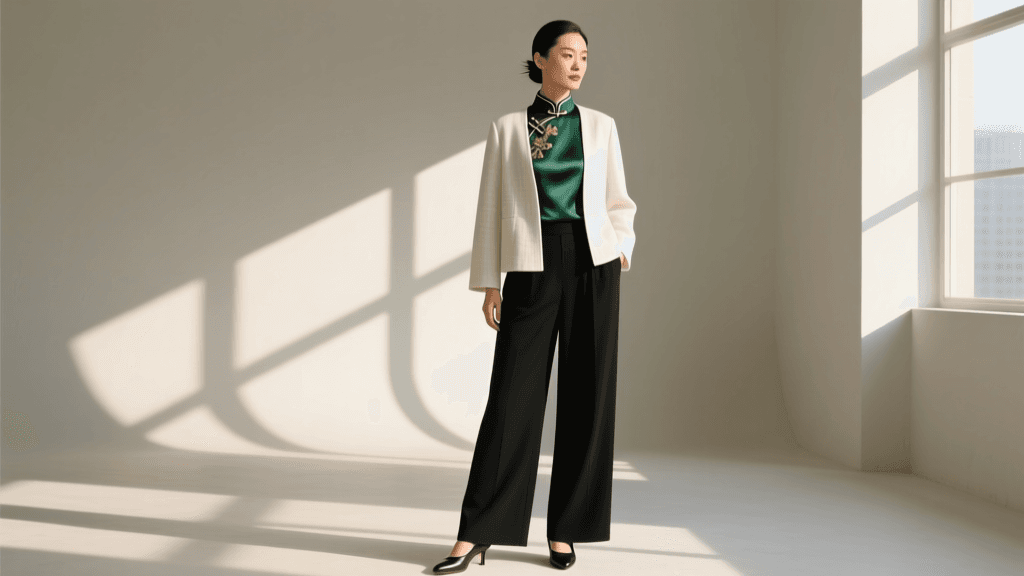
Replace your standard silk camisole or cotton button-down with a sleeveless or short-sleeved cheongsam top in a matte fabric like crepe de chine. Pair it with a sharply tailored, oversized blazer and matching wide-leg trousers. The Mandarin collar will sit neatly against the lapel of the blazer, providing a frame for the face without the bulk of a folded shirt collar. Opt for deep 2026 jewel tones like oxblood, emerald, or slate grey to maintain a commanding corporate presence.
Look 2: High-Waisted Pleated Trousers
For a smart-casual Friday, tuck a fitted, long-sleeved cheongsam top into high-waisted, pleated wool trousers. The asymmetrical pipa neckline of the top draws the eye diagonally, creating visual interest. Keep the trousers in a neutral tone like charcoal or camel, and finish the look with a sleek leather belt and pointed-toe ankle boots. This silhouette elongates the legs and highlights the tailored waist of the top.
Look 3: The Layered Turtleneck (Autumn/Winter)
When the temperature drops, utilize a sleeveless cheongsam vest as a layering piece. Wear it over a fine-gauge merino wool turtleneck. The contrast between the modern, ribbed knit and the smooth, potentially embroidered silk or brocade of the vest creates a rich textural outfit that is perfectly suited for creative offices and academic environments.
The Tang Jacket (Tangzhuang) in Contemporary Smart-Casual
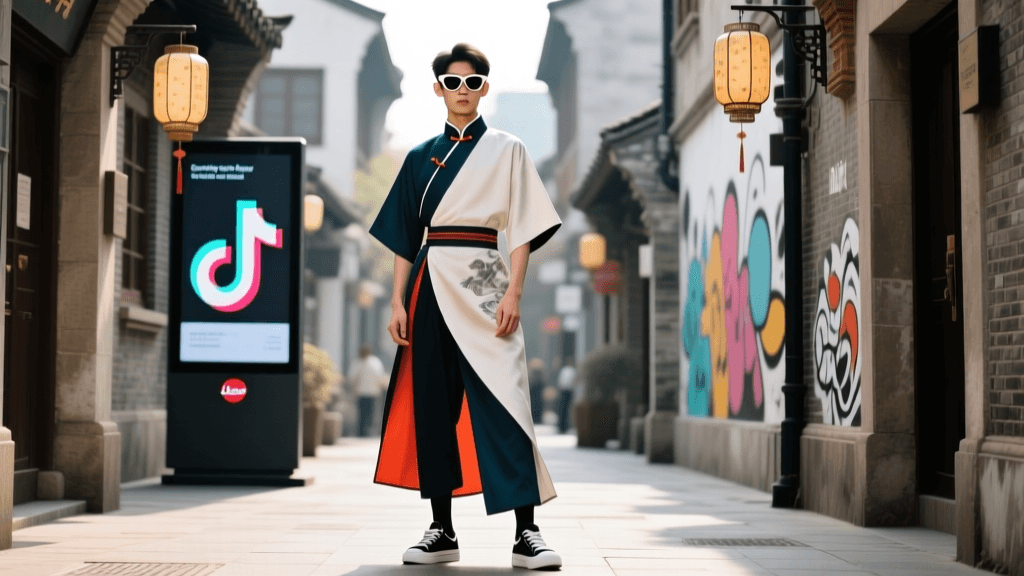
The Tang jacket, with its stand collar, front frog closures, and relaxed, boxy fit, is often mistakenly reserved for Lunar New Year celebrations or weddings. In 2026, the key to wearing the Tang jacket in a modern context is to treat it as you would a bomber jacket or a casual cardigan.
To avoid looking costumey, avoid heavily embroidered, bright red, or shiny satin Tang jackets for daily wear. Instead, seek out jackets crafted from matte cotton-linen blends, raw silk, or even lightweight tech-nylon. A cropped duan'gua (short jacket) in navy, olive, or black pairs exceptionally well with a plain white heavyweight cotton t-shirt, raw selvedge denim, and minimalist leather sneakers. The juxtaposition of the traditional knotted buttons against the rugged, utilitarian texture of raw denim grounds the garment, making it a standout piece in a modern streetwear-inspired wardrobe.
Fabric Innovations and Sustainable Care
Traditional cheongsam and Tang jackets were heavily reliant on pure mulberry silk and silk brocades. While beautiful, these fabrics are delicate, prone to water spotting, and require expensive dry cleaning. In 2026, the shift toward eco-conscious luxury means many top designers are utilizing innovative, sustainable textiles that mimic the drape of silk but offer the durability of modern synthetics. According to the Textile Exchange, the adoption of regenerative cellulosic fibers blended with peace silk has surged, offering professionals breathable, machine-washable alternatives.
| Fabric Type | Composition | Best For 2026 Season | Care Instructions |
|---|---|---|---|
| Heavy Crepe de Chine | 100% Mulberry Silk | Spring/Summer Office | Dry clean or cold hand wash with pH-neutral detergent |
| Tencel-Silk Blend | 70% Tencel Lyocell, 30% Silk | Year-round Smart Casual | Machine wash delicate cycle, hang dry, cool iron |
| Matte Cupro | 100% Cupro (Bemberg) | Autumn/Winter Layering | Dry clean recommended to maintain structural integrity |
| Cotton-Linen Twill | 60% Cotton, 40% Linen | Summer Tang Jackets | Machine wash warm, tumble dry low, steam to remove wrinkles |
Tailoring, Fit, and Alterations
The most common mistake when integrating traditional Asian garments into a Western wardrobe is ignoring the differences in foundational tailoring. Western shirts and jackets rely heavily on bust darts and shoulder seams to create shape. Traditional cheongsam tops, however, often utilize a flat, two-dimensional pattern with side slits (kaiqi) and underarm gussets to allow for movement.
If you are buying off-the-rack in 2026, look for brands that have already adapted these patterns for modern bodies by adding subtle princess seams or contour darts. If you are working with a tailor, be cautious about taking in the side seams too aggressively. The side slits are functional; they prevent the fabric from pulling across the hips when you sit. A good rule of thumb is to ensure the hem of the cheongsam top rests gently against the body without flaring out, but tight enough that it stays tucked into your trousers when you raise your arms.
Accessorizing the Asian-Inspired Silhouette
When styling garments that feature pankou (frog buttons) or intricate embroidery, the golden rule is to let the garment be the focal point. The knotted buttons themselves act as jewelry, drawing the eye across the neckline and chest.
- Necklaces: Avoid long, dangling pendants that will tangle with the frog closures. If you must wear a necklace, opt for a delicate, choker-style gold chain or a single, smooth jade cabochon on a short silk cord.
- Earrings: Because the Mandarin collar frames the face so closely, drop earrings or medium-sized hoops work beautifully to elongate the neck. Avoid large statement studs that might rub against the stiffened collar fabric.
- Outerwear: When wearing a coat over a cheongsam top, choose outerwear with a collarless or shawl-collar design (like a cocoon coat or a wrap trench) to prevent the collars from competing and creating bulk around the neck.
Conclusion
Mixing traditional Asian pieces with modern wardrobes is an exercise in balance and respect for sartorial history. By treating the cheongsam top as a sophisticated alternative to the blouse, and the Tang jacket as a versatile layering piece, you can create a 2026 wardrobe that is deeply personal, culturally resonant, and impeccably professional. Cultural institutions like the Asia Society have long championed the integration of traditional Asian aesthetics into global contemporary art and fashion, proving that these garments are not relics of the past, but living, evolving components of modern global style. Embrace the structure, invest in sustainable modern fabrics, and let your heritage inform your daily style.