2026 Silk Road Finds: Reconstructing Sogdian Silk Textiles
The Intersection of Archaeology and Modern Fashion
The year 2026 has marked a renaissance in the study and application of ancient Asian textiles, driven by groundbreaking archaeological discoveries along the historic Silk Road. As the Xin Zhongshi (New Chinese Style) movement continues to dominate global fashion runways and streetwear, designers and historians are looking past the well-documented Ming and Qing dynasties. Instead, the focus has shifted to the cosmopolitan exchanges of the Tang Dynasty and the pivotal role of Sogdian merchants. The recent 2026 excavations in the Tarim Basin have unearthed remarkably preserved Sogdian silk fragments, offering an unprecedented glimpse into the cross-cultural textile exchanges that defined the first millennium. These finds are not merely sitting in museum archives; they are actively being reconstructed using cutting-edge 2026 textile technology to inform the next generation of heritage-inspired garments.
For enthusiasts of Asian traditions, understanding the journey of these textiles from the arid sands of the Taklamakan Desert to the high-tech Jacquard looms of modern Hangzhou provides a fascinating look at how history is worn today. The fusion of ancient weaving techniques with contemporary digital analysis represents the pinnacle of the 2026 Xin Zhongshi movement, where authenticity and innovation walk hand in hand.
The 2026 Tarim Basin Excavations: Unearthing Sogdian Samite
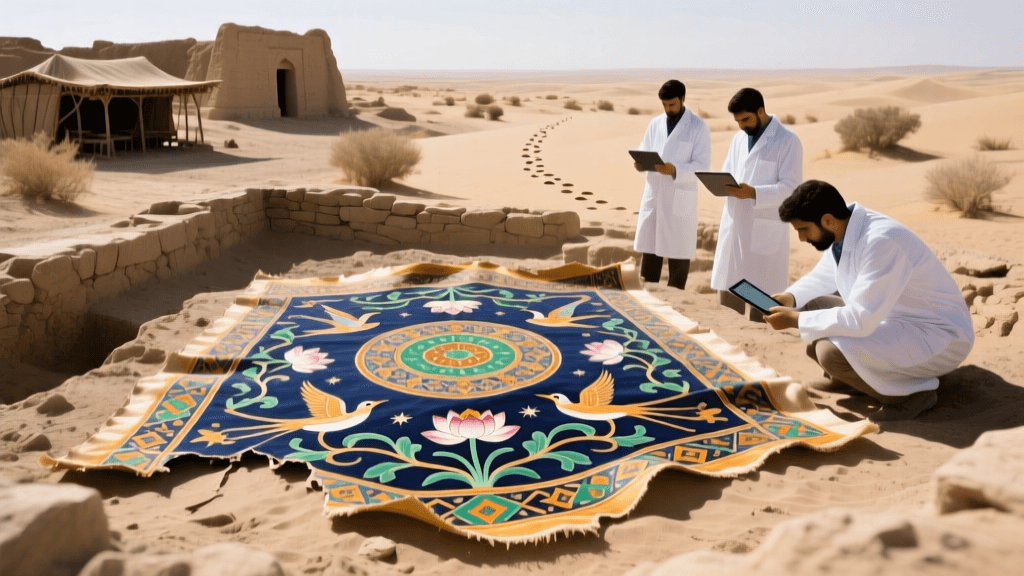
In early 2026, a joint archaeological team working near the Astana cemetery complex in the Turpan Depression uncovered a previously sealed tomb containing a wealth of organic materials. Among the most significant finds were several fragments of Sogdian samite, a luxurious weft-faced compound twill silk that was the height of luxury along the Silk Road. The Sogdians, acting as the primary mercantile bridge between the Sasanian Empire, the Byzantine world, and Tang China, were renowned for their distinct aesthetic, which heavily featured pearl roundels, confronting peacocks, and senmurvs (mythical bird-dogs).
According to data published by the International Dunhuang Project, the preservation of these silks is attributed to the extreme aridity of the Tarim Basin and the unique alkaline composition of the surrounding soil. The 2026 findings are particularly notable because they include intact selvedges and loom-width markers, allowing modern textile engineers to calculate the exact reed density and harness configurations used by 8th-century weavers. This level of structural data is incredibly rare and has provided a precise blueprint for modern reproduction.
The motifs found on these specific 2026 fragments highlight a fascinating syncretism. While the weaving technique is distinctly Sogdian, the color palette and certain floral filler motifs show direct influence from Central Plains Chinese workshops, proving that textile exchange was not merely about trading finished goods, but also about sharing technical knowledge and aesthetic philosophies across thousands of miles.
Multispectral Imaging and Digital Reconstruction
One of the greatest challenges in studying excavated textiles is that centuries of exposure to light, soil, and microbial activity strip away the vibrant dyes, leaving behind uniform, muddy brown fragments. However, 2026 has seen the widespread adoption of AI-enhanced multispectral imaging in archaeological conservation. By capturing data across the electromagnetic spectrum—from ultraviolet to short-wave infrared—conservators can identify the chemical signatures of long-faded organic dyes without taking destructive physical samples.
The Metropolitan Museum of Art Conservation Department has been at the forefront of refining these non-invasive imaging techniques, and their 2026 protocols have been adopted by excavation teams in Xinjiang. Through this technology, researchers discovered that the Astana samite fragments were originally dyed using a complex combination of madder root (Rubia tinctorum) for deep crimson, weld (Reseda luteola) for vibrant yellows, and imported indigo for the striking blue accents within the pearl roundels.
This digital color mapping allows modern weavers to recreate the exact visual impact of the original garments. In the context of the Xin Zhongshi movement, where consumers demand historical accuracy in their traditional clothing, this scientific rigor elevates a garment from a mere costume to a wearable piece of peer-reviewed history.
Reviving Ancient Dyes: Botanical Sourcing in 2026
To achieve true authenticity in 2026, it is not enough to replicate the weave; the dyes must also be historically accurate. The revival of botanical dyeing has become a massive sub-industry within the Asian traditional garment sector. Agricultural cooperatives in Xinjiang and Gansu have dedicated hundreds of hectares to cultivating heritage dye plants specifically for the high-end Xin Zhongshi market.
- Madder (Rubia tinctorum): Cultivated in the alkaline soils of Turpan, yielding the iconic Sogdian red. The 2026 harvests have been optimized using traditional irrigation techniques to maximize alizarin content.
- Woad and Indigo: While true indigo (Indigofera tinctoria) was historically imported, local woad (Isatis tinctoria) is now being processed using 8th-century fermentation vats to create the deep, colorfast blues seen in the Tarim finds.
- Pomegranate Rind: Used extensively as a mordant and a secondary yellow dye, providing the warm, golden undertones that synthetic 20th-century dyes simply cannot replicate.
By combining these historically accurate dyes with modern temperature-controlled dye vats, 2026 textile mills are achieving colorfastness that rivals modern synthetics while maintaining the rich, multi-tonal depth characteristic of ancient Silk Road silks.
Translating Ancient Weaves into 2026 Xin Zhongshi Fashion
The transition from a fragile, 1,200-year-old archaeological fragment to a durable, wearable garment for the modern consumer requires advanced manufacturing. The weft-faced compound twill (samite) structure is incredibly dense and complex, traditionally requiring a drawloom operated by multiple weavers. Today, modern electronic Jacquard looms equipped with high-density harness systems can replicate this structure efficiently.
Below is a comparison of the ancient textile specifications versus the 2026 commercial reproductions currently driving the premium Xin Zhongshi market.
| Feature | Ancient Sogdian Samite (8th Century) | 2026 Xin Zhongshi Jacquard Replica |
|---|---|---|
| Weave Structure | Weft-faced compound twill (Samite) | Electronic Jacquard weft-faced twill |
| Thread Count | approx. 90 warp / 45 weft per cm | 110 warp / 50 weft per cm (optimized for drape) |
| Fiber Content | 100% Degummed Mulberry Silk | 85% Mulberry Silk, 15% Cupro (for durability) |
| Dyes | Madder, Weld, Indigo, Mineral mordants | Botanical extracts with eco-friendly bio-mordants |
| Motifs | Pearl roundels, confronting peacocks | Adapted roundels, scaled for modern garment panels |
| Estimated Cost | Equivalent to several ounces of gold | approx. $180 - $250 USD per meter |
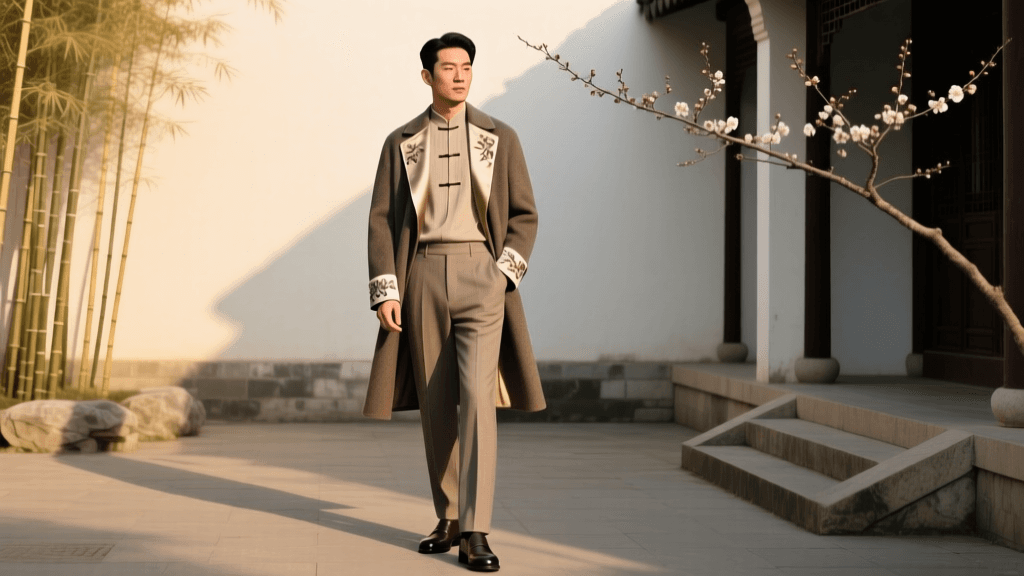
Designers in 2026 are adapting these heavy, structured silks into modern silhouettes. Rather than traditional, voluminous robes, the Sogdian samite reproductions are being tailored into structured blazers, A-line midi skirts, and corset-style bodices. The heavy drape and high sheen of the weft-faced twill provide a sculptural quality that appeals to the contemporary consumer looking for luxury heritage wear.
Conservation and Storage Protocols for Excavated Silks
For private collectors, museum curators, and archivists who handle genuine Silk Road artifacts or even high-end natural-dye reproductions, proper storage is paramount. The UNESCO Silk Roads Programme frequently highlights the fragility of organic artifacts recovered from arid environments once they are exposed to modern, humid, and polluted atmospheres. If you are archiving traditional silk garments in 2026, strict environmental controls must be implemented.
Climate and Light Control
Silk is a protein fiber highly susceptible to hydrolysis and photo-oxidation. Display and storage areas must maintain a strict relative humidity (RH) of 45% to 55%. Fluctuations beyond this range cause the fibers to expand and contract, leading to micro-fractures in the ancient weave. Light exposure must be limited to a maximum of 50 lux, with all ultraviolet (UV) radiation completely filtered out using modern UV-blocking acrylic glazing or LED lighting with zero UV emission.
Anoxic Storage Solutions
For long-term archival storage of priceless Silk Road textiles, anoxic (oxygen-free) environments are the 2026 gold standard. Textiles are sealed in specialized, high-barrier laminated film enclosures. The oxygen is then purged and replaced with humidified argon gas. Argon is preferred over nitrogen because it is denser, providing a more stable blanket, and it does not react with the metallic threads or mineral mordants often found in ancient Sogdian samites.
Physical Support and Handling
Never hang archaeological silk fragments or heavy, unlined samite reproductions. The sheer weight of the weft-faced twill will cause gravitational distortion and warp-yarn breakage over time. Garments must be stored flat in archival-grade, acid-free corrugated polypropylene boxes. Internal folds should be padded with unbuffered, acid-free tissue paper to prevent hard creases, which can permanently snap the silk filaments. When handling, conservators must use powder-free nitrile gloves, as the natural oils and salts from human skin will catalyze the degradation of the protein structure and alter the pH of botanical dyes.
The Future of Silk Road Heritage
The 2026 Tarim Basin discoveries have fundamentally shifted the narrative of Asian traditional garments. By proving that the Silk Road was a conduit for deep technological and artistic collaboration, these Sogdian silk fragments remind us that traditional fashion has always been dynamic and cross-cultural. As multispectral imaging and digital Jacquard weaving continue to advance, the boundary between archaeological artifact and contemporary wardrobe will only continue to blur. For the modern wearer of Xin Zhongshi, donning a reconstructed Sogdian pearl roundel is not just a fashion statement; it is an act of preserving and participating in a millennia-old dialogue of global exchange.