2026 Hanfu Guide: Dressing for Tropical, Desert & Cold Climates
The Global Hanfu Movement: Adapting Tradition for Extreme Environments
As we navigate through 2026, the global appreciation for Hanfu has transcended its temperate East Asian origins. Enthusiasts from the sweltering streets of Singapore to the arid dunes of Dubai and the sub-zero winters of Harbin are embracing traditional Chinese garments. However, wearing historically accurate silk and heavy brocades in extreme climates presents unique challenges. The intersection of historical authenticity and modern textile innovation has given rise to a new era of climate-adaptive Hanfu. By studying historical precedents and leveraging 2026 fabric technologies, wearers can maintain elegance and comfort regardless of the thermometer's reading. According to Britannica's comprehensive guide to Chinese dress, historical Chinese clothing was always deeply tied to regional climates and seasonal changes, a philosophy that modern enthusiasts are reviving today.
Tropical Climates: Beating Humidity with Song Dynasty Elegance
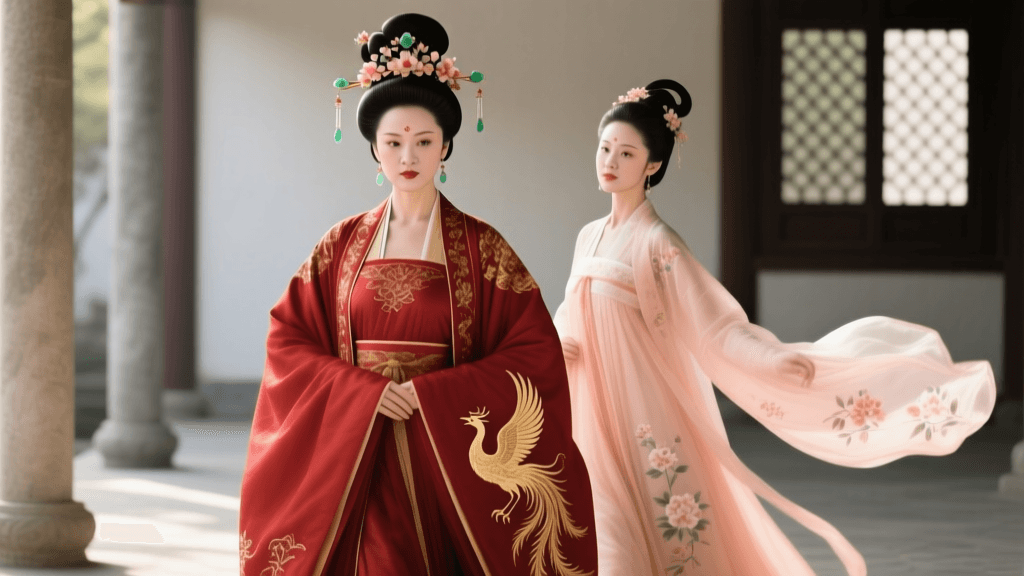
Tropical regions are defined by high temperatures and oppressive humidity, which can quickly turn heavy, multi-layered traditional garments into a sauna. The key to tropical Hanfu in 2026 lies in the revival of Song Dynasty (960–1279 CE) silhouettes, specifically the Beizi (an open-front, long-sleeved jacket) paired with lightweight inner layers.
Fabric Innovations for High Humidity
Traditional heavy silks trap heat and moisture. In 2026, the market has seen a massive surge in nano-treated Xiangyunsha (mud silk). Historically prized for its cooling properties, modern Xiangyunsha is now woven with bamboo-linen blends that offer superior moisture-wicking capabilities. Furthermore, 'ice-silk' (a high-tech viscose derivative) has become the standard for the Zhongyi (inner garment), providing a cooling sensation against the skin while preventing sweat from damaging delicate outer layers.
Styling Strategy: Airflow and Drape
- Top: Opt for a short-sleeved or sleeveless Ru (blouse) made from breathable ramie, layered under a sheer, open-front Beizi.
- Bottom: Avoid the heavily pleated Mamianqun (horse-face skirt), as the dense pleats trap heat. Instead, choose a flat Baiqun (white skirt) or a wide-legged Ku (trouser) made from porous linen.
- Colors: Light-reflecting pastels and natural undyed hues reduce solar heat absorption.
Desert Climates: Sun Protection and Tang Dynasty Silhouettes
Desert environments present a dual challenge: blistering, UV-heavy days and rapidly dropping temperatures at night, alongside the ever-present threat of windblown sand. For desert adaptation, modern Hanfu enthusiasts are looking to the cosmopolitan Tang Dynasty (618–907 CE), which frequently interacted with Western Region cultures along the Silk Road, resulting in practical, protective garments.
UV Protection and Sand Defense
The 2026 textile market has introduced UPF 50+ treated Luo (gauze). This sheer, woven fabric acts as a physical barrier against harsh UV rays while allowing maximum airflow. A popular desert ensemble involves wearing a fitted, moisture-wicking base layer beneath a wide-sleeved Dahu (a sleeveless or short-sleeved vest) made from this advanced gauze. To protect the face and neck from sandstorms, the Weimao—a traditional wide-brimmed hat with a sheer veil—has made a spectacular comeback, now featuring anti-static mesh that repels desert dust.
Managing Extreme Temperature Swings
Desert nights can become surprisingly cold. The 2026 approach utilizes modular layering. Wearers utilize a Yuanlingpao (round-collar robe) with a detachable, fleece-lined inner collar. As detailed in the Victoria and Albert Museum's Asian Collections, historical round-collar robes were often layered to denote status and provide warmth; today, those layers are engineered with lightweight, heat-retaining aerogel insulation that adds zero bulk to the traditional drape.
Cold Regions: Sub-Zero Survival with Ming Dynasty Layering
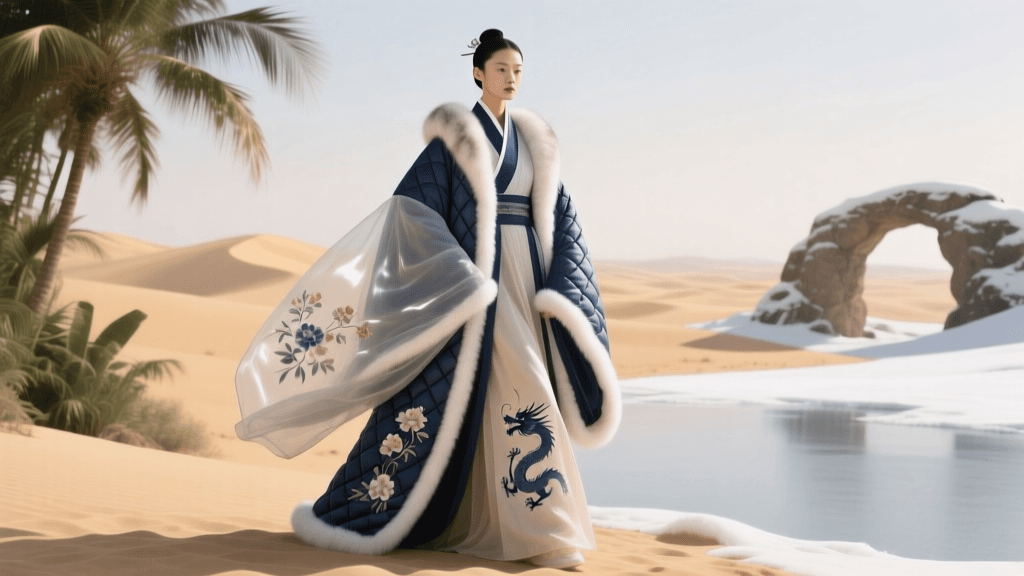
Wearing Hanfu in freezing climates requires serious thermal engineering. The Ming Dynasty (1368–1644 CE) provides the ultimate blueprint for cold-weather elegance, characterized by structured, high-collared garments and heavy layering. In 2026, the integration of smart textiles has revolutionized winter Hanfu, allowing wearers to survive sub-zero temperatures without sacrificing the traditional silhouette.
The Modern Aoqun and Thermal Engineering
The Aoqun (a lined or padded jacket worn over a skirt) is the cornerstone of winter Hanfu. Historically padded with cotton or silk wadding, the 2026 Ao features graphene-infused thermal linings. Graphene, a highly conductive nanomaterial, distributes body heat evenly across the torso. Many premium 2026 winter Hanfu brands now include hidden, USB-rechargeable carbon fiber heating pads integrated into the lower back and chest zones of the Ao, powered by slim, discreet power banks.
Windproofing and Extremities
Wind chill is the enemy of traditional loose-fitting garments. To combat this, modern Mamianqun designed for winter are crafted from heavy wool-cashmere blends backed by a micro-thin TPU (thermoplastic polyurethane) windproof membrane. This maintains the crisp, structured pleats of the skirt while completely blocking icy gusts. For the neck, the Piling (cloud collar) has been reimagined with plush, sustainable faux-fur and a built-in thermal neck zone, echoing the opulent fur collars of Ming nobility while providing essential carotid artery warmth.
2026 Hanfu Climate Adaptation Matrix
To help you build your extreme-climate wardrobe, refer to the following adaptation matrix based on current 2026 market offerings and historical styling principles.
| Climate Zone | Primary Challenge | Recommended Hanfu Garment | 2026 Fabric Innovation |
|---|---|---|---|
| Tropical | High humidity, sweat, heat retention | Song Dynasty Beizi & Baiqun | Nano-hydrophobic Xiangyunsha (Mud Silk) & Bamboo-linen blends |
| Desert | UV radiation, sandstorms, night chills | Tang Dahu, Yuanlingpao & Weimao | UPF 50+ treated Luo (Gauze) & Aerogel insulation layers |
| Cold | Sub-zero temps, wind chill, snow | Ming Aoqun & Fur Piling | Graphene thermal linings, USB-heated zones, TPU windproof membranes |
Essential Accessories for Extreme Environments
No Hanfu ensemble is complete without the proper footwear and accessories, which must also be adapted for extreme weather. The traditional Xue (boot) has been heavily modified for 2026. For desert and tropical trekking, Xue are now crafted with perforated, water-resistant vegan leather and feature Vibram soles for grip on slick or sandy terrain. In cold regions, winter Xue are lined with shearling and feature integrated Gore-Tex membranes to keep snow and slush out while allowing foot perspiration to escape.
Furthermore, the use of traditional silk fans in tropical regions has been supplemented by silent, bladeless neck fans disguised as jade pendants, a popular 2026 accessory that provides a cooling breeze without disrupting the aesthetic of the garment. For desert wearers, UV-blocking silk gloves that extend to the elbow protect the hands while maintaining the graceful, elongated sleeve silhouette characteristic of Hanfu.
Conclusion: Honoring the Past with Modern Science
The evolution of Hanfu in 2026 proves that traditional clothing is not a static relic, but a living, breathing art form capable of adapting to the modern world's diverse environments. By understanding the historical context of regional dress and embracing cutting-edge textile science, enthusiasts can confidently wear Hanfu across the globe's most extreme climates. Whether you are navigating the humid streets of Southeast Asia or braving the snowy landscapes of the north, the fusion of ancient silhouettes and modern engineering ensures that traditional Chinese dress remains both functional and breathtakingly beautiful. As Britannica's overview of silk notes, the continuous innovation in textile production has always been the driving force behind the longevity and spread of Chinese fashion, a legacy that continues unabated today.