Hanfu For Extreme Climates 2026: Tropical, Desert & Cold Gear
The 2026 Hanfu Renaissance: Beyond Temperate Zones
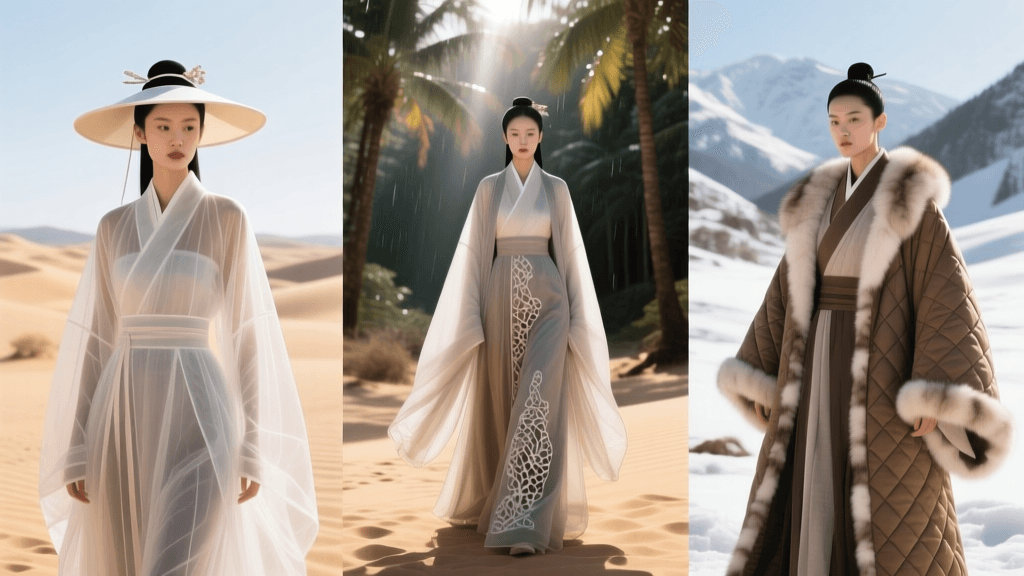
As we navigate through 2026, the global Hanfu movement has transcended its traditional geographic and climatic boundaries. What was once primarily worn during spring festivals in temperate regions of East Asia is now a year-round, global wardrobe staple. Enthusiasts from the sweltering humidity of Singapore to the arid dunes of Dubai, and even the freezing alpine winds of Reykjavik, are actively integrating traditional Chinese garments into their daily lives. However, wearing historical clothing in extreme climates requires a deep understanding of traditional textile science, historical layering techniques, and modern 2026 fabric innovations. This comprehensive guide explores how to authentically and comfortably wear Hanfu in tropical, desert, and cold environments today.
Tropical and Humid Climates: Mastering the Heat
Wearing Hanfu in tropical regions like Southeast Asia, Hainan, or the American Gulf Coast presents a unique challenge: extreme heat combined with suffocating humidity. The key to surviving and thriving in these environments lies in selecting the correct historical silhouettes and leveraging traditional summer textiles that have been optimized for airflow.
The Magic of Xiangyunsha and Ramie
For tropical climates, synthetic blends are a trap; they trap sweat and cause severe discomfort. In 2026, the most sought-after fabric for humid weather is authentic Xiangyunsha (gambiered gauze). This remarkable silk is dyed using the juice of the Dioscorea cirrhosa plant and coated with iron-rich river mud, a process recognized for its deep cultural significance. According to the UNESCO Intangible Cultural Heritage archives, the traditional sericulture and silk craftsmanship of China have long produced textiles uniquely suited to regional climates. Xiangyunsha is naturally antimicrobial, dries almost instantly, and feels cool to the touch. A genuine Xiangyunsha top in 2026 averages between $280 and $450 USD, but its longevity and comfort in 90% humidity are unmatched.
Alternatively, Ramie (夏布), often referred to as 'China grass,' offers a more budget-friendly option. Modern 2026 weaving techniques have softened Ramie significantly compared to historical iterations, providing a linen-like breathability that excels in high heat. Ramie garments typically cost between $80 and $150 USD, making them an excellent entry point for tropical Hanfu wardrobes.
Airflow-Optimized Silhouettes
The Song Dynasty Beizi (褙子) is the ultimate tropical silhouette. Characterized by its open front, straight cut, and side slits, the Beizi acts as a wearable fan, allowing cross-breezes to reach the body. Pairing a lightweight Ramie Beizi over a simple, sleeveless Song-style camisole (Moxiong) maximizes ventilation while maintaining modesty and historical accuracy. Avoid tightly wrapped garments or heavy pleated skirts; instead, opt for single-layer, wide-leg Song trousers (Songku) which provide excellent sun protection without clinging to the skin.
Desert and Arid Regions: Sun Protection and Thermoregulation
Desert environments, such as the Middle East, the American Southwest, or Xinjiang, require a completely different approach. The primary adversaries here are intense ultraviolet (UV) radiation, abrasive sand, and drastic temperature drops once the sun sets. The historical wardrobe of the Ming Dynasty offers brilliant solutions for these exact conditions.
UV-Blocking Silks and High Collars
While it may seem counterintuitive to cover up in the desert, historical desert-dwelling cultures have always utilized full-coverage garments to trap a layer of cool air and block UV rays. The Ming Dynasty Ao (袄) with its standing collar (Liling) is exceptionally well-suited for this. The high collar protects the sensitive skin of the neck from sunburn and blowing sand, while the dense weave of raw silk or high-thread-count linen provides natural UPF 50+ sun protection. The Metropolitan Museum of Art notes in its Heilbrunn Timeline of Art History that the structural integrity and density of Chinese silk weaves made them highly valued trade commodities along the Silk Road, precisely because of their durability and protective qualities in arid transit.
The Weimao and Desert Travel
For outdoor desert excursions in 2026, the Weimao (帷帽) is making a massive functional comeback. Originally popular in the Tang Dynasty, this wide-brimmed hat features a sheer, flowing veil that drapes down to the shoulders. It provides crucial shade for the face and neck while the sheer mesh protects the eyes and respiratory system from sudden sandstorms without obstructing vision. When the desert temperature plummets by up to 30 degrees Fahrenheit at night, layering a Dahu (sleeveless vest) over your Ao provides core insulation without restricting arm movement, allowing for easy thermoregulation.
Cold and Alpine Regions: Historical Insulation Meets Modern Tech
Wearing Hanfu in sub-zero temperatures—whether in Harbin, Northern Europe, or Canada—requires a mastery of historical layering combined with invisible modern technology. The romanticized image of a delicate silk dress in the snow is a modern cinematic myth; true historical winter wear was robust, heavily insulated, and highly practical.
The Ming Dynasty Winter Wardrobe
The Ming Dynasty Pifeng (披风), a long, sweeping cloak, is the cornerstone of the cold-weather Hanfu wardrobe. In 2026, high-end Pifeng are crafted from Zhuanghua brocade or heavy wool blends, often lined with ethically sourced or high-quality faux-fur (historically accurate to the era's use of animal pelts for warmth). The wide sleeves allow for multiple thick layers underneath without bunching. Beneath the Pifeng, a padded Ao (cotton or wool-stuffed jacket) provides the primary thermal barrier. The Victoria and Albert Museum's extensive Chinese textiles collection highlights how historical garments were frequently lined with wool, fur, or thick wadding to combat the harsh winters of northern China, proving that Hanfu is inherently capable of extreme cold adaptation.
Invisible Modern Layering for 2026
The secret to wearing Hanfu in -20°C weather in 2026 lies in what you cannot see. Modern graphene-lined thermal undergarments and merino wool base layers are worn directly against the skin beneath the traditional Zhongyi (inner garments). Because Hanfu silhouettes, particularly the Ming Aoqun (jacket and skirt), are naturally voluminous and do not cling to the body, you can easily wear up to three layers of modern thermal tech underneath without altering the historical silhouette. For the extremities, traditional cloud-head shoes (Yuntouxie) have been updated by 2026 cobblers with insulated EVA foam soles and waterproof exterior treatments, ensuring your feet remain warm and dry on snowy streets.
Comparative Guide: Hanfu for Extreme Climates
To help you build your climate-specific wardrobe, refer to the structured comparison table below:
| Climate Zone | Primary Fabric | Recommended Style | Key Functional Feature | Est. 2026 Cost (USD) |
|---|---|---|---|---|
| Tropical / Humid | Xiangyunsha, Ramie | Song Beizi, Moxiong, Songku | Open-front airflow, antimicrobial, quick-dry | $150 - $450 |
| Desert / Arid | Raw Silk, Dense Linen | Ming Ao (Liling), Weimao | UV protection, sand-blocking high collar | $200 - $600 |
| Cold / Alpine | Wool, Brocade, Faux-Fur | Ming Pifeng, Padded Ao, Aoqun | Windproof outer shell, voluminous layering space | $350 - $900+ |
Sourcing Authentic Extreme-Weather Hanfu in 2026
When shopping for extreme-weather Hanfu, always scrutinize the fabric composition labels. Many mass-market brands use polyester disguised as 'silk satin,' which will cause heatstroke in tropical climates and freeze solidly in alpine winds. Seek out specialized ateliers that focus on natural fibers and historical weaving techniques. For tropical wear, look for certified Xiangyunsha producers from Guangdong. For winter wear, consult tailors who specialize in Ming Dynasty structural tailoring, ensuring the garment's internal lining is properly quilted to hold modern thermal layers in place.
Conclusion
The versatility of traditional Chinese clothing is a testament to the ingenuity of historical textile artisans. By understanding the fundamental principles of fabric behavior and historical silhouette design, the 2026 Hanfu enthusiast can confidently wear their heritage in any environment on Earth. Whether you are navigating the monsoon rains of the tropics, the scorching sun of the desert, or the biting winds of the alpine tundra, there is a historically accurate, deeply functional Hanfu ensemble waiting to be worn.